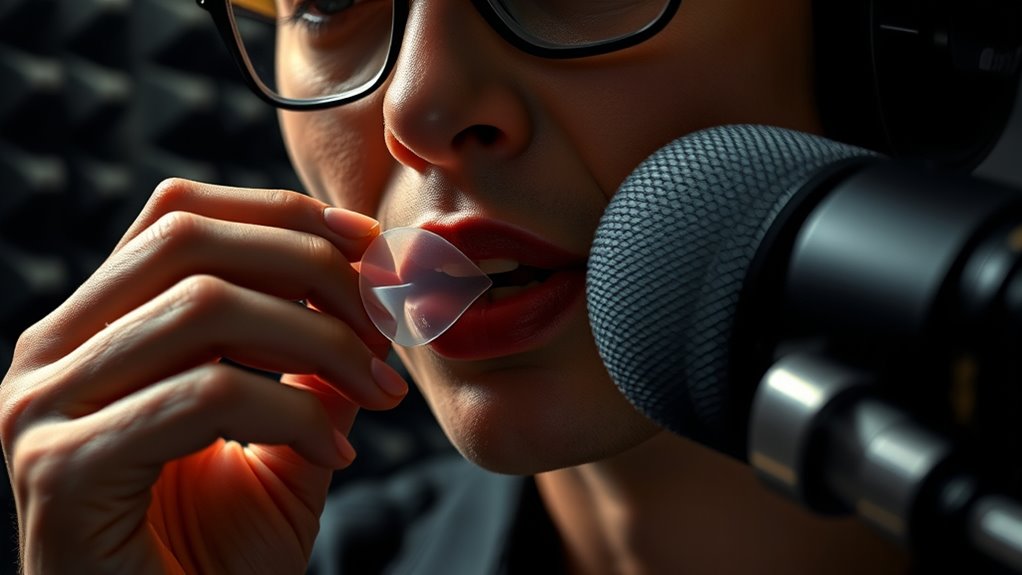

To manage mouth flaps effectively during anime dubbing, focus on analyzing the original animation to spot key lip movements and adjust your dialogue timing accordingly. Use audio editing tools to fine-tune delivery, elongate sounds, or slightly modify speech pace to align with visual cues. Practice patience and experiment with different timing tweaks to achieve natural, unobtrusive lip sync. Keep refining your skills, and you’ll discover more techniques that make your dubbing seamless and convincing.
Key Takeaways
- Analyze original animation to identify key lip movements for accurate timing guidance.
- Adjust dialogue pacing and delivery speed to align with visual mouth movements.
- Use audio editing tools to refine timing, pitch, and elongate sounds for better sync.
- Focus on natural speech flow, emphasizing syllables without overmatching minor mouth movements.
- Practice patience and multiple takes to achieve seamless, unobtrusive lip synchronization.
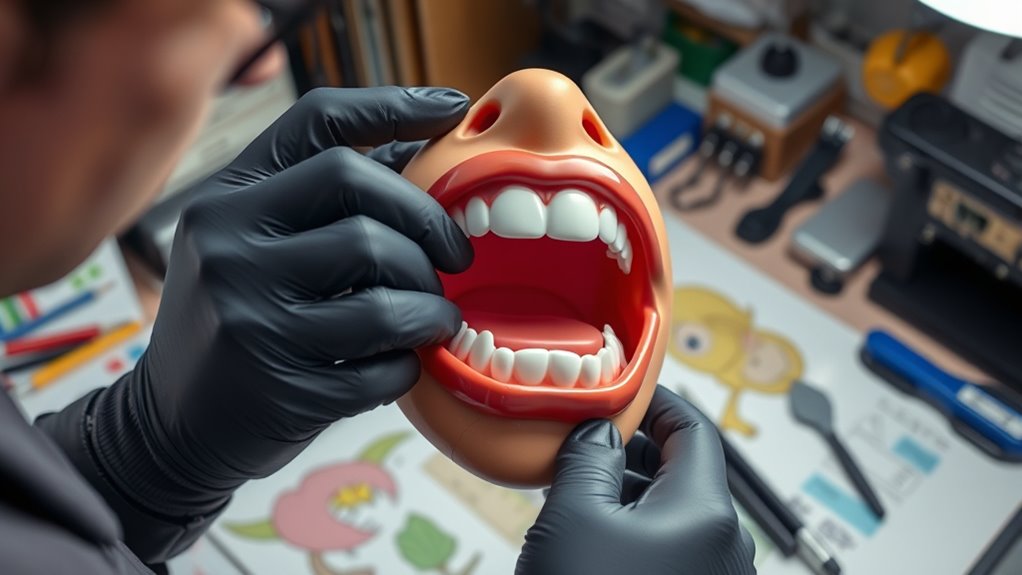
Mouth flaps can be uncomfortable and disruptive, but with proper management, you can minimize their impact. When dubbing anime, one of your primary challenges is ensuring that the dialogue matches the character’s mouth movements. This process, often called lip sync, is essential for maintaining the viewer’s immersion and making the scene feel natural. Achieving perfect lip sync involves careful attention to dialogue timing, which means you need to adjust your voice recordings so they align seamlessly with the character’s mouth movements on screen. It might seem tricky at first, but with practice, you’ll develop a sense of how to match speech patterns precisely, reducing the distraction of mismatched mouth flaps.
Proper dialogue timing reduces mouth flaps, enhancing naturalness and viewer immersion in anime dubbing.
To manage mouth flaps effectively, start by analyzing the original animation closely. Observe how the character’s mouth moves during different lines and identify key moments where lip movements are most prominent. When recording dialogue, you should aim to match the pacing of your speech to these visual cues. This doesn’t mean you need to replicate every tiny movement, but your dialogue should flow naturally within the timing constraints of the animation. Sometimes, slightly adjusting the speed of your delivery can help create a more convincing lip sync, making it easier to hide minor discrepancies in mouth movements.
Another technique involves editing your voice recordings after they’re captured. Using audio editing software, you can fine-tune dialogue timing, emphasizing certain syllables or elongating specific sounds to better fit the mouth flaps. This precision helps to reduce the visual mismatch and makes the scene feel more cohesive. When you’re doing this, it’s essential to keep the emotional tone and natural rhythm of the original dialogue intact, so the scene’s authenticity isn’t compromised. Additionally, understanding the self waterer plant pots concepts can help in creating a calm environment that fosters patience and attention to detail during editing.
Practicing patience and attention to detail is key. You might find yourself re-recording lines multiple times, experimenting with different timings, or adjusting the pitch and speed to achieve ideal lip sync. Remember, the goal isn’t just to match the mouth movements but to do so in a way that feels natural and unobtrusive. Over time, you’ll develop an intuitive sense of dialogue timing, making it easier to produce dubbed scenes where mouth flaps are minimized and the viewer’s focus stays on the story, not the technical glitches. Ultimately, mastering lip sync and dialogue timing will elevate your dubbing work, creating a more polished and engaging final product.
Top picks for "manag mouth flap"
As an affiliate, we earn on qualifying purchases.
Frequently Asked Questions
How Do Voice Actors Synchronize Speech With Animated Mouth Movements?
You achieve lip sync by carefully listening to the original dialogue and matching your speech to the animated mouth movements. Focus on timing accuracy, ensuring your words align precisely with the mouth flaps. Use your instincts and experience to adjust your delivery, making sure your voice matches the lip movements naturally. Practice helps improve synchronization, allowing your performance to feel seamless and authentic, enhancing the overall dubbing quality.
What Tools Assist in Editing Mouth Flaps for Realism?
Coincidentally, you find that mouth flap software and editing tools are essential for achieving realistic animation. These tools help you precisely manipulate lip movements, ensuring they match speech naturally. Programs like Adobe After Effects, Toon Boom, and specialized mouth flap software streamline the process, allowing you to adjust timing, shape, and sync seamlessly. With these editing tools, you can create smooth, believable mouth movements that enhance the overall dubbing quality effortlessly.
How Do Cultural Differences Influence Mouth Flap Management?
Cultural sensitivities and language nuances profoundly influence how you manage mouth flaps in anime dubbing. You need to adapt your timing and lip movements to respect cultural differences, ensuring the translation feels natural and respectful. By understanding local customs and language intricacies, you can adjust mouth flaps to avoid misinterpretations or offense. This approach helps create a seamless, culturally sensitive dubbing experience that resonates with diverse audiences.
Can AI Improve Mouth Flap Alignment in Dubbing?
You bet AI can improve mouth flap alignment in dubbing. With AI animation, you get precise lip synchronization that takes the guesswork out of matching speech to characters’ mouths. It’s like hitting two birds with one stone—saving time and boosting accuracy. By analyzing voice patterns and facial movements, AI guarantees that dubbed dialogue syncs seamlessly, making your anime feel more natural and engaging for viewers.
What Are Common Challenges With Non-Human Character Mouth Movements?
You often face challenges with non-human character mouth movements because lip sync and facial expressions don’t always match the original animation. Non-human characters may have exaggerated or abstract features that make precise lip sync difficult. You need to carefully adapt audio to fit these unique movements while preserving the character’s personality. Balancing natural-looking facial expressions with accurate lip sync is key to making the dubbing convincing and engaging.
Conclusion
Mastering mouth flaps in anime dubbing is like wielding a lightsaber—you need precision, timing, and a bit of Jedi intuition. By syncing dialogue seamlessly and adjusting for expressions, you bring characters to life, making scenes feel natural and immersive. Think of it as painting with pixels during a Renaissance fair—each stroke matters. With practice, you’ll navigate these flaps effortlessly, ensuring your dubbing feels as smooth as a vintage vinyl record spinning on a turntable.