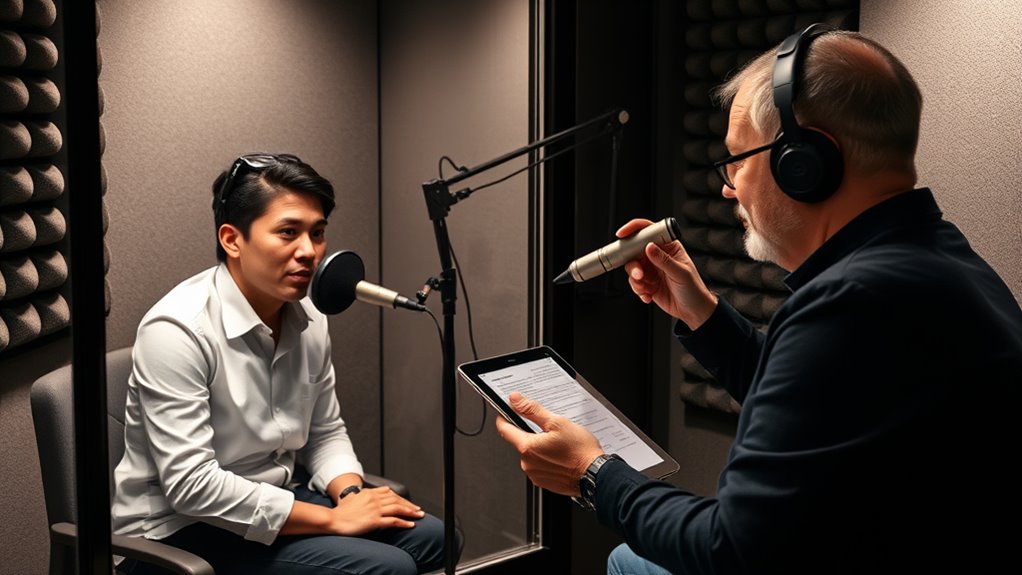

To work effectively with directors, listen carefully to their guidance and ask clarifying questions to make certain you understand their vision. Respect the studio environment, stay punctual, and take notes on feedback for future improvements. Communicate clearly, sharing ideas constructively and adjusting your approach as needed. Staying informed about industry trends helps you align your performance with project needs. Keep an open mind and foster a collaborative attitude—more tips await those ready to improve their partnerships.
Key Takeaways
- Act actively by listening carefully to director feedback and asking clarifying questions to ensure alignment.
- Respect studio etiquette and maintain professionalism to foster trust and smooth collaboration.
- Take detailed notes during sessions and confirm understanding of instructions for consistent delivery.
- Stay informed about industry trends to tailor performances that meet current market preferences.
- Be flexible and open-minded, offering suggestions constructively while respecting the director’s vision.
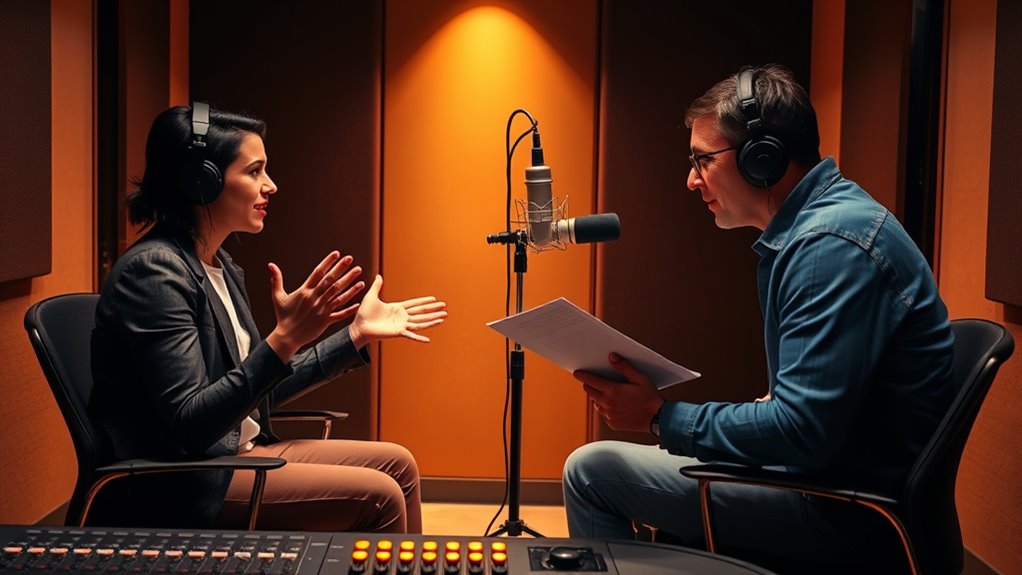
Collaboration is essential for voice talent to deliver the best results, but it can sometimes be challenging without clear communication and teamwork. When working with directors, your ability to interpret scripts accurately and adapt to their vision is key. Script interpretation requires you to understand not just the words but the tone, mood, and subtext behind the lines. A good director will provide guidance on how they want the script to come across, whether it’s playful, serious, or somewhere in between. Your job is to listen carefully, ask clarifying questions if needed, and bring your own skills to interpret the script in a way that aligns with the project’s goals. This process often involves multiple takes and adjustments, so staying receptive to feedback is crucial.
Studio etiquette plays a significant role in fostering effective collaboration. Respect the space, the engineer, and the director’s time. Be punctual, prepared, and mindful of the recording environment. Keep noise levels down, avoid unnecessary movements, and follow any guidelines the studio has in place. Respecting studio etiquette ensures a smooth session and demonstrates professionalism, which encourages directors to trust your judgment and creativity. Remember, your attitude impacts the overall atmosphere, and a positive, cooperative demeanor can lead to better results and ongoing opportunities.
Clear communication is vital during your session. When the director offers direction, take notes and confirm your understanding. If you’re unsure about a direction or a line’s delivery, don’t hesitate to ask for clarification. This minimizes the risk of misunderstandings and saves time during editing. Also, be proactive in discussing any technical issues or preferences, like microphone settings or vocal styles, to ensure your performance aligns with the director’s expectations. Sharing your ideas constructively can also add value; directors appreciate when talent shows initiative and a collaborative spirit. Additionally, being aware of market trends and insights can help you tailor your performances to current industry preferences, making your work more appealing to clients.
Balancing professionalism with creative flexibility is essential. Be adaptable and open-minded, especially when given specific instructions on how to approach your script interpretation. At the same time, don’t be afraid to suggest alternatives if you believe they might improve the final product. Remember, working with a director is a partnership—both of you aim for the best possible outcome. Respecting studio etiquette, actively listening, and maintaining open, honest communication are the cornerstones of a productive collaboration. When you do these things, you not only deliver great performances but also build lasting professional relationships that can lead to more rewarding projects in the future.
professional microphone for voice recording
As an affiliate, we earn on qualifying purchases.
As an affiliate, we earn on qualifying purchases.
Frequently Asked Questions
How Do I Handle Creative Differences With a Director?
When facing creative differences with a director, prioritize collaborative communication by actively listening and expressing your perspective clearly. Stay open-minded and seek common ground to resolve conflicts effectively. Remember, conflict resolution involves understanding their vision while confidently sharing your ideas. Stay professional, flexible, and focused on the project’s success. By fostering a collaborative environment, you can turn disagreements into productive discussions that enhance the final performance.
What’s the Best Way to Interpret Directorial Feedback?
You should listen carefully to the director’s feedback and ask clarifying questions to understand their vision. Focus on aligning your tone and emotional nuance with their guidance, rather than taking it personally. Experiment with different interpretations, then seek their input to refine your delivery. This active approach guarantees you interpret feedback effectively, resulting in performances that resonate with the director’s intent and enhance the overall project.
How Can I Build Rapport With New Directors Quickly?
Imagine you’re in your first session with a new director. To build rapport quickly, focus on trust building by being punctual, prepared, and professional. Use active listening to understand their vision and preferences, asking clarifying questions. Show genuine interest in their ideas, and adapt your approach to their feedback. This combination fosters trust and rapport, making collaboration smoother and more productive right from the start.
What Equipment Should I Use for Remote Directing Sessions?
For remote directing sessions, you should use a reliable home studio setup with high-quality microphone, audio interface, and headphones to guarantee excellent audio quality. A stable internet connection, webcam, and proper acoustic treatment help maintain clear communication. Invest in a good microphone and monitor your audio to avoid distractions. This setup ensures your director receives professional sound, making collaboration smooth and productive during remote sessions.
How Do I Stay Flexible During Last-Minute Script Changes?
Picture yourself flowing like a river, effortlessly adapting scripts as they shift course. When last-minute changes come, stay calm and focus on managing deadlines, adjusting your tone and pacing swiftly. Keep a flexible mindset, review key points quickly, and communicate openly with your director. Your ability to adapt seamlessly ensures you stay on track, maintaining quality and professionalism even when the script evolves unexpectedly.
soundproof studio booth for voiceover
As an affiliate, we earn on qualifying purchases.
As an affiliate, we earn on qualifying purchases.
Conclusion
When you embrace collaboration with directors, you create more than just a great performance—you build connections that can unexpectedly lead to new opportunities. Sometimes, a simple conversation or shared idea sparks a breakthrough you never saw coming. Trust in the process, stay open, and watch how these moments of coincidence can transform your career. Remember, the best collaborations often happen when you least expect them—so keep your heart and ears open.
voice acting headphones with noise cancellation
As an affiliate, we earn on qualifying purchases.
As an affiliate, we earn on qualifying purchases.
As an affiliate, we earn on qualifying purchases.