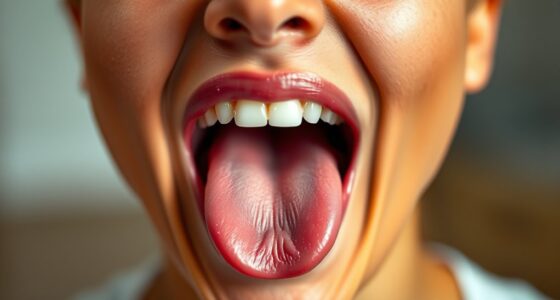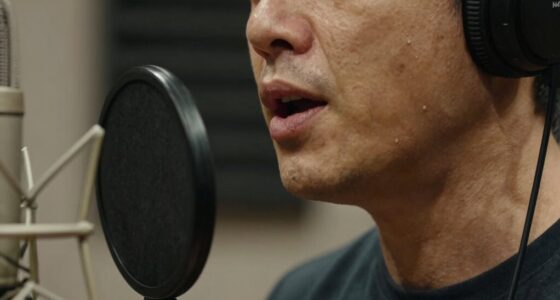

Expressive non-verbal sounds like grunts, laughs, and gasps are powerful ways to convey emotion and connect with others. These sounds often reveal feelings more honestly than words, signaling agreement, surprise, frustration, or joy. They help you set the tone and build rapport in social interactions. By paying attention to these cues, you can respond more empathetically. If you keep exploring, you’ll discover how mastering these sounds can deepen your understanding and communication skills even further.

Get everyday helpers delivered free — and shop member deals
- Fast, free delivery on millions of items
- Access to Prime Big Deal Days deals on October 6–7
- Prime Video, Amazon Music and more included
Key Takeaways
- Non-verbal sounds like grunts, laughs, and gasps convey strong emotions and social signals beyond words.
- These sounds help set the tone of interactions, indicating feelings such as surprise, joy, or frustration.
- Recognizing expressive sounds enhances understanding of others’ emotional states and improves empathetic responses.
- Such sounds often reveal genuine feelings, bypassing social filters and fostering authentic connections.
- Mastery of expressive non-verbal sounds enriches communication, making interactions more dynamic and meaningful.

Non-verbal sounds often convey more emotion and meaning than words can express, making them powerful tools for communication. When you grunt, laugh, or gasp, you’re sending subtle yet impactful emotional cues that others can interpret instantly. These sounds act as social signaling, helping you connect without uttering a single word. They reveal your feelings—whether surprise, joy, frustration, or discomfort—and influence how others perceive and respond to you. Recognizing these cues can deepen your understanding of social interactions and improve your communication skills.
Think about a hearty laugh that bursts out during a shared joke. That sound isn’t just a sign of amusement; it signals to others that you’re engaged, happy, and comfortable. Your laughter invites closeness, encourages reciprocal reactions, and helps build rapport. Conversely, a sigh or a gasp might indicate frustration or shock, silently warning those around you of your emotional state. These sounds serve as immediate social signals, giving others a window into what you’re experiencing without needing words. They also help set the tone of an encounter—whether lighthearted, tense, or serious—guiding the flow of interaction.
Your non-verbal sounds can also carry emotional cues that influence group dynamics. A quick grunt during a conversation might show agreement or understanding, subtly acknowledging someone’s point. A loud gasp can punctuate a moment of surprise or disbelief, heightening the emotional atmosphere. When you understand how these sounds function as social signaling, you become more attuned to the unspoken messages in your environment. This awareness allows you to respond more empathetically and appropriately, strengthening your personal and professional relationships.
In many situations, these sounds are more authentic than words. They often bypass social filters, revealing your true feelings more directly. For example, a quick gasp of astonishment can convey genuine amazement better than a forced compliment. Similarly, a spontaneous laugh can express sincere amusement or relief. By paying attention to these emotional cues, you can better interpret others’ feelings and intentions, fostering clearer, more meaningful connections.
Ultimately, mastering the use of expressive non-verbal sounds enhances your ability to communicate dynamically. They serve as essential tools for social signaling, helping others understand your emotional cues instantly. By consciously using or recognizing these sounds, you create richer, more nuanced exchanges. Whether you’re sharing joy, expressing discomfort, or reacting to a surprising moment, your non-verbal sounds add depth and authenticity to your interactions, making your communication more genuine and effective.
As an affiliate, we earn on qualifying purchases.
Frequently Asked Questions
How Do Cultural Differences Influence Non-Verbal Sound Interpretation?
You should be aware that cultural norms heavily influence how non-verbal sounds are interpreted. For example, a laugh might be seen as friendliness in one culture but disrespectful in another. Misunderstanding these cues can lead to cross-cultural misunderstandings. To avoid this, observe local behaviors and ask questions when unsure. Recognizing these differences helps you communicate more effectively and avoid unintended offense.
Can Non-Verbal Sounds Convey Complex Emotions Effectively?
You can definitely convey complex emotions through non-verbal sounds by using tone modulation and emotional resonance. When your sounds vary in pitch, volume, or rhythm, they communicate feelings like surprise, frustration, or joy more vividly. These sounds tap into subconscious cues, making your emotional message clearer and more impactful. So, with intentional modulation, you can express nuanced emotions effectively, even without words, creating stronger connections and understanding.
Are There Neurological Factors Affecting Non-Verbal Sound Production?
Think of your brain as a conductor orchestrating sound production, much like Beethoven guiding an orchestra. Neurological pathways directly influence how you produce non-verbal sounds, affecting clarity, intensity, and emotional expression. If these pathways are disrupted—due to injury or neurological conditions—your ability to generate genuine sounds like laughs or gasps can diminish. Understanding these factors helps explain why some people communicate more effectively through sounds than others.
How Do Infants Develop the Ability to Produce Expressive Sounds?
You notice that infants develop the ability to produce expressive sounds through early vocalizations called infant vocalizations. As they reach developmental milestones, they start experimenting with sounds like grunts, laughs, and gasps. These milestones typically occur within the first year, helping infants communicate emotions and needs. Your role involves supporting their vocal exploration, which strengthens their expressive abilities and lays the foundation for later speech development.
What Role Do Non-Verbal Sounds Play in Human Evolution?
Imagine a world where a simple gasp or laugh sparks connection, shaping human history. Non-verbal sounds like grunts and gasps serve as primal gesture symbolism, laying the groundwork for complex language. They played a crucial role in evolutionary communication, helping our ancestors convey emotions, intentions, and social bonds. These sounds, etched into our biology, bridge the gap between instinct and speech, fueling our social evolution over millennia.
emotional expression training kit
As an affiliate, we earn on qualifying purchases.
As an affiliate, we earn on qualifying purchases.
Conclusion
As you journey through the world of expressive non-verbal sounds, you realize they’re like a secret language dancing just beneath the surface of words. Grunts, laughs, and gasps paint vivid pictures of emotion, turning moments into symphonies of unspoken stories. Next time you hear one, remember it’s a hidden melody waiting to be discovered, a spark that ignites connection without a single word. Embrace these sounds—they’re the heartbeat of human expression, silent yet profoundly loud.
As an affiliate, we earn on qualifying purchases.
voice modulation and expression guide
As an affiliate, we earn on qualifying purchases.
As an affiliate, we earn on qualifying purchases.
Fall Picks
fall essentials
As an affiliate, we earn on qualifying purchases.