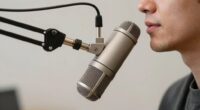
In a small booth, acoustic panels and bass traps serve different but complementary roles. Acoustic panels absorb mid to high frequencies, reducing echoes and improving clarity. Bass traps target low-frequency issues, preventing muddiness and boominess. Using both guarantees a balanced sound, controlling reflections at all levels. Proper placement is key for maximum effect. If you want to optimize your space and achieve professional sound, understanding how each works can make a big difference—there’s more to discover.
Key Takeaways
- Acoustic panels target mid to high frequencies, improving clarity; bass traps focus on low-frequency control to prevent muddiness.
- In small booths, prioritize bass traps in corners to manage low-end buildup, while acoustic panels can be placed on walls for high-frequency absorption.
- Combining both ensures balanced sound, reducing echoes and low-frequency rumble for a clearer, professional audio environment.
- Bass traps are thicker and denser, suited for corners; acoustic panels are thinner and ideal for wall placement.
- Effective treatment in small booths involves strategic placement of both to optimize sound quality and reduce fatigue.
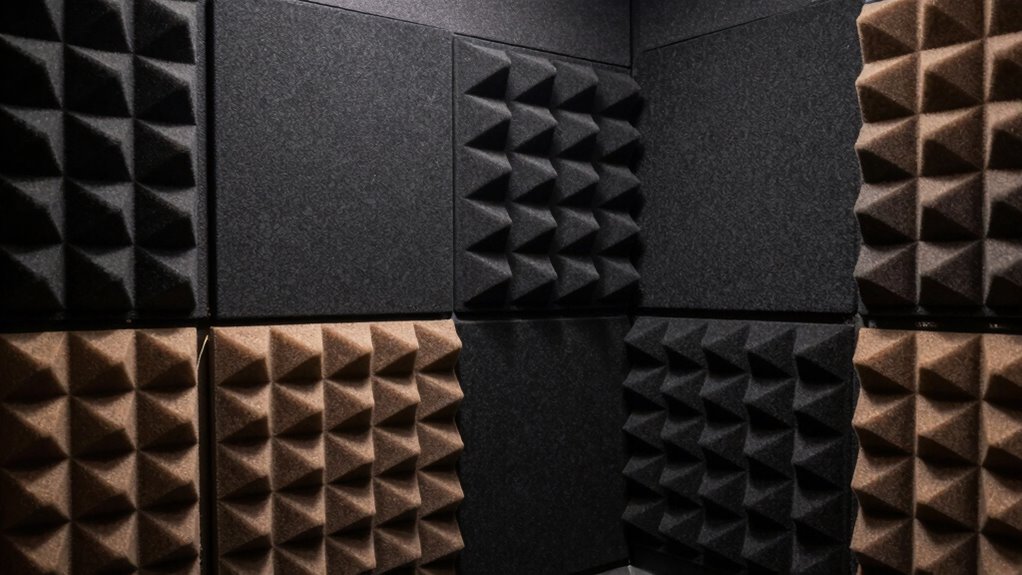
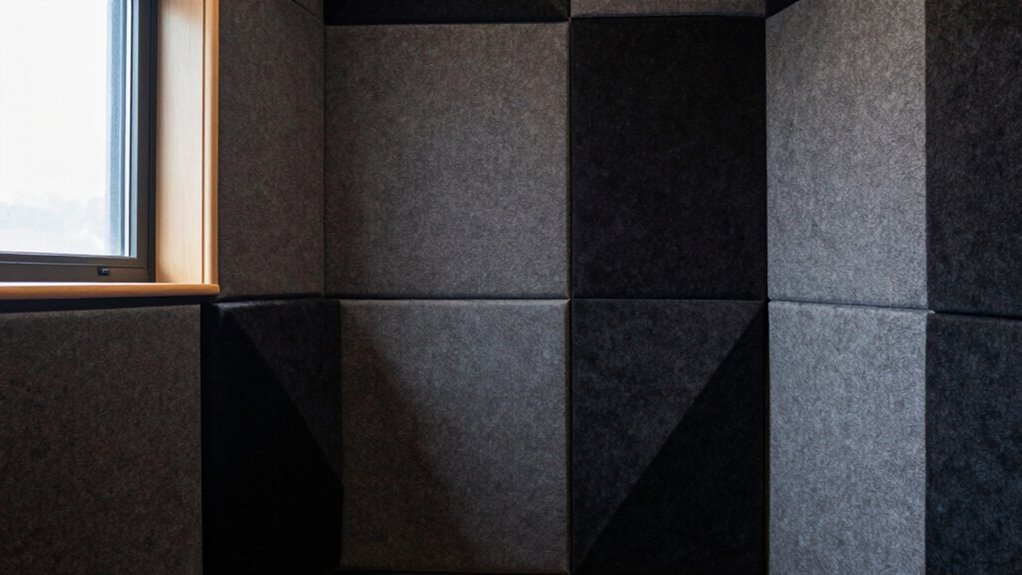
When it comes to optimizing your room’s sound quality, understanding the difference between acoustic panels and bass traps is essential. In a small booth, every detail counts, and both tools play crucial roles in shaping your room’s acoustics. Acoustic panels are primarily designed to handle sound absorption, which means they help reduce echoes and control mid to high-frequency reflections. They are usually made of dense foam or fabric-covered materials that absorb sound waves bouncing around your space. By installing these panels strategically, you can prevent sound from bouncing off walls excessively, creating a clearer and more accurate listening environment. This directly improves room acoustics by minimizing unwanted reverberations and making your space feel more controlled.
Acoustic panels reduce echoes and high-frequency reflections for a clearer, more controlled sound environment.
Bass traps, on the other hand, target low-frequency issues that acoustic panels often can’t handle effectively. Low frequencies tend to build up in small spaces, causing muddiness or boomy sounds that obscure details. Bass traps are thicker and denser, designed to absorb these problematic low-end sounds before they reflect and accumulate. They are usually placed in corners or areas where low-frequency energy tends to concentrate. When you incorporate bass traps into your booth, you’ll notice a significant reduction in bass muddiness, resulting in a more balanced sound profile. This adjustment is critical for achieving professional-quality recordings or mixes, especially in confined spaces where low-end problems are more pronounced.
In terms of room acoustics, both acoustic panels and bass traps complement each other. While panels improve the clarity of higher frequencies, traps ensure that low frequencies don’t dominate or muddy your sound. Together, they create a more harmonious environment, allowing you to hear your music or recordings as intended. If you’re working in a small booth, it’s essential to understand that no single solution will fix all acoustic issues. Instead, a hybrid approach—using acoustic panels for sound absorption and bass traps for controlling low-end buildup—will give you the best results. This balanced treatment can make your small space feel larger acoustically, reduce listening fatigue, and give you greater confidence in your mixing or recording process.
Ultimately, knowing when and where to place these acoustic treatments will dramatically improve your room’s acoustics. By addressing both sound absorption and low-frequency management, you’ll create a more accurate, professional sound environment that elevates your work and enjoyment. Additionally, understanding sound reflection principles can help optimize your setup further.
acoustic panels for small recording booth
As an affiliate, we earn on qualifying purchases.
As an affiliate, we earn on qualifying purchases.
Frequently Asked Questions
How Do I Choose Between Acoustic Panels and Bass Traps?
You should choose based on your room’s needs and style preferences. Acoustic panels are great for general sound absorption and come in various aesthetic options, allowing you to match your decor. Bass traps specifically target low-frequency issues and are more durable for long-term use. Consider your material durability needs and aesthetic options to decide whether acoustic panels or bass traps will best optimize your small booth’s sound quality.
Can I Use Both Acoustic Panels and Bass Traps Together?
Yes, you can definitely use both acoustic panels and bass traps together. In fact, combining them enhances your soundproofing materials, improving overall acoustic treatment. Did you know that a mix of decorative wall coverings and specialized soundproofing materials can reduce echo by up to 60%? Using both guarantees you target different frequencies effectively, creating a balanced environment. Layering these elements optimizes sound absorption, making your small booth sound professional and acoustically perfect.
What Is the Cost Difference Between Acoustic Panels and Bass Traps?
The cost comparison shows that acoustic panels generally cost less than bass traps, making them a more budget-friendly option for small booths. Price differences can range from $20 to $100 per panel, depending on size and quality, while bass traps tend to be pricier due to their specialized design, often costing $50 to $200 each. You’ll find that acoustic panels are more affordable for broad coverage, but bass traps are essential for controlling low frequencies.
How Do I Install Acoustic Panels and Bass Traps Properly?
Installing acoustic panels and bass traps correctly is essential to transforming your room into a sound sanctuary. Measure your room dimensions carefully, ensuring panels are placed at reflection points and bass traps in corners. Use durable mounting materials suited for the panel’s weight and material. Secure each piece firmly, avoiding gaps, to maximize sound absorption. Proper installation makes the difference between a good space and a room that sings like a superstar.
Are There Specific Brands Recommended for Small Booths?
For small booths, you should consider brand recommendations like Auralex, Primacoustic, and ATS Acoustics, known for their quality and effective sound treatment products. When comparing products, look for features like ease of installation, material quality, and price. Auralex’s Studiofoam panels are popular, while Primacoustic offers versatile bass traps. Check reviews and specifications to verify they fit your space and budget for peak acoustic performance.
As an affiliate, we earn on qualifying purchases.
Conclusion
In the end, choosing between acoustic panels and bass traps depends on what you need to tame in your small booth. Think of it as fixing a leaky faucet—you don’t need a sledgehammer when a wrench does the trick. Use panels to handle mid and high frequencies, and bass traps for those deep, boomy lows. By combining both, you’ll create a space where sound flows smoothly, making it a win-win for your recordings or mixes.
soundproofing acoustic treatment panels
As an affiliate, we earn on qualifying purchases.
As an affiliate, we earn on qualifying purchases.
As an affiliate, we earn on qualifying purchases.