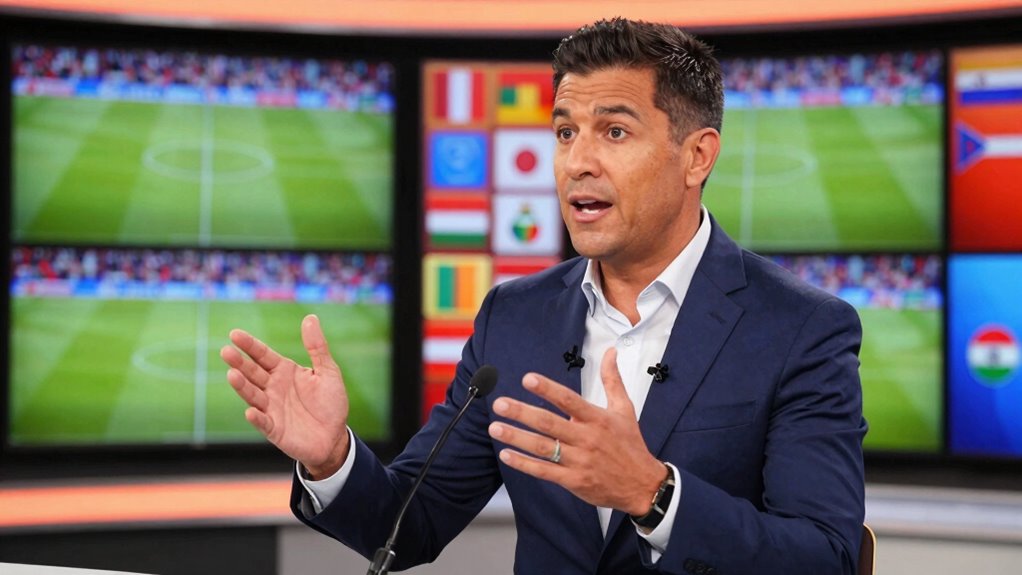

To localize sports commentary for international fans, broadcasters adapt language, humor, and cultural references to connect with diverse audiences. They work with local commentators who understand regional preferences and tone—whether formal or lively—and tailor the pace accordingly. Technology like real-time translation also helps deliver commentary quickly and accurately. When done well, it creates a shared experience that unites fans worldwide. Keep exploring to discover more about how these strategies bring the game closer to every fan.
Key Takeaways
- Commentary is culturally adapted by incorporating local humor, references, and idioms to resonate with international audiences.
- Local commentators or voice-over artists tailor tone, style, and pacing to match cultural preferences and expectations.
- Real-time translation tools and voice-over technology enable quick, accurate localization during live broadcasts.
- Commentary style is adjusted to balance excitement with cultural sensitivities, ensuring respectful engagement.
- Effective localization transforms global events into shared experiences, fostering connection and excitement across diverse fanbases.
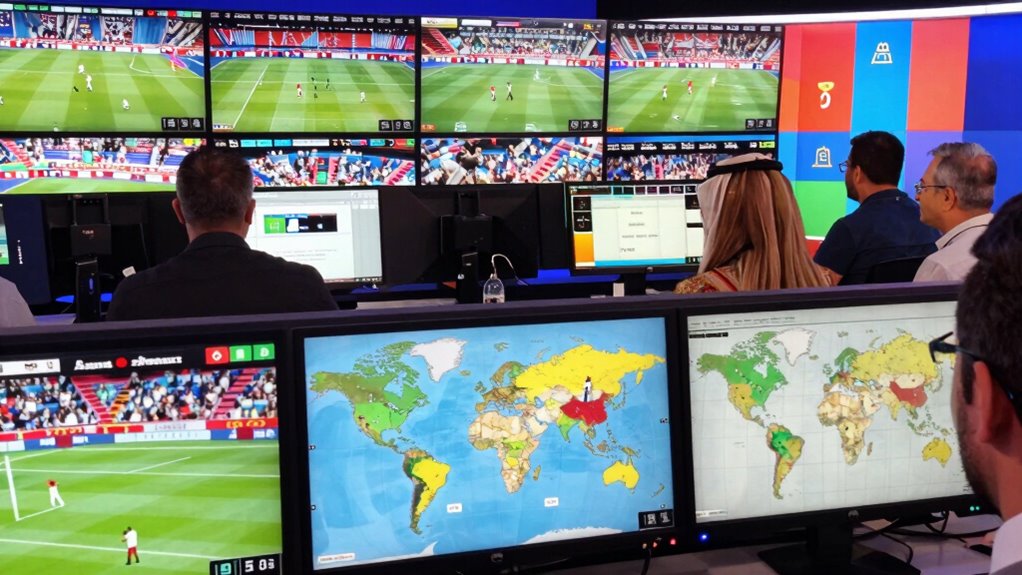
Have you ever wondered how sports commentary manages to resonate with diverse audiences around the world? It’s a fascinating process rooted in the art of localization, where broadcasters and commentators adapt their words and style to connect with fans from different cultures. This isn’t just about translating words; it’s about cultural adaptation—understanding what matters most to each audience and how they perceive sports. When commentary is tailored for international viewers, it considers local customs, humor, and references, making the experience more relatable. For instance, a commentator might incorporate local idioms or cultural references to create a sense of familiarity.
Language nuances play an essential role in this adaptation. Every language has its unique expressions, idioms, and tonal qualities, so direct translations often fall flat or lose meaning. Skilled translators and commentators work diligently to capture the essence of the original commentary while making it accessible in the target language. They pay close attention to subtle language nuances—such as tone, humor, and emotional emphasis—that help evoke the same excitement and engagement as the original. This guarantees that international fans feel connected, as if they’re sitting in the stadium or watching with friends who share their language and cultural background.
The process of localization also involves choosing the right voice and style for each audience. Some cultures prefer a more formal commentary, while others enjoy a lively, energetic tone. Broadcasters often work with local commentators who understand these preferences deeply, which helps in creating content that feels authentic and engaging. It’s about striking a balance—preserving the excitement of the sport while respecting the cultural context. This might also mean adjusting the pace of commentary or adding culturally relevant anecdotes that resonate with local fans.
Moreover, technology plays a fundamental role in making this possible. Real-time translation and voice-over tools enable broadcasters to deliver localized commentary quickly and efficiently. These tools help bridge language gaps and bring the game to life for international audiences without losing its core excitement. Additionally, understanding content localization strategies ensures that the message remains impactful across different cultural landscapes. Ultimately, successful localization of sports commentary hinges on a deep understanding of both language nuances and cultural adaptation. When done well, it transforms a global sporting event into a shared experience, uniting fans across borders and languages in their love for the game.
real-time sports translation device
As an affiliate, we earn on qualifying purchases.
As an affiliate, we earn on qualifying purchases.
Frequently Asked Questions
How Do Commentators Adapt Humor for Different Cultures?
You adapt humor for different cultures by understanding cultural humor and language nuances. You tailor jokes to align with local customs, avoiding humor that might be offensive or misunderstood. You also consider regional expressions and slang, making commentary more relatable. By researching cultural sensitivities and observing local humor styles, you connect better with international fans, ensuring your humor resonates without crossing boundaries. This approach makes the game more engaging worldwide.
What Challenges Arise in Translating Sports Idioms?
Translating sports idioms presents challenges due to cultural nuances and linguistic barriers. You might find that an idiom’s literal translation doesn’t carry the same meaning or emotional impact across cultures. To overcome this, you adapt idioms to resonate locally, sometimes replacing them with equivalent expressions. This guarantees the commentary remains engaging and understandable for international fans, though it requires deep cultural knowledge and creative language skills to preserve the original sentiment.
How Is Slang Localized for International Audiences?
You know what they say, “When in Rome, do as the Romans do.” When localizing slang for international audiences, you adapt cultural references and consider language nuances to make commentary relatable. Translators replace or modify slang expressions, ensuring they resonate locally without losing the original energy. This process helps fans connect, making the game feel close to home, regardless of where they’re tuning in from.
Do Commentators Change Their Tone for Diverse Viewers?
Yes, commentators often change their tone for diverse viewers to boost audience engagement and show cultural sensitivity. They adapt their language, humor, and expressions to resonate with different cultural backgrounds, making the game more relatable. This approach helps viewers feel included and appreciated, fostering a stronger connection to the broadcast. By tailoring their tone, commentators guarantee that international fans stay engaged and enjoy the sport without feeling disconnected.
How Is Regional Sports History Incorporated Into Commentary?
You hear regional sports history in commentary through stories about local legends and regional narratives that resonate with fans. Commentators incorporate these elements by highlighting historic moments, rivalries, or notable players from the area. This approach makes the game more engaging for local viewers, connecting current play to the rich traditions and memorable figures that define the community’s sports culture. It’s a way of celebrating regional pride during live broadcasts.
sports commentary localization software
As an affiliate, we earn on qualifying purchases.
As an affiliate, we earn on qualifying purchases.
Conclusion
So, next time you tune into an international game, think about how your favorite commentators adapt their words, tone, and references to make you feel like you’re right there. They bridge language gaps and cultural differences, turning a global event into a localized experience. Isn’t it amazing how a little change in language can bring fans closer together? Ultimately, localization guarantees you don’t just watch the game—you feel like part of it, no matter where you’re from.
multilingual voice-over tools for sports
As an affiliate, we earn on qualifying purchases.
As an affiliate, we earn on qualifying purchases.
As an affiliate, we earn on qualifying purchases.