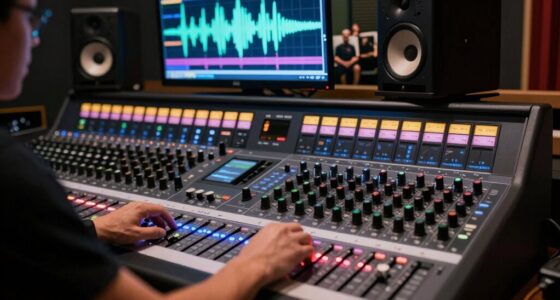
Lip-sync dubbing involves replacing original voices with actors who match the characters’ lip movements, creating a seamless, authentic experience. In contrast, un-style voice-over overlays narration or commentary without matching on-screen lip movements, allowing for quicker and more flexible production. While lip-sync helps maintain character integrity and emotional connection, voice-over offers clearer narration and context. To discover more about how these methods influence audience engagement and storytelling, keep exploring the differences.
Key Takeaways
- Lip-sync dubbing involves replacing original voices with actors whose speech matches on-screen lip movements precisely.
- UN-style voice-over overlays narration without matching lip movements, maintaining original audio and character voices.
- Lip-sync requires high technical skill and resources for seamless synchronization, while voice-over is quicker and more flexible.
- Lip-sync enhances character authenticity and emotional connection, unlike voice-over, which may overshadow original voices.
- The choice depends on storytelling priorities: immersion and character realism versus clarity and accessibility.
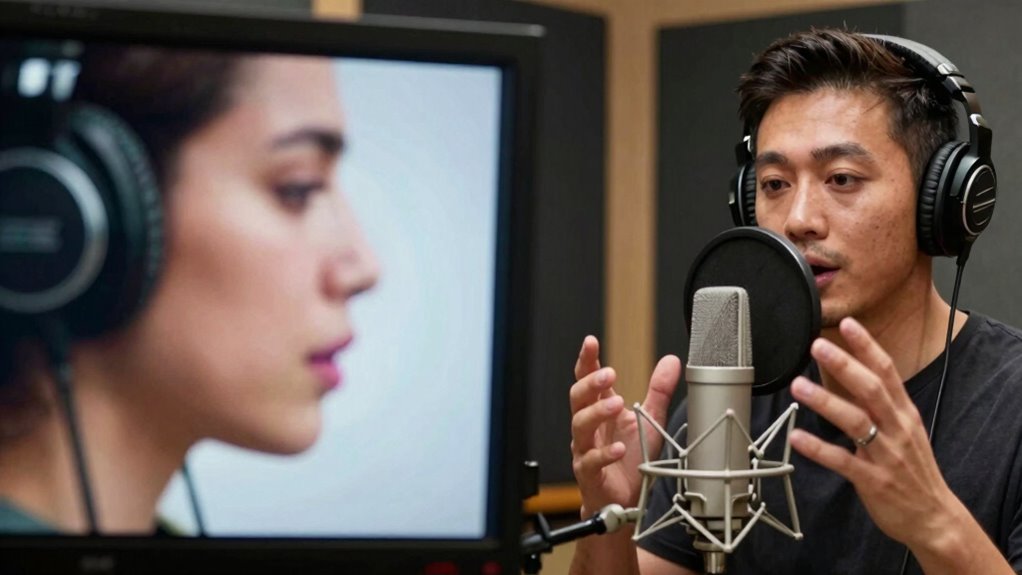
When it comes to adapting media for different audiences, choosing between lip-sync dubbing and voice-over can profoundly impact how viewers experience the content. Both methods aim to make foreign or localized media more accessible, but they do so in very different ways—affecting character alignment and audience engagement in unique ways. Lip-sync dubbing involves replacing the original voices with actors who match the on-screen lip movements as closely as possible. This technique strives for seamless integration, making it easier for viewers to believe in the characters’ authenticity. When done well, lip-sync maintains character consistency, helping audiences connect emotionally with the story because the actors’ voices feel like a natural extension of the characters’ personalities. However, if the lip-sync isn’t precise, it can create a disconnect, pulling viewers out of the experience and weakening overall engagement. Achieving high-quality lip-sync dubbing requires skilled voice actors and precise synchronization techniques, often making it a more resource-intensive process.
On the other hand, voice-over works by overlaying a narrator’s or voice actor’s narration over the original audio. This approach doesn’t require matching lip movements, so it’s often quicker and more flexible, especially for documentaries, interviews, or content where visual synchronization isn’t as critical. Voice-over can enhance audience engagement by providing context, background information, or emotional commentary that guides viewers through the story. Yet, it can sometimes create a barrier to character alignment because the original voices remain audible, and the added narration may overshadow or conflict with on-screen dialogue. This can diminish the sense of immersion, especially if the voice-over isn’t well-matched in tone or style. Additionally, choosing the appropriate content format is crucial because it influences how well the audience perceives the target message and maintains engagement. The choice of technology used in voice-over production can also significantly affect the clarity and emotional impact of the narration.
Your choice between lip-sync dubbing and voice-over hinges on what you prioritize for your audience. If you want viewers to feel like they’re truly inside the story, with characters that seem real and consistent, lip-sync dubbing is generally the better option—assuming you can secure talented voice actors who match the original performances. Conversely, if your goal is to provide clarity, context, or commentary that enhances understanding without demanding perfect lip synchronization, voice-over might serve you better. Both methods influence character alignment and audience engagement differently, and understanding these nuances helps you select the right approach for your media. Ultimately, the goal is to maintain the integrity of the story while making it accessible and engaging for your specific audience.
As an affiliate, we earn on qualifying purchases.
Frequently Asked Questions
How Do Cultural Differences Affect Lip-Sync Dubbing Choices?
Cultural differences greatly influence lip-sync dubbing choices, as creators aim for cultural adaptation and authenticity. You need to take into account language nuances, including idioms, humor, and speech patterns, to ensure the dialogue resonates locally. When adapting content, you’ll adjust lip movements and timing to match cultural expectations, making the audience feel connected. This careful attention helps maintain the original’s intent while respecting cultural sensitivities, creating a seamless viewing experience.
What Equipment Is Essential for Professional Voice-Over Recording?
To record professional voice-overs, you need good studio acoustics that minimize echo and background noise, creating a clear sound environment. Invest in a quality microphone, like a condenser or dynamic mic, to capture your voice accurately. Proper studio acoustics and the right microphone types are essential for producing high-quality recordings, ensuring your voice sounds professional and crisp. Good equipment makes all the difference in achieving polished voice-over results.
How Do Actors Prepare Differently for Lip-Sync Dubbing Versus Voice-Over?
You prepare for lip-sync dubbing by focusing intensely on lip synchronization and vocal matching, making every word perfectly align with the on-screen actor’s mouth. You study the original performance, practicing precise timing and matching emotions. In contrast, for voice-over, you emphasize clarity, tone, and storytelling, without worrying about matching lip movements. Your goal is to bring life to the narration, regardless of matching the visual’s exact mouth movements.
Which Industries Predominantly Use Each Technique?
You’ll find lip-sync dubbing mainly in the film and television industry, especially for language localization, to match actors’ lip movements and enhance audience engagement. Conversely, UN-style voice overs are common in documentaries, commercials, and corporate videos, where clarity and message are key. Each technique caters to different industry needs, ensuring the content resonates locally or globally while maintaining viewer connection.
How Does Budget Impact the Selection of Dubbing Versus Voice-Over?
Your budget constraints greatly influence whether you choose dubbing or voice-over. Dubbing, especially lip-sync, tends to be more expensive due to higher production costs, including detailed synchronization and actor fees. Voice-over is usually more budget-friendly because it requires less time, fewer resources, and simpler editing. If you’re working with a tight budget, opting for voice-over can save money while still delivering a clear, engaging message.
As an affiliate, we earn on qualifying purchases.
Conclusion
Understanding the difference between lip-sync dubbing and voice-over helps you appreciate the craft behind your favorite films and shows. Lip-sync dubbing matches voices perfectly to the actors’ lip movements, creating a seamless experience. Conversely, voice-over adds depth and context without syncing directly to the on-screen action. Knowing these techniques is like having a key to the magic behind the scenes—once you see how they work, you’ll never look at your screens the same way again.
professional voice acting studio equipment
As an affiliate, we earn on qualifying purchases.
As an affiliate, we earn on qualifying purchases.
audio synchronization tools for dubbing
As an affiliate, we earn on qualifying purchases.
As an affiliate, we earn on qualifying purchases.