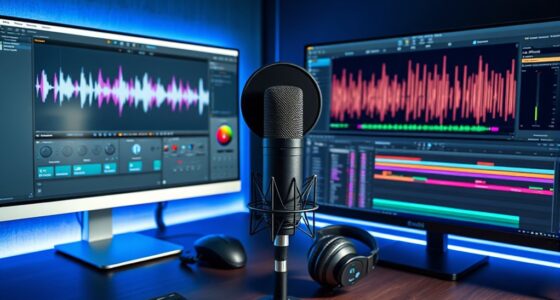
Building a window plug is definitely worth it for voice work because it helps reduce unwanted noise and echoes, making your recordings clearer and more professional. It’s an affordable way to improve room acoustics without expensive treatments. By blocking reflections and noise intrusion, you’ll notice better sound quality and easier mic placement. If you keep exploring, you’ll discover simple tips to maximize your setup and truly enhance your voice recordings.
Key Takeaways
- A window plug reduces reflections and noise, improving overall voice clarity during recordings.
- Building a window plug is cost-effective and quick, offering noticeable acoustic improvements.
- It enhances microphone performance by minimizing echo and background interference.
- A well-fitting plug creates a more controlled environment, especially in rooms with problematic windows.
- Overall, it’s a valuable investment for achieving professional-quality voice recordings.
Have you ever wondered if building a window plug is a worthwhile investment for your voice work? If you’re serious about capturing high-quality recordings, understanding how room acoustics and microphone placement influence your sound is vital. Windows often let in unwanted noise and cause sound reflections that can muddy your recordings, making a window plug a tempting solution. But before jumping into construction, it’s worth considering whether the benefits outweigh the effort.
Room acoustics play a significant role in your recording quality. Windows tend to reflect sound waves, creating echoes and reverb that can distort your voice. These reflections interfere with your microphone’s ability to pick up a clean, direct sound. By blocking or reducing these reflections with a window plug, you create a more controlled acoustic environment. This isn’t just about noise isolation; it’s about shaping the soundscape so your voice comes through more clearly and naturally. Improving your room acoustics through a window plug can make your recordings sound more professional without needing expensive studio treatments. Additionally, using appropriate ventilation solutions can help maintain indoor air quality while minimizing sound intrusion. Proper ventilation is especially important if you plan to record for extended periods, ensuring comfort without sacrificing sound quality.
Blocking window reflections enhances recording clarity and creates a more professional, natural sound environment.
Microphone placement is another key factor in achieving ideal recordings. When you position your microphone too close to reflective surfaces like windows, you risk capturing unwanted reflections that blend with your voice. With a window plug in place, you can place your microphone more freely, closer to your mouth without worrying about those reflections. This allows you to capture a more direct and intimate sound, which is especially important for voice work. A well-placed microphone combined with a window plug creates a synergy that enhances your vocal clarity and reduces post-processing time.
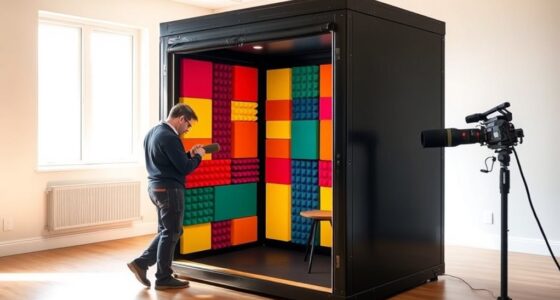
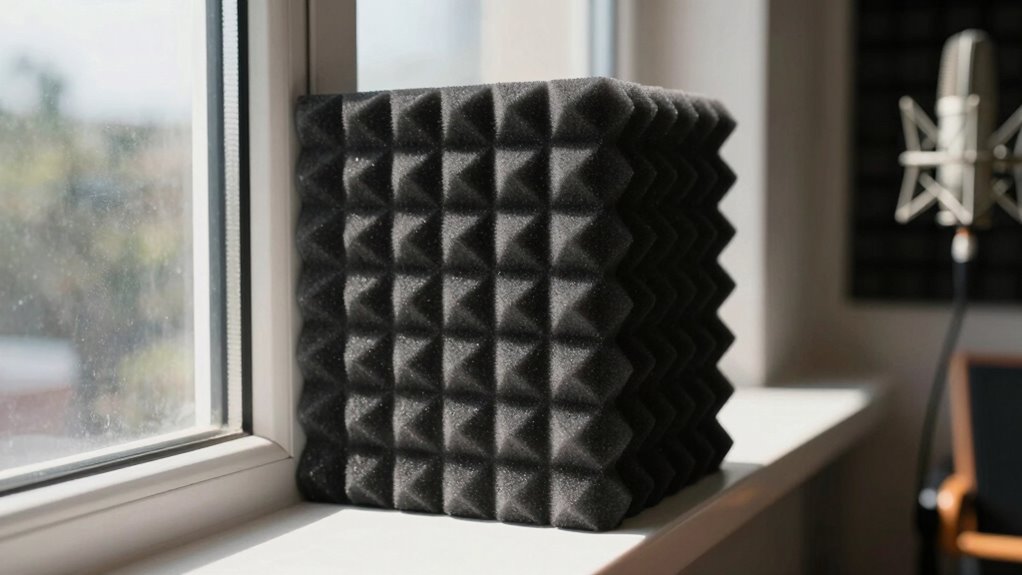
Building a window plug is generally affordable and straightforward. You can use materials like foam, acoustic panels, or even DIY solutions like thick fabric stretched over a frame. The key is to ensure the plug fits snugly and doesn’t introduce new sound issues. Once installed, you’ll notice a difference in the quality of your recordings—less background noise, fewer echoes, and a more focused vocal sound. The investment in a window plug can pay off quickly in improved audio fidelity and less time editing after recording. Plus, customizing your setup with soundproofing techniques can further optimize your recording space for professional results.
Ultimately, whether a window plug is worth building depends on your specific recording environment and goals. If you find that window noise or reflections are consistently causing issues, making a simple, effective plug can be a game-changer. It helps enhance your room acoustics and microphone placement, leading to clearer, more professional-sounding voice recordings. For many voice artists, it’s a small step with a big impact.
soundproof window plug for voice recording
As an affiliate, we earn on qualifying purchases.
As an affiliate, we earn on qualifying purchases.
Frequently Asked Questions
How Much Does Building a Window Plug Typically Cost?
Building a window plug typically costs between $50 and $150, depending on materials and size. Using soundproofing techniques like acoustic foam, mass-loaded vinyl, or weatherstripping can reduce costs while improving effectiveness. Consider your budget carefully; DIY solutions are usually more affordable, but professional-grade materials offer better soundproofing. Weigh your needs against your budget considerations to decide if building a window plug is a worthwhile investment for your voice work.
Can Window Plugs Improve Voice Recording Quality Significantly?
Yes, window plugs can markedly improve voice recording quality by reducing outside noise. They act as effective soundproofing techniques, blocking unwanted sound leaks through windows. When combined with additional acoustic treatments, such as foam panels or bass traps, you create a controlled environment that minimizes echo and background noise. This leads to clearer, professional-sounding recordings, especially if your space faces noisy streets or busy areas.
What Materials Are Best for Constructing a Window Plug?
Research shows that proper soundproofing can reduce noise transfer by up to 90%. For building a window plug, you should use dense, soundproofing materials like mass-loaded vinyl or acoustic foam. Combining these with acoustic treatment techniques guarantees better sound isolation. A solid core material, such as MDF or plywood, also helps block sound transmission. These choices make your window plug effective at enhancing voice recording quality.
How Easy Is It to Install a Window Plug Myself?
Installing a window plug yourself is fairly straightforward if you follow DIY techniques properly. You’ll measure carefully, cut the materials accurately, and seal all edges for effective soundproofing. Don’t buy into soundproofing myths that it’s complicated; many find it manageable with basic tools. With patience, you can successfully build and install a window plug, saving money and improving sound isolation for voice work.
Are There Alternative Solutions to Window Plugs for Soundproofing?
Yes, there are alternatives to window plugs for soundproofing. You can enhance noise insulation and air sealing by applying acoustic window treatments like soundproof curtains or installing acrylic panels. These options are easier to install and remove, offering flexibility. Using weatherstripping around the window frame also improves air sealing, reducing sound leakage. These methods effectively block noise without the need for a full window plug, making them practical solutions for voice work.
acoustic foam panels for home studio
As an affiliate, we earn on qualifying purchases.
As an affiliate, we earn on qualifying purchases.
Conclusion
Building a window plug can be a game-changer for your voice work, especially if you’re battling outside noise. Imagine recording in a busy neighborhood, but with a custom plug, your voice sounds crisp and clear—like a professional studio. Take Sarah, a podcaster who built her own plug, and now her episodes sound pristine, even during rush hour. If noise is your enemy, investing in a window plug might just be the upgrade you need to elevate your recordings.
As an affiliate, we earn on qualifying purchases.
As an affiliate, we earn on qualifying purchases.