
For spoken word workflows, the best voice processor offers real-time noise suppression to keep your recordings clear and natural. Look for intuitive controls that let you make instant adjustments, reducing editing time later. Seamless hardware compatibility and multiple input/output options guarantee smooth integration with your setup. Features like visual feedback and presets help you quickly fine-tune your sound. Keep going to discover how these tools can boost your audio quality and efficiency even more.
Key Takeaways
- Advanced noise suppression ensures clear, natural voice quality in various environments.
- Real-time editing capabilities enable immediate adjustments and error correction during recording.
- User-friendly interface and customizable presets streamline workflow and reduce setup time.
- Connectivity options support diverse hardware for seamless integration into existing setups.
- Workflow efficiency features like instant feedback and reduced post-production save time and effort.
In spoken word workflows, having a voice processor equipped with the right features can considerably enhance your productivity and output quality. One of the most pivotal features you should look for is noise suppression. When you’re recording or editing speech, background noise can be a major distraction and can diminish the clarity of your audio. A voice processor with advanced noise suppression capabilities filters out ambient sounds, guaranteeing your voice remains crisp and clear. This feature is especially valuable if you’re working in less-than-ideal environments or on the go. It simplifies the editing process because you spend less time cleaning up recordings, allowing you to focus on content creation rather than post-production fixes. Additionally, audio quality is influenced by the processor’s ability to maintain natural sound while reducing noise, ensuring your recordings sound professional. Incorporating signal processing techniques can further optimize your audio for clarity and fidelity. Advanced noise reduction algorithms play a crucial role in preserving the warmth and nuance of your voice while eliminating unwanted sounds.
Advanced noise suppression keeps your voice clear and focused, reducing editing time and improving overall audio quality.
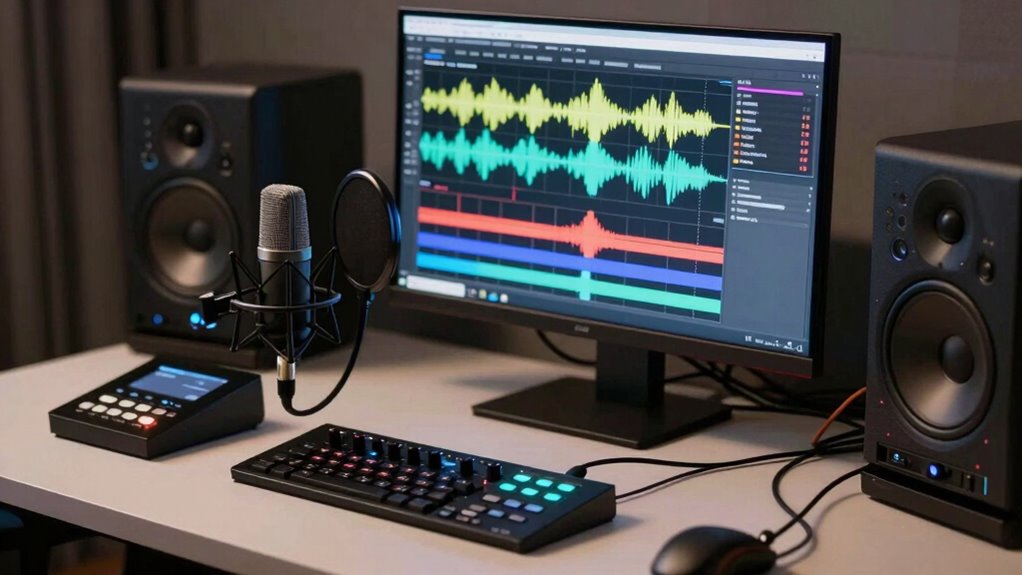
Another essential feature is real-time editing. This capability allows you to make adjustments on the fly, giving you immediate feedback as you record or process audio. With real-time editing, you’re able to monitor your voice, apply effects, and correct issues instantly, which saves you time and improves workflow efficiency. This instant responsiveness is critical for spoken word projects where timing and clarity matter. It also helps you catch errors early, reducing the need for extensive corrections later. Whether you’re editing a podcast, audiobook, or speech, real-time editing ensures you stay in control of the sound quality throughout the process.
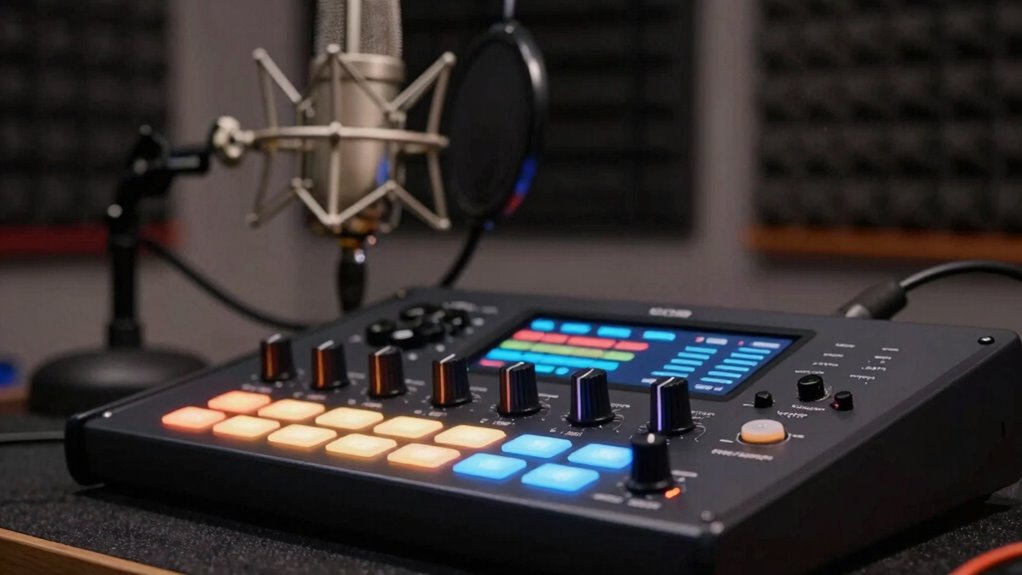
A good voice processor also offers intuitive controls and user-friendly interfaces. When you’re working with complex features like noise suppression and real-time editing, you want to be able to navigate settings effortlessly. Speed and ease of use can dramatically increase your productivity, especially during tight deadlines. Look for processors that provide visual feedback, customizable presets, and easy access to key functions, so you can adjust parameters quickly without interrupting your workflow. This ensures you can focus more on your content rather than the technical details.
Furthermore, versatility in connectivity options can streamline your setup. Features like multiple input/output ports, compatibility with other devices, and wireless options allow for seamless integration into your existing setup. This flexibility means you can switch between different microphones, recorders, or editing stations without hassle, maintaining your focus on content rather than technical issues.
voice processor with noise suppression
As an affiliate, we earn on qualifying purchases.
As an affiliate, we earn on qualifying purchases.
Frequently Asked Questions
How Do Voice Processors Handle Different Accents?
Voice processors handle different accents through advanced features like accent adaptation and pronunciation enhancement. You’ll find that these tools analyze speech patterns, adjusting their algorithms to better recognize and clarify various accents. By doing so, they improve transcription accuracy and guarantee clearer communication. With continuous learning, they adapt over time, making it easier for you to work seamlessly across diverse accents, enhancing overall spoken word workflows.
Can Voice Processors Improve Clarity in Noisy Environments?
Yes, voice processors can improve clarity in noisy environments. They use background noise reduction to filter out distractions and automatic gain control to keep your voice steady. While background noise reduction minimizes ambient sounds, automatic gain control adjusts your volume dynamically, ensuring your speech remains clear and consistent. Together, these features help your voice cut through the noise, making your spoken words more intelligible, even in challenging environments.
Are Voice Processors Suitable for Live Spoken Word Performances?
Yes, voice processors are suitable for live spoken word performances, especially when you consider studio acoustics and microphone placement. They help optimize your sound, reduce feedback, and enhance clarity in real-time. Proper microphone placement guarantees you capture your voice accurately, while the processor adjusts for room acoustics. Together, these elements improve your performance, making your voice clearer and more professional, even in challenging live environments.
How Do Voice Processors Affect Speech Naturalness?
Did you know that 85% of speakers report improved clarity using voice processors? These devices can enhance speech naturalness by adjusting voice modulation, making your voice sound more expressive and engaging. However, hardware compatibility is essential; incompatible equipment can cause unnatural pauses or distortions. When properly integrated, voice processors preserve your natural speech patterns, allowing your voice to sound authentic while benefiting from subtle enhancements that keep your delivery lively and clear.
What Are the Best Settings for Long-Form Narration?
To optimize long-form narration, set your voice processor to moderate audio compression, ensuring your speech remains natural without sounding squashed. Enable noise reduction to minimize background sounds and keep your voice clear throughout the recording. Adjust the attack and release times for smooth processing, and avoid over-compression, which can make narration sound unnatural. These settings help maintain consistent volume and clarity, making your long-form content engaging and professional.
real-time audio editing hardware
As an affiliate, we earn on qualifying purchases.
As an affiliate, we earn on qualifying purchases.
Conclusion
By choosing the right voice processor, you transform your spoken word workflows into a seamless symphony of clarity and precision. Imagine your voice as a river, flowing effortlessly over rocks and obstacles—these features act as guiding currents, smoothing out the rough patches. With the right tools at your fingertips, you’ll craft recordings that resonate like a perfectly tuned instrument, turning simple speech into compelling storytelling. Embrace these features, and watch your voice soar to new heights.
audio interface with customizable presets
As an affiliate, we earn on qualifying purchases.
As an affiliate, we earn on qualifying purchases.
professional voice recording processor
As an affiliate, we earn on qualifying purchases.
As an affiliate, we earn on qualifying purchases.