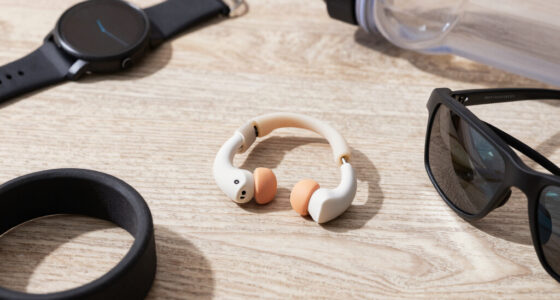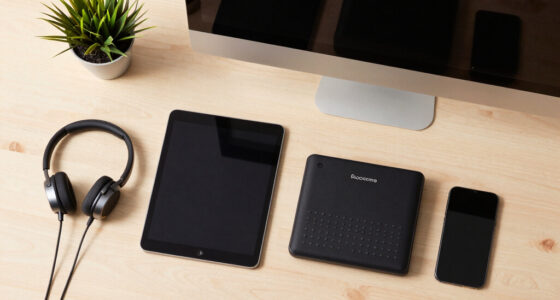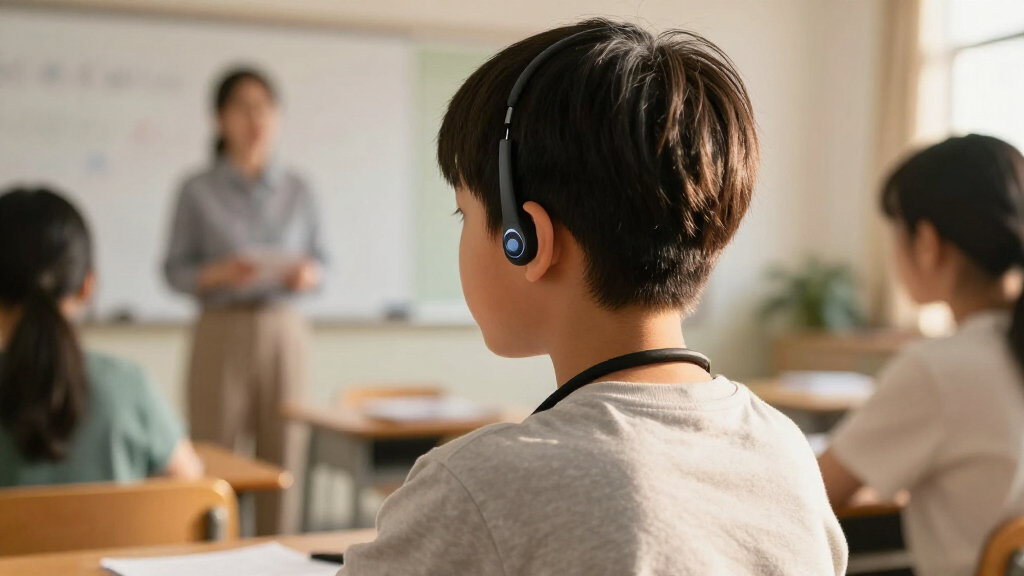
Assistive listening devices for classrooms help ensure every student can hear and understand instruction clearly, especially in noisy or large environments. The best overall pick, the Complete 12-Person Wireless Listening and Learning Center, offers extensive coverage for bigger groups, but it comes with a higher price and setup complexity. For smaller classes or budget-conscious schools, systems like the 4-Person Assistive Listening System with carrying case provide reliable performance at a lower cost, though they lack scalability. Meanwhile, systems like the Retekess TT119 excel for multi-purpose use in churches and events, showcasing flexibility but potentially sacrificing some classroom-specific features. The main tradeoff across options involves balancing coverage, ease of use, and price. Continue reading for detailed insights into which device best matches your classroom needs.
Key Takeaways
- The best overall system offers extensive coverage but tends to be more complex and costly.
- Compact or budget-friendly systems are suitable for smaller classrooms but lack scalability.
- Wireless systems with multiple channels excel in multi-use environments like churches or large auditoriums.
- Ease of setup and user support vary significantly, impacting long-term usability.
- Choosing between dedicated classroom systems and multipurpose devices depends heavily on specific needs and budget constraints.
| Complete 12-Person Wireless Listening and Learning Center for Classroom |  | Best Overall for Large Classrooms | Number of headphones: 12 | Operating time: Up to 35 hours | Charge time: 12-14 hours | VIEW LATEST PRICE | See Our Full Breakdown |
| 4-Person Assistive Listening System with Carrying Case and ADA Plaque |  | Best for Small Venues and Accessibility | Includes: Carrying case CAS-10, ADA plaque | Supports: Up to 4 listeners, expandable | Warranty: 3-year US support | VIEW LATEST PRICE | See Our Full Breakdown |
| Retekess TT119 Assistive Listening System (1 Transmitter, 10 Receivers) |  | Best for Large Venues with Long Range | Range: 300 meters / 984 feet | Channels: 17 | Input Options: XLR, AUX, RCA, USB | VIEW LATEST PRICE | See Our Full Breakdown |
| 4-Person Assistive Listening System with 3-Year Warranty and Phone Support |  | Best Support and Expandability for Small to Medium Venues | Number of Users: 4 | Warranty: 3 years | Support: Phone support | VIEW LATEST PRICE | See Our Full Breakdown |
| Retekess T131 Tour Headsets Receiver (10 Pack) |  | Best for Tours and Small Group Events | Transmission Range: 60 meters | Number of Receivers: 10 | Battery Capacity: 600mAh | VIEW LATEST PRICE | See Our Full Breakdown |
| Retekess TT106S Assistive Listening System with 2.4G Wireless Microphone and Earhook Receivers |  | Best Overall for Long-Range Classroom Assistance | Battery Life: 50 hours | Battery Capacity: 450mAh | Range: 200 meters | VIEW LATEST PRICE | See Our Full Breakdown |
| Retekess T130 Assistive Listening System, Tour Guide Headsets (1 TX 10 RX) |  | Best for Guided Tours and Small Group Settings | FCC Certification: Yes | Transmission Range: 50-60 meters | Battery: Built-in rechargeable lithium battery | VIEW LATEST PRICE | See Our Full Breakdown |
| Avantree Audiplex M3 Multi-Channel Assistive Listening System with Transmitter and Receivers |  | Best for Large Venues and Multi-Channel Clarity | Channels Supported: 4 | Latency: 30ms | Wireless Range: 100 meters | VIEW LATEST PRICE | See Our Full Breakdown |
| Venucast AuraPlex M3 Auracast Assistive Listening System for Churches |  | Best for Bluetooth-Enabled Hearing Aids and Medium Venues | Transmitter Count: 1 | Receiver Count: 3 | Range: 328 feet | VIEW LATEST PRICE | See Our Full Breakdown |
More Details on Our Top Picks
Complete 12-Person Wireless Listening and Learning Center for Classroom
This system stands out for supporting up to 12 users simultaneously, making it ideal for large classrooms or group settings. Its long battery life of up to 35 hours ensures reliable all-day use, while switchable FM frequencies help reduce interference, which can be a concern with smaller systems like the 4-Person Assistive Listening System with Carrying Case and ADA Plaque. However, it requires multiple power adapters and cables, adding complexity to setup, and the lockable carry case does not include a lock, which could pose security issues. Compared to smaller systems, this offers scalability at the expense of increased setup complexity. Best for educational environments needing multiple simultaneous users without interference.
Pros:- Supports up to 12 users simultaneously, ideal for big groups
- Long battery life of up to 35 hours reduces charging needs
- Switchable FM frequencies minimize interference
Cons:- Requires multiple power adapters and cables, complicating setup
- Lockable carry case does not include a lock, risking security
Best for: Large classrooms or training sessions where multiple students need independent, high-quality audio support.
Not ideal for: Small rooms or one-on-one coaching, where a simpler, more portable system is sufficient.
- Number of headphones:12
- Operating time:Up to 35 hours
- Charge time:12-14 hours
- Frequencies:72500 MHz, 72100 MHz, 72900 MHz, 74700 MHz
Our verdict“This system suits large educational settings demanding high capacity and minimal interference, despite its setup complexity.”
4-Person Assistive Listening System with Carrying Case and ADA Plaque
This system is tailored for smaller groups, supporting up to four users with expandability options, making it suitable for churches and small classrooms. Its inclusion of an ADA plaque demonstrates a focus on accessibility, and the U.S.-support and 3-year warranty add peace of mind. Compared to the Complete 12-Person System, it’s more manageable for limited spaces but requires additional receivers for more users, which can increase costs. The system’s simplicity and support make it ideal for venues that prioritize accessibility and small group use, though it isn’t suited for larger audiences. Best for small venues needing reliable, accessible audio support.
Pros:- Supports up to four users with expandable options
- Includes ADA plaque for accessibility compliance
- U.S.-based support and 3-year warranty
Cons:- Limited to four users without additional receivers
- Requires purchase of extra receivers for larger groups
Best for: Small classrooms or churches with up to four users, prioritizing accessibility and support.
Not ideal for: Large lecture halls or conferences, where capacity exceeds four users and expandability is limited without extra investment.
- Includes:Carrying case CAS-10, ADA plaque
- Supports:Up to 4 listeners, expandable
- Warranty:3-year US support
Our verdict“This pick is perfect for small venues emphasizing accessibility, with room to grow but limited capacity without extra purchases.”
Retekess TT119 Assistive Listening System (1 Transmitter, 10 Receivers)
The Retekess TT119 excels in environments like churches or large conference settings where a wireless range of 300 meters matters. Its support for 17 channels and multiple language options make it versatile for diverse audiences, surpassing smaller systems like the 4-Person Assistive Listening System. However, it defaults to mono sound, requiring adjustments for stereo, and the receivers need external batteries, adding to operational considerations. Its lightweight design and extensive range make it suitable for expansive venues, though limited to 10 receivers without additional packs. Best suited for large venues needing extensive audio coverage and multilingual support.
Pros:- Long wireless range of 300 meters supports large spaces
- Supports 17 channels and multiple languages
- Lightweight, portable design
Cons:- Default mono sound requires setting adjustments for stereo
- Receivers need external batteries, adding to operational hassle
Best for: Large venues such as churches or conference halls where long-range wireless audio is essential.
Not ideal for: Small classrooms or events where a shorter range and fewer channels suffice, making this system unnecessarily complex and expensive.
- Range:300 meters / 984 feet
- Channels:17
- Input Options:XLR, AUX, RCA, USB
- Battery Life:Up to 10 hours
- Weight of Receiver:90 grams
- Transmission Type:FM stereo
Our verdict“This system offers extensive range and flexibility, ideal for large venues with diverse audio needs, but involves some setup complexity.”
4-Person Assistive Listening System with 3-Year Warranty and Phone Support
This system supports up to four users with a 3-year warranty and dedicated phone support, making it a reliable choice for venues like churches or theaters. Its support for expansion with extra receivers allows flexibility, but it requires additional purchases for accessories like carrying cases or headphones, which could increase overall costs. Compared with systems like the Complete 12-Person System, it offers less capacity but emphasizes dependable support and accessibility features. Its straightforward setup and support services make it appealing for venues prioritizing ongoing assistance. Best for small to medium venues that value support and expandability over large capacity.
Pros:- Supports up to four users simultaneously
- Includes ADA plaque for accessibility
- Expanding system offers future-proofing
Cons:- Requires additional purchases for accessories
- Limited to four users unless expanded
Best for: Small to medium-sized venues needing reliable support and room to expand without overwhelming complexity.
Not ideal for: Large institutions or events demanding high capacity, where this system’s four-user limit may fall short.
- Number of Users:4
- Warranty:3 years
- Support:Phone support
- Includes:ADA plaque
Our verdict“This system suits small to medium venues seeking dependable support and expandability, but isn’t designed for large-scale use.”
Retekess T131 Tour Headsets Receiver (10 Pack)
This pack of 10 receivers with a 60-meter range and 18-hour rechargeable batteries makes it ideal for guiding tours or supporting multiple groups in church or event settings. Its 99 ID channels allow several groups to listen simultaneously without interference, and volume adjustment ensures clarity. Compared to systems like the Complete 12-Person Wireless Learning System, this is more specialized for short-range, multi-group communication rather than classroom learning, and it needs compatible systems to work effectively. The rechargeable batteries add convenience, but the limited range and receiver count restrict use in larger or more complex environments. Best suited for small groups or tours where mobility and rechargeable operation are priorities.
Pros:- Long transmission range of 60 meters supports mobility
- Rechargeable batteries with 18-hour life
- Supports up to 99 ID channels for multiple groups
Cons:- Limited to 10 receivers, which may restrict larger groups
- Requires charging after extended use, adding operational steps
Best for: Church tours, small group events, or guided sessions requiring multiple listeners with rechargeable batteries.
Not ideal for: Large classrooms or venues needing long-range, multi-user classroom audio, where this system’s shorter range and limited pack size fall short.
- Transmission Range:60 meters
- Number of Receivers:10
- Battery Capacity:600mAh
- Battery Life:18 hours
- ID Channels:99
Our verdict“This pack offers flexible, rechargeable audio support for small groups and tours, though it’s less suited for large or fixed classroom environments.”
Retekess TT106S Assistive Listening System with 2.4G Wireless Microphone and Earhook Receivers
This system stands out for its impressive 200-meter range, making it ideal for large classrooms or multi-room settings where mobility is key. Compared to the Avantree Audiplex M3, which offers multiple channels and low latency, the TT106S provides more extensive coverage but lacks the same level of sound customization and low-latency features. Its long battery life of 50 hours supports all-day use without frequent recharging. The earhook design ensures comfort during extended wear, a plus over bulkier models. However, the absence of detailed weight info and the auto shutdown feature could disrupt continuous use. This pick is best for educators or facilitators needing dependable long-range coverage.
Pros:- Long battery life of up to 50 hours ensures all-day operation
- Range of 200 meters supports large spaces and corridors
- High channel capacity (9999 channels) minimizes interference during multiple simultaneous uses
- Comfortable earhook design reduces ear pressure during extended use
Cons:- No specific pricing info makes budget comparison difficult
- Lack of detailed weight and size data could impact portability considerations
- Auto shutdown may interrupt ongoing sessions if signal is lost
Best for: Teachers or trainers in large or multi-room environments who need reliable, long-range audio transmission.
Not ideal for: Small classrooms or settings requiring low-latency, real-time audio for interactive activities, where the auto shutdown or limited sound customization might hinder engagement.
- Battery Life:50 hours
- Battery Capacity:450mAh
- Range:200 meters
- Channels:9999
- Receiver Volume Levels:0-9
- Auto Shutdown:Yes after 20 minutes of no signal
Our verdict“This system best suits educators or event organizers prioritizing extensive coverage over real-time low latency or advanced sound customization.”
Retekess T130 Assistive Listening System, Tour Guide Headsets (1 TX 10 RX)
The Retekess T130 excels in environments like guided tours, churches, or classrooms where a 50-60 meter range is sufficient. Compared with the Venucast AuraPlex M3, which offers Bluetooth LE Audio for compatibility with hearing aids, the T130 relies on traditional RF transmission and requires an AUX cable for some devices, limiting its flexibility. Its rechargeable batteries support repeated use, and the 16-port charging station simplifies management of multiple units. However, its single-direction, one-way audio transmission limits interactive possibilities, and the lack of detailed sound quality or durability info may concern those seeking more robust performance. This system is ideal for users needing straightforward, reliable audio for small to medium groups.
Pros:- Wide transmission range of up to 60 meters supports medium-sized venues
- Rechargeable batteries with a large capacity for repeated use
- Supports charging up to 16 devices simultaneously, easing management
- Simple one-way audio transmission for ease of use
Cons:- Limited to one-way audio, restricting interaction
- Requires AUX cable connection for some devices, reducing versatility
- No detailed info on sound quality or device durability limits confidence
Best for: Tour guides, small churches, or educational settings that need reliable, straightforward audio without complex features.
Not ideal for: Large venues or environments demanding two-way communication and advanced audio customization, where the system’s simplicity could fall short.
- FCC Certification:Yes
- Transmission Range:50-60 meters
- Battery:Built-in rechargeable lithium battery
- Charging Station:16-port USB
- Connectivity:3.5mm Jack, AUX cable
- Use Cases:Tour guides, church translation, voice teaching, business training
Our verdict“This pick makes the most sense for guided tours or small groups where ease of use and battery life are priorities over interactive features.”
Avantree Audiplex M3 Multi-Channel Assistive Listening System with Transmitter and Receivers
The Avantree Audiplex M3 shines in settings where multiple groups require simultaneous, clear audio, thanks to support for up to 4 channels. Compared with the Venucast AuraPlex M3, which offers Bluetooth LE Audio for device compatibility, the Audiplex is more versatile in venues with varied audio sources, though it requires wired earbuds, which might be less discreet. Its low latency of 30ms and 100-meter range make it suitable for larger spaces where synchronized sound matters. The included three receivers are expandable, but additional units cost extra. Its wired earbud requirement could be a drawback for users seeking a fully wireless experience. This system targets larger classrooms, churches, or events that need multi-channel clarity with minimal delay.
Pros:- Supports up to 4 channels to avoid interference during simultaneous use
- Low latency of 30ms keeps audio synchronized with video
- Wireless range of 100 meters supports large venues
- Expandable system allows more receivers for bigger groups
Cons:- Requires wired earbuds, which may be less comfortable or discreet
- Includes only 3 receivers, additional units increase cost
- Limited info on sound quality and durability could affect long-term reliability
Best for: Educational institutions or churches with multiple groups needing synchronized, interference-free audio in sizable venues.
Not ideal for: Settings favoring wireless, fully cordless solutions or smaller spaces where extensive channels are unnecessary.
- Channels Supported:4
- Latency:30ms
- Wireless Range:100 meters
- Number of Receivers:3 (expandable)
- Includes:1 transmitter, 3 clip-on receivers, wired earbuds
Our verdict“This system is well-suited for larger venues needing multiple, synchronized channels but might not appeal to those preferring wireless, discreet solutions.”
Venucast AuraPlex M3 Auracast Assistive Listening System for Churches
The AuraPlex M3 offers a modern approach for venues equipped with Auracast-enabled hearing aids, supporting Bluetooth LE Audio for seamless, synchronized sound. Compared with the Retekess TT106S, which relies on RF transmission for large coverage, the AuraPlex is tailored for medium-sized spaces with a range of 328 feet, making it ideal for churches and classrooms that prioritize compatibility with personal hearing devices. Its support for BYOD devices adds flexibility, but it’s less suited for outdoor or highly obstructed environments. The system’s reliance on compatible hearing aids or devices limits its applicability but makes it exceptionally convenient for tech-savvy users. This system is best for venues with attendees who already use Auracast-compatible hearing aids or smartphones.
Pros:- Compatible with a variety of Auracast-enabled hearing aids
- Supports BYOD devices for flexible attendee connectivity
- Long Bluetooth LE Audio range of 328 feet enables large or medium venues
- Provides synchronized, reliable sound quality
Cons:- Limited to venues with compatible hearing aids or devices
- Not suitable for outdoor or heavily obstructed environments
- Limited to medium-sized venues, not ideal for very large spaces
Best for: Churches, classrooms, or event spaces with attendees using Auracast-enabled hearing aids or smartphones for easy, wireless audio access.
Not ideal for: Outdoor or outdoor-urban settings with significant obstructions, where Bluetooth LE signals may weaken or drop.
- Transmitter Count:1
- Receiver Count:3
- Range:328 feet
- Compatibility:Auracast-enabled hearing aids, BYOD devices
- Supported Venues:Churches, classrooms, event spaces
Our verdict“This system fits well in settings with tech-savvy users who rely on Bluetooth-enabled hearing aids, especially in medium venues where Bluetooth range is sufficient.”
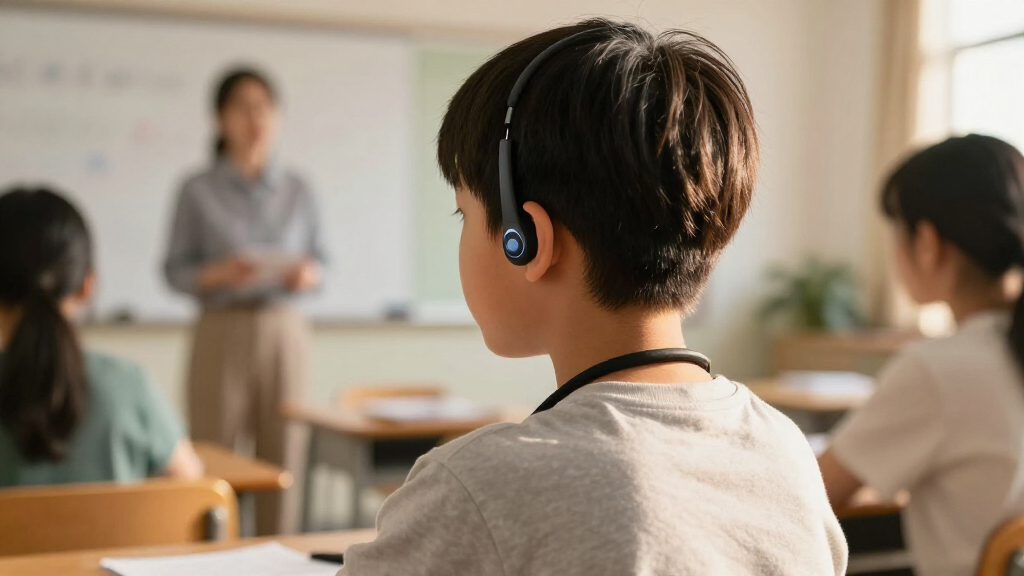
How We Picked
The products in this roundup were evaluated based on their performance, usability, build quality, and value for classroom settings. Priority was given to systems that offer reliable audio clarity, ease of operation for teachers and students, and sufficient coverage for typical classroom sizes. We also considered compatibility with existing audio infrastructure, portability, and warranty/support options. The ranking reflects a balance between advanced features and affordability, ensuring options fit a range of school sizes and budgets. Systems that excelled in scalability or multi-use versatility were rated higher, but those with overly complicated setups or limited ranges were ranked lower despite strong individual features.Factors to Consider When Choosing Assistive Listening Devices For Classrooms
Selecting the right assistive listening device for a classroom involves understanding several key factors. First, consider the size of your classroom and the number of students who need assistance—larger spaces demand systems with greater coverage. Second, evaluate ease of use; devices should be simple for teachers and students to operate without extensive training. Third, think about compatibility with your existing audio systems and future scalability if your class sizes grow. Fourth, assess durability and warranty support, especially if the system will be used daily. Lastly, set your budget, but remember that investing in a higher-quality device can improve reliability and reduce long-term costs. Being aware of these considerations helps avoid common pitfalls like underestimating coverage needs or choosing overly complex systems that hinder daily use.Coverage and Scalability
One of the most critical factors is how many students the system can support simultaneously. Larger classrooms or those with more students require systems with extended range and multiple receivers. Scalability is also vital if you plan to expand or repurpose the system across different classrooms. Choosing a system with modular or multi-channel capabilities can save money and hassle in the long run. Be cautious of systems that claim high coverage but lack the ability to add more receivers later, as they may require costly upgrades or replacements.
Ease of Use and Setup
Devices that are straightforward to set up and operate tend to save time and reduce frustration. Look for systems with clear controls, simple pairing processes, and minimal configuration requirements. Ease of use is especially important for teachers, who need reliable equipment that doesn’t distract from instruction. Complex systems can lead to user errors or downtime, so consider models with intuitive interfaces and comprehensive support resources. Remember, a system’s complexity shouldn’t compromise its reliability or accessibility for all users.
Audio Quality and Reliability
Clear, consistent audio transmission is the backbone of effective assistive listening devices. Look for systems with high-quality microphones and receivers that minimize background noise and interference. Wireless systems suffering from dropouts or static can undermine trust and usability. Reliable performance in various environments, from noisy classrooms to larger auditoriums, distinguishes a good system from a mediocre one. Always consider feedback from users about real-world audio performance, especially in your specific classroom setting.
Compatibility and Future-Proofing
Ensure that the chosen system integrates smoothly with your existing audio infrastructure, such as amplification or audio input options. Some systems offer multiple channels or digital interfaces that can adapt as your needs change. Future-proofing involves selecting devices with software updates or modular components that can be upgraded without replacing the entire system. This approach protects your investment and keeps your classroom technology current, especially as standards evolve or new features become available.
Budget and Support
While price is always a consideration, opting solely for the cheapest option can lead to higher long-term costs due to poor durability or limited support. Prioritize systems that come with solid warranties and accessible customer service. Brands with reputable support can troubleshoot issues quickly, minimizing classroom disruptions. Remember, investing in a reliable device with good support can significantly improve the overall classroom experience and reduce maintenance headaches over time.
Frequently Asked Questions
Can assistive listening devices be used with existing classroom audio systems?
Yes, many assistive listening devices are compatible with existing classroom audio setups, especially wireless systems with standard audio inputs. When choosing a device, check for compatibility with your current microphones, amplifiers, or sound systems. Some models offer multiple connection options, including Bluetooth, auxiliary inputs, or digital interfaces, making integration straightforward. Proper setup ensures that the audio feed is clear and synchronized, which is essential for effective use in a classroom environment.
How many receivers can a typical classroom assistive listening system support?
The number varies widely depending on the system. Basic systems might support 2-4 receivers, suitable for small classes. Larger systems, like the Complete 12-Person Wireless Listening Center, can support up to 12 or more users simultaneously, ideal for bigger groups. When selecting a system, assess your current and future needs, considering whether you might expand the number of students using the system. Overestimating your needs can lead to unnecessary costs, but underestimating can limit usability and hinder accessibility.
Are wireless assistive listening systems prone to interference?
Wireless systems can sometimes experience interference from Wi-Fi networks, Bluetooth devices, or other wireless signals, which can disrupt audio quality. High-quality systems often include features like frequency hopping or multiple channels to mitigate interference. Choosing a system with these features can improve reliability, especially in environments with dense wireless activity. It’s also wise to test the device in your classroom environment before full deployment to identify and address potential issues early.
What is the typical battery life for portable receivers?
Battery life varies depending on the model and usage patterns. Many portable receivers offer between 8 to 20 hours of operation on a single charge or set of batteries. Longer battery life reduces the need for frequent recharging or battery replacements, which can be disruptive. Consider systems with rechargeable batteries and indicators for low power, as these features make daily operation smoother and help avoid unexpected shutdowns during lessons.
When is it worth investing in a premium assistive listening system?
Premium systems are valuable when high audio quality, extensive coverage, and long-term durability are priorities. They are especially suited for large classrooms, multi-purpose spaces, or environments with high interference potential. Investing in a top-tier system can also offer enhanced features like multiple channels, better support, and future upgrade options. However, for smaller or budget-conscious settings, mid-range systems often provide sufficient performance without the higher price tag.
Conclusion
For schools prioritizing comprehensive coverage and ease of use, the Complete 12-Person Wireless Listening and Learning Center makes the most sense as the best overall choice. Budget-conscious or smaller classrooms should consider the 4-Person Assistive Listening System with Carrying Case for reliable performance at a lower cost. For larger venues or multi-use purposes, systems like the Retekess TT119 or Avantree Audiplex M3 stand out, offering flexibility and scalability. Beginners or those new to assistive listening technology will find simpler systems easier to operate, while districts with larger or more complex needs should look toward premium options with advanced features. Tailoring your choice to your specific environment and budget will ensure the best fit for your classroom’s audio needs.