
Get everyday helpers delivered free — and shop member deals
- Fast, free delivery on millions of items
- Access to Prime Big Deal Days deals on October 6–7
- Prime Video, Amazon Music and more included
Branded or Generic Hearing Aid Accessories: Which Should You Buy?
Anyone who wears hearing aids eventually hits the same wall: the aids work well in conversation, but streaming the TV, hearing someone in a noisy restaurant, or taking a phone call is still a struggle. Accessories — TV streamers, remote microphones, remote controls, and phone clips — promise to close that gap. The decision readers face is almost always the same one: buy the accessory made by your hearing aid manufacturer, typically costing $150 to $350 per device, or grab a generic Bluetooth streamer or third-party microphone for a quarter of that price.

MiniFit Power Domes for Oticon Mini RITE Hearing Aids, 6mm, 30 Pieces
- ✔ Type: MiniFit Power Domes (closed)
- ✔ Material: Soft silicone
- ✔ Size: 6mm
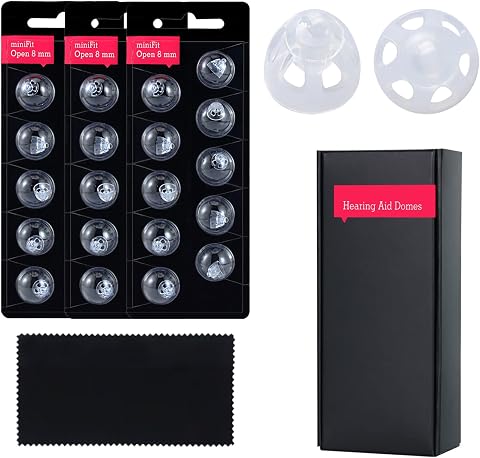
Oticon MiniFit Open Vent Bass Domes (8mm) – 3 Pack (30 Domes)
- ✔ Brand: Oticon (OEM)
- ✔ Type: Open Vent Bass Domes
- ✔ Size: 8mm

MiniFit Open Dome Ear Tips for Oticon Hearing Aids (5mm) with Cleaning Kit
- ✔ Type: Silicone open dome ear tips
- ✔ Material: Silicone
- ✔ Size: 5mm (also available in 6mm, 8mm, 10mm)
The tension is real because the two paths solve the same problems in very different ways. Branded accessories like the Phonak TV Connector or Oticon TV Adapter communicate with your hearing aids over a dedicated 2.4 GHz protocol that streams audio directly into both ears with no phone in the loop and no app fiddling. Generic accessories assume your hearing aids (or your phone) support standard Bluetooth and route audio through that connection instead. If your hearing aids are recent and Bluetooth-enabled, generics can work surprisingly well. If they are older, locked to a proprietary protocol, or have limited Bluetooth support, generics may simply not connect — making the branded route the only route.
This guide compares the two categories side by side across compatibility, sound quality, ease of use, battery impact, cost, and reliability, so you can decide based on your hearing aids, your budget, and how much of your day involves streaming.
MiniFit Power Domes for Oticon Mini RITE Hearing Aids, 6mm, 30 Pieces
This kit stands out as the most complete accessory package of the three. The closed power dome design seals the ear canal, which matters most for wearers with more significant hearing loss who need every bit of amplification to reach the eardrum without leaking back out as feedback. Compared with the open vent options in this lineup, these domes trade a little breathability for noticeably stronger low-frequency presence and a tighter acoustic seal.What separates this pick from the 8mm Oticon three-pack is everything else in the box. Alongside the 30 domes you get wax guards, a cleaning brush, a dome cleaner, and a portable carry case, essentially a full maintenance kit rather than just a bag of tips. The soft silicone is comfortable for all-day wear, and installation requires no tools, which makes weekly swaps painless. The 6mm size suits average ear canals, though wearers with very narrow or wide canals will need to source an alternate size. Like every option here, Corda and Corda2 tube users should look elsewhere entirely.
Pros:
- Closed power dome design maximizes seal and low-frequency clarity
- 30 domes plus wax guards, cleaning brush, dome cleaner, and carry case
- Soft silicone comfortable for extended all-day wear
- Tool-free installation and removal
Cons:
- Not compatible with Corda or Corda2 tubes
- Fixed 6mm size may not fit narrow or wide ear canals
- Sealed design can feel plugged for wearers sensitive to occlusion
Best for: Oticon Mini RITE wearers who want maximum seal and amplification plus a complete maintenance kit in one purchase
Not ideal for: Users with Corda or Corda2 thin tubes, or those who find closed domes too occluding
Bottom line: The most well-rounded kit here, pairing amplification-focused power domes with the maintenance tools you will actually use.
“The most well-rounded kit here, pairing amplification-focused power domes with the maintenance tools you will actually use.”
Oticon MiniFit Open Vent Bass Domes (8mm) – 3 Pack (30 Domes)
Where the power domes seal the canal shut, this option goes the other direction. The open vent design lets air and ambient sound pass through, so your own voice does not boom in your head and the listening experience feels closer to unaided hearing. For mild to moderate high-frequency loss, that openness is a genuine advantage rather than a compromise. The bass vent geometry adds a touch of low-end reinforcement, distinguishing these from fully open standard domes.Being an official Oticon product is the other differentiator: you are buying the same dome your audiologist likely fits in-office, which gives some wearers extra confidence in the molding quality. The three-pack format totals 30 domes, matching the supply of our top pick, but there are no extras here, no wax guards, no case. Where the MiniFit Power Dome kit is a maintenance system, this is a straightforward consumable resupply, and the weekly replacement schedule means the 30 domes represent roughly seven months of wear. One medical note from the manufacturer: perforated eardrums rule this option out entirely.
Pros:
- Open vent design delivers a natural, breathable listening experience
- Official Oticon product matching audiologist-fitted parts
- Bass vent adds low-end reinforcement compared with standard open domes
- Generous supply of 30 domes across three packs
Cons:
- Weekly replacement needed to control wax buildup
- No cleaning tools or accessories included
- Not suitable for users with perforated eardrums
Best for: Wearers with mild to moderate loss who prioritize a natural, breathable sound and prefer OEM Oticon parts
Not ideal for: People with perforated eardrums or those wanting a full cleaning kit included
Bottom line: The choice for wearers who dislike the plugged feeling of closed domes and want genuine Oticon parts in bulk.
“The choice for wearers who dislike the plugged feeling of closed domes and want genuine Oticon parts in bulk.”
MiniFit Open Dome Ear Tips for Oticon Hearing Aids (5mm) with Cleaning Kit
The 5mm size is what makes this kit worth a slot in the lineup. Many adults, and especially long-term wearers with narrower canals, struggle to get a secure fit from the 6mm and 8mm options above; a dome that is too loose slips and whistles, and one that is too tight aches by evening. This pick fills that gap, and it is also available in 6mm, 8mm, and 10mm if you are still dialing in your size, making it the most flexible sizing ecosystem of the three products.Compared with the Oticon open vent three-pack, this kit splits the difference on features: you get a multifunctional cleaning brush and cloth, but no wax guards or case. The silicone tips click on and off quickly, and the ventilation holes keep the canal breathing, echoing the natural sound character of the open vent bass domes rather than the sealed feel of the power domes. With 20 domes rather than 30, the supply runs shorter, and the monthly replacement cadence is more forgiving than the weekly schedule the open vent bass domes demand. Corda tube incompatibility applies here too, so confirm your receiver type first.
Pros:
- Rare 5mm size ideal for narrow ear canals, with 6mm-10mm sizes also available
- Ventilation holes keep the ear canal breathable during long wear
- Click-on, click-off design makes swapping quick
- Includes multifunctional cleaning brush and cloth
Cons:
- Only 20 domes per package versus 30 in the other kits
- Monthly replacement still required due to wax buildup
- Not compatible with Corda or Corda2 tubes
Best for: Wearers with small or narrow ear canals and anyone still experimenting to find their ideal dome size
Not ideal for: People who need a sealed dome for significant low-frequency amplification
Bottom line: The smart starting point for small canals and size experimentation, with enough cleaning tools for daily upkeep.
“The smart starting point for small canals and size experimentation, with enough cleaning tools for daily upkeep.”
As an Amazon Associate we earn from qualifying purchases.
At a Glance
| Criteria | Manufacturer-branded hearing aid accessories (e.g., Phonak TV Connector, Oticon TV Adapter, ReSound Multi Mic) | Generic Bluetooth streaming accessories and third-party assistive devices | Winner |
|---|---|---|---|
| Compatibility | Guaranteed with same-brand aids; useless with other brands | Works with any Bluetooth-enabled aid or via phone relay; incompatible with older proprietary-only aids | Depends |
| Streaming sound quality | Near-CD-quality stereo, streamed directly to both ears, automatic | Good for music, variable for speech; mono or compressed depending on device | A |
| Ease of setup and daily use | Plug-and-play or one-button pairing; automatic reconnect | Manual Bluetooth pairing, app switching, occasional re-pairing | A |
| Battery drain on hearing aids | Low to moderate; proprietary protocols are power-efficient | Higher; standard Bluetooth drains aids and phones faster | A |
| Price | $150-$350 per accessory | $25-$100 per accessory | B |
| Reliability and range | Very stable, 10-30m line of sight, minimal dropouts | Decent within a room; dropouts near Wi-Fi congestion and through walls | A |
| Support and warranty | Audiologist support, firmware updates, 1-3 year warranty | Retailer warranty only; no audiology support or firmware updates | A |
Key Differences
Key Differences at a Glance
The single biggest difference is how audio reaches your hearing aids. Branded accessories use the manufacturer’s own radio protocol — Phonak’s AirStream, Oticon’s and ReSound’s 2.4 GHz standards, Starkey’s Thrive ecosystem. The accessory and the hearing aids are designed as a pair, which is why a Phonak TV Connector starts streaming the moment you walk into the room and a ReSound Multi Mic pairs with a long-press. Generic accessories, by contrast, treat your hearing aids as just another Bluetooth device. That works when your aids support Bluetooth Classic or LE Audio, but it puts a phone or intermediary device in the chain, and every extra link adds latency, battery drain, and one more thing that can fail to connect.
The second difference is what the market quietly assumes: branded accessories are priced for a captive audience. If you own Phonak aids and want Phonak-level TV streaming, there is exactly one product that does it. Manufacturers know this, which is why a TV streamer with perhaps $30 of electronics inside sells for $250+. Generic accessories compete on price instead, and for users with modern Bluetooth hearing aids who mostly stream music and podcasts, the audible difference is often small enough that the $200 saved matters more.
Third, the categories fail differently. Branded accessories fail rarely but expensively — if the TV Connector dies after warranty, you are buying another one at full price. Generic accessories fail often but cheaply — dropouts, re-pairing loops, and lag are recurring irritations, but replacing the device costs less than a dinner out. Which failure mode you can tolerate says a lot about which category fits you.
Detailed Comparison
Compatibility (major difference)
Branded accessories are all-or-nothing: a Phonak streamer works only with Phonak aids of a compatible generation, an Oticon adapter only with Oticon. Within that brand family, compatibility is essentially guaranteed and your audiologist can verify chip generations before you buy. Generic accessories depend entirely on your hearing aids having standard Bluetooth — true for most aids released since roughly 2019 with Made-for-iPhone support or Bluetooth LE Audio, false for millions of older proprietary-only aids. There is a genuine trap here: buyers with aids older than about five years frequently discover generic streamers will not pair at all, and some aids support phone calls via Bluetooth but not media streaming. Check your aid’s Bluetooth profile before buying anything generic; if it lacks it, the branded accessory is not the better choice, it is the only choice.
Streaming sound quality (Manufacturer-branded hearing aid accessories (e.g., Phonak TV Connector, Oticon TV Adapter, ReSound Multi Mic) wins — major)
Branded accessories stream a full-bandwidth stereo signal directly into both hearing aids, which then process it through your personalized prescription. The result is close to what your audiologist tuned the aids to deliver, with lip-sync-friendly latency for TV. Generic Bluetooth paths compress audio more, often collapse to mono on older devices, and can introduce 100-200ms of latency that puts dialogue slightly behind the actor’s lips — a small annoyance that many hearing aid users notice constantly. For music, the gap narrows; for TV dialogue and phone calls, the branded path is audibly clearer for most users. This is a major gap, not because generics sound bad, but because clarity of speech is exactly the thing a hearing aid accessory exists to deliver.
Ease of setup and daily use (Manufacturer-branded hearing aid accessories (e.g., Phonak TV Connector, Oticon TV Adapter, ReSound Multi Mic) wins — major)
Branded accessories are designed for people who will never read a manual: the TV Connector is plug into power, plug into TV audio out, done — hearing aids connect automatically when you enter the room. Remote mics pair with a button press. Generic accessories demand standard Bluetooth pairing through your phone’s settings, often an app, and sometimes re-pairing after every use or after a phone update. If you are comfortable with Bluetooth settings, generics are a five-minute setup you repeat occasionally. If you are not — or if you are buying for an elderly parent — the branded set-and-forget experience is worth real money. The gap is moderate to major depending on the user’s tech comfort.
Battery drain (Manufacturer-branded hearing aid accessories (e.g., Phonak TV Connector, Oticon TV Adapter, ReSound Multi Mic) wins — moderate)
Proprietary low-power protocols are engineered to sip current; the accessory does the heavy radio lifting. Standard Bluetooth streaming, particularly Bluetooth Classic audio, consumes noticeably more power from the hearing aids themselves and from the phone acting as relay. Users of generic setups frequently report charging their hearing aids a few hours earlier on heavy-streaming days. Moderate difference: annoying for full-day streamers, negligible if you stream an hour a day.
Price (Generic Bluetooth streaming accessories and third-party assistive devices wins — major)
Generic accessories win this decisively. A respectable generic Bluetooth transmitter or Bluetooth remote microphone costs $25-$100; the branded equivalents cost $150-$350. Over a full kit — TV streamer, remote mic, phone clip — you could easily spend $700+ going branded versus $150 going generic. That is a meaningful difference for anyone on a fixed income, which describes a large share of hearing aid users. The only fair caveat: generics sometimes need replacing more often, so the lifetime cost gap is somewhat smaller than the sticker gap.
Reliability and range (Manufacturer-branded hearing aid accessories (e.g., Phonak TV Connector, Oticon TV Adapter, ReSound Multi Mic) wins — moderate)
Branded accessories hold a stable connection across a typical room and one or two walls, with rare dropouts. Generic Bluetooth gear performs well within line of sight but stutters near dense Wi-Fi environments, apartments packed with Bluetooth devices, and when your body blocks the antenna. For TV watching from a couch, both usually hold; for walking around the house mid-stream, branded wins clearly. Moderate gap for stationary use, major for mobile use.
Support and warranty (Manufacturer-branded hearing aid accessories (e.g., Phonak TV Connector, Oticon TV Adapter, ReSound Multi Mic) wins — moderate)
Buy branded and your audiologist becomes your troubleshooting desk: they handle warranty claims, firmware updates, and pairing problems, and manufacturers typically back accessories for one to three years. Generic accessories come with a retailer return window and an email address. If something stops working, you are on your own with a manual. For less technical buyers, this support difference is worth as much as the hardware itself. Minor for tech-savvy users, major for everyone else.
Manufacturer-branded hearing aid accessories (e.g., Phonak TV Connector, Oticon TV Adapter, ReSound Multi Mic): Pros and Cons
Pros:
- Seamless, automatic connection — no pairing rituals or app switching
- Direct stereo streaming to both hearing aids at near-CD quality with low latency
- Guaranteed compatibility within the same brand and generation
- Power-efficient proprietary protocols preserve hearing aid battery life
- Audiologist support, firmware updates, and multi-year warranty
Cons:
- Expensive: $150-$350 per accessory, often $700+ for a full kit
- Locked to one brand — useless if you switch hearing aid manufacturers
- Usually excluded from hearing aid purchase bundles unless negotiated upfront
- Overkill for occasional, light streaming use
Generic Bluetooth streaming accessories and third-party assistive devices: Pros and Cons
Pros:
- One quarter to one fifth the price of branded equivalents
- Brand-agnostic — works with any Bluetooth hearing aid, now or after an upgrade
- Huge selection of form factors: neckloops, transmitters, clip-on mics, speakers
- Cheap to replace if lost, broken, or superseded
Cons:
- Incompatible with older hearing aids lacking standard Bluetooth
- Manual pairing and periodic re-pairing; app-dependent for some functions
- Higher battery drain and occasional audio dropouts or lip-sync lag
- No audiology support — troubleshooting is entirely on you
Who Should Choose What
Choose Manufacturer-branded hearing aid accessories (e.g., Phonak TV Connector, Oticon TV Adapter, ReSound Multi Mic) if:
- Your hearing aids are older than roughly five years or use a proprietary wireless protocol with no standard Bluetooth — generics likely will not connect at all
- You watch TV daily and want automatic, walk-into-the-room streaming with zero fuss
- You are buying for a parent or relative who is not comfortable managing Bluetooth settings and re-pairing
- You rely on a remote microphone for meetings, restaurants, or lectures and need maximum speech clarity
- You stream several hours a day and cannot afford your hearing aid batteries dying mid-afternoon
Choose Generic Bluetooth streaming accessories and third-party assistive devices if:
- Your hearing aids are recent and support standard Bluetooth or LE Audio — verify this first
- You stream occasionally (music, podcasts, a few calls) rather than all day
- Budget is the primary constraint, or you want to test whether streaming helps before committing $300
- You are comfortable doing your own pairing and troubleshooting
- You anticipate changing hearing aid brands soon and want accessories that survive the switch
Skip both if: Your hearing aids stream directly from your phone and TV over Bluetooth LE Audio with no intermediary — native streaming is making both accessory categories partially obsolete for newer devices. Also skip both if a free smartphone app from your manufacturer already covers remote-mic and TV functions adequately.
Value for Money
Is the Branded Price Premium Worth It?
For the right buyer, yes — and the right buyer is narrower than manufacturers would like you to believe. The branded premium buys three concrete things: guaranteed compatibility, automatic daily use, and better speech clarity. If any one of those is decisive for you — you have proprietary-only aids, or you are equipping a non-technical parent, or you need a remote mic for work — the $200 difference amortized over 4-5 years of daily use is a few cents per day for a device you will use more than almost anything else you own.
If none of those conditions apply, the branded premium is hard to justify. A user with 2022-era Bluetooth hearing aids who streams an hour of podcasts a day gets perhaps 90% of the branded experience from a $40 generic transmitter. That is a better value by any honest measure, and generics improve every year as Bluetooth LE Audio spreads.
One practical middle path worth knowing: many audiologists will bundle a TV streamer into a new hearing aid purchase if you ask before signing. The best time to acquire branded accessories is at the point of hearing aid purchase, when your negotiating leverage is highest — not two years later at full list price.
Final Verdict
Buy branded if your hearing aids require it or your daily life depends on it. That means older proprietary-only aids, daily TV watchers, non-technical users, and anyone depending on a remote microphone for work or social situations. For these buyers the branded accessory is not a luxury purchase; it is the device that makes the hearing aids themselves fully usable, and the price is justified.
Buy generic if you have modern Bluetooth hearing aids and stream lightly. The $150-$300 saved is real money, the performance gap for casual music and podcast streaming is small, and brand-agnostic hardware survives your next hearing aid upgrade — which branded accessories never do.
The single deciding factor is your hearing aid model, not your budget. Confirm whether your aids support standard Bluetooth before anything else: if they do, generic is a legitimate choice; if they do not, the comparison is over and the branded accessory is the only accessory. Ask your audiologist for the exact wireless protocol your aids use, and make your buying decision from that fact rather than from sticker shock.
Frequently Asked Questions
Will a generic Bluetooth streamer work with my hearing aids?
Only if your hearing aids support standard Bluetooth audio — Made-for-iPhone/Made-for-Android hearing aids (roughly 2019 onward) or devices with Bluetooth LE Audio. Check your model’s specification sheet or ask your audiologist. Aids that communicate only over a proprietary protocol, such as older Phonak, Oticon, or Siemens models, will not pair with generic devices at all.
Why are branded hearing aid accessories so expensive?
Three reasons: captive-market pricing (only one device works with your brand of aids), small production volumes compared to mass-market electronics, and the inclusion of professional support and warranty through audiologists. The components inside a $250 TV streamer are worth a fraction of that; you are also paying for compatibility certainty and support infrastructure.
Can I use branded accessories from a different brand than my hearing aids?
No. Branded accessories are locked to their manufacturer’s proprietary wireless protocol. A Phonak TV Connector will not stream to Oticon aids and vice versa. There is no cross-brand bridge on the market, which is precisely why generic Bluetooth accessories exist as an alternative for multi-brand households.
Do I still need accessories if my hearing aids stream from my phone directly?
Possibly not for phone calls and music. But TV streaming via phone drains your phone battery, adds latency, and requires you to carry the phone. Dedicated TV streamers and remote microphones still outperform phone-relay streaming for TV volume, distance listening, and noisy-room speech, so many users with phone-capable aids still buy a TV accessory.
Is there a way to get branded accessories cheaper?
Yes. Negotiate them into your hearing aid purchase — audiologists frequently bundle a TV streamer at low or no cost to close a sale. Also check authorized online retailers and ask your audiologist to price-match; list prices are commonly discounted 15-30%. Avoid used units from auction sites unless you can confirm compatibility with your exact chip generation.
Fall Picks
fall essentials
As an affiliate, we earn on qualifying purchases.