
TL;DR

Get everyday helpers delivered free with Prime
- Fast, free delivery on millions of items
- Prime Video, Amazon Music and more included
- Member-only deals all year
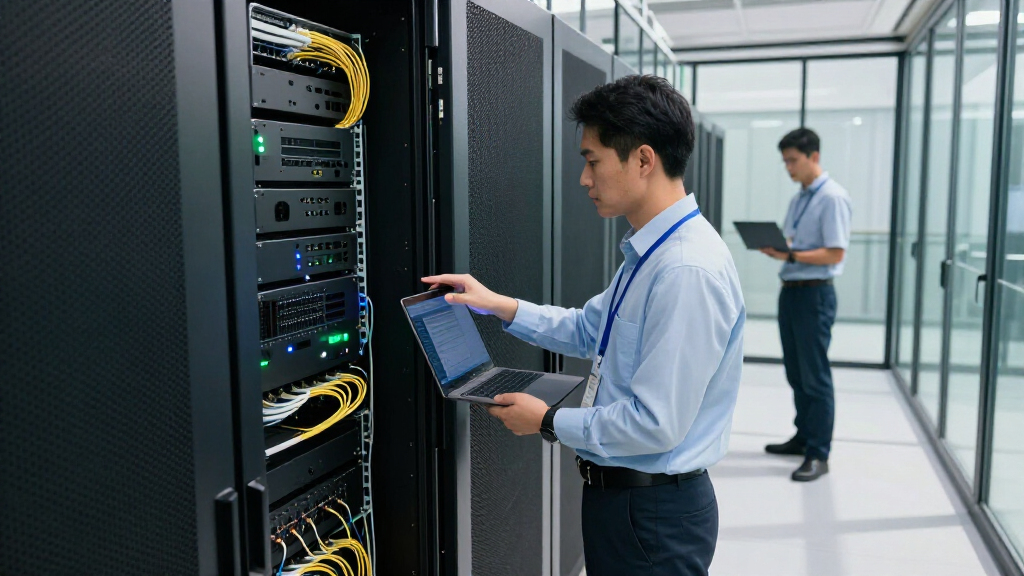
Diraq says it has installed an eight-qubit silicon spin quantum computer at Equinix’s Sydney data center, a deployment the company describes as the first of its kind inside a commercial data center. The system uses less than 20 kilowatts and occupies 170 square feet; Diraq is targeting as many as 256 qubits in the same installation within a year. The deployment is an infrastructure milestone, not evidence that the computer can yet deliver practical commercial or medical benefits.
Diraq says it has installed an eight-qubit silicon spin quantum computer at Equinix’s commercial data center in Sydney, Australia, bringing the system into a facility used for business computing infrastructure. The company describes the installation as the first commercial data center deployment of a silicon spin quantum computer. It draws less than 20 kilowatts and occupies 170 square feet; Diraq is targeting an expansion to as many as 256 qubits in the same system within a year.
The installation is operating at an Equinix site, according to Diraq’s announcement. Its eight-qubit processor is designed to run within existing data center infrastructure rather than requiring a facility built specifically for quantum computing. Diraq says its silicon spin approach uses semiconductor manufacturing processes already used to make conventional computer chips, though the announcement does not provide independent operational or performance results for the deployed system.
Diraq’s next stated milestone is to raise the system’s capacity to up to 256 qubits within a year. That is a company target, not a completed upgrade or a demonstrated timetable. Diraq says a future utility-scale system could use around 300 kilowatts and occupy as little as 50 square feet. Those figures are projections, distinct from the current installation’s reported power draw and floor area.
The announcement also introduces Diraq’s Quantum at Work report, which considers potential uses in fields including medicine, energy, materials, climate and transport. Its health-economics estimates are models, not outcomes from the installed computer: Diraq says a 10-percentage-point improvement in clinical trial success rates could save about US$600 million per medicine. The company’s analysis is based on a 2010 industry cost study and modeled FDA approval data.
A Quantum System Joins Data Center Infrastructure
The deployment tests whether a quantum processor can be installed and operated in a commercial data center alongside the computing infrastructure businesses already use. That matters because scaling a technology is not only a processor question: power, space, cooling, controls and integration can affect whether organizations can access it. Diraq’s installation offers a real-world setting for evaluating those practical requirements, but one deployment does not establish that the system is ready for broad enterprise use.
If Diraq can increase the qubit count within the stated footprint and power envelope, the approach could offer a route to adding quantum hardware without constructing a dedicated facility. For now, the evidence in the announcement is limited to the installation’s reported specifications and location. It gives no details on customer access, workloads run, error rates, reliability or useful computational advantage.
The medicine figures may attract attention because drug development is costly and lengthy, but they describe a modeled scenario rather than a result produced by this eight-qubit computer. Any claim that quantum computing will improve trial success or reduce drug costs remains prospective; the announcement does not show that the installed system can model a medicine or change clinical outcomes.
Popular right now

Apple AirPods Pro (2nd Generation) Wireless Earbuds with USB‑C Charging, Up to 2X More Active Noise Cancelling, Transparency Mode, Adaptive

Dyson Airsmooth Styling Brush

Dyson V15 Detect Cordless Vacuum
As an affiliate, we earn on qualifying purchases.
From Chip Processes to Data Centers
Silicon spin quantum computers encode information in the spin states of electrons in silicon. Diraq’s stated strategy is to build such processors using semiconductor fabrication methods, which the company argues could support manufacturing at scale. Whether those processes will deliver the required performance and reliability as qubit counts grow remains a technical question; the data center installation alone does not settle it.
The deployment follows Diraq’s recent advancement to Stage C of the DARPA Quantum Benchmarking Initiative, according to the company. Diraq says it is one of six companies to reach that stage, which has potential funding of up to US$300 million. It also says it signed a US$38 million letter of intent with the U.S. Department of Commerce under the CHIPS and Science Act. These developments provide funding and program context, but they are separate from the performance of the Sydney installation.
Equinix’s role is to host the system within its data center. The company’s announcement frames the project as a demonstration of quantum hardware operating alongside existing digital infrastructure. Neither company has described the installation as a customer-ready quantum service with publicly specified access terms.
“We are now at a point where quantum computing can start to reach industries and the people they serve.”
— Andrew Dzurak, Diraq CEO and founder
Performance and Access Remain Unspecified
The announcement does not report the computer’s error rates, uptime, benchmark results or the kinds of calculations it has completed. It is also unclear whether external customers can access the machine, what applications are currently running, or how the system’s performance compares with conventional computers on any task.
Diraq’s target of up to 256 qubits within a year has not yet been achieved, and the company does not provide a detailed upgrade schedule or say what technical milestones would count as success. The projected power and space requirements for future utility-scale systems are estimates, not measurements from the current installation.
The report’s clinical-trial and drug-development estimates also depend on assumptions about how a higher trial success rate might affect costs and the number of medicines reaching patients. The announcement does not establish that quantum computing can produce that improvement, or specify when a system might do so.
The 256-Qubit Target Is Next
Diraq’s next public test is whether it can expand the deployed system from eight qubits to as many as 256 within the next year, as targeted. Progress would be easier to evaluate with published details on the processor’s performance, reliability, power use after upgrades and workloads run at Equinix.
The company may also provide further information about access to the system and the applications explored in its Quantum at Work report. Until then, the installation is best understood as a commercial data center deployment and a test of Diraq’s scaling approach—not proof that quantum computers are already delivering the projected medical or economic benefits.
Key Questions
Where is Diraq’s quantum computer installed?
Diraq says the eight-qubit system is live at Equinix’s data center in Sydney, Australia.
How large and power-intensive is the current system?
Diraq reports that the current installation uses less than 20 kilowatts and occupies 170 square feet.
Does the computer have 256 qubits now?
No. The system currently operates with eight qubits. Diraq says it is targeting an upgrade to as many as 256 qubits within a year.
Has the deployment shown that quantum computing can improve drug development?
No such result is reported. Diraq’s estimate of about US$600 million in potential savings per medicine is based on modeled trial-success assumptions, not a demonstrated outcome from the installed computer.
Can customers use the system?
The announcement does not specify whether customers can access the computer, what workloads it runs, or how access would be arranged.
Source: thequantuminsider.com