
TL;DR

Get everyday helpers delivered free with Prime
- Fast, free delivery on millions of items
- Prime Video, Amazon Music and more included
- Member-only deals all year
Two phase III trials found that the oral GLP-1 drug orforglipron reduced apnea-hypopnea index scores over 52 weeks in adults with moderate-to-severe obstructive sleep apnea and overweight or obesity. The drug is already FDA-approved for weight management, but the source report does not say it is approved to treat sleep apnea; gastrointestinal side effects were more common than with placebo.
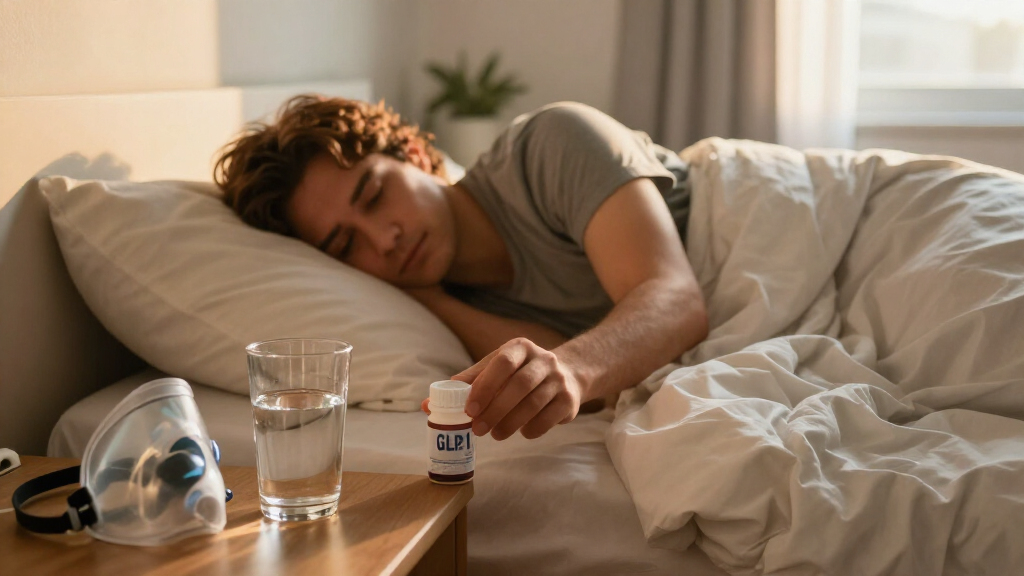
In two 52-week phase III trials, the oral GLP-1 drug orforglipron improved sleep-disordered breathing in adults with moderate-to-severe obstructive sleep apnea and overweight or obesity, compared with placebo. The results, presented at the American Heart Association meeting and published in JAMA, add evidence for a potential tablet-based treatment option, but the report does not establish FDA approval for sleep apnea.
For the trial group receiving positive airway pressure (PAP), the mean apnea-hypopnea index (AHI) fell by 17.3 events per hour with orforglipron, compared with 5.3 events per hour with placebo. Among participants not receiving PAP, the corresponding reductions were 17.8 and 4.5 events per hour. Both comparisons were statistically significant, with P<0.001, according to the study results reported by MedPage Today.
The ATTAIN-OSA program included two multicenter, double-blind, placebo-controlled trials: 349 participants using PAP and 363 not using it. Adults were eligible if they had moderate-to-severe obstructive sleep apnea and a body mass index of at least 27. Participants received once-daily orforglipron at a maximum tolerated dose equivalent to 9, 14.5 or 17.2 milligrams, or placebo.
Researchers also reported improvements in secondary measures, including sleep apnea-specific hypoxic burden, body weight, high-sensitivity C-reactive protein and blood pressure. Gastrointestinal events were the most frequently reported adverse events. In the no-PAP trial, they occurred in 68% of participants taking orforglipron and 37.4% taking placebo; in the PAP trial, the figures were 70.6% and 36.6%.
A Tablet Option for Sleep Apnea
Obstructive sleep apnea can be treated with PAP devices, but the study discussants said device use can be difficult for some patients and treatment remains underused. An effective oral medicine could give clinicians and patients another option, particularly for people who have trouble using PAP. The trial results show improvement in breathing measures, but do not show that orforglipron can replace PAP or other care.
Orforglipron is a non-peptide oral GLP-1 receptor agonist already approved by the FDA for weight management, according to the source report. Its potential role in sleep apnea would be a separate use. The reported effects on weight, blood pressure and inflammatory markers are relevant secondary findings, but cardiovascular risk reduction with orforglipron has not been established, the report said.
At the meeting, discussant Ildiko Lingvay compared the findings with those for tirzepatide, which is already FDA-approved for obstructive sleep apnea. She said tirzepatide appeared to have advantages in the reported degree of improvement in AHI and hypoxic burden, as well as safety measures. Orforglipron’s practical distinction is that it is taken as a daily tablet, while tirzepatide is injected.
Popular right now

Ninja DualZone Air Fryer 10 Qt Smart 6-in-1 Grey

Apple AirPods Pro (2nd Generation) Wireless Earbuds with USB‑C Charging, Up to 2X More Active Noise Cancelling, Transparency Mode, Adaptive

Dyson Airsmooth Styling Brush
As an affiliate, we earn on qualifying purchases.
How the Trials Were Designed
The two studies were conducted at 66 sites in the United States and eight other countries or territories, including Argentina, Brazil, China, Germany and Japan. Participants were followed for 52 weeks and assigned to orforglipron or placebo. One trial enrolled people receiving PAP and the other enrolled people who were not receiving it, allowing researchers to examine results across both groups.
The primary measure described in the report was change in AHI, which counts breathing pauses and shallow-breathing events per hour of sleep. The trials also tracked hypoxic burden, body weight, inflammation and blood pressure. These measures help describe treatment effects, but the reported results do not establish long-term outcomes or show how the drug compares head-to-head with PAP, tirzepatide or other therapies.
Study presenter Vaishnavi Kundel of the Icahn School of Medicine at Mount Sinai said the findings support the drug’s potential as an oral option for adults with moderate-to-severe sleep apnea and overweight or obesity. The trials were published alongside an editorial discussing how the medicine might fit into broader treatment plans.
“The biggest benefit of orforglipron is really the fact that it comes in a tablet form, for once-daily administration, while tirzepatide requires a cold chain supply and injections.”
— Ildiko Lingvay, MD, MPH, University of Texas Southwestern Medical Center
Approval and Comparisons Remain Open
The reported trials establish results for the study period, but the source material does not state whether or when the FDA may consider orforglipron for obstructive sleep apnea. Approval for weight management does not by itself establish approval for this condition. It is also unclear from the report how durable the breathing improvements are beyond 52 weeks or how they translate into longer-term health outcomes.
The findings do not provide a direct comparison with PAP, oral appliances or tirzepatide. Lingvay said tirzepatide appeared to show greater improvements in some sleep apnea measures and safety measures, but the trials described were not head-to-head comparisons. The source also says cardiovascular risk reduction has not been established for orforglipron. Researchers have not yet shown which patients would benefit most or whether the drug should be used alongside existing therapies.
Comparative Trials Will Clarify Use
The immediate next step is further study of how orforglipron fits into sleep apnea care. The editorial authors called for pragmatic trials comparing or combining it with PAP, oral appliances, tirzepatide and other treatments. Those studies could help clarify whether the tablet is best used alone for some patients or as part of a wider treatment plan, including for people with severe disease.
Regulatory timing for a sleep apnea indication is not specified in the report. Until additional evidence and any relevant regulatory decisions are available, the findings should be understood as phase III trial results—not confirmation that orforglipron is an approved sleep apnea treatment.
Key Questions
What did the orforglipron trials find?
Across two 52-week trials, orforglipron reduced AHI more than placebo in adults with moderate-to-severe obstructive sleep apnea and overweight or obesity. The reported mean reductions were 17.3 versus 5.3 events per hour among participants using PAP, and 17.8 versus 4.5 among those not using PAP.
Is orforglipron approved to treat sleep apnea?
The source report says orforglipron is FDA-approved for weight management, but does not say it is approved for obstructive sleep apnea. A possible sleep apnea use remains subject to further evidence and regulatory decisions.
Can orforglipron replace a PAP device?
The trials do not show that orforglipron can replace PAP. One trial studied people receiving PAP and another studied people not receiving it, but the report describes no direct comparison establishing that the drug can substitute for a device.
What side effects were reported?
Gastrointestinal events were the most common adverse events reported. They occurred in 68% of participants taking orforglipron versus 37.4% taking placebo in the trial without PAP, and in 70.6% versus 36.6% in the PAP trial.
How does orforglipron compare with tirzepatide?
The trials were not direct comparisons. Meeting discussant Ildiko Lingvay said tirzepatide appeared to have advantages in some reported sleep apnea measures and safety measures, while orforglipron’s distinction is once-daily oral dosing. The report says comparative trials are needed.
Source: medpagetoday.com