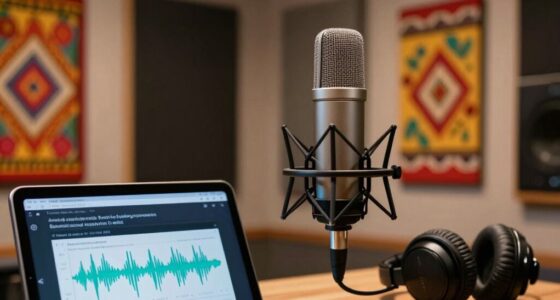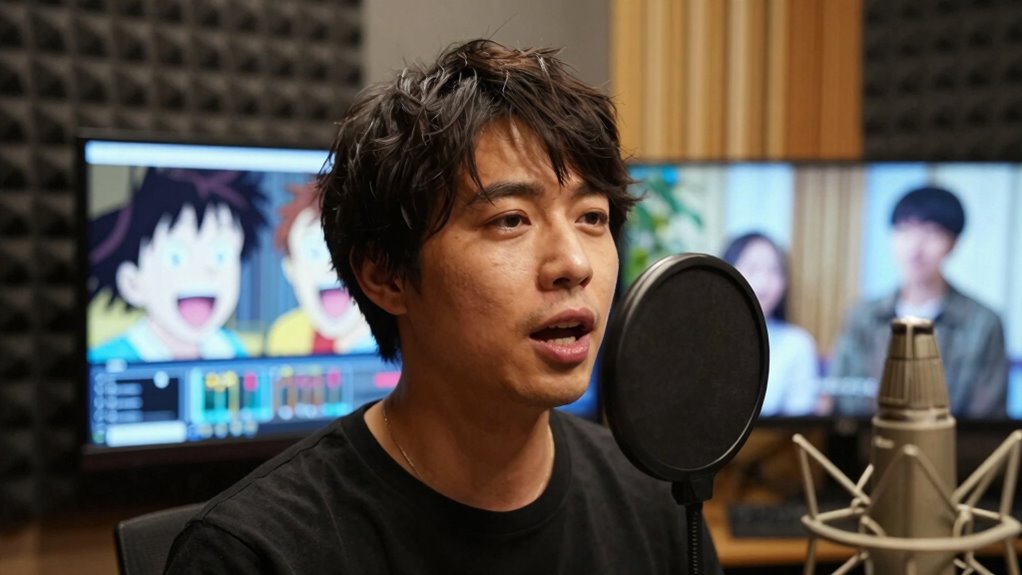

Anime dubbing is different because you have to match voice performances to exaggerated movements and stylized visuals, which can be quite challenging. It requires precise timing to sync dialogue with rapid lip movements and expressive expressions, while also adapting cultural references for international audiences. Unlike live-action, where natural facial cues make synchronization easier, anime demands careful creative adjustments. The unique animation style and cultural nuances make anime dubbing a distinct craft—you’ll discover more about these differences as you go on.

Get everyday helpers delivered free with Prime
- Fast, free delivery on millions of items
- Prime Video, Amazon Music and more included
- Member-only deals all year
Key Takeaways
- Anime dubbing emphasizes lip synchronization with exaggerated expressions and stylized visuals, requiring precise timing and creative adaptation.
- Live-action dubbing focuses on mimicking natural facial cues and speech flow, simplifying synchronization with real performances.
- Anime localization involves adapting culturally specific references and humor, demanding higher creative effort for relevance.
- Live-action dubbing relies more on universal themes, making cultural localization less complex.
- Techniques differ: anime prioritizes stylized synchronization and cultural adaptation, while live-action emphasizes authentic performance mimicry.

Have you ever wondered how dubbing differs between anime and live-action productions? The differences often come down to how voice synchronization and cultural localization are handled. In anime, voice synchronization isn’t just about matching lip movements; it’s about capturing the essence of characters and making the dialogue feel natural within a highly stylized visual context. Since anime often features exaggerated expressions and distinctive animation styles, voice actors must adapt their delivery to complement these elements, ensuring that the speech aligns seamlessly with the animated characters’ mouth movements. This process requires meticulous attention to timing, so the dialogue fits perfectly without looking out of place, which is especially *vital* given the rapid, sometimes exaggerated lip movements typical of anime.
Anime dubbing requires precise timing and adaptation to match exaggerated expressions and stylized visuals seamlessly.
Cultural localization in anime dubbing presents unique challenges compared to live-action. Anime frequently incorporates culturally specific references, idioms, and humor rooted in Japanese society. When dubbing for a different audience, it’s essential to adapt these references so they resonate without losing the original intent. This means translators and voice directors work closely to find the right balance between staying true to the source material and making it accessible for viewers unfamiliar with Japanese culture. Unlike live-action, where actors can often mimic real speech patterns and regional accents, anime dubbing demands a higher level of creative adaptation to preserve the story’s flavor while making it relatable.
In live-action dubbing, voice synchronization tends to be more straightforward. Actors generally mimic the original actors’ lip movements more closely, especially with filmed performances where facial expressions and mouth movements are natural. The goal is to create a seamless experience so viewers feel immersed without noticing the dubbing. Cultural localization still plays a role, but it’s often *less impactful* because live-action films usually have more universal themes and less reliance on culturally specific jokes or references. Dubbing directors can focus more on matching performances and ensuring the dialogue sounds natural in the target language.
Ultimately, the key difference lies in how much creative effort is needed to adapt the content. Anime dubbing involves a delicate dance of voice synchronization and cultural localization to bring animated characters to life authentically for an international audience. In contrast, live-action dubbing emphasizes mimicking real actors’ performances and maintaining natural speech flow. Both forms aim to make the viewer forget they’re watching a dubbed version, but the techniques and challenges involved vary *considerably*.
As an affiliate, we earn on qualifying purchases.
Frequently Asked Questions
How Does Lip-Syncing Differ Between Anime and Live-Action Dubbing?
You’ll notice that in anime dubbing, lip-syncing focuses on matching the characters’ lip movements with the dubbed dialogue, often with some flexibility to preserve emotional intensity. In live-action dubbing, actors aim for precise lip-sync to match real human speech, which is more challenging due to natural lip movements. Anime allows more creative adaptation, emphasizing emotional expression, while live-action prioritizes accuracy and realism in lip movement.
What Unique Challenges Do Voice Actors Face in Anime Dubbing?
You face the ironic challenge of voice characterization in anime dubbing, where you must match exaggerated expressions and distinct personalities with limited physical cues. Conveying emotional expression becomes tricky when your voice alone must bring characters to life, often without the benefit of live-action’s visual feedback. You need to adapt quickly, capturing subtle nuances and maintaining consistency, all while syncing perfectly to animated lip movements—an art that demands both skill and intuition.
How Are Cultural References Adapted in Anime Versus Live-Action?
In anime dubbing, you need to adapt cultural references carefully to preserve cultural nuance while maintaining translation accuracy. Unlike live-action, where lip-syncing and real-world settings constrain changes, anime often allows more flexibility in adjusting references to suit the target audience. You must balance staying true to the original meaning with making the content relatable, ensuring viewers understand and connect without losing the story’s cultural essence.
Do Dubbing Techniques Vary Based on Animation Style?
Did you know that anime dubbing often involves adjusting voice actor techniques to match exaggerated expressions and unique animation styles? You’ll notice dubbing technology helps synchronize voices with varying animation styles, from subtle to hyper-expressive. In anime, voice actors may exaggerate intonations to match the art’s style, whereas live-action dubbing focuses more on natural speech. So, yes, dubbing techniques definitely vary based on animation style to create a seamless viewing experience.
How Is Audience Reception Different for Anime and Live-Action Dubs?
You’ll notice audience reception differs between anime and live-action dubs because anime fans often prioritize authentic voice acting that captures unique character styles, boosting engagement and emotional impact. In contrast, live-action viewers might focus more on lip-sync and natural dialogue, valuing realism. Your emotional connection to anime characters can be stronger with well-done dubs, while live-action audiences may appreciate seamless integration, affecting overall engagement and perception of authenticity.
As an affiliate, we earn on qualifying purchases.
Conclusion
In the world of dubbing, anime and live-action each demand distinct delicacies. Anime dubbing dares you to plunge into a domain where dialogue, diction, and delivery dance in harmony with highly animated expressions. Meanwhile, live-action dubbing demands a deftness to match mood, manner, and movement. Whether you’re steering through nuanced nuances or lively lip-syncs, mastering these methods makes your dubbing daring, dynamic, and undeniably different. Embark, and discover the delightful diversity of dubbing domains!
As an affiliate, we earn on qualifying purchases.
cultural localization translation tools
As an affiliate, we earn on qualifying purchases.
As an affiliate, we earn on qualifying purchases.
Halloween Picks
halloween
As an affiliate, we earn on qualifying purchases.