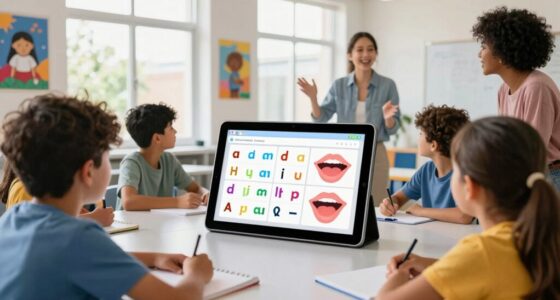

E-learning localization focuses on making content clear, accurate, and culturally relevant to guarantee learners understand and absorb information effectively. You need to prioritize technical accuracy and adapt examples or idioms while maintaining clarity. In contrast, entertainment dubbing aims to capture the tone, humor, and personality of characters, matching lip movements and emotional expression. If you want to explore how these approaches differ and what strategies work best, keep going for more insights.

Get everyday helpers delivered free with Prime
- Fast, free delivery on millions of items
- Prime Video, Amazon Music and more included
- Member-only deals all year
Key Takeaways
- E-learning localization emphasizes accuracy, technical terminology, and cultural relevance to ensure clarity and effective learning.
- Entertainment dubbing focuses on matching lip movements, tone, humor, and emotional expression to maintain viewer engagement.
- E-learning content requires precise translation to preserve educational intent, while entertainment prioritizes natural language flow and personality.
- Cultural adaptation in e-learning ensures examples and references resonate, whereas in entertainment, it enhances authenticity and entertainment value.
- The primary goal in e-learning is knowledge transfer, while in entertainment, it is maintaining immersion and emotional connection.
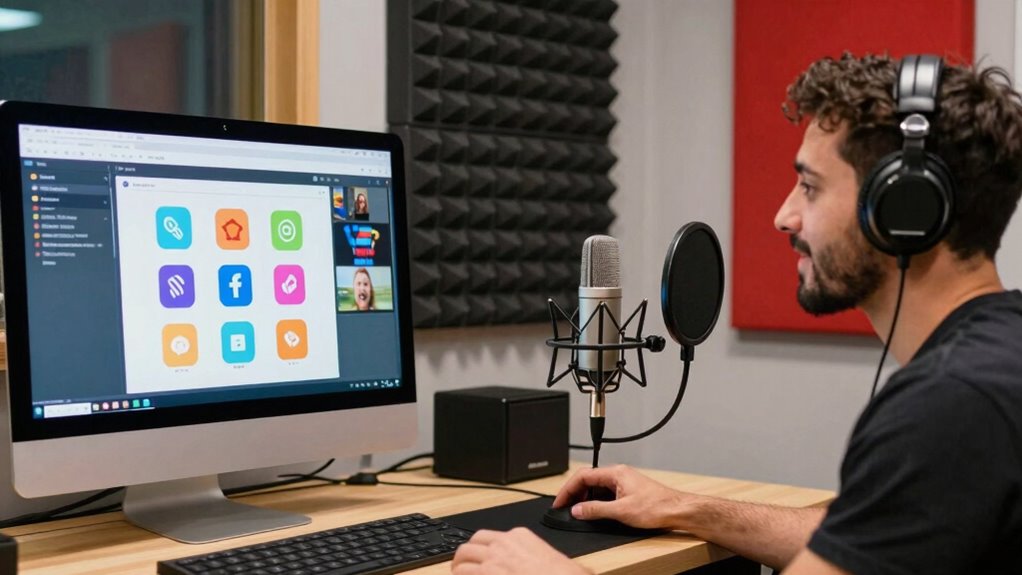
While both e-learning localization and entertainment dubbing involve adapting content for different audiences, they serve vastly different purposes and demand distinct approaches. When you’re working on e-learning localization, your primary goal is to ensure learners understand the material as if it were originally created for their language and culture. This means you need to focus heavily on cultural adaptation, making sure examples, idioms, and references resonate with the target audience. Language accuracy is critical here; your translations must preserve the original intent while being clear and accessible. You want learners to feel that the content was designed specifically for their context, which requires careful attention to cultural nuances and terminology. The tone should be professional and consistent, supporting learning objectives rather than entertainment.
On the other hand, entertainment dubbing aims to engage viewers and evoke emotions, so the approach is quite different. When you dub a movie or TV show, the focus shifts to capturing the original tone, humor, and personality of characters. Here, cultural adaptation is still important, but it’s balanced with maintaining the artistic integrity of the content. You need to match the timing, lip movements, and voice performance to create a seamless experience. Language accuracy remains essential, but it’s more about conveying the original characters’ personalities and emotions rather than straightforward translation. Dubbing often involves creative liberties to adapt jokes, idioms, or cultural references in a way that feels natural for the target audience, ensuring they connect with the content on an emotional level. Additionally, understanding the cultural nuances involved in both fields helps translators make informed decisions that enhance authenticity and effectiveness.
Furthermore, the scope of localization differs between these two fields. With e-learning, you’re often working with technical or educational content that requires precise terminology and clarity. Mistakes or inaccuracies can hinder learning progress, so accuracy and cultural relevance are non-negotiable. This precision is especially important when dealing with technical terminology, which must be accurately translated to avoid confusion. In entertainment, the emphasis is on preserving entertainment value, where voice acting, timing, and emotional expression are prioritized to maintain viewer engagement. The stakes are different: accuracy in e-learning is about effective knowledge transfer, while in entertainment, it’s about sustaining immersion and enjoyment. Recognizing the linguistic precision needed in e-learning ensures that educational content remains accessible and effective, highlighting the difference in goals between these two types of localization.
A thorough understanding of content adaptation principles can significantly improve the quality and effectiveness of both types of localization projects.
e-learning localization software
As an affiliate, we earn on qualifying purchases.
As an affiliate, we earn on qualifying purchases.
Frequently Asked Questions
How Does Cultural Adaptation Differ Between E-Learning and Entertainment Dubbing?
You adapt cultural nuances differently in e-learning and entertainment dubbing because of audience expectations. In e-learning, you focus on clarity, accuracy, and respecting educational standards, ensuring cultural nuances enhance understanding without distraction. In entertainment dubbing, you emphasize matching tone, humor, and emotional impact to meet audience expectations. Your goal is to make content feel natural and engaging, whether informing or entertaining, by carefully tailoring cultural adaptations to suit each context.
What Are the Primary Technical Challenges in E-Learning Localization?
You face several technical challenges in e-learning localization, especially with interactive algorithms that require precise integration across multiple languages. Ensuring quality assurance is vital to maintain content accuracy and consistency, which can be complex with diverse platforms and formats. Did you know that over 60% of e-learning providers report difficulties in adapting interactive elements? Addressing these issues involves seamless technical adjustments and rigorous testing to deliver an engaging, reliable learning experience.
How Is Voice Talent Selection Different for Educational Versus Entertainment Content?
You select voice talent differently based on audience demographics and content accuracy needs. For educational content, you prioritize clear, authoritative voices that foster trust and understanding across diverse learner groups. In entertainment, you focus on engaging, expressive voices that match the characters’ personalities. Your goal is to guarantee the tone suits the target audience, maintaining content accuracy while delivering an authentic experience tailored to each context.
What Impact Does Localization Have on Learner Engagement in E-Learning?
You’ll find that localization considerably boosts learner engagement—studies show localized content increases completion rates by up to 50%. By integrating gamification strategies and interactive assessments tailored to local cultures, you create a more immersive experience. This approach makes the material more relatable and motivating, encouraging learners to stay engaged. When you adapt your e-learning content through localization, you foster better understanding and retention, ultimately leading to more successful learning outcomes.
Are There Specific Legal Considerations Unique to Each Localization Type?
You need to take legal compliance and copyright issues carefully into account, as each localization type has unique legal considerations. For e-learning, guarantee compliance with educational standards and data privacy laws. In entertainment dubbing, copyright issues related to intellectual property rights are prominent, requiring licensing agreements. Understanding these distinctions helps you avoid legal pitfalls, ensuring your content remains compliant, respects intellectual property, and avoids costly legal disputes.
As an affiliate, we earn on qualifying purchases.
Conclusion
You now see that e-learning localization and entertainment dubbing serve different worlds with unique needs. While one aims to educate and inform, the other seeks to entertain and engage. Think of them as two sides of the same coin—each valuable, yet requiring distinct approaches. Just as a master storyteller tailors their tale, you must adapt your strategy to truly connect, reminding us that understanding the audience is the key that accesses meaningful communication.
As an affiliate, we earn on qualifying purchases.
translation and localization tools
As an affiliate, we earn on qualifying purchases.
As an affiliate, we earn on qualifying purchases.
Halloween Picks
halloween
As an affiliate, we earn on qualifying purchases.