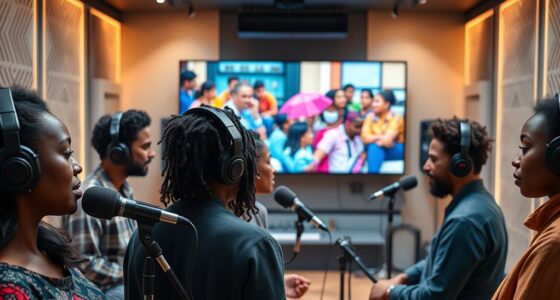

If you want a truly authentic experience, subtitles often beat dubbing because they preserve original voices, cultural nuances, and emotional depth. You’ll catch idiomatic expressions, regional accents, and subtle language details that dubs sometimes lose or distort. Subtitles also keep you connected to the story’s cultural context, making it more immersive. If you keep exploring, you’ll discover even more reasons why subtitles enhance your understanding and enjoyment of international media.

Get everyday helpers delivered free with Prime
- Fast, free delivery on millions of items
- Prime Video, Amazon Music and more included
- Member-only deals all year
Key Takeaways
- Subtitles preserve original voices, tone, and emotional nuance, enhancing authenticity and emotional impact for viewers.
- They maintain cultural references, idiomatic expressions, and regional accents often lost in dubbing.
- Subtitles encourage engagement with the original language, supporting linguistic diversity and cultural appreciation.
- They create a more immersive experience by requiring active reading and connecting viewers to the original context.
- Subtitles are cost-effective and accessible, allowing broader audiences to enjoy foreign media without language barriers.
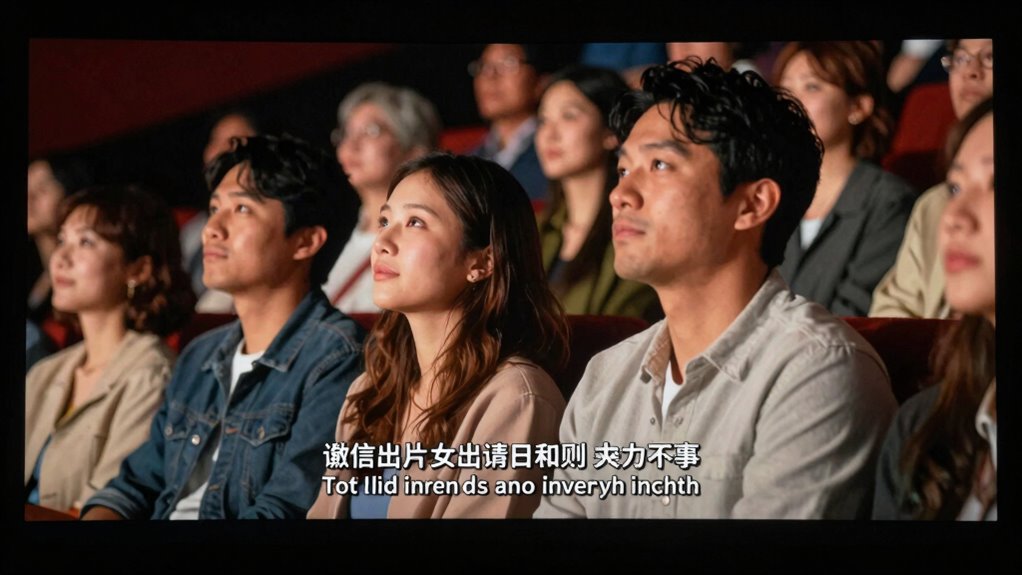
When it comes to enjoying foreign films or TV shows, the choice between subtitles and dubbing can considerably impact your viewing experience. If you value cultural authenticity, subtitles often provide a richer, more genuine connection to the original material. Dubbing, while convenient, can sometimes distort the nuances of a language, losing subtle cultural references and emotional depth in translation. When you opt for subtitles, you’re more likely to experience the story as it was intended, with all its cultural context intact. This approach allows you to hear the authentic voices of actors, preserving the original tone, pitch, and emotion that might get muddled through voice-over translations.
Subtitles also play a key role in language preservation. By reading the dialogue in its original language, you’re indirectly supporting the maintenance of linguistic diversity. Watching with subtitles encourages you to engage with unfamiliar words and expressions, fostering a deeper appreciation for the language’s richness. Over time, this can enhance your understanding and even spark an interest in learning the language itself. In contrast, dubbing often replaces original speech with a localized version that may lack the cultural nuances embedded in the original language. This can lead to a homogenized viewing experience where the cultural specificity gets lost, and the story feels less authentic.
You might find that subtitles demand a little more attention, but that’s part of the immersive experience. They keep you connected to the original context, making the cultural authenticity of the film or show more vivid. They also allow you to catch idiomatic expressions, regional accents, and cultural references that are often missed in dubbed versions. This authenticity enriches your understanding of the characters’ backgrounds and the societal nuances woven into the plot. Plus, subtitles help maintain the original voice acting’s emotional integrity, which is crucial for a genuine audience experience. Moreover, cultural nuance in subtitles can reveal subtleties that are often lost when content is dubbed. Supporting language preservation through watching subtitles can also contribute to the ongoing vitality of diverse linguistic communities. Additionally, research in sound healing science shows that engaging with original language content can activate neural pathways associated with comprehension and emotional processing, enriching your overall viewing experience.
Furthermore, choosing subtitles can be a cost-effective way to enjoy international media without the need for multiple language voice-overs or production costs associated with dubbing, making it accessible to a broader audience. Dubbing may also be less effective in conveying cultural context, as voice actors may not capture the original tone or regional accents that add depth to characters. While dubbing can be easier and faster, it often comes at the expense of cultural authenticity and language preservation. Dubbing may seem more accessible, but it can inadvertently dilute the cultural essence of a foreign production. By choosing subtitles, you support the preservation of original languages and their cultural expressions. Ultimately, if you want to truly immerse yourself in the story’s cultural fabric, subtitles are the way to go, offering a more authentic, respectful, and enriching viewing experience.
As an affiliate, we earn on qualifying purchases.
Frequently Asked Questions
How Do Subtitles Affect Viewing Comprehension Compared to Dubbing?
Subtitles enhance your viewing comprehension by allowing you to read and understand dialogue in the original language, improving reading accuracy. They also keep you more engaged because you process both visual and textual cues simultaneously. Unlike dubbing, which can distract you from the visuals, subtitles encourage active listening and reading, making the experience more immersive and authentic. This combination helps you grasp nuances and emotions better while staying engaged with the story.
Are Subtitles More Accessible for Hearing-Impaired Audiences?
Subtitles act as a beacon for hearing-impaired audiences, offering visual clarity that’s hard to match. They provide direct language accuracy, ensuring you grasp every nuance without losing the original tone. Unlike dubbing, which can obscure facial expressions or vocal cues, subtitles stay clear and accessible. You can follow along effortlessly, enjoying the story’s richness while your eyes navigate the text, making the experience truly inclusive and immersive.
Do Subtitles Influence the Emotional Impact of a Scene?
Subtitles considerably influence the emotional impact of a scene by maintaining visual authenticity and allowing you to connect directly with the dialogue’s nuances. They preserve the original language’s tone and cultural context, enhancing your emotional engagement. Dubbing can sometimes diminish this connection, but subtitles keep the authentic voice intact, supporting language preservation and ensuring you feel every moment as intended by the creators.
How Does Cultural Context Impact Subtitle Translation Choices?
Cultural context deeply shapes your subtitle translation choices. You realize that cultural nuances can make or break the message, so you carefully balance translation accuracy with sensitivity. Missing subtle references risks alienating audiences or losing meaning. You navigate this delicate dance, ensuring that the humor, idioms, and customs resonate authentically. This precision keeps viewers engaged, preserving the story’s essence while respecting cultural differences, making every subtitle a bridge rather than a barrier.
What Are the Cost Differences Between Subtitles and Dubbing?
You’ll find that subtitles are generally more cost-efficient than dubbing because they involve lower production complexity. Dubbing requires hiring voice actors, sound engineers, and additional studio time, which drives up costs. Subtitles, on the other hand, mainly involve translating and timing text, making them a more budget-friendly option. If budget constraints matter, you’ll likely prefer subtitles, especially for quick releases or international markets.
As an affiliate, we earn on qualifying purchases.
Conclusion
In the battle between subtitles and dubbing, subtitles often deliver an experience that’s truly unparalleled—you feel every nuance spoken by the actors, immersing you deeper into the story. Dubbing can sometimes feel like a shadow of the original, but subtitles keep the soul intact. When it comes to truly connecting with a film, subtitles are your best bet—they’re not just words on a screen, but a gateway to emotions so powerful, they could move mountains.
As an affiliate, we earn on qualifying purchases.
As an affiliate, we earn on qualifying purchases.
Fall Picks
fall essentials
As an affiliate, we earn on qualifying purchases.