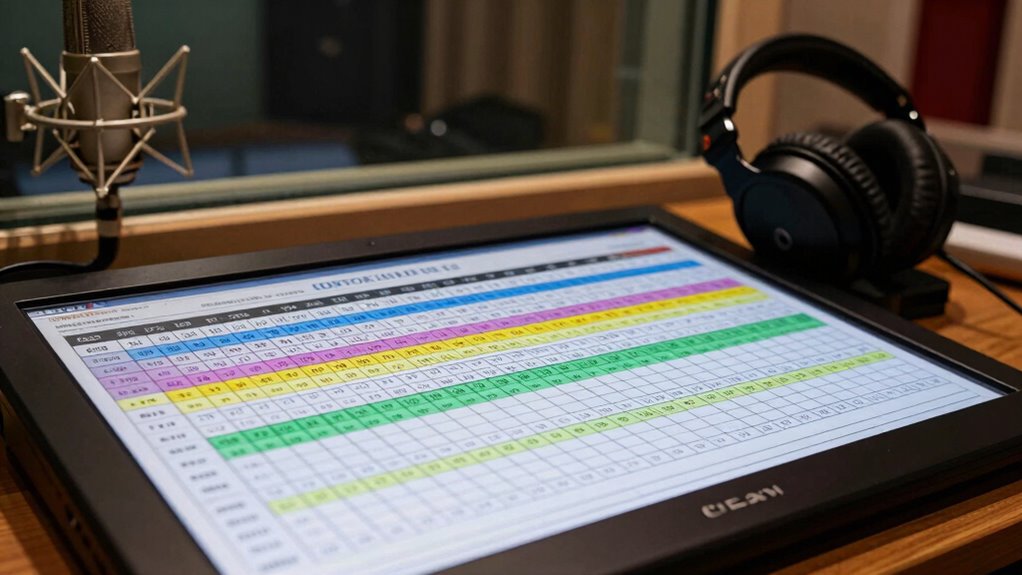

Timing sheets play a vital hidden role in your dubbing sessions by precisely coordinating dialogue with on-screen actions and lip movements. They guide you and the team through synchronization, helping voice actors deliver natural performances while guaranteeing technical accuracy. By serving as a clear blueprint, timing sheets boost efficiency, reduce errors, and improve overall quality. If you keep exploring, you’ll discover how these sheets make certain a seamless, immersive viewing experience from start to finish.
Key Takeaways
- Timing sheets serve as a detailed blueprint ensuring dialogue synchronization with on-screen actions and lip movements.
- They guide voice actors by providing clear cues for start and end points of lines.
- Timing sheets enable precise editing and technical adjustments for seamless audio-visual alignment.
- They facilitate effective communication among the dubbing team, reducing errors and multiple takes.
- Properly structured timing sheets enhance dubbing accuracy, realism, and overall production efficiency.
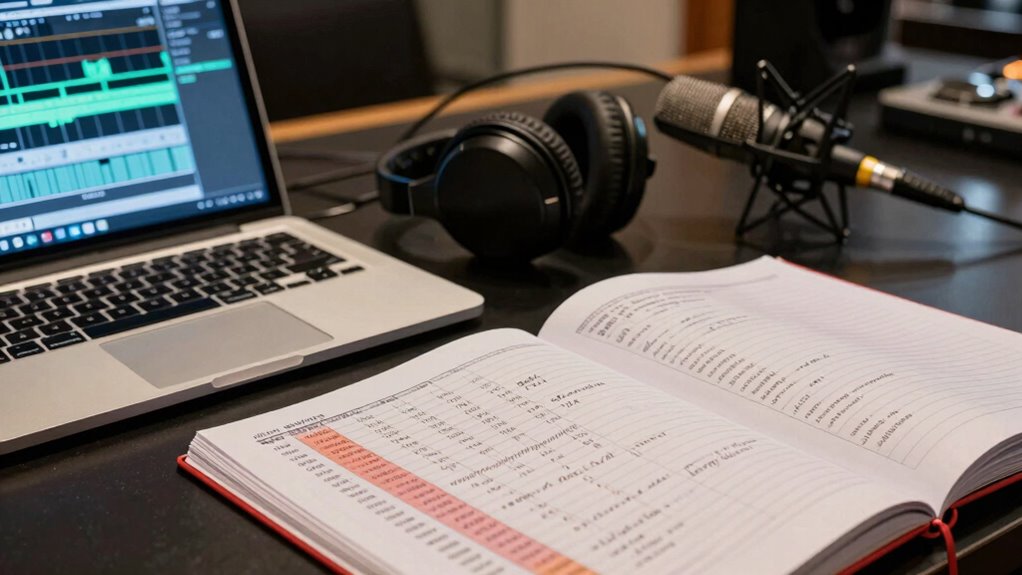
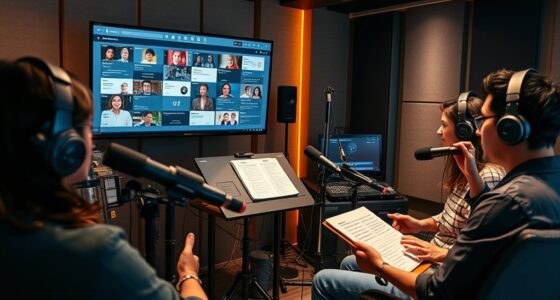
Have you ever wondered how dubbing studios guarantee that dialogue matches perfectly with on-screen actions and lip movements? The answer often lies in the meticulous use of timing sheets. These sheets are essential tools that guide the entire dubbing process, ensuring that voice recordings align seamlessly with the visual content. When you’re in the studio, you might not see the detailed planning behind the scenes, but it’s these timing sheets that keep everything on track. They serve as a blueprint, carefully mapping out when each line should be spoken, how it fits within the scene, and how it syncs with the actor’s lip movements.
Voice actor coordination is a critical aspect facilitated by these timing sheets. They provide clear cues for actors, indicating the exact moments they need to start and finish their lines. This coordination is vital because it helps actors deliver performances that feel natural and synchronized with the visuals. Without precise guidance, even the most talented voice actor might struggle to match their delivery with the on-screen action. Timing sheets break down each scene into manageable segments, giving actors a clear roadmap so they can focus on their performance without worrying about timing inaccuracies. Additionally, understanding the content structure can help actors better interpret their lines within the context of the scene.
Technical synchronization is another essential element that timing sheets help achieve. They ensure that the audio tracks align perfectly with the visual footage, which is crucial for maintaining realism and immersion. The sheets specify exact time codes, so sound engineers can edit and fine-tune recordings to fit perfectly within the scene’s timing. This process often involves adjusting the length of lines, elongating or shortening pauses, and making sure that lip movements are matched precisely. When technical synchronization is spot-on, viewers don’t notice the dubbing at all—they just experience a seamless, believable scene. Additionally, utilizing landscaping techniques can help enhance the overall visual harmony and support synchronization efforts.
In practice, the team works collaboratively, using the timing sheet as their master document. Directors, voice actors, and sound engineers rely on it to keep everyone aligned. The sheet’s detailed notes help to prevent miscommunications and reduce the need for multiple takes, saving time and resources. Ultimately, it’s the careful planning that makes the difference between a distracting, mismatched dub and a flawless, immersive experience for the audience. So, while they might seem like simple documents, timing sheets are the unsung heroes of successful dubbing sessions, expertly balancing voice actor coordination and technical synchronization to deliver a polished final product.

Lap Timing Sheets, Pack/3
Pack of 3 lap timing data sheets
As an affiliate, we earn on qualifying purchases.
As an affiliate, we earn on qualifying purchases.
Frequently Asked Questions
How Are Timing Sheets Created for Different Languages?
You create timing sheets for different languages by first translating the original script accurately. Then, you focus on voice synchronization, adjusting the timing to match each language’s speech patterns. You analyze the translated script, ensuring it fits the original scene’s pace and emotion. This process involves careful editing, aligning dialogue cues, and refining the timing so that every word syncs perfectly with the on-screen action, making dubbing seamless across languages.
What Software Tools Are Best for Managing Timing Sheets?
You should use software tools like Final Cut Pro, Aegisub, or Celtx, which excel at managing timing sheets for voice synchronization and script integration. These tools allow you to precisely align dialogue with visual cues, making it easier to adjust timing as needed. They also facilitate collaborative editing, ensuring your timing sheets stay accurate across different languages and dubbing sessions, ultimately streamlining the entire process.
How Do Timing Sheets Adapt to Live Dubbing Sessions?
In live dubbing sessions, timing sheets adapt like a conductor guiding an orchestra, ensuring perfect voice synchronization and script alignment. You actively update them on the fly, marking precise cues as actors perform, and adjust timing to match spontaneous variations. This dynamic process keeps the dialogue seamlessly synchronized with visual cues, allowing you to maintain fluidity and accuracy, even when unexpected changes arise, turning a chaotic scene into a harmonious performance.
Who Typically Oversees the Accuracy of Timing Sheets?
You typically oversee the accuracy of timing sheets, ensuring proper script synchronization and quality assurance. Your role involves reviewing the timing details against the dialogue, making sure lip movements match speech, and confirming that the pacing aligns with the original content. By diligently checking these aspects, you help maintain seamless dubbing, prevent delays, and guarantee that the final product resonates naturally with viewers.
Can Timing Sheets Be Reused for Multiple Projects?
Timing sheets are like blueprints for script synchronization, but they shouldn’t be reused across multiple projects. You need to adjust them for each new project to guarantee voice actor coordination stays precise. Reusing timing sheets can lead to mismatched lip movements and awkward dialogue flow. Instead, tailor each sheet to the specific script to keep the dubbing smooth and natural, maintaining high-quality voice synchronization.

From Sheet Music to Stage: Preparing for Your Performance
As an affiliate, we earn on qualifying purchases.
As an affiliate, we earn on qualifying purchases.
Conclusion
Think of timing sheets as the compass guiding your dubbing voyage. Without them, you’d drift aimlessly through a sea of dialogue, unsure if your words align with the original intent. But with these sheets in hand, you’re the captain steering precisely, ensuring every line hits its mark, perfectly synchronized. They’re the hidden map that transforms a chaotic session into a smooth journey, turning your dubbing experience into a well-orchestrated adventure where every cue finds its true destination.

KTTOOL Chassis Ears Automotive Engine Noise Finder, 6 Channel Car Sound Detector Tester Tool Set, Electronic Stethoscope Diagnostic Kit with Headphones
🚕【PMulti-Channel Chassis Ears Automotive Engine Tool】: 6-channel detector design, sound and light synchronization. This auto detector tool can…
As an affiliate, we earn on qualifying purchases.
As an affiliate, we earn on qualifying purchases.
film dubbing timing software
As an affiliate, we earn on qualifying purchases.
As an affiliate, we earn on qualifying purchases.