
As a voice director in international co-productions, you guide actors to deliver performances that authentically represent different cultures. You oversee casting choices, ensuring voice talent can convey personality, emotion, and cultural nuances convincingly. You collaborate on localization, adjusting scripts for humor and idioms, and direct recording sessions to match the tone and style of the original. Your role helps bridge cultural gaps, making stories more authentic and relatable—discover how these elements come together in the process.
Key Takeaways
- Select culturally authentic voice actors who accurately represent diverse backgrounds and story nuances.
- Collaborate with translators and scriptwriters to adapt content for target audiences while preserving original intent.
- Guide actors during recording sessions to ensure performances match the tone, emotion, and cultural context.
- Promote cultural sensitivity and ethical standards, ensuring respectful and inclusive storytelling.
- Facilitate seamless integration of performances to create a cohesive, relatable, and authentic international viewing experience.
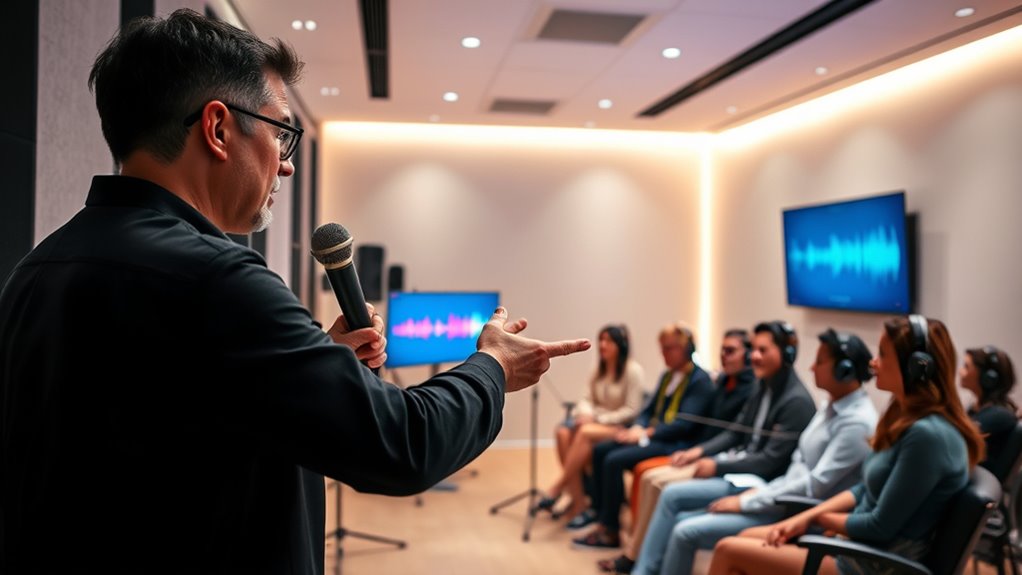
Have you ever wondered how voice directors help bridge cultural and linguistic gaps in international co-productions? It all begins with voice casting, where you play an essential role in selecting actors who can authentically represent characters across diverse cultures. You don’t just look for someone who sounds right; you seek talent that can convey the character’s personality, emotional depth, and cultural nuances. This process involves understanding the subtleties of each language and accent, guaranteeing the voice talent can deliver lines convincingly and naturally. When choosing voice actors, you also consider their ability to adapt their delivery to fit the cultural context of the story, which is critical for maintaining authenticity.
Effective voice casting ensures authentic, culturally nuanced performances for seamless international storytelling.
Cultural adaptation is at the core of your work. You work closely with translators and scriptwriters to ensure dialogue resonates with the target audience without losing the original intent. This might mean adjusting idioms, humor, or references so they feel familiar and relatable, yet still respect the source material. Your goal is to make the story feel seamless and genuine, regardless of the language or culture. This process requires a keen ear for nuance and a deep understanding of cultural sensitivities. By guiding voice actors through this adaptation process, you help preserve the integrity of the story while making it accessible to new audiences.
As a voice director, you also coordinate recording sessions, providing actors with clear direction on intonation, emotion, and timing. Your active involvement guarantees that performances align with the tone and style of the original production, but also suit the cultural context of the target language. You have to be adaptable, often encouraging actors to bring their own cultural insights into their performances, which enriches the final product. Throughout this process, you act as a bridge—translating creative and cultural ideas into performances that resonate universally. Additionally, understanding the importance of privacy and consent ensures that all recordings and performances are handled ethically and professionally.
In international co-productions, your role extends beyond technical direction; you become a cultural ambassador, ensuring that the voice performances honor both the source material and the target audience’s sensibilities. Your expertise in voice casting and cultural adaptation not only helps avoid misunderstandings but also promotes inclusivity and respect for diverse cultures. In the end, your work as a voice director is pivotal in creating a cohesive, authentic experience that connects viewers across borders, making stories truly global.

MAONO XLR Condenser Microphone, Professional Cardioid Studio Recording Mic for Streaming, Podcasting, Singing, Voice-Over, Vocal, Home-Studio, YouTube, Skype, Twitch (PM320S)
48V phantom power required: When using PM320S, you need to connect the microphone to a 48V phantom power/audio…
As an affiliate, we earn on qualifying purchases.
As an affiliate, we earn on qualifying purchases.
Frequently Asked Questions
How Do Voice Directors Handle Language Barriers During Production?
You handle language barriers by coordinating closely with linguistic experts and translators to guarantee accurate linguistic adaptation. You manage dialects carefully, guiding actors to deliver authentic performances that respect cultural nuances. You also facilitate clear communication between international teams, making sure everyone understands script nuances and pronunciation. This proactive approach helps overcome language obstacles, ensuring the final product resonates locally while maintaining the show’s integrity across different languages and dialects.
What Skills Are Essential for a Successful Voice Director Internationally?
You need strong communication skills and cultural awareness to succeed as an international voice director. Your expertise in voice casting guarantees you select actors who resonate globally, while performance direction helps actors deliver authentic, engaging voices across languages. Being adaptable and empathetic lets you navigate diverse accents and performances, making your direction effective. These skills combine to create seamless, compelling productions that resonate worldwide.
How Do Voice Directors Balance Cultural Differences in Performances?
You balance cultural differences by actively understanding cultural nuances and integrating them into performances. You listen carefully to actors’ interpretations, ensuring authenticity while respecting cultural sensitivities. You adapt scripts and instructions to reflect diverse perspectives, fostering genuine performances that resonate globally. By maintaining open communication and cultural awareness, you create authentic performances that honor cultural differences without compromising the integrity of the characters, ensuring the project appeals to diverse audiences.
What Challenges Do Voice Directors Face With Localization Accuracy?
You face challenges with localization accuracy by ensuring linguistic nuances are preserved and cultural sensitivity is maintained. You must carefully adapt scripts so that jokes, idioms, and references resonate correctly across cultures without losing meaning. Balancing fidelity to the original content with cultural appropriateness requires keen attention and collaboration with translators and cultural consultants. Your goal is to deliver a natural, authentic performance that respects both linguistic subtleties and cultural differences.
How Do Voice Directors Coordinate Between Multiple International Teams?
Did you know that effective cross-cultural communication boosts project success rates by 40%? As a voice director, you coordinate between international teams by employing strong project management strategies. You set clear deadlines, hold regular virtual meetings, and foster open dialogue to guarantee everyone understands their roles. By bridging cultural gaps and maintaining consistent communication, you streamline the process, ensuring the localized content aligns with the original vision and stays on schedule.
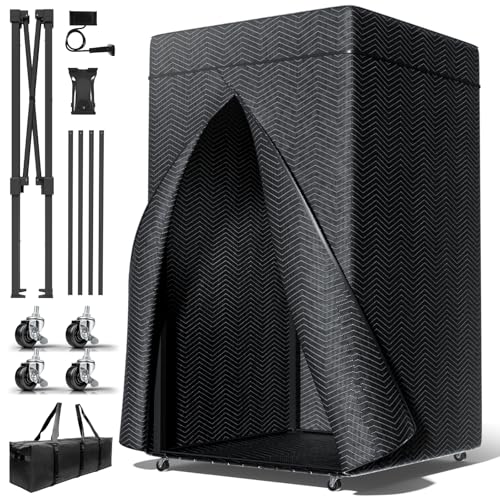
RDCMKL XL Portable Recording Booth, Complete Home Recording Studio Soundproof Vocal Booth, Foldable with Travel Bag for Echo-Free Studio-Quality Sound, Ideal for Voiceovers, Podcasts, and Music
Transform your home studio with our complete home recording studio. This vocal booth offers clear, high-quality audio for…
As an affiliate, we earn on qualifying purchases.
As an affiliate, we earn on qualifying purchases.
Conclusion
As a voice director in international co-productions, you bridge cultures and guarantee authentic performances. Your guidance shapes how audiences worldwide connect with characters, making stories resonate across languages. By investigating language nuances and cultural context, you create a visual map of ideas that enhances storytelling. Ultimately, your role isn’t just about directing voices—it’s about uniting diverse perspectives to craft a seamless, compelling experience for all viewers.

OneOdio Wired Over Ear Headphones Hi-Res Studio Monitor & Mixing DJ Stereo Headsets with 50mm Drivers and 1/4 to 3.5mm Jack for AMP Computer Recording Podcast Keyboard Guitar Laptop – Black
Bass Sound: Enjoy clear sound and superior comfort with the OneOdio Studio Monitor Headphones. Equipped with large 50mm…
As an affiliate, we earn on qualifying purchases.
As an affiliate, we earn on qualifying purchases.
![WavePad Free Audio Editor – Create Music and Sound Tracks with Audio Editing Tools and Effects [Download]](https://m.media-amazon.com/images/I/B1HPw+BmlXS._SL500_.png)
WavePad Free Audio Editor – Create Music and Sound Tracks with Audio Editing Tools and Effects [Download]
Easily edit music and audio tracks with one of the many music editing tools available.
As an affiliate, we earn on qualifying purchases.
As an affiliate, we earn on qualifying purchases.