TL;DR

Get everyday helpers delivered free with Prime
- Fast, free delivery on millions of items
- Prime Video, Amazon Music and more included
- Member-only deals all year
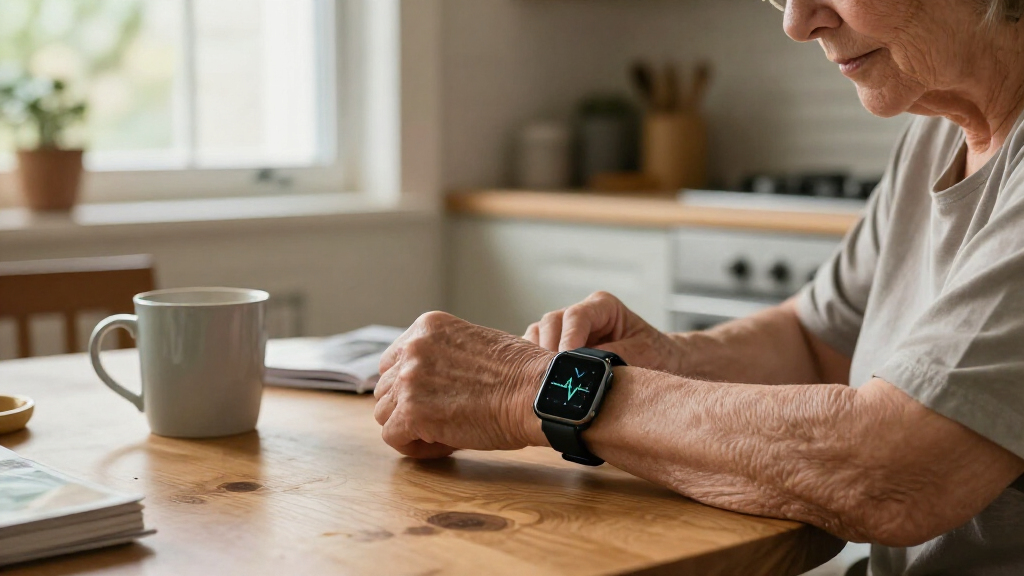
A study presented at the American Heart Association meeting found that an AI model used with Apple and Samsung smartwatches could identify some cases of reduced left ventricular ejection fraction, but readings often differed between devices and across repeated home recordings. Researchers say the findings do not establish smartwatch ECGs as reliable stand-alone screening tools, and more research is needed before clinical use.
A Korean study presented at the American Heart Association annual meeting found that an AI model screening smartwatch ECGs for reduced heart pumping function could produce different results across Apple and Samsung devices and inconsistent readings for the same person at home. The findings raise questions about relying on smartwatch results to identify left ventricular systolic dysfunction, or LVSD, without clinical follow-up.
The analysis compared readings from 2,211 people undergoing echocardiography for clinical reasons at Incheon Sejong Hospital. Participants were given Apple Watches and Samsung Galaxy Watches, and researchers applied the same AI-ECG model cutoff to both devices. LVSD was defined as an ejection fraction of 40% or less on an ECG taken within 14 days of an echocardiogram.
Researchers reported areas under the curve of 0.907 for Apple Watch and 0.895 for Galaxy Watch. Sensitivity was 69.2% and 53.4%, respectively, while specificity was 88.9% and 93.4%. But at the shared cutoff, 9% of participants had discordant results: 158 tested positive only on Apple Watch and 42 only on Galaxy Watch. Presenter Hak Seung Lee said Apple Watch scores tended to be higher.
In a separate, smaller group of 146 people recording ECGs at home, 49.3% had both positive and negative results within the same week using the same device, usually a Galaxy Watch. Attempts to reduce inconsistent results, including averaging readings across a week, had trade-offs: a stricter rule reduced false positives but also missed more cases of LVSD.
Why Device Results May Not Be Enough
The findings matter because a smartwatch could make it easier to flag possible reduced heart function outside a clinic. But if results shift by device or from one recording to another, a screening program could miss people who need assessment or send many people for follow-up after false alarms. Either outcome affects how clinicians and health systems would use the technology.
Jessica Golbus, a University of Michigan cardiologist who spoke at the AHA press conference, said the challenge is balancing the need to identify people with LVSD against the burden of false positives on healthcare resources. She also said health systems would need a clear route for people with positive results to receive appropriate evaluation and treatment. The study did not show that smartwatch screening improves patient outcomes.
Popular right now

Apple AirPods Pro (2nd Generation) Wireless Earbuds with USB‑C Charging, Up to 2X More Active Noise Cancelling, Transparency Mode, Adaptive

KitchenAid Artisan Mini Tilt-Head Stand Mixer, 3.5 Qt, Contour Silver

DREAME A3 AWD 1000 LiDAR Robot Lawn Mower
As an affiliate, we earn on qualifying purchases.
How Researchers Tested the Watches
Interest in smartwatch screening follows earlier research, including a 2022 study that reported good accuracy for an AI model using a smartwatch’s single-lead ECG to detect LVSD. The current study tested a model called AiTiALVSD-1L. According to Lee, it was pre-trained on nearly 3 million ECGs without labels, then fine-tuned using about 360,000 clinical lead I ECGs.
Researchers set a model cutoff of 23.5 using a separate Galaxy Watch tuning set designed for 98% specificity, then applied that cutoff to both watch brands. The 2,211-person device comparison cohort included people already referred for echocardiography; 6.6% had known LVSD and 31% had known heart failure. The separate at-home cohort had higher rates of known disease: 33.6% had LVSD and 55.5% had heart failure.
“A single negative home recording is not reassuring on its own, and mixed results should prompt further evaluation.”
— Hak Seung Lee, study presenter
Who the Results Apply To
The study was conducted at one hospital and did not test screening in asymptomatic people without known heart failure. Its participants had already been referred for echocardiography, so the results may not reflect performance among the general public or people with different levels of risk.
The report does not establish how the model performs across age, race, ethnicity, or different ejection fractions. It also does not show whether using the watches to screen patients would improve treatment or health outcomes. Golbus said performance in different patient populations needs further study.
Further Testing Before Clinical Use
Researchers will need to test the model in larger and more varied populations, determine whether each watch requires its own cutoff, and assess how repeated readings should be interpreted. Further work also needs to establish how positive or mixed readings can be followed up without unnecessary referrals or missed cases.
Lee said more evidence is needed before real-world application. Golbus pointed to clinical outcomes and reliable pathways into care as important next steps. The study report does not specify a timeline for those studies or a date for any clinical rollout.
Key Questions
What condition was the smartwatch model looking for?
It screened for left ventricular systolic dysfunction, a condition in which the heart’s main pumping chamber has reduced function. In this study, LVSD was defined as an ejection fraction of 40% or less.
Did the Apple and Samsung watches give the same results?
No. At the shared AI-model cutoff, 9% of the 2,211-person cohort had discordant results: 158 were positive only on Apple Watch and 42 only on Galaxy Watch.
Does a negative smartwatch ECG rule out LVSD?
The study does not support using a single negative home recording to rule out LVSD. Presenter Hak Seung Lee said one negative reading is not reassuring on its own; people should discuss health concerns and test results with a qualified healthcare professional.
Was the study conducted in the general population?
No. The main cohort consisted of people referred for clinically indicated echocardiography at one hospital in South Korea. The researchers did not assess screening performance in asymptomatic people without heart failure.
What needs to happen before smartwatch screening is used routinely?
Researchers need to test performance in broader patient groups, address differences between devices and repeated readings, and examine whether screening leads to appropriate care and improved clinical outcomes. The study did not establish a timeline for routine use.
Source: medpagetoday.com