
TL;DR

Get everyday helpers delivered free with Prime
- Fast, free delivery on millions of items
- Prime Video, Amazon Music and more included
- Member-only deals all year
A study published in the Journal of Clinical Investigation found brain tissue loss and weakened connections between memory- and planning-related regions in people with pulmonary hypertension. The researchers linked these changes to inflammation involving the NCOA7 gene, but the work does not establish a clinical screening test or treatment.
University of Pittsburgh and UPMC researchers have linked pulmonary hypertension to specific brain changes and inflammation involving the NCOA7 gene, offering a possible biological explanation for memory and concentration problems reported by some patients. The study, published November 2 in the Journal of Clinical Investigation, points to a potential marker for future research, but it does not establish a test for routine clinical use.
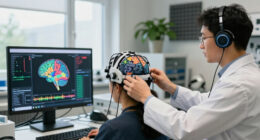
The team compared brain MRI scans from people with pulmonary hypertension with scans from people without the condition, drawing on a large public health database and a smaller group of UPMC patients. In both groups of patients with pulmonary hypertension, researchers observed loss of brain tissue and weaker communication between the cerebellum and frontal lobe, regions involved in memory, attention and planning.
The report says the same pattern was not seen in people with other heart, lung or psychiatric conditions included in the comparisons. The researchers also found that the changes could not be explained by low blood oxygen, impaired heart function or medications used to treat pulmonary hypertension. Those comparisons support an association specific to the disease in the study, but do not show that every patient experiences cognitive symptoms.
Genetic analyses and laboratory work linked the brain findings to NCOA7, a gene previously associated by the research team with inflammatory responses in pulmonary hypertension. Examination of cerebellum tissue from affected people and mice showed signs of overactive microglia, the brain’s immune cells, and changes in neurons. Mice with pulmonary hypertension that also lacked NCOA7 had more severe cerebellar damage than mice with the disease alone, supporting a role for the gene in regulating inflammation in this model.
Brain Symptoms May Be Part of the Disease
The findings add evidence that pulmonary hypertension may affect more than the blood vessels of the lungs and the heart. Cognitive difficulties can affect daily activities and quality of life, yet the source report says current management guidelines do not include cognitive screening, and no biological marker is available to predict or track brain effects.
A marker related to NCOA7 could eventually help researchers identify people at risk or measure disease-related brain changes. For now, that is a research possibility, not a validated clinical tool. The study also suggests inflammation could be a target for investigation, but it did not test a treatment that prevents or reverses cognitive impairment.
Senior researcher Stephen Chan said the results support treating memory or concentration complaints as potentially relevant to pulmonary hypertension rather than assuming they are unrelated. The study may also prompt researchers to examine whether similar inflammatory pathways operate in other conditions, though that broader connection remains a hypothesis.
Popular right now

Hisense 85 U7 Mini-LED ULED 4K UHD Smart Google TV (85U7SG, 2026)

Ninja CREAMi 7-in-1 Ice Cream Maker, NC301

LG 85-Inch QNED84B Mini LED 4K Smart TV (2026)
As an affiliate, we earn on qualifying purchases.
How Researchers Traced the Brain Changes
Pulmonary hypertension is high blood pressure in the vessels of the lungs. It can cause shortness of breath, chest pain and lightheadedness. The study focuses on reported cognitive concerns, including impaired executive function and memory problems, and asks whether they have a biological link to the disease.
Chan’s earlier research identified a variant in NCOA7 that, according to the report, drives inflammatory responses and is associated with worse survival in about a quarter of pulmonary hypertension patients. The new study tested whether this pathway might also be involved in brain inflammation. The researchers combined brain imaging and blood tests with genetic analysis, tissue examinations and experiments in mice.
The paper, by Okawa and colleagues, is titled “Cerebellar and frontal lobe alterations in pulmonary hypertension implicate an inflammatory lung vascular/brain axis.” It appeared in the Journal of Clinical Investigation on November 2, 2026. Its findings bring together human comparisons and animal experiments; the mouse results help investigate a possible mechanism but do not, on their own, establish effects in people.
““This changes the way we look at a disease like pulmonary hypertension. In medicine, we typically treat the symptoms of one organ system; but the reality is that our bodies are very complex, and disease processes may be affecting multiple parts of the body in a variety of ways.””
— Stephen Chan, M.D., Ph.D., University of Pittsburgh and UPMC
Clinical Use Remains Unproven
The study does not establish how common or severe cognitive impairment is across all people with pulmonary hypertension, nor whether the observed brain changes predict an individual patient’s symptoms or future decline. The source report does not provide enough detail here to assess the size and composition of each comparison group or the precise performance of a proposed NCOA7-related marker.
No screening test based on these findings is described as ready for clinical use, and the study did not demonstrate that changing NCOA7 activity or reducing inflammation improves cognition. Chan’s suggestion that the mechanism could apply to dementia, aging or other inflammatory conditions remains a hypothesis. Further research is needed to establish how the findings translate to patient care.
Validation Needed Before Screening
The next steps are to test the findings in additional groups of people with pulmonary hypertension and determine whether NCOA7-related measures can reliably track brain changes or cognitive outcomes. Researchers would also need to establish whether the observed MRI differences correspond to changes in patients’ day-to-day memory, attention and planning.
Further studies could examine whether inflammation can be safely targeted and whether doing so preserves brain function, but this report does not announce a treatment trial or a timeline for clinical adoption. Until more evidence is available, patients with concerns about memory or concentration can raise them with their health care team; the study itself does not offer individual diagnosis or treatment guidance.
Key Questions
What did the study find?
Researchers reported brain tissue loss and weaker communication between the cerebellum and frontal lobe in the pulmonary hypertension groups they studied. They also linked the changes to inflammatory processes involving NCOA7.
Does pulmonary hypertension cause cognitive decline in every patient?
No. The study reports group-level findings and does not show that every person with pulmonary hypertension has cognitive impairment or that all memory and concentration problems have the same cause.
Is there now a test to screen patients for brain effects?
No validated clinical screening test is established by this study. The researchers identified a potential biological marker for future investigation, while current guidelines described in the report do not include cognitive screening.
Does the study show that treating inflammation will improve memory?
No. The findings identify inflammation as a possible research target, but the study did not test a treatment or show that reducing inflammation prevents or reverses cognitive changes.
Could the findings apply to dementia or aging?
Chan said the mechanism might be relevant to other inflammatory conditions, including those that contribute to dementia or aging. That is a hypothesis and has not been established by this study.
Source: news-medical.net