
AI detection tools help you distinguish synthetic voices from genuine ones using advanced algorithms that analyze speech patterns, pitch, and spectral features. These tools identify subtle irregularities, like unnatural pauses or frequency deviations, which often escape human ears. As voice synthesis technology improves, detection methods are also evolving to stay ahead of increasingly realistic sounds. If you want to understand how these tools adapt and their role in safeguarding communication, there’s more to contemplate.

Get everyday helpers delivered free with Prime
- Fast, free delivery on millions of items
- Prime Video, Amazon Music and more included
- Member-only deals all year
Key Takeaways
- Detection tools analyze speech patterns, pitch variations, and spectral features to identify signs of synthetic voices.
- They utilize machine learning algorithms trained on genuine and AI-generated audio datasets for improved accuracy.
- Detection methods focus on spotting irregularities such as unnatural pauses, pitch inconsistencies, and spectral anomalies.
- Continual updates and adaptation are essential to keep pace with evolving voice synthesis technologies.
- These tools are vital for verifying authenticity in security, media, and legal applications to prevent misinformation and impersonation.
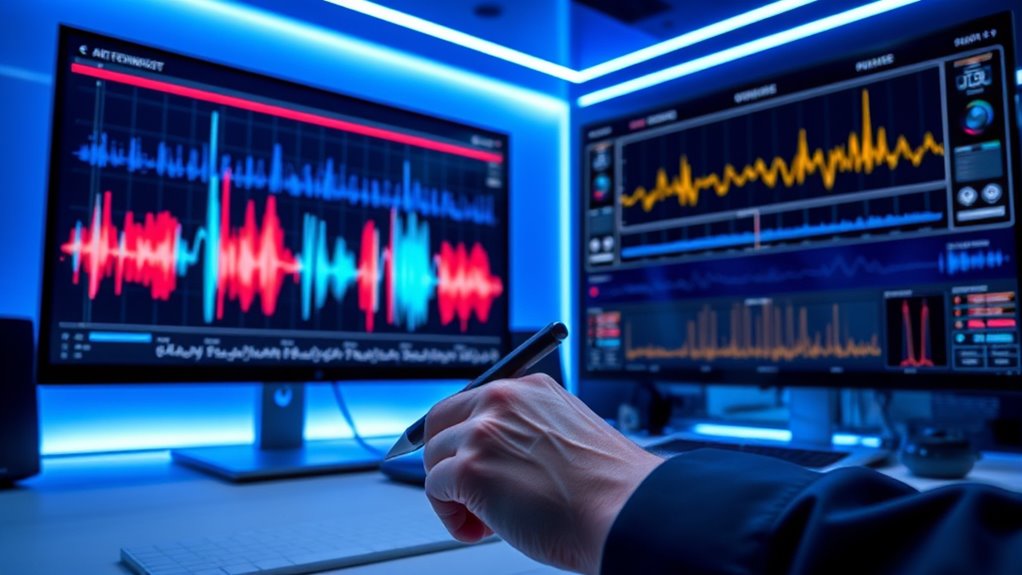
Have you ever wondered how to distinguish between human and AI-generated content? With advances in voice synthesis technology, AI can now produce remarkably realistic speech that’s difficult to tell apart from actual human voices. That’s where AI detection tools come into play, especially those designed to identify synthetic voices. These tools utilize sophisticated detection algorithms, which analyze audio signals to find telltale signs of artificial origin. Instead of relying on surface features alone, these algorithms dig deeper into the nuances of speech patterns, pitch variations, and acoustic signatures that are often subtle or inconsistent in AI-generated voices.
Detection algorithms are essential because they scan for inconsistencies that humans might overlook. For example, they can identify irregularities in pronunciation, unnatural pauses, or repetitive patterns that are common in voice synthesis outputs. Many AI voices lack the natural fluctuations present in human speech, such as slight tremors, emotional inflections, or imperfect intonation. Detection algorithms are trained to spot these discrepancies by analyzing large datasets of both genuine and synthetic voices. They look for statistical anomalies, frequency deviations, or spectral irregularities that serve as digital fingerprints of AI creation.
Detection algorithms identify speech inconsistencies, such as unnatural pauses and spectral irregularities, to distinguish AI voices from human speech.
Voice synthesis has become more advanced, making manual detection increasingly challenging. That’s why automated detection algorithms are crucial in security, media verification, and even legal contexts. They help verify whether a voice clip is authentic or artificially generated, protecting against misinformation, fraud, and impersonation. These detection methods are continually evolving, incorporating machine learning models that improve over time as they are exposed to new types of synthetic voices. The more data they analyze, the better they become at recognizing the subtle cues that distinguish real from fake. Additionally, detection accuracy depends heavily on the quality and diversity of training data, which enhances the system’s ability to identify emerging synthesis techniques.
You should also be aware that as voice synthesis tech advances, so do the detection algorithms. This ongoing ‘arms race’ pushes developers to refine their tools constantly. It’s not enough to rely solely on static criteria; detection algorithms must adapt to new voice synthesis techniques that produce increasingly convincing speech. This dynamic process helps ensure that AI detection tools remain effective and reliable, safeguarding the integrity of voice-based communication across various platforms.
As an affiliate, we earn on qualifying purchases.
Frequently Asked Questions
Can AI Detection Tools Identify All Types of Synthetic Voices?
AI detection tools can’t identify all types of synthetic voices with perfect detection accuracy. Some synthetic voices are highly realistic and can fool even advanced tools, especially as technology improves. You need to stay updated on the latest detection methods, as new synthetic voices emerge constantly. While detection accuracy varies, combining different tools and techniques increases your chances of accurately identifying synthetic voices and preventing deception.
How Reliable Are Current AI Detection Methods?
Current AI detection methods are somewhat reliable, but they aren’t foolproof. Techniques like deepfake detection and voice authentication help identify synthetic voices, yet sophisticated deepfakes can still bypass them. You should stay cautious, as false positives and negatives happen. Continual improvements are making detection more accurate, but it’s essential to combine multiple tools and stay updated on new threats to effectively verify voice authenticity.
What Are the Limitations of AI Voice Detection?
You should be aware that AI voice detection faces significant limitations, especially with voice impersonation, where synthetic voices closely mimic real ones. Detection challenges arise because advanced AI can replicate subtle vocal nuances, making it hard to distinguish between genuine and fake voices. As technology evolves, these challenges increase, reducing the overall reliability of current detection methods and highlighting the need for improved tools to combat sophisticated voice impersonation.
How Do Synthetic Voices Evolve to Bypass Detection?
Synthetic voices evolve to bypass detection through advanced voice cloning and deepfake vulnerabilities. As creators refine algorithms, they produce more lifelike voices that mimic natural speech patterns, making it harder for detection tools to identify them. They exploit weaknesses in AI detection systems, constantly updating their techniques to stay ahead. This ongoing arms race challenges the effectiveness of current detection methods, requiring continuous innovation to keep up with increasingly sophisticated synthetic voices.
Are There Ethical Concerns With Using AI Detection Tools?
You might worry that using AI detection tools raises privacy concerns, especially if personal data is collected or analyzed without consent. False positives can also cause issues, wrongly flagging genuine voices as synthetic, leading to mistrust. While these tools help identify deepfakes and protect authenticity, it’s essential to balance their use with ethical considerations, transparency, and respect for individuals’ privacy rights to avoid potential misuse or harm.
synthetic voice verification tools
As an affiliate, we earn on qualifying purchases.
As an affiliate, we earn on qualifying purchases.
Conclusion
Just as a lighthouse guides ships safely through stormy seas, AI detection tools help you navigate the turbulent waters of synthetic voices. They’re your beacon, shining a light on what’s genuine and what’s not. By staying vigilant and leveraging these tools, you can protect yourself from deception and verify authenticity. Remember, in this digital ocean, your awareness is the lighthouse—keeping you afloat amid waves of synthetic audio. Stay alert, stay safe.
audio authenticity verification device
As an affiliate, we earn on qualifying purchases.
As an affiliate, we earn on qualifying purchases.
voice synthesis detection software
As an affiliate, we earn on qualifying purchases.
As an affiliate, we earn on qualifying purchases.
Halloween Picks
halloween
As an affiliate, we earn on qualifying purchases.