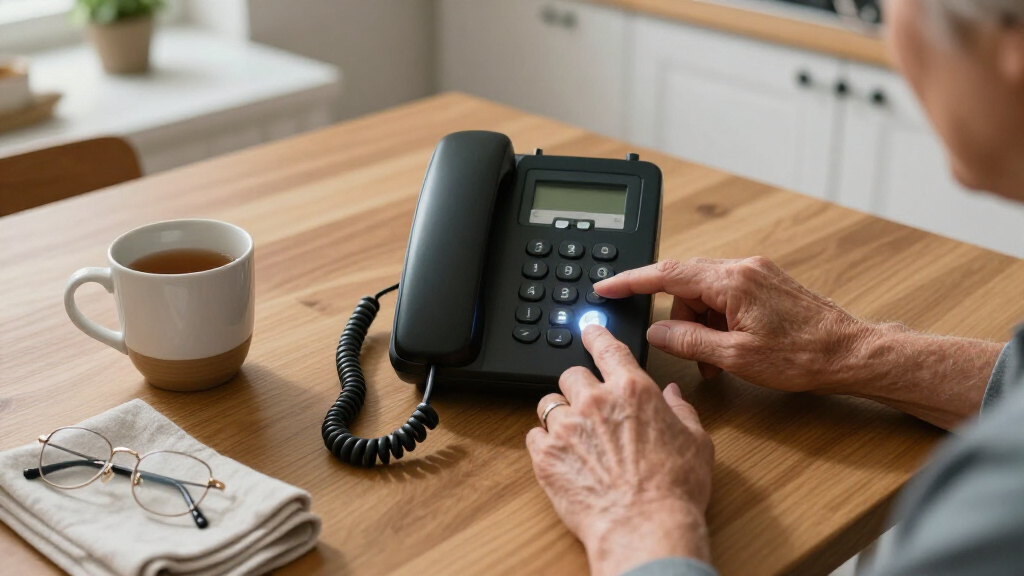

Amplified telephones for seniors solve one specific problem: making everyday calls audible and stress-free again. The Panasonic KX-TGM450S stands out as my best overall pick thanks to its 50dB volume boost, Slow Talk caller playback, and hearing aid compatibility, while the VTech SN1127 is the strongest budget-friendly corded option with photo speed dial for memory support, and the Hamilton CapTel 2400iSPNBT is unmatched for anyone who benefits from captions rather than volume alone. The main tradeoff in this category is between raw amplification and simplicity — the most powerful phones tend to have more buttons and settings, while the simplest phones sacrifice volume ceiling and features. Corded models never lose power or placement, but cordless ones offer freedom around the house. Read on for the full breakdown of all 12 models and which one fits your situation.

Get everyday helpers delivered free with Prime
- Fast, free delivery on millions of items
- Prime Video, Amazon Music and more included
- Member-only deals all year
Key Takeaways
- Panasonic‘s KX-TGM family dominated the comparison because Slow Talk and a 50dB boost address both hearing and comprehension — the two problems seniors actually face on calls.
- The Hamilton CapTel 2400iSPNBT plays a different sport entirely: captioning beats amplification for people with profound or high-frequency hearing loss, but it depends on internet service and a service subscription.
- Photo speed dial proved the single biggest ease-of-use differentiator for seniors with memory difficulties — the VTech SN1127 and Serene Innovations corded models win on this feature even though they’re otherwise basic.
- Several budget amplifiers (the generic 9-photo-key corded model, Clarity D714) reach loud volumes but cut corners on caller ID screens, answering machines, and call blocking, which adds daily frustration.
- Multi-handset bundles like the AT&T BL102-2 and Panasonic KX-TGM420W 3-handset kit only make sense if the senior moves between rooms; paying for extra handsets in a small home is wasted money.
| Hamilton CapTel 2400iSPNBT Large Touch Screen Captioned Telephone |  | Best for Call Captions | Display: Large touchscreen | Captioning: Real-time captions for incoming and outgoing calls | Caption modes: Automated captions or assisted captions with live operator support | VIEW LATEST PRICE | See Our Full Breakdown |
| Panasonic KX-TGM450S Amplified Cordless Phone |  | Best for Maximum Volume and Call Clarity | Phone type: Amplified cordless landline phone | Handsets included: 1 | Caller volume boost: Up to 50dB | VIEW LATEST PRICE | See Our Full Breakdown |
| VTech SN5127 Amplified Cordless Senior Phone with Answering Machine and Call Blocking |  | Best for Photo Speed Dial and Call Screening | Phone type: Cordless senior phone | Audio Assist: 50dB volume boost | Ringer: 90dB with visual ring indicator | VIEW LATEST PRICE | See Our Full Breakdown |
| VTech SN1127 Amplified Corded Senior Phone with Answering Machine |  | Best Corded Pick for Photo Calling | Phone type: Corded amplified phone | Answering machine: Integrated digital answering machine | Photo speed dial: 8 keys | VIEW LATEST PRICE | See Our Full Breakdown |
| AT&T BL102-2 DECT 6.0 2-Handset Cordless Phone with Answering Machine |  | Best Two-Handset Everyday Option | Phone type: DECT 6.0 cordless landline phone | Handsets included: 2 | Handset expansion: Up to 5 | VIEW LATEST PRICE | See Our Full Breakdown |
| Panasonic KX-TGM420W Amplified Cordless Phone with Answering Machine and One Handset |  | Best for Multi-Room Homes | Included handsets: 2 | Maximum expandable handsets: 6 | Caller volume boost: Up to 40 dB | VIEW LATEST PRICE | See Our Full Breakdown |
| VTech SN5147 Amplified Corded/Cordless Senior Phone |  | Best for Power-Outage Reliability | Phone type: Corded base with one cordless handset | Maximum ringer volume: 90 dB | Audio Assist volume boost: Up to 50 dB | VIEW LATEST PRICE | See Our Full Breakdown |
| Panasonic KX-TGM420W Amplified Cordless Phone with Slow Talk, 1 Handset, White |  | Best Starter Pick | Handsets included: 1 | Maximum volume boost: 40 dB | Base ringer volume: Up to 100 dB | VIEW LATEST PRICE | See Our Full Breakdown |
| Clarity D714 DECT 6.0 Amplified Cordless Phone with Digital Answering System |  | Best No-Frills Amplification | Technology: DECT 6.0 | Sound amplification: Up to 40 dB | Tone settings: 4 | VIEW LATEST PRICE | See Our Full Breakdown |
| Serene Innovations Amplified Big Button Corded Landline Phone with Photo Speed Dial |  | Best for Cognitive and Vision Support | Power source: Phone line (no mains power required) | Ringer volume: 85 dB | Answering system: Microcassette, 24 minutes | VIEW LATEST PRICE | See Our Full Breakdown |
| Amplified Corded Landline Phone for Seniors with 9 Photo Memory Keys |  | Best for Photo One-Touch Calling | Phone type: Corded landline | Connection: RJ11 phone line | Memory keys: 9 photo one-touch dialing keys | VIEW LATEST PRICE | See Our Full Breakdown |
| Panasonic KX-TGM420W Amplified Cordless Phone with Digital Answering Machine and 2 KX-TGMA44W Handsets |  | Best Multi-Handset System | Included handsets: 3 (base plus 2 KX-TGMA44W handsets) | Amplified volume: Up to 40 dB | Ringer volume: Up to 100 dB | VIEW LATEST PRICE | See Our Full Breakdown |
| amplified telephones for senior | Phone type |
|---|---|
| Hamilton CapTel 2400iSPNBT Lar | — |
| Panasonic KX-TGM450S Amplified | Amplified cordless landline phone |
| VTech SN5127 Amplified Cordles | Cordless senior phone |
| VTech SN1127 Amplified Corded | Corded amplified phone |
| AT&T BL102-2 DECT 6.0 2-Handse | DECT 6.0 cordless landline phone |
| Panasonic KX-TGM420W Amplified | — |
| VTech SN5147 Amplified Corded/ | Corded base with one cordless handset |
| Panasonic KX-TGM420W Amplified | — |
| Clarity D714 DECT 6.0 Amplifie | Cordless handset |
| Serene Innovations Amplified B | — |
| Amplified Corded Landline Phon | Corded landline |
| Panasonic KX-TGM420W Amplified | — |
More Details on Our Top Picks
Hamilton CapTel 2400iSPNBT Large Touch Screen Captioned Telephone
For someone who can follow a conversation more easily by reading along, the Hamilton CapTel 2400iSPNBT adds real-time captions to amplified phone audio. Its large touchscreen displays incoming and outgoing call captions, while captioned voicemail makes it easier to review messages later. Compared with the Panasonic KX-TGM450S, which puts more emphasis on very loud volume, Slow Talk, and voice controls, this Hamilton is the more specialized choice for people who benefit from text support as they listen. It also offers up to 40dB amplification and hearing aid compatibility. The tradeoff is setup: captioning needs high-speed internet, registration, and eligibility as a US resident with hearing loss; some setups may also need telephone service. I’d skip it if louder audio alone is enough or those requirements are a barrier.
Pros:- Real-time captions appear on a large touchscreen during calls
- Captioned voicemail helps users review messages
- Up to 40dB amplification and hearing aid compatibility
- 24/7 nationwide captioning service is available to eligible US residents at no cost
Cons:- Captioning requires high-speed internet and service registration
- Eligibility is limited to US residents with hearing loss
- Some installations may also require traditional telephone service
Best for: US residents with hearing loss who want to read live captions while listening to calls and can meet the service and internet requirements
Not ideal for: Callers who need a simple plug-in phone, live outside the eligible service area, or lack reliable high-speed internet
- Display:Large touchscreen
- Captioning:Real-time captions for incoming and outgoing calls
- Caption modes:Automated captions or assisted captions with live operator support
- Amplification:Up to 40dB gain
- Hearing aid compatible:Yes
- Voicemail:Built-in answering machine with captioned voicemail
- Requirements:High-speed internet, electrical power, and telephone service in some cases
- Service eligibility:FCC-certified captioning service for eligible US residents with hearing loss; registration required
Our verdict“Choose the Hamilton if reading captions alongside amplified audio is more helpful than the Panasonic KX-TGM450S’s stronger volume-focused controls.”
Panasonic KX-TGM450S Amplified Cordless Phone
The Panasonic KX-TGM450S is the strongest fit here for someone who needs substantial volume and help making fast speech easier to follow. Its 50dB volume boost, six voice-tone settings, noise reduction, and Slow Talk give callers several ways to shape a conversation; the 112dB ringer and red visual alerts can help make incoming calls harder to miss. The VTech SN5127 also reaches 50dB of audio assistance, but the Panasonic adds a particularly loud ringer and expands to six handsets, compared with the VTech’s four. Talking Caller ID and keypad prompts offer extra guidance, though there is a learning curve if those features are unnecessary. The base package includes just one handset, so households wanting phones in several rooms need to add compatible handsets.
Pros:- Up to 50dB caller volume boost with six voice-tone settings
- Slow Talk and noise reduction can make fast or noisy conversations easier to follow
- 112dB ringer plus red visual alerts on the base and handset
- Talking prompts, call blocking, and expansion to six handsets
Cons:- Only one handset is included
- The many accessibility and call-management features may take time to learn
- Battery runtime is not specified in the provided product details
Best for: Older adults with significant hearing loss who want adjustable call clarity, a very loud ringer, and the option to add handsets around the home
Not ideal for: Buyers who want multiple handsets included or prefer a basic phone without many accessibility controls
- Phone type:Amplified cordless landline phone
- Handsets included:1
- Caller volume boost:Up to 50dB
- Ringer volume:Up to 112dB
- Call clarity:Six voice-tone settings, Slow Talk, and noise reduction
- Display and keypad:1.8-inch white backlit LCD and large backlit keypad
- Call blocking:Up to 250 numbers
- Handset expansion:Up to 6 handsets
- Hearing aid compatible:Yes
Our verdict“Pick the Panasonic over the VTech SN5127 if a louder ringer and expansion to six handsets matter more than photo speed-dial keys.”
VTech SN5127 Amplified Cordless Senior Phone with Answering Machine and Call Blocking
The VTech SN5127 combines loud calling features with shortcuts that can make everyday use more familiar. Its four photo speed-dial keys give users a visual way to reach frequent contacts, while spoken Caller ID and a 1,000-number block list help with screening unwanted calls. A one-touch 50dB Audio Assist, 90dB ringer, and flashing visual alert address hearing access; the 22-minute answering machine captures messages when nobody can answer. Compared with the Panasonic KX-TGM450S, this VTech offers photo contacts and a larger block list, while the Panasonic has a louder stated ringer and can expand to more handsets. The SN5127’s four-handset limit and single-line operation suit a smaller household, but won’t fit someone who needs multiple lines or broader room coverage.
Pros:- One-touch 50dB Audio Assist with a 90dB ringer
- Four photo speed-dial keys make calling selected contacts easier
- Spoken Caller ID and call blocking for up to 1,000 numbers
- Digital answering machine records up to 22 minutes
Cons:- Supports only single-line operation
- Expansion is limited to four handsets total
- The cordless handset needs regular charging
Best for: Older adults who want cordless convenience, recognizable photo shortcuts for four key contacts, and built-in message recording
Not ideal for: Households that need more than four handsets, multiple phone lines, or a ringer louder than 90dB
- Phone type:Cordless senior phone
- Audio Assist:50dB volume boost
- Ringer:90dB with visual ring indicator
- Answering machine:Digital, up to 22 minutes
- Photo speed dial:4 slots
- Call blocking:Up to 1,000 numbers
- Handset expansion:Up to 4 total
- Caller ID:Spoken announcement and display
- Operation:Single line
Our verdict“Choose the SN5127 over the Panasonic KX-TGM450S if photo-based calling and a large block list matter more than a 112dB ringer or six-handset expansion.”
VTech SN1127 Amplified Corded Senior Phone with Answering Machine
The VTech SN1127 is a practical choice for someone who values a stable base and direct, picture-based calling over carrying a handset from room to room. Its eight photo speed-dial keys give it twice as many visual contact shortcuts as the cordless VTech SN5127, making it better suited to users who regularly call a wider circle of family or caregivers. It also pairs a 90dB adjustable ringer and flashing alert with a one-touch 40dB audio booster, spoken Caller ID, and an answering machine. The corded design is the defining tradeoff: it keeps the handset connected to the base and is described as working during power outages, but restricts where calls can be taken. Its boost is also lower than the SN5127’s 50dB Audio Assist.
Pros:- Eight photo speed-dial keys provide shortcuts for a wider contact list
- Corded design is described as working during power outages
- 90dB adjustable ringer with flashing visual alert
- One-touch 40dB audio boost, full-duplex speakerphone, and spoken Caller ID
Cons:- Corded handset limits movement during calls
- 40dB amplification is lower than the VTech SN5127’s 50dB Audio Assist
- Maximum ringer volume may be too loud for some users
Best for: Older adults who make frequent calls to several familiar contacts and prefer a fixed, corded handset with large buttons
Not ideal for: People who want to walk around the home while talking or need the stronger 50dB boost of the cordless VTech SN5127
- Phone type:Corded amplified phone
- Answering machine:Integrated digital answering machine
- Photo speed dial:8 keys
- Ringer:Adjustable, up to 90dB, with flashing visual alert
- Audio amplification:Up to 40dB
- Speakerphone:Full-duplex
- Caller ID:Spoken Caller ID
- Hearing aid compatible:Yes
Our verdict“Choose the SN1127 over the cordless SN5127 if eight photo shortcuts and a fixed corded setup matter more than mobility and stronger amplification.”
AT&T BL102-2 DECT 6.0 2-Handset Cordless Phone with Answering Machine
The AT&T BL102-2 makes the most sense for someone who wants a cordless phone in two rooms and useful accessibility support without a highly specialized setup. It includes two handsets, a 2-inch backlit display, large lighted buttons, caller name announcements, and Audio Assist. Automatic robocall blocking and a 1,000-entry blacklist add a practical screening layer, while the digital answering machine records up to 22 minutes. Compared with the VTech SN5127, AT&T supplies two handsets out of the box and can expand to five, but the provided details don’t specify a comparable decibel boost or ringer level. That makes it less compelling for someone who needs very loud amplification. It also depends on a traditional landline connection, so it won’t suit homes without one.
Pros:- Two cordless handsets included, expandable to five
- Automatic robocall blocking and a 1,000-entry blacklist
- Caller name announcements and Audio Assist
- Large backlit display, lighted extra-large buttons, and 22-minute answering machine
Cons:- Requires a traditional landline phone connection
- Answering machine recording is limited to 22 minutes
- Provided specifications do not state an amplification or ringer decibel level
Best for: Landline households that want two handsets, caller announcements, and call screening with basic audio assistance
Not ideal for: People who need a specified high-decibel boost or very loud ringer, or homes without a traditional phone line
- Phone type:DECT 6.0 cordless landline phone
- Handsets included:2
- Handset expansion:Up to 5
- Answering machine:Digital, up to 22 minutes
- Call blocking:Automatic robocall blocking and 1,000-entry blacklist
- Display and keypad:2-inch high-contrast backlit display and lighted extra-large buttons
- Caller ID:Caller name announcement and 50-entry history
- Audio and calling:Audio Assist, full-duplex speakerphone, and intercom
- Phonebook:50 names and numbers
Our verdict“Choose the AT&T over the VTech SN5127 if you want two handsets included and call screening, and don’t need a stated 50dB boost or 90dB ringer.”
Panasonic KX-TGM420W Amplified Cordless Phone with Answering Machine and One Handset
This two-handset version of the KX-TGM420W stands out for households where an older adult moves between rooms — one handset by the bed, one in the kitchen — without buying extras up front. The 40 dB volume boost and Slow Talk feature work together well: amplification makes voices louder, while Slow Talk tempers the pace of fast talkers, which matters for anyone who hears volume fine but loses words. Compared with the VTech SN5147, the Panasonic blocks fewer numbers (250 versus 1,000) and its base won’t work during a power cut, but it offers a much stronger 100 dB ringer and more tone customization. Families juggling robocalls will still find 250 blocked numbers adequate; the real draw is whole-home coverage with room to expand to six handsets later.
Pros:- Two handsets included out of the box with expansion to six
- Slow Talk and noise reduction improve word clarity, not just loudness
- 100 dB ringer plus visual ringers catches attention
- Talking caller ID and keypad help users with low vision
Cons:- Cordless design means no phone service during power outages
- Call blocking capacity is modest at 250 numbers
Best for: Seniors living in larger homes who need a handset in multiple rooms and may add more later
Not ideal for: Anyone wanting a system that keeps working in a power outage, since unlike the corded VTech SN5147 this cordless setup loses service without electricity
- Included handsets:2
- Maximum expandable handsets:6
- Caller volume boost:Up to 40 dB
- Ringer volume:Up to 100 dB
- Voice tone settings:6-level and custom
- Call block capacity:250 numbers
- Answering machine recording time:17 minutes
- Talk time:Up to 13 hours
Our verdict“If coverage across a whole house matters more than blackout backup, this expandable two-handset system is the strongest starting point.”
VTech SN5147 Amplified Corded/Cordless Senior Phone
What separates this VTech from every cordless option here is the corded base that works during power outages — a genuine safety consideration for seniors living alone, especially in storm-prone areas. The hybrid design gives you a stationary, always-ready phone plus one cordless handset for roaming, and the 50 dB Audio Assist boost actually out-amplifies the Panasonic KX-TGM420W’s 40 dB, which matters for more severe hearing loss. The tradeoff is flexibility: expanding past the single cordless handset requires hunting down compatible SN5307 units, whereas the Panasonic system accepts expansion more generously. Where the VTech pulls ahead of simpler picks like the Clarity D714 is everyday usability — photo speed dial, oversized buttons, and a 1,000-number call block list make it far friendlier for someone managing the phone independently.
Pros:- Corded base stays operational during power outages
- 50 dB Audio Assist exceeds the amplification of most rivals here
- Photo speed dial and large buttons suit vision and memory challenges
- Blocks up to 1,000 unwanted numbers
Cons:- Only one cordless handset included
- Expansion limited to four handsets with a specific compatible model
Best for: Seniors in areas with frequent power cuts who want a phone that never goes dead, paired with stronger 50 dB amplification
Not ideal for: Anyone planning a large multi-handset setup, since expansion is limited to four and requires specific SN5307 handsets
- Phone type:Corded base with one cordless handset
- Maximum ringer volume:90 dB
- Audio Assist volume boost:Up to 50 dB
- Call blocking capacity:Up to 1,000 numbers
- Photo speed dial slots:4
- Answering machine:22 minutes
- Power outage operation:Corded base works during power outages
Our verdict“This hybrid makes the most sense when blackout reliability and heavier amplification outrank expandability.”
Panasonic KX-TGM420W Amplified Cordless Phone with Slow Talk, 1 Handset, White
This single-handset version of the KX-TGM420W is the low-commitment entry into Panasonic’s amplified lineup — you get the same 40 dB boost, Slow Talk button, and hearing aid compatibility as the two-handset bundle, just without paying for hardware a small apartment doesn’t need. Compared with the two-handset KX-TGM420W elsewhere in this roundup, the difference is purely coverage; compared with the Serene Innovations big-button corded phone, it trades the corded model’s photo speed dial for mobility, a talking keypad, and a built-in answering machine. The backlit display and keypad make nighttime calls manageable, and the 100 dB base ringer is loud enough for most moderate hearing loss. Note the smaller call block list — 100 numbers versus 250 on the two-handset listing — which is fine for light robocall pressure but limiting for heavy screeners.
Pros:- Full Panasonic amplification feature set at a single-handset entry point
- Slow Talk and talking keypad aid comprehension and low-vision dialing
- Hearing aid compatible with 100 dB base ringer
- Expandable to six handsets if needs change
Cons:- Only one handset included out of the box
- Smaller 100-number call block capacity than sibling listings
Best for: Seniors in apartments or single-level homes who want one reliable amplified handset without extra handsets to manage
Not ideal for: Multi-room households or anyone needing blackout-ready calling, since it’s one cordless handset on a landline-dependent system
- Handsets included:1
- Maximum volume boost:40 dB
- Base ringer volume:Up to 100 dB
- Voice tone settings:6
- Call blocking:Up to 100 numbers
- Expandable handsets:Up to 6
- Display size:1.8 in (4.4 cm)
- Key features:Slow Talk, answering machine, talking caller ID, hearing aid compatibility, power backup
Our verdict“A sensible first amplified phone for one-room living, with room to grow if you later add handsets.”
Clarity D714 DECT 6.0 Amplified Cordless Phone with Digital Answering System
Where the Panasonic and VTech models pile on talking keypads, photo dial, and call blocking, the Clarity D714 keeps the brief simple: 40 dB amplification, four tone settings, and a digital answering machine on a DECT 6.0 cordless handset. That restraint is the point. Some seniors find feature-heavy phones confusing, and a pared-down device with fewer buttons to mis-press can be the difference between a phone that gets used and one that sits unused. Compared with the Panasonic KX-TGM420W, you give up Slow Talk, talking features, and a loud visual ringer — so this is better suited to moderate hearing loss than severe loss. The adjustable tone control still lets you tune toward the frequencies the listener hears best, which many bare-bones phones skip entirely. Just know you’re buying amplification and little else.
Pros:- Clean, simple interface with fewer confusing controls
- Adjustable tone control across four settings
- Built-in digital answering system
- DECT 6.0 reduces interference and supports cordless mobility
Cons:- No Slow Talk, visual ringer, or talking features found on pricier rivals
- No call blocking capability for screening unwanted calls
Best for: Seniors who get overwhelmed by extra features and just want louder, clearer calls with voicemail
Not ideal for: Anyone with severe hearing loss or heavy robocall problems, since there’s no Slow Talk, visual ringer, or meaningful call blocking
- Technology:DECT 6.0
- Sound amplification:Up to 40 dB
- Tone settings:4
- Answering system:Digital
- Phone type:Cordless handset
- Color:White
Our verdict“This is the pick when simplicity itself is the goal — amplification and voicemail, nothing to relearn.”
Serene Innovations Amplified Big Button Corded Landline Phone with Photo Speed Dial
This corded unit targets a different problem than the rest of the lineup: not just loudness, but cognitive and visual accessibility. The oversized buttons and photo speed dial let someone with memory loss or low vision call family by pressing a familiar face — something neither the Panasonic KX-TGM420W nor the Clarity D714 offers in this tactile, immediate form. Unlike the VTech SN5147, which needs mains power for its cordless handset, this phone draws power from the phone line itself, so it functions through outages with no batteries to forget. The 85 dB ringer is quieter than the Panasonic’s 100 dB, and the microcassette answering system feels dated next to everyone else’s digital recorders. But for the buyer it serves, robust simplicity beats modern features.
Pros:- Photo speed dial makes calling loved ones nearly effortless
- Runs entirely on phone-line power, no outlet or batteries needed
- Extra-large buttons suit tremors and low vision
- 3-way conference calling on a single line
Cons:- Microcassette answering system is dated and fiddly compared with digital rivals
- Tethered to one spot — no cordless freedom at all
Best for: Seniors with dementia, memory loss, or low vision who call a small circle of familiar people
Not ideal for: Anyone wanting mobility, call blocking, or modern digital voicemail, since this is a stationary single-line corded phone
- Power source:Phone line (no mains power required)
- Ringer volume:85 dB
- Answering system:Microcassette, 24 minutes
- Photo speed dial:Yes
- Conference calling:3-way
- Line operation:Single-line
- Dimensions:7 x 5 x 3 inches
- Weight:1.9 pounds
Our verdict“For a loved one who needs photos more than features, this corded phone does one job exceptionally well.”
Amplified Corded Landline Phone for Seniors with 9 Photo Memory Keys
The nine photo memory keys make this a practical choice for someone who wants to call familiar people without reading a directory or remembering numbers. Its corded, line-powered design needs no batteries or external power, and the flashing LED adds a visual cue when the phone rings. Compared with the VTech SN1127, it offers one more photo key, while both focus on simple corded calling; the supplied details do not list an answering machine for this model. Adjustable ringer and earpiece volume, plus hands-free calling, add flexibility, but the phone requires an RJ11 line and lacks caller ID, voicemail, and message recording. Stored photo contacts may also be erased if the line is disconnected, so it suits a stable landline setup best.
Pros:- Nine photo keys provide quick one-touch calls to familiar contacts
- Ringer volume over 110 dB and earpiece volume over 90 dB, each with three settings
- Flashing LED call alert and hands-free calling
- Runs from an RJ11 phone line without batteries or external power
Cons:- Requires a traditional RJ11 phone line
- Does not support caller ID, voicemail, or message recording
- Disconnecting the phone line may erase stored photo contacts
Best for: Seniors who call a small circle of family or caregivers and prefer photo-guided one-touch dialing on a traditional landline
Not ideal for: People who rely on caller ID, voicemail, recorded messages, or a cordless handset, or whose phone line is frequently disconnected
- Phone type:Corded landline
- Connection:RJ11 phone line
- Memory keys:9 photo one-touch dialing keys
- Ringer volume:Over 110 dB
- Earpiece volume:Over 90 dB
- Volume settings:3
- Call alert:Flashing LED
- Power:No batteries or external power required
Our verdict“Choose this corded model if photo-based calling matters more than caller ID, messaging, or cordless convenience.”
Panasonic KX-TGM420W Amplified Cordless Phone with Digital Answering Machine and 2 KX-TGMA44W Handsets
This three-handset bundle is suited to households that need an amplified phone within reach in more than one room. Up to 40 dB voice boost, six tone levels plus a custom setting, and Slow Talk give callers several ways to make speech easier to follow. Compared with the single-handset Panasonic KX-TGM450S, this package includes more handsets and an answering machine, while the KX-TGM450S lists a stronger volume boost. Enlarged backlit keys, bright red visual ringers, and Talking Caller ID add useful cues, and the system can expand to six handsets. The tradeoff is its 17-minute message capacity; buyers who need the greatest amplification may prefer a higher-boost model, while households with several rooms may value this bundle’s reach more.
Pros:- Voice volume boost up to 40 dB with six tone levels and a custom setting
- Slow Talk slows callers’ speech in real time
- Includes three handsets and supports expansion up to six
- Bright red visual ringers, enlarged backlit keys, Talking Caller ID, and 250-number call block
Cons:- Answering machine holds only 17 minutes of messages
- The KX-TGM450S offers a higher listed volume boost
- The multi-handset bundle may be more equipment than a single-user household needs
Best for: Households with mild to moderate hearing loss that want amplified cordless phones in several rooms, plus call blocking and an answering machine
Not ideal for: Buyers who need the strongest listed amplification or routinely keep more than 17 minutes of messages
- Included handsets:3 (base plus 2 KX-TGMA44W handsets)
- Amplified volume:Up to 40 dB
- Ringer volume:Up to 100 dB
- Expandable handsets:Up to 6
- Voice tone settings:6 levels plus custom
- Phonebook memory:100 items
- Call block database:250 numbers
- Voice messaging capacity:17 minutes
- Talking Caller ID languages:English and Spanish
Our verdict“Pick this Panasonic bundle when room-to-room access and speech controls matter more than maximum amplification or long message storage.”

How We Picked
I evaluated every model against four criteria that directly affect daily use by seniors with hearing loss: amplification level and clarity (measured in decibels of boost, tone control, and hearing aid compatibility), ease of operation (button size, screen readability, photo dialing, and how many steps a basic call requires), safety and convenience features (visual ringers, answering machines, call blocking, battery backup), and value relative to the buyer’s situation rather than just price. A phone that is loud but confusing to operate scores worse than a quieter phone a senior can actually use unassisted.
The ranking logic follows hearing needs first and lifestyle second. Models with volume boost above 40dB plus comprehension aids like Slow Talk or captioning placed highest because they address the full problem. Simpler corded phones with photo dialing ranked as strong value picks for memory support rather than pure amplification. Multi-handset bundles were judged on whether the extra handsets justify the cost for single-person households.
Factors to Consider When Choosing Amplified Telephones For Seniors
Choosing an amplified phone is less about specs and more about matching the phone to one person’s hearing profile, hands, memory, and home. These are the factors that actually separate a phone that gets used from one that sits in a drawer.Amplification Level: Match the dB to the Hearing Loss
Decibel ratings in this category range from roughly 30dB of boost on basic models to 50dB on the strongest, and buying the wrong end of that range is the most common mistake I see. A senior with mild loss will find a 50dB phone painfully loud at even mid-settings, while someone with severe loss will max out a 30dB phone and still strain. Ask when the TV volume started climbing and whether hearing aids are already in use — hearing aid users need telecoil or M-rated compatibility more than raw volume, because acoustic feedback between a hearing aid and an amplified handset can make things worse. Tone control matters as much as loudness: many seniors lose high frequencies first, so a phone that boosts treble makes voices clearer at lower, more comfortable volumes. When in doubt, buy more amplification headroom than currently needed, because hearing tends to decline and adjustable volume costs nothing extra.
Corded vs. Cordless: Reliability Versus Freedom
Corded models like the VTech SN1127 and Serene Innovations phone never need charging, never get lost under couch cushions, and always work during a power outage — a genuine safety advantage for a senior living alone. Cordless systems such as the Panasonic KX-TGM450S and Clarity D714 let the user answer from the kitchen or bedroom, which reduces the panicked shuffle to reach a ringing phone, itself a fall risk. A sensible middle path many families choose is a corded base in the main living area plus one or two cordless handsets in the bedroom and bathroom. Also check whether the cordless base has battery backup; some retain call function during outages while cheaper ones go completely dead. The number of handsets should reflect rooms actually occupied, not rooms that exist.
Ease of Use: Buttons, Screens, and Photo Dialing
Hearing loss frequently travels alongside reduced vision, dexterity, and memory, and a phone that only solves one of those problems creates new frustrations. Large backlit keypads help at night, but photo speed dial is the feature that matters most for memory support — a senior who cannot remember a granddaughter’s number can still press her picture. Count the steps required for common actions: the best models let a user dial, adjust volume, and check messages without navigating menus. Answering machines with a large counter display and one-button playback beat voicemail services every time, because remembering a PIN is an unnecessary barrier. If the senior resists new technology, choose the model with the fewest buttons that still meets the volume requirement — simplicity is a feature, not a compromise.
Special Features That Earn Their Keep
A few features in this category deliver outsized value for seniors specifically. A loud visual ringer (like the 112dB flashing ringer on the Panasonic) addresses the reality that many seniors miss calls entirely — you cannot answer what you cannot hear. Slow Talk, which replays voicemail at a slower speed without distortion, helps with comprehension rather than just volume. Call blocking and spam filters reduce the volume of scam calls targeting older adults, which is both a convenience and a safety issue. Caller ID announcement lets the user screen calls without crossing the room to read a small screen. Captioned phones sit in a category of their own: for profound loss, reading captions beats any amount of amplification, but they require internet and an active captioning service, so factor that dependency in.
Common Buying Mistakes to Avoid
The mistake I see most often is an adult child buying a phone based on online features without watching how the parent actually makes calls — a complicated menu-driven phone defeats the purpose even if it is technically superior. The second is overspending on multi-handset bundles for a small apartment, or underspending on a low-boost model for someone with severe loss and replacing it within a year. Third is ignoring hearing aid compatibility ratings for users who wear aids; interference between a non-compatible handset and an aid produces buzzing that no volume setting fixes. Fourth is forgetting the answering machine — voicemail systems with PINs are a frequent point of failure for seniors. Finally, check return policies before buying, because amplification comfort is genuinely personal and even well-researched picks sometimes need to be exchanged.
Frequently Asked Questions
Is a captioned phone like the Hamilton CapTel better than an amplified phone?
It depends on the type and severity of hearing loss. Captioned phones display a written transcript of what the caller says in near real time, which helps people with profound or high-frequency loss where amplification alone makes voices louder but not more understandable. Amplified phones like the Panasonic KX-TGM450S are better for mild to moderate loss, since they keep conversation natural and don’t require reading while listening. The tradeoffs matter: the CapTel requires an internet connection and an active captioning service to function, while a standard amplified cordless works on a plain phone line out of the box. If the senior already struggles to follow conversations even with a hearing aid turned up, captioning is usually the more effective solution. If the problem is simply that voices are too quiet, amplification is simpler and cheaper.
How much amplification does my parent actually need?
Should I choose a corded or cordless amplified phone for a senior living alone?
For a senior living alone, I lean toward either a corded phone or a hybrid setup. A corded model like the VTech SN1127 works during power outages, never needs charging, and stays exactly where it is expected to be — three things that matter for safety and routine. The risk of a cordless-only setup is a dead battery at the moment a call comes in, plus the fall hazard of rushing to find a misplaced handset. The best compromise is a corded base plus one or two cordless handsets placed in fixed spots like the bedroom nightstand, which is essentially what the VTech SN5147 combo design offers. Rooms with only one phone jack make cordless handsets the practical choice, since they only need an outlet for the charger.
Are amplified phones with photo speed dial buttons really easier to use?
For seniors with memory difficulties or early dementia, photo speed dial is arguably the single most valuable feature in this category. Instead of remembering numbers or navigating a contact list, the user presses a printed photograph of the person they want to call — one step, no reading, no memory required. The VTech SN1127 and Serene Innovations models center their whole design around this. The limitation is that photo keys typically hold only eight or nine contacts, so anything beyond close family still requires standard dialing. If memory is not a concern, a big-button phone with a large contact directory may serve better, since photo keys take up space that could go to larger standard buttons. Families report the biggest wins when the photo buttons cover the three or four people the senior calls weekly.
Do I need to buy extra handsets, or is one enough?
Match handset count to the rooms the senior actually uses, not the size of the home. A single-handset setup like the base Panasonic KX-TGM420W works well for someone who spends most of the day in one living area, and adding handsets later is usually possible since they pair with the same base. Two handsets make sense when the bedroom is far from the main phone, and three or more — like the AT&T BL102-2 expanded or the Panasonic multi-handset kit — suit multi-floor homes where rushing to answer is a fall risk. Every additional handset is also one more thing to charge and one more place to misplace one. The answering machine feature matters more than handset count for people who miss calls regularly, because it removes the pressure to answer on the first ring entirely.
Conclusion
After comparing all 12 models, the right choice comes down to who is doing the buying and for whom. For best overall, the Panasonic KX-TGM450S earns the top spot with its 50dB boost, Slow Talk playback, and 112dB visual ringer covering hearing, comprehension, and missed calls in one package. The best value pick is the VTech SN1127, which delivers photo speed dial, big buttons, and a 90dB ringer at the friendlier end of the price range. For best premium, the Hamilton CapTel 2400iSPNBT justifies its higher cost and internet requirement for anyone whose hearing loss exceeds what amplification alone can fix. Best for beginners — meaning seniors who want zero learning curve — is the Serene Innovations big-button corded phone, which works like the phones they grew up with. For specific needs: the Panasonic KX-TGM420W multi-handset kit covers a multi-room home, the AT&T BL102-2 handles heavy scam-call pressure with its blocking and announcing features, and the VTech SN5147 bridges corded reliability with cordless convenience. Whatever you pick, prioritize the volume level that matches the actual hearing loss over any feature list — a phone that is loud enough and simple enough to use daily beats a specification sheet every time.
Fall Picks
fall essentials
As an affiliate, we earn on qualifying purchases.