Digital hearing aids range from self-fitting OTC devices with app controls to basic amplifiers that make nearby sound louder. My best overall pick is the Jabra Enhance Select M2 Swift for its FDA-cleared self-fit approach, while the ELEHEAR Beyond stands out for AI speech enhancement and the iBstone AuraLink for app-controlled fitting. The main tradeoffs are personalization and support versus simpler controls, compact designs, and fewer adjustment options. I also separate hearing aids from amplifiers, since amplification alone may not offer the fitting tools or support some buyers need. Read on for the full comparison, buying advice, and recommendations by listener type.

Get everyday helpers delivered free with Prime
- Fast, free delivery on millions of items
- Prime Video, Amazon Music and more included
- Member-only deals all year
Complete the kit


Key Takeaways
Fitting tools separate the leading picks from basic amplifiers: Jabra Enhance Select M2 Swift and iBstone AuraLink offer self-fit or app-based adjustment, while several behind-the-ear options focus on straightforward amplification.
Speech-focused processing is a distinct strength: ELEHEAR Beyond and Beyond 2 Pro are the standout choices for shoppers prioritizing speech enhancement, though buyers should compare their control and support needs before choosing.
Form factor changes the daily experience: In-ear options such as Audien Atom One and Oricle prioritize a less visible fit, while behind-the-ear and RIC designs may be easier for some users to handle.
Rechargeable does not mean equally convenient: Charging cases, neckband layouts, and device-specific controls affect how easily a pair fits into travel and daily routines.
Amplifiers and hearing aids are not interchangeable: Models labeled hearing amplifiers may suit buyers seeking basic sound boost, but shoppers wanting personalized fitting should focus on OTC hearing aids with adjustment tools.
| Rechargeable Behind-the-Ear Hearing Amplifiers with Noise Reduction and Charging Case |  | Best for Long Listening Between Charges | Brand: QIPOPC | Model: ZF-M802 | Fit: Behind-the-ear | VIEW LATEST PRICE | See Our Full Breakdown |
| ELEHEAR Beyond OTC Rechargeable Hearing Aids with AI Speech Enhancement |  | Best for App-Based Sound Personalization | Technology: VOCCLEAR AI | Maximum gain: Up to 50 dB | Noise attenuation: 24 dB | VIEW LATEST PRICE | See Our Full Breakdown |
| Jabra Enhance Select M2 Swift FDA-Cleared Self-Fit Hearing Aids, Sand |  | Best for Self-Fitting and Streaming | Fitting: FDA-cleared self-fit | Weight: 2.12 grams | Battery life: Over 24 hours per charge | VIEW LATEST PRICE | See Our Full Breakdown |
| WONDERSKY Rechargeable OTC Hearing Aids with 16-Channel Noise Reduction |  | Best for Open-Ear Fit and Simple Controls | Type: OTC hearing aids | Processing: 16-channel digital processing | Fit: Open-ear hook; semi-in-ear design | VIEW LATEST PRICE | See Our Full Breakdown |
| ELEHEAR Beyond 2 Pro Bluetooth OTC Rechargeable Hearing Aids, Champagne Gold | 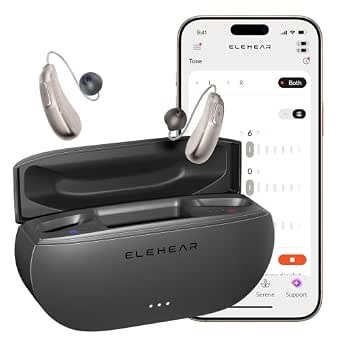 | Best for Rugged Bluetooth Daily Wear | Fit: Behind-the-ear, receiver-in-canal | Bluetooth: Version 5.3 | Compatibility: iPhone with iOS 15 or later; Android 8.0 or later | VIEW LATEST PRICE | See Our Full Breakdown |
| Ceretone Core One Pro Rechargeable OTC Hearing Aids |  | Best for Long Case-Backed Runtime | Hearing loss range: Mild to moderate | Style: In-ear | Digital chip: Intricon | VIEW LATEST PRICE | See Our Full Breakdown |
| DiGGiNGSOUND Rechargeable Neckband Hearing Amplifier with Bluetooth |  | Best for Bluetooth Headset Flexibility | Product type: Neckband hearing amplifier | Model: T014US012 | Battery life: Up to 24 hours | VIEW LATEST PRICE | See Our Full Breakdown |
| Manzelun GM-105 Rechargeable Behind-the-Ear Hearing Amplifiers |  | Best for Hands-On Physical Controls | Model: GM-105 | Fit type: Behind-the-ear | Controls: Slide switch and continuous volume control knob | VIEW LATEST PRICE | See Our Full Breakdown |
| Audien Atom One OTC Hearing Aids |  | Best for Simple Manual Tuning | Type: OTC hearing aids | Fit: In-ear | Intended use: Mild to moderate hearing loss | VIEW LATEST PRICE | See Our Full Breakdown |
| Britzgo BHA-220D Behind-the-Ear Hearing Amplifiers, 2-Pack, Blue |  | Best for Fine-Grained Button Adjustments | Model: BHA-220 | Quantity: 2 amplifiers | Fit type: Behind-the-ear | VIEW LATEST PRICE | See Our Full Breakdown |
| JIUYEE RIC Rechargeable OTC Bluetooth Hearing Aids |  | Best for Wireless Listening | Style: Receiver-in-canal, behind-the-ear | Connectivity: Bluetooth 5.4 | Controls: Smartphone app with volume adjustment and preset modes | VIEW LATEST PRICE | See Our Full Breakdown |
| Karthus Rechargeable In-Ear Hearing Aids with Noise Reduction |  | Best for App-Free Simplicity | Style: In-ear | Intended users: Adults 18+ with perceived mild to moderate hearing loss | Listening modes: Noise Reduction and Quiet | VIEW LATEST PRICE | See Our Full Breakdown |
| iBstone Nova Rechargeable OTC Hearing Aids |  | Best for More On-Device Adjustment | Fit type: In-ear | Hearing-loss range: Mild to moderate | Volume levels: 11 | VIEW LATEST PRICE | See Our Full Breakdown |
| Oricle Rechargeable In-Ear Hearing Aids with Noise Cancellation and Portable Charging Case |  | Best for a Discreet In-Canal Fit | Fit type: In-ear, completely-in-canal | Material: Silicone | Noise control: Environmental noise cancellation | VIEW LATEST PRICE | See Our Full Breakdown |
| iBstone AuraLink Bluetooth Hearing Aids with App-Controlled Fitting | 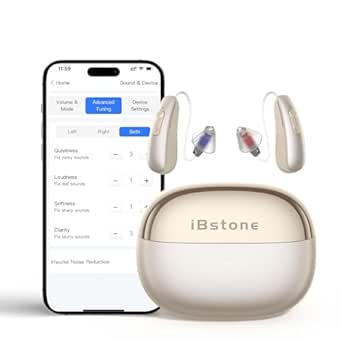 | Best for App-Based Personalization | Design: Receiver-in-canal (RIC) | Hearing-loss suitability: Mild to moderate | Connectivity: Bluetooth 5.4 | VIEW LATEST PRICE | See Our Full Breakdown |
| digital hearing aid | Battery life |
|---|---|
| Rechargeable Behind-the-Ear He | Up to 120 hours |
| ELEHEAR Beyond OTC Rechargeabl | Up to 20 hours per charge; up to 100 hours with charging case |
| Jabra Enhance Select M2 Swift | Over 24 hours per charge |
| WONDERSKY Rechargeable OTC Hea | Up to 12 hours per charge; up to 70 hours total with charging case |
| ELEHEAR Beyond 2 Pro Bluetooth | Up to 20 hours per charge |
| Ceretone Core One Pro Recharge | — |
| DiGGiNGSOUND Rechargeable Neck | Up to 24 hours |
| Manzelun GM-105 Rechargeable B | — |
| Audien Atom One OTC Hearing Ai | Up to 24 hours |
| Britzgo BHA-220D Behind-the-Ea | Up to 500 hours |
| JIUYEE RIC Rechargeable OTC Bl | — |
| Karthus Rechargeable In-Ear He | — |
| iBstone Nova Rechargeable OTC | Up to 80 hours |
| Oricle Rechargeable In-Ear Hea | Up to 60 hours on a single charge |
| iBstone AuraLink Bluetooth Hea | — |
More Details on Our Top Picks
Rechargeable Behind-the-Ear Hearing Amplifiers with Noise Reduction and Charging Case
The standout here is up to 120 hours of listening time per full charge, a longer stated runtime than the case-supported totals of the ELEHEAR Beyond and WONDERSKY models. That can suit buyers who want a straightforward device for regular conversations, TV, and outings without frequent charging. A magnetic charging case and USB-C cable simplify the charging routine, while button controls let you adjust power and volume without relying on an app. Its digital noise reduction is intended to make voices easier to follow amid everyday background sound, though the description does not give detailed adjustment options. Compared with the app-rich Jabra Enhance Select M2 Swift, this QIPOPC amplifier is simpler but offers fewer documented ways to tailor sound. The main tradeoff is its behind-the-ear fit, which may not suit everyone, and the product data leaves charging time and volume-step details unspecified.
Pros:- Up to 120 hours of listening time per full charge is a strong stated runtime.
- Magnetic charging case and USB-C cable support a simple charging routine.
- Button controls allow power and volume adjustment without a phone.
- Replacement silicone domes provide fit options.
Cons:- Behind-the-ear design may not suit buyers who prefer an in-ear style.
- Charging time and the number of volume levels are not specified.
- No Bluetooth or companion-app customization is listed.
Best for: People who want rechargeable behind-the-ear amplifiers for everyday conversations and prefer physical controls over app-based setup.
Not ideal for: Buyers who want a discreet in-ear fit, smartphone streaming, or clearly documented sound-adjustment levels.
- Brand:QIPOPC
- Model:ZF-M802
- Fit:Behind-the-ear
- Battery:Included lithium-ion
- Battery life:Up to 120 hours
- Controls:Button control
- Features:Noise reduction, rechargeable, lightweight
- Included accessories:Magnetic charging case, USB-C cable, replacement silicone domes, quick-start guide
Our verdict“Choose this QIPOPC model if long stated runtime and button controls matter more to you than app-based fitting or streaming.”
ELEHEAR Beyond OTC Rechargeable Hearing Aids with AI Speech Enhancement
The ELEHEAR Beyond is the most customization-focused option in this group: VOCCLEAR AI speech enhancement, noise attenuation, and feedback control are paired with an iOS and Android app for listening adjustments. That makes it a better fit for buyers who want to tune sound for calls or different settings than the button-controlled QIPOPC amplifiers. The app also lists telephone speech enhancement and AI translation, though those features depend on using the companion app. Its receiver-in-the-canal design and several dome sizes offer fit choices, while the case supplies up to 100 hours total across four additional charging cycles. It is intended for mild to moderate hearing loss, with up to 50 dB maximum gain; it is not presented as a solution for severe loss. Compared with the Jabra Enhance Select M2 Swift, ELEHEAR emphasizes AI and app features, while Jabra adds listed environmental presets and broader streaming standards.
Pros:- VOCCLEAR AI combines speech enhancement with noise attenuation and feedback control.
- App offers adjustable sound settings and telephone speech enhancement.
- Charging case supports up to 100 hours total use across four additional charging cycles.
- Multiple dome sizes support fit adjustment.
Cons:- Designed for mild to moderate hearing loss and may not suit more severe needs.
- Some listed features require the companion app.
- Up to 20 hours per charge is less than the stated single-charge runtime of the QIPOPC amplifiers.
Best for: Adults with perceived mild to moderate hearing loss who want app-adjustable listening, speech enhancement, and phone-related features.
Not ideal for: People with severe hearing loss, or buyers who want settings that can be changed without a smartphone app.
- Technology:VOCCLEAR AI
- Maximum gain:Up to 50 dB
- Noise attenuation:24 dB
- Hearing loss range:Mild to moderate
- Design:Receiver-in-the-canal
- Connectivity:Bluetooth
- App compatibility:iOS and Android
- Battery life:Up to 20 hours per charge; up to 100 hours with charging case
- Care service:ElePro Audiologist Remote Care Service
Our verdict“Pick ELEHEAR Beyond if app-based sound control and AI speech features matter more than maximum single-charge runtime.”
Jabra Enhance Select M2 Swift FDA-Cleared Self-Fit Hearing Aids, Sand
Jabra stands apart for combining FDA-cleared self-fitting with adaptive listening and speech-clarity technology. App controls for volume, bass, treble, and environmental presets give buyers more specified ways to tailor sound than the WONDERSKY’s five volume levels. It also supports calls and media streaming from compatible Apple and Android devices, plus Bluetooth LE Audio and Auracast. At 2.12 grams, the listed weight points to a lightweight design, and IP68 protection adds a defined water- and dust-resistance rating. Its portable charger provides up to 96 hours of power, but the aids themselves offer just over 24 hours per charge—far below the QIPOPC amplifier’s stated 120 hours. The app requirement is another real tradeoff: buyers who want physical controls or phone-free adjustments may find the ELEHEAR Beyond or QIPOPC simpler.
Pros:- FDA-cleared self-fitting setup with app adjustments for volume, bass, treble, and environmental presets.
- Adaptive listening and speech-clarity features are designed for changing sound environments.
- Bluetooth streaming supports calls and media on compatible devices.
- IP68 rating and a portable charger add protection and charging flexibility.
Cons:- App control and streaming require a compatible Apple or Android device.
- Over 24 hours per charge is a shorter stated runtime than the QIPOPC model.
- Portable charger provides up to 96 hours, less than the ELEHEAR Beyond’s stated 100-hour total.
Best for: Buyers seeking self-fitting hearing aids with app-based sound adjustments and Bluetooth streaming from compatible phones.
Not ideal for: People who do not have a compatible Apple or Android device, or who prioritize long single-charge runtime over streaming and fitting controls.
- Fitting:FDA-cleared self-fit
- Weight:2.12 grams
- Battery life:Over 24 hours per charge
- Portable charger power:Up to 96 hours
- Water and dust resistance:IP68 with weatherproof nano-coating
- Connectivity:Bluetooth, Bluetooth LE Audio, Auracast
- Compatibility:Compatible Apple and Android devices
- Controls:App-based volume, bass, treble, and environmental presets
- Warranty and protection:1-year warranty and 1-year loss and damage protection
Our verdict“Choose Jabra if self-fitting, detailed app controls, and streaming are priorities and you are comfortable managing the aids through a compatible phone.”
WONDERSKY Rechargeable OTC Hearing Aids with 16-Channel Noise Reduction
WONDERSKY is the clearest choice here for buyers who want an open-ear hook design rather than a receiver-in-the-canal fit. Its 16-channel digital processing is designed to clarify speech and reduce noise, whistling, and feedback, while five volume levels keep adjustment more direct than the app-led Jabra Enhance Select M2 Swift. A battery-level display also makes it easier to check charge status at a glance. The case adds three to four charges, for up to 70 hours total, but each full charge provides only up to 12 hours—shorter than the QIPOPC amplifiers and both ELEHEAR options. That makes charging frequency the main compromise for daily wear. The product is recommended for mild to mild-to-moderate hearing loss, so buyers seeking support for more severe loss should look elsewhere.
Pros:- Open-ear hook design avoids placing the hearing aid in the ear canal.
- 16-channel processing is designed to clarify speech and reduce noise, whistling, and feedback.
- Five volume levels and a digital battery display make basic adjustments and charge checks straightforward.
- Case provides three to four additional charges, with up to 70 hours total stated battery life.
Cons:- Up to 12 hours per charge means more frequent charging than the other rechargeable options here.
- Recommended for mild to mild-to-moderate hearing loss, not more severe loss.
- No Bluetooth streaming or companion-app customization is listed.
Best for: People with mild to mild-to-moderate hearing loss who prefer an open-ear hook fit and straightforward touch controls.
Not ideal for: Buyers who need more than 12 hours of use between charges, want app-based customization, or have more severe hearing loss.
- Type:OTC hearing aids
- Processing:16-channel digital processing
- Fit:Open-ear hook; semi-in-ear design
- Controls:Touchpad
- Volume levels:5
- Battery display:Digital battery-level display
- Battery life:Up to 12 hours per charge; up to 70 hours total with charging case
- Recommended hearing loss range:Mild to mild-to-moderate
- Warranty:1 year against manufacturing defects and functional issues under normal use
Our verdict“Choose WONDERSKY if an open-ear hook and simple controls matter more than long daily runtime or app features.”
ELEHEAR Beyond 2 Pro Bluetooth OTC Rechargeable Hearing Aids, Champagne Gold
Beyond 2 Pro builds on the app-focused approach of the ELEHEAR Beyond, adding Bluetooth 5.3 streaming, an IP67 dust- and water-resistance rating, and a stated recharge time of about 1.5 hours. VocClear 3.0 speech enhancement and adaptive feedback suppression target changing listening environments, while the app provides controls and access to a hearing test with remote adjustment recommendations. The case supplies four additional charges, matching the earlier ELEHEAR Beyond’s listed number of case cycles, and each charge lasts up to 20 hours. This makes it a stronger fit for buyers who want streaming and a more clearly specified protection rating; Jabra Enhance Select M2 Swift, by contrast, lists IP68 protection and broader connectivity including Auracast. The tradeoff is that adjustments depend on the ELEHEAR app, and the product is intended for mild to moderate hearing loss.
Pros:- VocClear 3.0 speech enhancement and adaptive feedback suppression target changing listening conditions.
- Bluetooth 5.3 supports audio streaming from compatible smartphones.
- IP67 rating provides specified dust and water resistance.
- Up to 20 hours per charge with four additional charges from the case.
Cons:- Hearing adjustments require the ELEHEAR app.
- The product is intended for perceived mild to moderate hearing loss, not severe loss.
- Unlike the Jabra Enhance Select M2 Swift, Apple MFi hearing-aid connectivity is not listed.
Best for: Adults with perceived mild to moderate hearing loss who want app-controlled fitting, phone streaming, and dust- and water-resistant aids for regular daily wear.
Not ideal for: Buyers who want phone-free controls, Apple MFi hearing-aid connectivity, or a model intended for severe hearing loss.
- Fit:Behind-the-ear, receiver-in-canal
- Bluetooth:Version 5.3
- Compatibility:iPhone with iOS 15 or later; Android 8.0 or later
- Water and dust resistance:IP67
- Battery life:Up to 20 hours per charge
- Charging case:Provides four additional charges
- Recharge time:About 1.5 hours
- Audio latency:Under 8.5 ms
- Warranty:1-year limited warranty
Our verdict“Pick Beyond 2 Pro if you want rechargeable, app-adjustable OTC aids with Bluetooth streaming and an IP67 rating.”
Ceretone Core One Pro Rechargeable OTC Hearing Aids
The Ceretone Core One Pro is a strong fit for buyers who want a discreet in-ear style and fewer charging interruptions. Its aids run for up to 20–25 hours per charge, while the case adds over 80 hours of total use—more reserve than the stated single-charge runtime of the Audien Atom One. Four listening programs, adjustable volume, and saved settings give users ways to tailor everyday listening without relying on an app. Three ear-tip sizes also help with fit, though comfort and sound depend on finding a secure seal. Unlike the neckband-style DiGGiNGSOUND amplifier, this pair sits in the ear and avoids a visible band. The tradeoff is limited stated scope: it is intended for mild to moderate hearing loss, and the product information does not specify Bluetooth or water resistance.
Pros:- In-ear design offers a discreet alternative to behind-the-ear and neckband styles.
- Three ear-tip sizes support a more tailored fit.
- Four programs, adjustable volume, and memory settings allow everyday personalization.
- Charging case provides over 80 hours of stated total use.
Cons:- Intended for mild to moderate hearing loss, not every level of hearing impairment.
- Bluetooth connectivity and water resistance are not specified.
- A suitable ear-tip seal may take some adjustment to find.
Best for: Adults with mild to moderate hearing loss who prefer discreet in-ear aids and want a charging case with substantial reserve capacity.
Not ideal for: Buyers who need Bluetooth streaming, documented water resistance, or amplification intended for hearing loss beyond the mild-to-moderate range.
- Hearing loss range:Mild to moderate
- Style:In-ear
- Digital chip:Intricon
- Listening programs:4 (P1–P4)
- Battery life per charge:Up to 20–25 hours
- Total use with charging case:Over 80 hours
- Ear-tip sizes:Small, medium, and large
- Features:Wind-noise management, adjustable volume, display screen, memory settings, automatic on
Our verdict“Choose the Ceretone Core One Pro if you want discreet, adjustable in-ear aids and value extended case-backed runtime over stated Bluetooth features.”
DiGGiNGSOUND Rechargeable Neckband Hearing Amplifier with Bluetooth
The DiGGiNGSOUND is the clearest choice here for someone who wants a neckband amplifier that also works as a Bluetooth headset. It can connect with compatible smartphones, tablets, and televisions, making it more versatile for device use than the Ceretone Core One Pro, whose listing does not specify Bluetooth. Five volume levels and two noise-reduction modes offer basic adjustments, while five dome sizes provide more fit choices than the three sizes supplied with the Audien Atom One. Its stated 24-hour runtime and 1.5-hour charging time suit people who want a quick recharge between daily sessions. The compromise is form: a neckband is more visible and may feel less convenient than in-ear or behind-the-ear designs. It is also an amplifier, so buyers should not assume it offers the fitting or care of a professionally selected hearing aid.
Pros:- Bluetooth functionality supports use as a headset with compatible devices.
- Up to 24 hours of stated use per charge.
- Five volume levels and two noise-reduction modes offer basic adjustments.
- Five dome sizes give more fit options than several in-ear alternatives in this lineup.
Cons:- Neckband form is more visible and may be less comfortable for users who prefer ear-only designs.
- Five volume levels may feel limited to buyers seeking finer adjustment.
- The stated hearing compensation of up to 35 dB may not meet every user’s needs.
Best for: People who want one rechargeable neckband device for hearing amplification and Bluetooth use with a phone, tablet, or television.
Not ideal for: Buyers who dislike wearing a neckband, want a discreet in-ear aid, or need more than five volume steps and two noise-reduction modes.
- Product type:Neckband hearing amplifier
- Model:T014US012
- Battery life:Up to 24 hours
- Charging time:1.5 hours
- Volume levels:5
- Noise-reduction modes:2
- Hearing compensation:Up to 35 dB
- Dome sizes:5
- Compatible devices:Smartphones, tablets, and televisions
Our verdict“Pick the DiGGiNGSOUND if Bluetooth headset use and a quick charge matter more to you than a discreet, neckband-free fit.”
Manzelun GM-105 Rechargeable Behind-the-Ear Hearing Amplifiers
The Manzelun GM-105 suits buyers who favor visible, tactile controls over small dials or a neckband interface. A slide switch and continuous volume knob let the wearer make adjustments directly on the device; that gives it finer-feeling control than the Britzgo BHA-220D’s button-based setup, though the Britzgo offers more specified volume levels and four hearing modes. Manzelun pairs its behind-the-ear fit with ergonomic hooks, multiple ear tips, and active noise cancellation intended to reduce competing sound. Its case can recharge both aids up to four times, and the stated continuous runtime is approximately 25 hours. The listed weight is inconsistent across the product details, and the listing warns of possible operating noise and an adaptation period. Buyers should also treat its severe-hearing-loss recommendation cautiously and seek professional guidance before choosing an amplifier for that need.
Pros:- Slide switch and continuous volume knob provide direct physical adjustment.
- Ergonomic ear hooks and multiple ear-tip sizes offer fit flexibility.
- Active noise cancellation is intended to reduce background noise.
- Charging case can fully recharge both aids up to four times.
Cons:- Product details give conflicting weight figures.
- The description notes possible operating noise and an adaptation period.
- Bluetooth streaming is not specified, despite listed compatibility with phones, tablets, and televisions.
Best for: Users who prefer a behind-the-ear fit with a physical slide switch and continuous volume control, plus a case that can recharge the aids multiple times.
Not ideal for: First-time users who want a clearly documented fit for their hearing loss, or anyone who needs Bluetooth, verified weight information, or a quiet adaptation period.
- Model:GM-105
- Fit type:Behind-the-ear
- Controls:Slide switch and continuous volume control knob
- Noise control:Active noise cancellation
- Maximum continuous use:Approximately 25 hours
- Charging case capacity:Up to four full charges for both hearing aids
- Battery type:Lithium-ion
- Included ear tips:Five pairs
Our verdict“Choose the GM-105 if easy-to-operate physical controls and a multi-charge case matter more than confirmed weight and Bluetooth details.”
Audien Atom One OTC Hearing Aids
The Audien Atom One is aimed at buyers who want manual, app-free adjustments in a compact rechargeable in-ear aid. Separate analog dials control volume and frequency, giving users a direct way to tune the sound without navigating phone menus. That control style differs from the Ceretone Core One Pro, which offers four saved listening programs and wind-noise management; the Audien instead keeps the adjustment approach simple but does not list any noise-control feature. It runs for up to 24 hours per charge and includes three sizes of silicone domes, a wax guard kit, and expert-guided setup. USB-C charging is familiar for many households, though the stated charging time is about three hours. Its mild-to-moderate intended range and lack of noise control make it less suitable for buyers who need broader support or specific help with noisy settings.
Pros:- Separate analog dials adjust volume and frequency without an app.
- Up to 24 hours of stated battery life per charge.
- Three silicone dome sizes and a pull wire support fit and removal.
- Includes expert-guided setup and a one-year warranty.
Cons:- No noise-control feature is listed.
- Intended for mild to moderate hearing loss, not all levels.
- Charging takes about three hours, longer than the DiGGiNGSOUND’s stated 1.5-hour charge.
Best for: Adults with mild to moderate hearing loss who want a compact in-ear OTC aid with direct volume and frequency dials instead of app-based controls.
Not ideal for: People who need noise reduction, Bluetooth streaming, or a hearing aid intended for hearing loss outside the listed mild-to-moderate range.
- Type:OTC hearing aids
- Fit:In-ear
- Intended use:Mild to moderate hearing loss
- Controls:Analog volume and frequency dials
- Battery life:Up to 24 hours
- Charging time:About 3 hours
- Charging connector:USB-C
- Ear domes:Small, medium, and large silicone domes
- Warranty:1 year
Our verdict“Choose the Atom One if you want straightforward manual tuning and rechargeable in-ear aids, and can do without noise control.”
Britzgo BHA-220D Behind-the-Ear Hearing Amplifiers, 2-Pack, Blue
The Britzgo BHA-220D stands out for buyers who want many direct volume steps without a rechargeable case-centered routine. Its 16 volume levels and four hearing modes—wide, low, mid, and high frequency—give it more specified adjustment choices than the Manzelun GM-105, which relies on a continuous knob and slide switch. The behind-the-ear format is lightweight by the product description and uses replaceable A675 button batteries, with up to 500 hours of stated continuous use per battery. That long stated runtime can reduce charging interruptions, but it shifts upkeep to battery replacement; the Ceretone Core One Pro and Audien Atom One are rechargeable alternatives. There is no listed noise control, and product details conflict on weight, so buyers should not rely on the item-weight figure. This is an amplifier, not a substitute for individualized hearing care.
Pros:- Sixteen volume levels allow more specified steps than the Manzelun GM-105.
- Four hearing modes cover wide, low, mid, and high-frequency settings.
- Behind-the-ear design is described as lightweight.
- Up to 500 hours of stated continuous use per A675 battery.
Cons:- Requires A675 button batteries rather than rechargeable operation.
- No noise-control feature is listed.
- Product details conflict on the device weight.
Best for: Users who prefer behind-the-ear amplifiers with numerous button-controlled volume steps and long stated battery runtime between replacements.
Not ideal for: Buyers who want rechargeable aids, noise reduction, or consistent product weight information before choosing a fit.
- Model:BHA-220
- Quantity:2 amplifiers
- Fit type:Behind-the-ear
- Volume levels:16
- Hearing modes:4: wide, low, mid, and high frequency
- Power source:A675 button battery
- Battery life:Up to 500 hours
- Noise control:None listed
Our verdict“Pick the Britzgo if you value numerous button-controlled adjustments and long battery runtime more than rechargeable convenience or noise control.”
JIUYEE RIC Rechargeable OTC Bluetooth Hearing Aids
Bluetooth 5.4 makes the JIUYEE a fit for buyers who want hearing amplification alongside wireless calls and audio streaming. Its RIC, behind-the-ear design keeps the receiver in the canal while the main body sits behind the ear; the description also notes compatibility with glasses and masks. App controls add volume adjustments and preset modes, giving it more direct customization than Karthus, which relies on buttons and offers no app or Bluetooth. The tradeoff is limited battery information: neither runtime nor charging time is provided, so planning around a full day of use is harder. It is presented as an OTC sound amplification aid, not a prescription hearing aid, so buyers seeking clinical fitting or support should look elsewhere.
Pros:- Bluetooth 5.4 supports wireless calls and audio streaming.
- App provides volume adjustment and preset listening modes.
- RIC design is described as compatible with glasses and masks.
- Rechargeable units come with a portable charging and storage case.
Cons:- Battery runtime and charging time are not specified.
- Described as an OTC sound amplification aid rather than a prescription hearing aid.
Best for: Adults seeking a rechargeable RIC amplifier for everyday conversations who also want app controls and Bluetooth calls or streaming.
Not ideal for: Buyers who need published battery-runtime details, prescription-level care, or an in-ear device without behind-the-ear components.
- Style:Receiver-in-canal, behind-the-ear
- Connectivity:Bluetooth 5.4
- Controls:Smartphone app with volume adjustment and preset modes
- Noise reduction:Yes
- Power:Rechargeable batteries
- Charging case:Portable charging and storage case
- Use:Over-the-counter sound amplification
Our verdict“Choose the JIUYEE if wireless streaming and app adjustments matter more to you than having clearly stated battery-life figures.”
Karthus Rechargeable In-Ear Hearing Aids with Noise Reduction
Karthus keeps the controls direct: remove the aids from the case and they power on automatically, then use buttons, six volume levels, and two listening modes to adjust. That makes this a simpler alternative to the app-driven JIUYEE RIC and iBstone AuraLink, both of which offer smartphone features but ask buyers to manage another layer of setup. Its charging case is a standout for people who dislike frequent charging, with up to 24 hours per charge and 96 hours total listed. The compromise is less fine-tuning: there is no app or Bluetooth, and six levels may not suit listeners who want more granular control. Karthus is described for perceived mild to moderate hearing loss, not more severe needs.
Pros:- Two listening modes and six volume levels provide straightforward adjustments.
- Charging case is rated for up to 24 hours per charge and 96 hours total.
- Automatic power-on starts about five seconds after removal from the case.
- Included wax guard tools, domes, and cleaning brush support routine care.
Cons:- No app or Bluetooth connectivity for streaming or digital fitting.
- Six volume levels offer less adjustment range than the iBstone Nova’s 11.
- Described for perceived mild to moderate hearing loss, not more severe loss.
Best for: Adults with perceived mild to moderate hearing loss who prefer physical controls, automatic power-on, and extended use from a charging case.
Not ideal for: Listeners who want Bluetooth streaming, app-based fitting, extensive personalization, or support beyond the stated mild-to-moderate range.
- Style:In-ear
- Intended users:Adults 18+ with perceived mild to moderate hearing loss
- Listening modes:Noise Reduction and Quiet
- Volume levels:6
- Battery life per charge:Up to 24 hours
- Total battery life with case:Up to 96 hours
- Charging port:Type-C
- Connectivity:No app or Bluetooth
Our verdict“Pick Karthus for uncomplicated button control and long case-supported use, but skip it if you want wireless features or app fitting.”
iBstone Nova Rechargeable OTC Hearing Aids
The Nova offers a useful middle ground for buyers who want more control than a basic button-operated aid without moving to app-based fitting. Its single button cycles through 11 volume levels and three listening modes—Quiet, Noise, and Outdoor—while the iBstone AuraLink adds smartphone fitting and Bluetooth at the cost of greater reliance on an app. Nova’s case also gives practical charging feedback with a battery-level display, plus an anti-loss lanyard and space for a desiccant. The stated runtime is up to 80 hours after a 1.5-hour charge, although fit remains personal: the in-ear design may need trial and adjustment across its three included ear-tip types. It is aimed at mild to moderate hearing loss, not more severe needs.
Pros:- Eleven volume levels allow finer on-device adjustment than Karthus’s six.
- Three modes cover Quiet, Noise, and Outdoor listening settings.
- Up to 80 hours of use is listed after a 1.5-hour charge.
- Case includes a battery-level display, anti-loss lanyard, and space for desiccant.
Cons:- Designed for mild to moderate hearing loss.
- In-ear fit may require trying the three included ear-tip types.
- One-button control may be less direct than separate controls for each setting.
Best for: Adults with mild to moderate hearing loss who want several listening modes and fine volume adjustment without using a smartphone app.
Not ideal for: Buyers who prefer a behind-the-ear fit, need app-based personalization, or do not want to experiment with ear-tip fit.
- Fit type:In-ear
- Hearing-loss range:Mild to moderate
- Volume levels:11
- Listening modes:3: Quiet, Noise, and Outdoor
- Battery life:Up to 80 hours
- Charging time:1.5 hours
- Included ear tips:3 types
- Control type:One-button control
Our verdict“Choose the Nova if you want numerous on-device volume steps and useful case features without app-based controls.”
Oricle Rechargeable In-Ear Hearing Aids with Noise Cancellation and Portable Charging Case
Oricle’s defining choice is its completely-in-canal fit, which keeps the aids less visible than the behind-the-ear JIUYEE RIC. Soft silicone tips and automatic on/off operation may appeal to buyers who want a compact routine: place the devices in the case to switch them off, then remove them to switch them on. For conversation-focused use, it pairs noise reduction and speech enhancement with five volume levels and setting memory. Compared with the iBstone Nova, Oricle gives up some volume granularity and listening-mode detail in favor of its compact fit and automatic case operation. That fit will not suit every ear, and the five-second long press for manual power control is less immediate than a simple tap. The stated 60-hour battery figure is on a single charge.
Pros:- Completely-in-canal design offers a less visible alternative to RIC styles.
- Soft silicone ear tips and automatic on/off operation support a simple routine.
- Noise reduction and speech enhancement target conversation listening.
- Memory retains preferred settings, and the listed battery life is up to 60 hours on a single charge.
Cons:- Completely-in-canal fit may not suit every ear.
- Manual power control requires a five-second long press.
- Five volume levels offer less adjustment than the iBstone Nova’s 11.
Best for: Adults who prioritize a compact, completely-in-canal device with automatic case operation and straightforward conversation-focused controls.
Not ideal for: People who find in-canal devices uncomfortable, want more than five volume levels, or need Bluetooth and app-based adjustments.
- Fit type:In-ear, completely-in-canal
- Material:Silicone
- Noise control:Environmental noise cancellation
- Controls:Button control; five-second long press for manual on/off
- Volume levels:5
- Battery life:Up to 60 hours on a single charge
- Automatic operation:Turns on when removed from the case and off when placed in it
- Included components:Hearing aids, case, and charger
Our verdict“Choose Oricle for a compact in-canal style and automatic case operation, provided the fit and limited volume steps work for you.”
iBstone AuraLink Bluetooth Hearing Aids with App-Controlled Fitting
AuraLink is the most feature-rich digital option in this group for buyers who want fitting tools and wireless audio in one device. The AuraFit app supports hearing checks, personalized fitting, and tinnitus masking, while Bluetooth 5.4 adds calls and music streaming on iOS and Android. That is a broader digital toolkit than the JIUYEE, whose app is described for volume and preset modes, or the button-controlled iBstone Nova, which does not offer Bluetooth. AuraLink also adds IP68 protection, drop resistance, multiple dome options, and a UV-sanitizing charging case for more active routines. The tradeoff is dependence on app features for personalization and tinnitus masking; buyers who want simple controls may prefer Karthus. Its stated suitability is mild to moderate hearing loss.
Pros:- AuraFit app offers hearing checks, personalized fitting, and tinnitus masking.
- Bluetooth 5.4 supports calls and music streaming on iOS and Android.
- IP68 protection and drop resistance suit more active daily use.
- RIC design includes multiple dome options and a UV-sanitizing charging case.
Cons:- Personalized fitting and tinnitus masking rely on the AuraFit app.
- Designed for mild to moderate hearing loss.
- Its app and connectivity features may be unnecessary complexity for buyers seeking basic physical controls.
Best for: Adults with mild to moderate hearing loss who want app-guided fitting, tinnitus masking, Bluetooth streaming, and added protection for active use.
Not ideal for: People who prefer app-free controls, do not use a compatible smartphone, or need a device described for hearing loss outside the mild-to-moderate range.
- Design:Receiver-in-canal (RIC)
- Hearing-loss suitability:Mild to moderate
- Connectivity:Bluetooth 5.4
- App:AuraFit for iOS and Android
- App features:Hearing check, personalized fitting, and tinnitus masking
- Water and dust resistance:IP68
- Charging case:UV-sanitizing
- Protection:Drop resistance
Our verdict“Choose AuraLink if app-based fitting, streaming, and protective features matter to you; choose Karthus instead for a simpler app-free setup.”
How We Picked
I compared the 15 options by the factors that shape daily usefulness: whether each is presented as an OTC hearing aid or an amplifier, how it handles fitting and adjustment, the stated speech or noise features, wearing style, charging setup, and ease of operation. I also looked at the likely learning curve and whether the product description points to app controls, Bluetooth, or simpler onboard controls. Those details matter because a feature only helps if the wearer can set it up and use it comfortably.
The ranking favors products with clearer fitting support and purpose-built listening features over models that mainly promise general amplification. Jabra Enhance Select M2 Swift leads for its self-fit positioning; ELEHEAR Beyond and Beyond 2 Pro stand out for speech-focused processing; and simpler, compact, or budget-oriented designs fill narrower roles. I avoid treating a channel count or a noise-reduction label as proof of better hearing, and I weigh tradeoffs such as visibility, control complexity, and limited personalization throughout.
Factors to Consider When Choosing Digital Hearing Aids
Choosing digital hearing aids is less about collecting features and more about matching the device to your hearing needs, dexterity, listening settings, and willingness to manage setup. These broader checks can help prevent a mismatch that a spec list alone will not reveal.
Know Whether You Need a Hearing Aid or an Amplifier
Product names can blur the line between hearing aids and personal sound amplifiers. OTC hearing aids are intended for adults with perceived mild-to-moderate hearing loss and generally offer some form of fitting or adjustment; amplifiers primarily make sound louder. A louder signal may not make speech clearer, especially when background noise is present. Before buying, check the product’s intended use and the manufacturer’s fitting guidance rather than relying on the word “digital.” If hearing loss is sudden, uneven between ears, painful, or accompanied by dizziness, seek clinical advice instead of self-fitting a device.
Match Fitting Controls to Your Patience and Dexterity
Self-fit apps can help tailor sound, but they also add setup steps, phone dependence, and a learning curve. A simpler device may be easier to operate, yet offer fewer ways to adapt sound across different environments. Small buttons and tiny charging contacts can be difficult for people with limited dexterity, so look for controls you can see and handle comfortably. Avoid assuming that more adjustment channels automatically mean a better fit; useful fitting depends on how well the adjustments correspond to your hearing needs. If you want support during setup, check what guidance is actually available before choosing.
Choose a Style You Can Wear and Maintain
Behind-the-ear, receiver-in-canal, and in-ear designs differ in visibility, handling, and how they sit in or around the ear. A very small in-ear device may appeal to someone seeking a discreet profile, but it can be harder to insert, remove, or clean. Behind-the-ear styles are more visible, yet their larger controls may be easier for some wearers to manage. Earwax, moisture, and skin sensitivity can affect comfort and upkeep, so check cleaning instructions and replacement-part availability. If possible, confirm the return or trial terms before committing to a style you have not worn before.
Think Through Charging Before You Buy
Rechargeable models reduce routine battery changes, but their convenience depends on charging time, case design, and how long the device supports your daily schedule. A portable case can be useful away from home, while a neckband or a case with unfamiliar controls may not suit everyone. Ask whether the set can charge while traveling and whether the case itself needs frequent charging. Keep a consistent charging spot and inspect the contacts regularly; poor contact can look like a battery problem. Buyers who cannot reliably charge every day may prefer to compare battery-powered alternatives rather than treating rechargeable as an automatic advantage.
Separate Speech Help From General Noise Reduction
Noise reduction and speech enhancement are not identical promises. A device may reduce some steady background sounds without making a conversation in a busy room easy to follow. Think about where you most need help: television, one-on-one conversation, group settings, or outdoor listening. Bluetooth can support phone or media listening on compatible devices, but it does not guarantee that voices in a room will sound clearer. Be cautious about choosing by channel count or marketing terms alone; the best fit is the one whose adjustments address your everyday listening situations.
Check Support, Returns, and Professional Care
OTC devices can be a practical route for adults with mild-to-moderate hearing concerns, but not every buyer is suited to self-fitting. Confirm how the maker handles setup questions, repairs, replacement tips, and returns before purchase. A hearing evaluation can help identify whether one ear needs a different level of support or whether another condition is affecting hearing. Do not keep turning up amplification to compensate for persistent discomfort or unclear speech. If the device does not help in its intended settings, use the return window or seek professional guidance rather than accepting a poor fit.
Frequently Asked Questions
How can I tell whether an OTC hearing aid is a better fit than a basic amplifier?
Start with the product’s intended use and fitting process, not its name or the word “digital.” OTC hearing aids are intended for adults with perceived mild-to-moderate hearing loss and typically provide a way to adjust sound to the wearer. Basic amplifiers mainly increase sound level and may not offer the same fitting support. If conversations remain unclear even when sounds are louder, amplification alone may not address the problem. For severe, sudden, or one-sided hearing changes, seek a hearing professional rather than choosing either type without guidance.
Should I choose app-controlled fitting if I am not comfortable using a smartphone?
Only if you are willing and able to use the app during setup and any later adjustments. App controls can provide more ways to personalize sound, but they may add steps that a wearer finds frustrating or hard to see. A model with straightforward onboard controls can be easier for everyday volume changes, though it may offer less tailoring. Check whether essential functions still work without the app and whether another person can assist with initial setup. The best choice is the one you can operate consistently, not the one with the longest feature list.
Do rechargeable hearing aids make sense if I travel often?
They can, provided the charging setup fits your travel routine. Compare whether the case is portable, how it is powered, and whether it can recharge the devices when you are away from an outlet. A case that is easy to pack but awkward to open or connect may create more hassle than it removes. Keep the charger and any required cable with your travel kit, and confirm how the devices indicate a low battery. If you cannot reliably charge overnight, compare models with replaceable batteries as well.
Will a smaller in-ear model be more comfortable than a behind-the-ear design?
Not automatically. In-ear models can be less visible, but their fit depends on ear shape and they may require more precise insertion and cleaning. Behind-the-ear devices are easier to see and may have larger controls, though some wearers dislike having hardware behind the ear. Comfort also depends on tip size, pressure, moisture, and how many hours you wear the device. Use a return or trial period to judge comfort across normal days, and do not persist with a fit that causes soreness.
When should I stop self-adjusting and get a hearing evaluation?
Get professional advice if hearing changes suddenly, differs sharply between ears, or comes with pain, dizziness, or other new symptoms. An evaluation is also a sensible next step when a correctly fitted OTC device makes sound louder but speech remains difficult to understand. Repeatedly increasing volume can make listening uncomfortable without correcting an unsuitable fit or an underlying issue. A clinician can check for causes such as earwax or other conditions and help determine whether OTC devices match your needs. Self-fitting works best when the hearing concern is within the device’s intended range.
Conclusion
For most shoppers, I’d start with Jabra Enhance Select M2 Swift because self-fit support gives it a stronger case as an everyday OTC hearing aid than models focused mainly on amplification. For speech-focused features, compare ELEHEAR Beyond and Beyond 2 Pro; for app-based adjustment, look at iBstone AuraLink. Buyers seeking a simpler value-oriented option can compare the basic rechargeable amplifier and behind-the-ear picks, while recognizing they may offer less fitting support. For beginners, choose the model with controls and setup steps you can manage, not necessarily the one with the most features. For discreet wear, compare Audien Atom One and Oricle; for Bluetooth or a neckband-style setup, examine JIUYEE RIC and DiGGiNGSOUND. If your hearing loss is outside the mild-to-moderate OTC range or symptoms are new, get a professional evaluation before buying.