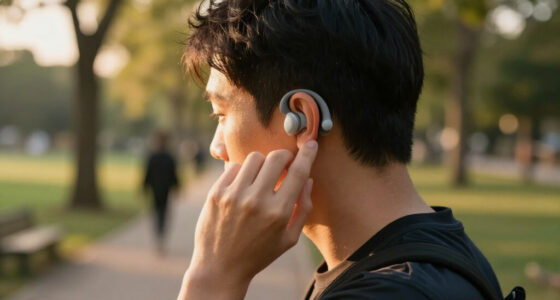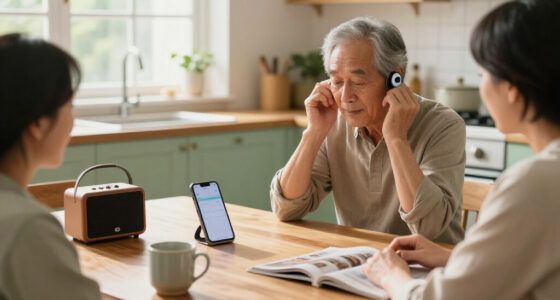
Speech-to-text glasses can help capture spoken language, support translation, or display prompts, but the options here vary in how much they prioritize each task. I rank the INMO GO3 as the best overall choice for buyers who want translation and teleprompter features in one pair, while the THINKAR AiLens stands out for presentation prompts and the Osawalla AI Smart Glasses for camera versatility and photochromic lenses. The main tradeoff is choosing between practical speech and translation tools, added camera features, and comfort for regular wear. Product names and feature descriptions do not confirm how accurately speech is transcribed, so buyers should verify supported languages, apps, and recording workflows before choosing. Read on for the full comparison and guidance on which type of glasses best fits your use.

Get everyday helpers delivered free with Prime
- Fast, free delivery on millions of items
- Prime Video, Amazon Music and more included
- Member-only deals all year
Key Takeaways
- INMO GO3 is the most balanced feature set: its combination of AI translation and a teleprompter gives it uses beyond simple audio or camera functions.
- THINKAR AiLens is the more focused presentation option: its teleprompter feature makes it a better fit for speakers who need visible prompts than for buyers mainly seeking camera features.
- Camera specifications do not establish speech transcription quality: the 4K and 1080P camera claims in this lineup say little about microphone performance, transcription accuracy, or export options.
- Photochromic lenses recur across several models: Osawalla, Smart Audio Glasses, and OICIIDO may suit buyers who want lenses that adapt to light, but that feature alone does not distinguish their speech tools.
- The product descriptions leave key workflow details open: supported languages, transcription storage, app compatibility, battery life, and audio privacy need checking before purchase.
| AI Smart Glasses with 8MP Camera, GPT Assistant, and Real-Time Translation |  | Best for Prescription Lens Flexibility | Camera: 8MP with EIS stabilization | Battery: 300mAh lithium polymer | Call time: Around 4 hours | VIEW LATEST PRICE | See Our Full Breakdown |
| AI Smart Glasses with 8MP Camera, 1080P HD Video, AI Assistant & Translation |  | Best for Travel Capture | Camera: 8MP | Video resolution: 1080P HD | AI assistant: ChatGPT support, voice commands, and object recognition | VIEW LATEST PRICE | See Our Full Breakdown |
| INMO GO3 AI Translation Smart Glasses, Teleprompter AR Glasses with Camera |  | Best for On-Lens Captions | Weight: 58 g | Battery capacity: 660 mAh | Battery type: Lithium-ion | VIEW LATEST PRICE | See Our Full Breakdown |
| Osawalla AI Smart Glasses with 4K Camera, Real-Time Translation, and Photochromic Lenses |  | Best for High-Resolution Recording | Video resolution: 4K | Video stabilization: Anti-shake | Translation: 139+ languages | VIEW LATEST PRICE | See Our Full Breakdown |
| Smart Audio Glasses with AI Translation and Photochromic Lenses |  | Best Lightweight Audio Pick | Weight: 33 g | Battery capacity: 2 × 85 mAh | Charging time: 1 hour | VIEW LATEST PRICE | See Our Full Breakdown |
| AI Smart Glasses with ChatGPT, Real-Time Translation & Bluetooth Audio |  | Best for Longer Audio and Phone-Free Translation | Compatibility: Android smartphones and iPhone | AI assistants: ChatGPT, Gemini, and Deepseek | Translation: Over 160 languages | VIEW LATEST PRICE | See Our Full Breakdown |
| OICIIDO AI Smart Glasses with Real-Time Translation and Photochromic Lenses |  | Best for Water-Resistant Everyday Wear | Compatibility: Android and iOS smartphones | Translation: Over 164 languages; mobile app required, no offline translation | Audio: Open-ear speakers with dual noise-canceling microphones | VIEW LATEST PRICE | See Our Full Breakdown |
| THINKAR AiLens AR Smart Glasses with Teleprompter and Translation |  | Best for On-Lens Prompts and Information | Operating system: THINKAR OS | Display: Waveguide LED | Display brightness: 1200 nits | VIEW LATEST PRICE | See Our Full Breakdown |
| speech to text glasse | Water resistance | Weight | Translation | Music playback |
|---|---|---|---|---|
| AI Smart Glasses with 8MP Came | IP65 | 0.04 kg | — | Up to 7 hours |
| AI Smart Glasses with 8MP Came | — | — | 100+ languages | — |
| INMO GO3 AI Translation Smart | None | 58 g | — | — |
| Osawalla AI Smart Glasses with | IP65 | 40.8 g | 139+ languages | Up to 7 hours |
| Smart Audio Glasses with AI Tr | Water resistant | 33 g | — | — |
| AI Smart Glasses with ChatGPT | — | 1.6 ounces | Over 160 languages | Up to 10 hours |
| OICIIDO AI Smart Glasses with | IP67 | — | Over 164 languages; mobile app required, no offline translation | Up to 6 hours |
| THINKAR AiLens AR Smart Glasse | Not water resistant | 37 g | More than 40 languages | — |
More Details on Our Top Picks
AI Smart Glasses with 8MP Camera, GPT Assistant, and Real-Time Translation
For speech-to-text-minded buyers who also want a camera and a spoken assistant, these glasses offer a broad set of voice-led tools without a built-in display. Real-time translation, GPT assistance, and object recognition make them more versatile than the simpler audio-focused Smart Audio Glasses with AI Translation and Photochromic Lenses, while open-ear audio lets you hear calls without sealing off surrounding sounds. Their replaceable prescription lenses are a practical advantage if you need your usual correction. The tradeoff is that the product details do not specify live captioning or where translated text appears, so I would not choose it specifically for reading speech on-screen. Just 2GB of storage also limits local media, and roughly four hours of call time may fall short for a long day of conversation.
Pros:- Replaceable prescription lenses make the frame adaptable to corrective vision needs.
- Real-time translation, GPT assistance, and object recognition support varied voice-led tasks.
- Open-ear audio allows calls and music while keeping ambient sound audible.
- EIS-stabilized 8MP camera supports hands-free photo and video capture.
Cons:- No built-in display or live-caption feature is specified, limiting its fit for speech-to-text reading.
- 2GB storage provides little room for captured media.
- Around four hours of call time may not cover extended use.
Best for: Prescription-glasses wearers who want voice assistance, translation, and open-ear calls in one lightweight frame.
Not ideal for: People who need readable live captions, long call sessions, or substantial onboard storage.
- Camera:8MP with EIS stabilization
- Battery:300mAh lithium polymer
- Call time:Around 4 hours
- Music playback:Up to 7 hours
- Storage:2GB
- Water resistance:IP65
- Weight:0.04 kg
- Compatibility:Android and iOS
- Lens support:Replaceable prescription lenses
Our verdict“Choose these if prescription-lens flexibility and voice tools matter more than on-lens captions or extended calling.”
AI Smart Glasses with 8MP Camera, 1080P HD Video, AI Assistant & Translation
These glasses make the most sense for travelers who want voice assistance and hands-free recording, rather than a dedicated speech-to-text display. The 8MP camera with 1080P video gives them a clearer capture focus than the INMO GO3, whose listed camera is 8MP HD but whose standout strength is presenting text in the wearer’s line of sight. Here, ChatGPT support, voice commands, object recognition, and translation in 100+ languages cover common on-the-go interactions, while photochromic lenses adjust as lighting changes. The key limitation for speech-to-text use is the no-display design: the available details do not describe captions appearing in your vision. There is also no built-in GPS, so location-based guidance is limited. I’d rank these ahead of camera-first alternatives for travel utility, but behind the INMO if visible text is the priority.
Pros:- 1080P HD video supports hands-free recording of travel and everyday moments.
- ChatGPT-supported voice commands and object recognition add useful spoken interactions.
- Translation is listed for more than 100 languages.
- Photochromic lenses adjust tint and include a blue-light filter.
Cons:- No display is specified, so spoken words and translations are not shown on the lenses.
- No built-in GPS limits location-based assistance.
- Battery capacity and call or recording runtime are not provided in the product details.
Best for: Travelers who want hands-free 1080P recording, voice-based assistance, and broad language translation in one frame.
Not ideal for: People who need live captions or translated text displayed in their field of view, or who rely on built-in GPS.
- Camera:8MP
- Video resolution:1080P HD
- AI assistant:ChatGPT support, voice commands, and object recognition
- Translation:100+ languages
- Lenses:Photochromic with blue-light filter
- Connectivity:Bluetooth wireless
- Display:No display
- Frame shape:Square
Our verdict“Pick this model for travel recording and voice-based translation, but choose the INMO GO3 if you need text visible in your line of sight.”
INMO GO3 AI Translation Smart Glasses, Teleprompter AR Glasses with Camera
Among these five options, the INMO GO3 has the clearest fit for speech-to-text: it can place real-time translated text directly in your line of sight, and its listed real-time captioning can assist people who benefit from visible words during conversation. That makes it a more direct match than the AI Smart Glasses with 1080P HD Video, which provide translation but have no display. The teleprompter mode adds a separate use for speakers who want private prompts, while navigation and hearing assistance broaden its role beyond translation. Its 58g frame and magnetic quick-swap batteries support extended sessions, though the stated battery life is about eight hours and water resistance is absent. The camera is useful for photo translation and POV recording, but buyers should focus on its text-display strengths rather than treat it as a rugged all-weather option.
Pros:- Displays real-time translated text in the wearer’s line of sight.
- Real-time captioning and hearing-assistance features support speech access.
- Invisible teleprompter mode can help presenters follow private prompts.
- Magnetic quick-swap batteries support continued use across longer sessions.
Cons:- No water resistance is listed, limiting use in rain or around splashes.
- About eight hours of battery life may require a swap during long days.
- At 58g, it is heavier than the 33g Smart Audio Glasses with AI Translation.
Best for: People who need translated text or captions in their field of view, plus presenters who want a discreet teleprompter.
Not ideal for: Buyers who need water-resistant glasses for wet or sweaty conditions, or who want longer use without swapping batteries.
- Weight:58 g
- Battery capacity:660 mAh
- Battery type:Lithium-ion
- Camera:8MP HD
- Storage:256 GB
- RAM:64 GB
- Languages supported:98
- Water resistance:None
Our verdict“Choose the INMO GO3 when visible captions and translation matter more than water resistance or the lightest possible frame.”
Osawalla AI Smart Glasses with 4K Camera, Real-Time Translation, and Photochromic Lenses
The Osawalla is the camera-focused choice in this lineup: 4K video with anti-shake technology goes beyond the 1080P recording listed for the travel-focused AI Smart Glasses, making it the stronger fit for buyers who want sharper first-person footage alongside translation. Its 139+ language support, voice assistance, and object recognition also make it a capable spoken companion. For a speech-to-text purchase, though, the available details do not say that captions or translated words appear on the lenses. That puts it behind the INMO GO3 for anyone who needs readable text during conversation. Photochromic lenses and IP65 protection suit changing outdoor conditions, but lens tint and adjustment speed depend on the environment. The 4GB storage is modest for frequent 4K recording, and the listed music runtime is up to seven hours.
Pros:- 4K video and anti-shake stabilization support clearer hands-free footage.
- Translation supports more than 139 languages.
- IP65 water resistance adds protection for outdoor use.
- Photochromic lenses adjust to changing light conditions.
Cons:- No on-lens text display or live-caption feature is specified.
- 4GB storage is limited for keeping many 4K recordings on the glasses.
- Photochromic tint and adjustment speed vary with environmental conditions.
Best for: Outdoor users who want stabilized 4K point-of-view video with translation and voice-assistant features.
Not ideal for: People who need on-lens captions, extensive local storage for video, or predictable photochromic tint changes.
- Video resolution:4K
- Video stabilization:Anti-shake
- Translation:139+ languages
- Bluetooth:5.4
- Battery capacity:290 mAh
- Music playback:Up to 7 hours
- Storage:4 GB
- Water resistance:IP65
- Weight:40.8 g
Our verdict“Choose the Osawalla for stabilized 4K capture and broad translation, not for visible speech captions.”
Smart Audio Glasses with AI Translation and Photochromic Lenses
At 33g, these are the lightest glasses in this group, and their appeal is practical: translation, meeting summaries, and Bluetooth calling in a frame described as waterproof and sweatproof. The 165-language translation count is the broadest listed here, while photochromic polarized lenses add a useful outdoor feature. Compared with the INMO GO3, however, this is an audio-first option: the product details do not specify an on-lens display or live caption text, so it cannot match the INMO’s direct visual speech-to-text approach. Its iOS compatibility is also the only operating-system support explicitly named, a significant uncertainty for Android users. This is a better fit for lightweight spoken translation and meeting recaps than for anyone who needs to read conversation as it happens.
Pros:- 33g weight makes it the lightest listed option in this group.
- Translation supports 165 languages, the broadest stated language range here.
- AI meeting summaries and hands-free Bluetooth calling support workday use.
- Photochromic polarized lenses and a water-resistant design suit varied daily settings.
Cons:- No on-lens display or live-caption feature is specified.
- Only iOS compatibility is explicitly listed, leaving Android support unclear.
- Battery capacity is listed as two 85mAh cells, but runtime is not specified.
Best for: iPhone users who want a very lightweight frame for spoken translation, meeting summaries, and hands-free calls.
Not ideal for: Android users or anyone who needs visible live captions and confirmed text display on the lenses.
- Weight:33 g
- Battery capacity:2 × 85 mAh
- Charging time:1 hour
- Connectivity:Bluetooth 5.3
- Translation languages:165
- Lens type:Photochromic, polarized
- Water resistance:Water resistant
- Compatible OS:iOS
Our verdict“Choose these for lightweight audio translation and meeting summaries on iOS, but pick the INMO GO3 if you need speech displayed as text.”
AI Smart Glasses with ChatGPT, Real-Time Translation & Bluetooth Audio
For speech-to-text-adjacent use, this pair is most useful when translation and spoken AI assistance matter more than saving visual notes. It supports ChatGPT, Gemini, and Deepseek, plus translation in over 160 languages without needing a phone for that feature, according to the product description. Compared with the OICIIDO AI Smart Glasses, it offers longer listed playback and talk times and avoids that model’s stated smartphone requirement for translation. The open-back Bluetooth audio also suits listening while staying aware of nearby sounds. The tradeoff is that there’s no camera, so it can’t capture text or scenes for later transcription, and the listed details don’t specify a dedicated transcript display or saving workflow. Photochromic lenses may also fail to darken much inside vehicles.
Pros:- Supports ChatGPT, Gemini, and Deepseek through voice assistance.
- Advertises real-time translation in over 160 languages without needing a phone.
- Open-back Bluetooth audio with up to 10 hours of music playback and 8 hours of talk time.
- Photochromic lenses provide UV and blue-light protection.
Cons:- No built-in camera for capturing text or visual context.
- Product details do not specify a transcript display or a way to save speech-to-text output.
- Photochromic lenses may not darken inside most vehicles.
Best for: Travelers and multilingual users who want hands-free translation, voice assistant access, and longer audio sessions without relying on a camera.
Not ideal for: People who need to photograph documents, record visual context, or review saved speech transcripts; these glasses have no camera and no stated transcript-viewing feature.
- Compatibility:Android smartphones and iPhone
- AI assistants:ChatGPT, Gemini, and Deepseek
- Translation:Over 160 languages
- Bluetooth:Version 5.4
- Music playback:Up to 10 hours
- Talk time:Up to 8 hours
- Lens type:Photochromic, with UV and blue-light protection
- Weight:1.6 ounces
Our verdict“Choose this pair for phone-free multilingual assistance and longer audio sessions, but skip it if your speech-to-text workflow depends on visual capture or saved transcripts.”
OICIIDO AI Smart Glasses with Real-Time Translation and Photochromic Lenses
The OICIIDO is the practical pick here for people who want translation and hands-free calls in a frame built for wet-weather exposure. Its IP67 water resistance is a useful distinction from the THINKAR AiLens, which is listed as not water resistant. For speech-to-text use, though, the key limitation is that AI and translation require a smartphone and mobile app; translation also won’t work offline. Its open-ear speakers and dual noise-canceling microphones support calls and spoken interaction, but the product data doesn’t describe a display or transcript-saving function. Compared with the first AI Smart Glasses in this batch, OICIIDO lists more translation languages, but shorter playback and call times. It has no camera, so it’s better for conversation than capturing written material.
Pros:- IP67 water resistance offers more protection than the non-water-resistant THINKAR AiLens.
- Supports translation in over 164 languages through a mobile app.
- Open-ear speakers and dual noise-canceling microphones support hands-free calls.
- Touch controls and photochromic lenses add convenience for daily use.
Cons:- AI features and translation require a smartphone and mobile app.
- Translation does not work offline.
- No camera or display is included, and no transcript-saving workflow is specified.
Best for: Commuters and outdoor users who want app-connected translation, open-ear calls, and water resistance for everyday wear.
Not ideal for: Travelers who need offline translation or buyers seeking glasses that work independently of a phone, display transcripts, or capture text with a camera.
- Compatibility:Android and iOS smartphones
- Translation:Over 164 languages; mobile app required, no offline translation
- Audio:Open-ear speakers with dual noise-canceling microphones
- Music playback:Up to 6 hours
- Call time:Up to 4 hours
- Battery charge time:1.5 hours
- Water resistance:IP67
- Camera and display:None
Our verdict“Pick OICIIDO for app-based translation and water resistance, but choose another option if you need offline use, visual capture, or on-lens transcripts.”
THINKAR AiLens AR Smart Glasses with Teleprompter and Translation
The THINKAR AiLens is the clearest fit for buyers who want information visible in their line of sight rather than delivered only through audio. Its binocular waveguide display supports notifications, navigation, and a teleprompter, giving it a more direct role in reading or presenting than either the camera-free OICIIDO or the audio-focused AI Smart Glasses in this batch. It also lists translation in more than 40 languages, though that is fewer than the other two picks here, which advertise over 160 and over 164. At 37 g, it is designed for everyday wear, and its stated eight-hour battery life matches the first pair’s listed talk time. The tradeoffs are meaningful: it is not water resistant, has no GPS geotagging, and the provided specs don’t explain whether spoken words can be saved as transcripts.
Pros:- Waveguide display can show notifications, navigation, and teleprompter content hands-free.
- Lightweight 37 g frame is designed for everyday wear.
- Includes AI assistance, messaging, music, and translation in more than 40 languages.
- Lists up to 8 hours of battery life.
Cons:- Not water resistant.
- Translation coverage is lower than the over-160-language claims of the other two picks in this batch.
- No GPS geotagging, and the product data does not specify transcript saving.
Best for: Presenters, speakers, and readers who want a lightweight heads-up display with a teleprompter and translation prompts.
Not ideal for: Users prioritizing the broadest language coverage, outdoor wet-weather use, or a confirmed speech-to-text transcript-saving workflow.
- Operating system:THINKAR OS
- Display:Waveguide LED
- Display brightness:1200 nits
- Screen size:60 inches
- Weight:37 g
- Battery capacity:175 mAh
- Battery life:Up to 8 hours
- Translation:More than 40 languages
- Water resistance:Not water resistant
Our verdict“Choose THINKAR if on-lens prompts and a teleprompter matter more than maximum translation coverage or weather protection.”
How We Picked
I compared the eight products against the needs implied by speech-to-text use: whether the listed features support spoken-language tasks, how clearly each model serves a distinct use, and what buyers can verify about its workflow. I gave more weight to purpose-specific tools such as translation and teleprompter functions than to camera resolution, since a camera spec does not establish transcription quality. I also looked at versatility, lens options, and the likely difference between an all-purpose pair and one built around a narrower task.
The ranking favors products whose stated features offer a clear reason to choose them for speech-led tasks. INMO GO3 leads for its mix of translation and teleprompter functions; THINKAR AiLens follows for presentation use, while Osawalla earns a distinct place for buyers who value camera features and photochromic lenses. Models with broad AI and translation claims rank lower when their descriptions do not specify transcription workflows or standout speech tools. I cannot infer real-world accuracy, comfort, battery life, or app support from the product names, so those remain points for buyers to confirm.
| speech to text glasse | Music playback | Water resistance |
|---|---|---|
| AI Smart Glasses with 8MP Came | Up to 7 hours | IP65 |
| AI Smart Glasses with 8MP Came | — | — |
| INMO GO3 AI Translation Smart | — | None |
| Osawalla AI Smart Glasses with | Up to 7 hours | IP65 |
| Smart Audio Glasses with AI Tr | — | Water resistant |
| AI Smart Glasses with ChatGPT | Up to 10 hours | — |
| OICIIDO AI Smart Glasses with | Up to 6 hours | IP67 |
| THINKAR AiLens AR Smart Glasse | — | Not water resistant |
Factors to Consider When Choosing Speech To Text Glasses
Before choosing a pair, separate speech transcription from neighboring features such as translation, voice assistants, and teleprompters. A product can advertise AI or real-time translation without making clear whether it converts speech into editable, saved text. These checks help you match the glasses to your actual workflow rather than relying on broad feature labels.
Check What “Speech-to-Text” Means in the App
Ask whether the glasses create a live transcript, translate speech on screen, or simply respond to spoken commands. These functions can sound similar in a listing but lead to very different results. If you need meeting notes, confirm that text can be saved, searched, copied, and exported to the tools you already use. A translation overlay may help during conversation but may not leave a transcript afterward. Do not assume that an AI assistant or translation label means the product records and stores complete speech. When documentation is unclear, treat transcription as unverified rather than a guaranteed feature.
Prioritize Microphone and Noise Handling Over Camera Resolution
For spoken-word capture, the microphones and their noise handling matter more than whether a frame records in 1080P or 4K. A camera can add recording options, but it does not tell you how well glasses distinguish a quiet speaker in a busy room. Look for microphone placement, supported recording modes, and any limits on distance or background noise. If you plan to use the glasses in meetings, check whether the system can capture other people clearly rather than only your own voice. A quiet-room demo may not represent a café, classroom, or group discussion. Avoid paying extra for imaging features if your main task is reliable text capture.
Match Translation Features to Your Languages and Settings
“Real-time translation” is not enough detail to judge whether a pair will work for your conversations. Verify the exact language pairs, whether speech must be routed through a phone, and whether an internet connection is required. Some workflows may handle one speaker or direction more smoothly than overlapping conversation, so check how turn-taking works. If you need speech converted into the same language, confirm that the product supports transcription rather than translation alone. Try to find out whether language packs or app access can change after purchase. Your least common language or travel destination should guide this check, not just the headline feature.
Think Through Display Readability and Teleprompter Use
A teleprompter is useful when you need prompts in your field of view, but it solves a different problem from recording a transcript. Check whether text is readable in the lighting where you will speak and whether the display position works with your prescription or usual posture. Longer scripts may call for controls that let you adjust scrolling speed without awkward hand movements. If you want captions for conversation, confirm that the display shows live speech and not only prepared text. A feature-rich display can add setup and learning time, so consider how often you will use it. For occasional presentations, a focused prompt function may matter more than extra camera modes.
Check Fit, Lens Options, and All-Day Wear
Glasses need to sit securely and comfortably before their AI features can be useful over a full day. Frame weight, nose fit, temple pressure, and prescription compatibility can vary, and product titles rarely answer those questions. Photochromic lenses may reduce the need to switch eyewear as lighting changes, but check how quickly they adapt and whether they work as expected indoors or in a car. A camera or display can add weight or make the frame feel less discreet. If you can, confirm return terms and prescription options before committing to a fit you have not tried. Choose a frame you will actually wear, not only the one with the longest feature list.
Review Privacy, Storage, and Battery Details
Speech capture can involve sensitive conversations, so find out whether audio or transcripts are stored locally, sent to a cloud service, or retained in an account. Check how recording is signaled and whether the app offers controls to delete files or restrict access. Battery life should be checked for the specific mode you plan to use; continuous translation or recording may draw more power than occasional assistant requests. Ask whether the glasses can work without a phone and what happens when the phone loses connectivity. These details shape whether a pair is suitable for work, travel, or private conversations. A clear privacy and power workflow can matter more than an additional AI feature.
Frequently Asked Questions
Do these glasses all produce a saved speech transcript?
The product descriptions supplied here do not confirm that all eight models create and save editable transcripts. Several advertise AI assistance or real-time translation, which may display translated speech without preserving the original words as a text file. Before choosing, check for an explicit transcript feature, export options, and storage details in the product documentation. If you need notes from meetings, confirm that the glasses can save and retrieve them afterward. Treat broad AI wording as a feature claim, not proof of a complete transcription workflow.
Can I use translation glasses for same-language captions?
Not necessarily: translation and same-language captioning are separate functions. A pair may translate between languages without showing a verbatim transcript in the speaker’s original language. Look for explicit support for live captions or speech recognition in the language you plan to use. Also check whether the text appears on the glasses, in a companion app, or both. If captions are the main need, choose based on documented caption support rather than a general translation claim.
Should I choose a model with a camera for speech-to-text?
A camera is not a reliable indicator of speech-capture quality, so it should not be your deciding feature unless you also need photos or video. The Osawalla listing highlights a 4K camera, while another model advertises 1080P video, but those specifications do not establish microphone clarity or transcript accuracy. Check the microphone and audio workflow separately. A camera may also affect frame weight, battery use, and how discreet the glasses feel. If recording images is not part of your use, compare the speech features first.
Are teleprompter glasses a good choice for live captions?
A teleprompter and live captions serve different jobs. The INMO GO3 and THINKAR AiLens list teleprompter functions, which are intended to display prepared prompts, while live captions require speech recognition that follows spoken words. Some products may offer both, but the listing needs to say so clearly. Confirm whether displayed text is user-loaded, generated from speech, or translated from another language. For presentations, prompts may be the priority; for accessibility or conversation support, verified live captioning matters more.
What should I verify before buying glasses for work conversations?
Check whether workplace rules allow recording or cloud-based transcription, then review how the glasses signal capture and where files are stored. Confirm that the model handles the languages and conversation format you use, including multiple speakers if that matters. Ask whether transcripts can be exported to approved work software and whether the glasses need a personal phone or account. Battery performance during continuous capture is also different from occasional assistant use, so look for mode-specific information. If the product documentation does not answer these questions, it may be a poor fit for sensitive or routine work calls.
Conclusion
For the best overall balance, I would start with the INMO GO3, whose translation and teleprompter features cover more than one speech-led task. The best presentation pick is THINKAR AiLens if visible prompts matter more than camera functions; for buyers who want a camera and photochromic lenses, Osawalla is the more feature-rich direction. A clear best value cannot be established from the supplied feature descriptions alone, so I would compare verified transcription support, app requirements, and included lens options before choosing. For beginners, the easiest choice is the model with the clearest setup instructions and confirmed language support, rather than the longest AI feature list. If your specific need is saved meeting notes, captions, or discreet recording, confirm that exact workflow before buying any pair here.