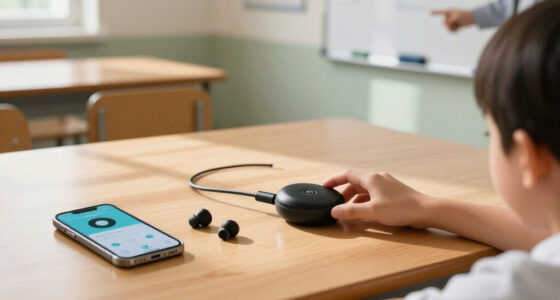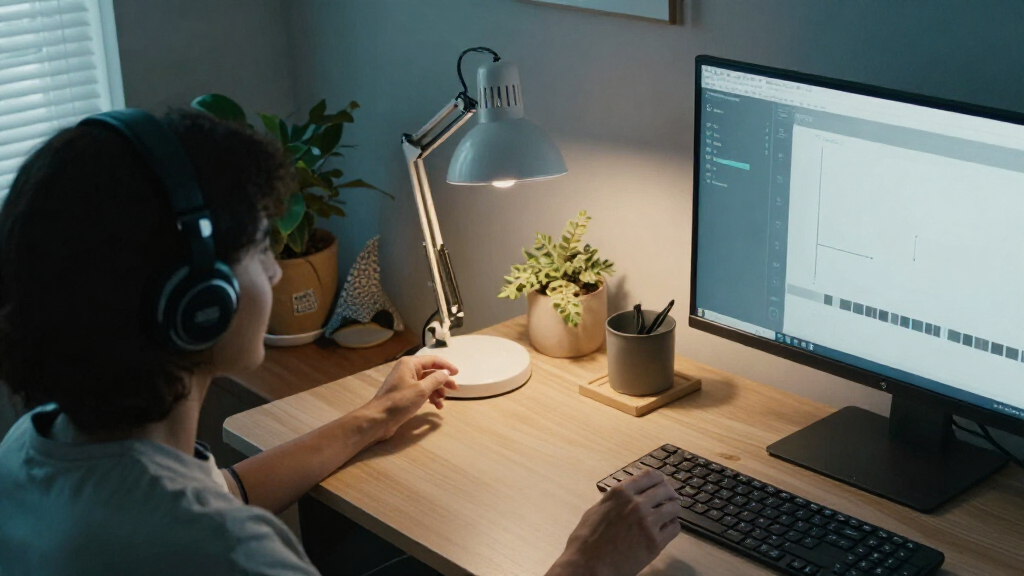

This checklist is for people setting up a workspace around sensory comfort, with options for lighting, tactile input, wrist support, and foot support. It may also help anyone comparing ways to make a desk routine feel more manageable. Personal comfort varies, so treat each pick as a starting point.

Get everyday helpers delivered free with Prime
- Fast, free delivery on millions of items
- Prime Video, Amazon Music and more included
- Member-only deals all year
The checklist follows the workspace from visual and sound considerations to touch and posture. Some sections have a named product; the two hearing-related sections offer advice only, since no product was specified for them.
Use the sections that match your needs, then check each item against your own workspace and routines. Confirm dimensions, hand orientation, adjustment needs, and any compatibility details before choosing. Try one change at a time so you can tell whether it suits you.
Desk Lighting
Desk lighting is a useful place to begin when the light in a workspace feels distracting or difficult to tailor. The listed pick is an OttLite LED Desk Lamp with Color Changing Base and USB Port, White. Its product name identifies a color-changing base and a USB port, which may be relevant features to consider as you plan where the lamp will sit. Placement matters: check whether the base and lamp can fit comfortably without crowding the work surface.
A common buying mistake is choosing a lamp based on its appearance or feature list without considering how it will be used at the desk. Think through where you sit, which side needs illumination, and whether the lamp’s footprint will interfere with other essentials. Check the product details for its dimensions, power requirements, controls, and any lighting adjustments you want. Do not assume the USB port or color-changing feature will meet a particular device or sensory need without confirming the specifications. Check the details before deciding whether this lamp suits your setup.
What to look for:
- Confirm the lamp’s dimensions and available desk space.
- Check its power requirements and cable arrangement.
- Review how the color-changing base is operated.
- Confirm the USB port details for your intended use.
OttLite LED Desk Lamp with Color Changing Base and USB Port, White

Modern white LED desk lamp featuring OttLite’s high-contrast, low-glare natural daylight illumination. Offers 3 color temperature modes and 3 brightness settings, with a base that glows in your choice of color or cycles through the spectrum.
Pros:
- High-contrast, low-glare OttLite illumination reduces eye strain
- Adjustable color temperature and brightness settings
- Flexible neck with wide height adjustment range
- Built-in USB port and fun color-changing base
Cons:
- Not water resistant
- Relatively low wattage may not suit users wanting very bright output
Best for: People considering a desk lamp with a color-changing base and USB port
Not ideal for: Workspaces without room for a desk lamp base
Bottom line: Check the lamp’s dimensions, controls, and power details against your workspace before choosing it.
Noise-Reducing Earplugs
Earplugs can be one option to explore when everyday workspace sounds make it harder to focus. No specific product is named for this checklist slot, so start by identifying the sounds you hope to soften and whether you need to remain aware of speech, alerts, or other cues. Your listening needs should guide the choice, especially if you rely on hearing for communication or safety.
A common mistake is assuming that any earplug will feel comfortable or provide the right balance of sound reduction and awareness. Consider the fit and material, how long you expect to wear them, and whether they are intended for repeated use. Review product information for sizing, cleaning, and care instructions, and make sure the fit works for you without discomfort. If you use hearing aids or assistive listening equipment, check whether earplugs can be used alongside your setup. Fit comes first: a product that does not feel comfortable is unlikely to be useful through a work session.
What to look for:
- Identify which sounds you want to soften.
- Check available sizes and material information.
- Review wear, cleaning, and care instructions.
- Consider whether you need to hear speech or alerts.
- Check compatibility with any hearing aids or assistive listening setup.
Over-Ear Hearing Protection
Over-ear hearing protection may be worth exploring when a workspace includes sounds that feel uncomfortable or distracting. This slot has no named product, so consider what sounds you are responding to and how much awareness of your surroundings you need to keep. Awareness needs can differ from one person and task to another.
Do not assume that a particular style will fit every head comfortably or work well with glasses, hearing aids, or other equipment. Review the product information for size, adjustability, cushioning, and intended use. Think about whether you will wear the protection for a short interval or for much of the workday, and check that it does not interfere with your other workspace essentials. If you rely on spoken communication, consider how the protection affects conversation and alerts before making it part of your routine. Check fit carefully and follow the maker’s use guidance.
What to look for:
- Check the stated fit range and adjustability.
- Review cushion and headband details for comfort.
- Consider fit with glasses or hearing aids.
- Confirm the product’s intended use and care guidance.
- Consider how much conversation or alert awareness you need.
Tactile Fidget Tools
A tactile fidget tool can give your hands something to engage with during desk time. The listed pick is Speks Odds Magnetic Sensory Balls, Set of 3. Its name indicates a set of three magnetic sensory balls; consider whether that form and quantity suit the way you want to use a fidget at your workspace. Choose for your routine, rather than assuming one object works for everyone.
A common buying mistake is overlooking how a fidget will be stored or handled between tasks. Check the product information for the individual pieces’ dimensions, materials, care guidance, and any age or use notes. Consider whether the magnetic feature fits your workspace and whether the pieces can be kept together when not in use. If you share a desk, think about whether the tool will be easy to put away and keep separate from items that should not be handled. Review the details so the form and care expectations are clear before choosing.
What to look for:
- Confirm the set contents and piece dimensions.
- Review material and care information.
- Consider how the magnetic feature fits your workspace.
- Check any age or use guidance.
- Plan where to store the pieces between uses.
Speks Odds Magnetic Sensory Balls, Set of 3

This set of three silicone sensory balls has a textured outer shell and magnetic core for quiet fidgeting, stacking, and magnetic tricks. Designed for adults and teens, the balls are intended to provide tactile stimulation for use at work, home, or while traveling.
Pros:
- Soft, textured silicone shell provides tactile stimulation
- Magnetic core supports stacking and magnetic tricks
- Designed for quiet fidgeting
Cons:
- Small size may limit how it feels in larger hands
- Contains magnets, which may require care around magnet-sensitive items
Best for: People considering a set of three magnetic sensory balls
Not ideal for: Workspaces where small magnetic pieces are unsuitable
Bottom line: Check the set details and storage needs to see whether these magnetic sensory balls fit your routine.
Wrist Rest
A wrist rest can be part of a desk setup when mouse use calls for added wrist support. The named pick is Carpio 2.0 Right-Handed Ergonomic Wrist Rest for Mouse, Pain Relief, A. The product name specifies a right-handed design, so hand orientation is an essential first check. Confirm the handedness before considering other details.
A frequent buying mistake is choosing a wrist rest without checking how it fits the mouse, desk surface, and user’s movement. Confirm the product dimensions and review any guidance about positioning and use. Consider whether it leaves enough space for your usual mouse movement and whether its height suits the rest of your setup. If you use a different hand for the mouse, this right-handed pick may not match your arrangement. Read the full product details for material, care, and fit information rather than assuming that the name alone answers those questions. Check the setup as a whole so the wrist rest does not crowd your workspace.
What to look for:
- Verify the right-handed orientation suits your mouse hand.
- Check dimensions against your mouse and desk space.
- Review positioning and use guidance.
- Consider the rest’s height alongside your desk setup.
- Confirm material and care details.
Carpio 2.0 Right-Handed Ergonomic Wrist Rest for Mouse, Pain Relief, Anti-Fatigu

The Carpio 2.0 is an ergonomic wrist rest designed for right-handed users to reduce strain and support comfort during extended computer use. Made with high-quality silicone and PTFE feet for smooth gliding, it promotes wrist health whether gaming, working, or browsing.
Pros:
- Ergonomic design reduces wrist strain
- High-quality silicone provides comfort and stability
- Smooth gliding PTFE feet enhance usability
- Suitable for long hours of work or gaming
Cons:
- Only available in large size
- Designed specifically for right-handed users
- Limited color options (black only)
Best for: Right-handed mouse users checking wrist support options
Not ideal for: Left-handed mouse users or setups that need another orientation
Bottom line: Confirm the handedness, dimensions, and positioning guidance before adding this wrist rest.
Footrest
A footrest can help you adjust the support available under a desk. The listed pick is a Step-to-Adjust Height-Adjustable Foot Rest with Foam Cushion. Its name identifies height adjustment and a foam cushion, making adjustment range and fit central considerations. Start with your seated position: the footrest should suit how you sit and the clearance under your desk.
A common mistake is choosing a footrest without checking whether it fits the space or can be adjusted to a useful height. Measure the available area and compare it with the product dimensions. Review how the height is adjusted, the adjustment range, and any setup or care guidance in the product details. Consider whether the foam cushion and footrest surface are suitable for your preferences, and check that the unit will not obstruct chair movement or nearby items. Check the range and the under-desk fit before deciding whether this pick belongs in your workspace.
What to look for:
- Compare the footrest dimensions with under-desk space.
- Confirm its height adjustment range and mechanism.
- Review setup and care instructions.
- Consider the foam cushion and surface for your preferences.
- Check clearance for chair and leg movement.
Step-to-Adjust Height-Adjustable Foot Rest with Foam Cushion
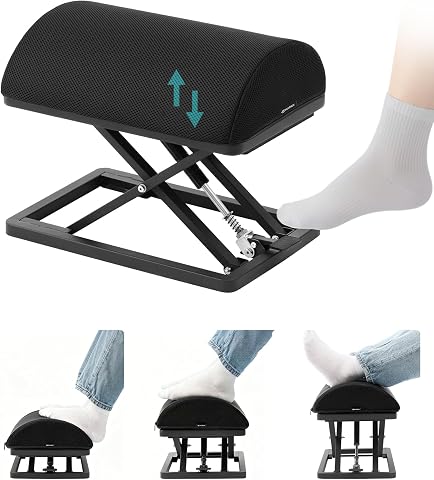
This foot rest adjusts from 2.7 to 13.1 inches with a foot tap, so you can change its height without bending down. It has a carbon steel frame, non-slip pads, and a contoured high-density foam cushion with a removable, washable cover.
Pros:
- Foot-tap height adjustment without bending
- Wide adjustment range for different postures
- Stable carbon steel construction with non-slip pads
- Removable, washable cushion cover
Cons:
- Finger-entrapment risk during operation
- Relatively heavy at 9.5 lb
Best for: People seeking a height-adjustable footrest with a foam cushion
Not ideal for: Workspaces without enough room beneath the desk
Bottom line: Measure your under-desk space and verify the adjustment range before choosing this footrest.
If you are building the workspace gradually, start with the change most connected to your daily discomfort or distraction, then consider fit and compatibility before adding another item. Check dimensions, adjustment ranges, hand orientation, and care details as relevant. For the hearing sections, first clarify how much sound reduction and environmental awareness you need. Prioritize your needs and use the checklist to compare options thoughtfully.
A sensory-friendly workspace is personal, and small adjustments can help you learn what works for your routine. Keep the products and advice that suit your space, and revise the setup as your needs change. Build at your pace, using comfort and practical fit as your guide.