
By focusing on accessibility, you open your voice careers to a more diverse audience, including those with disabilities. Designing inclusive solutions involves using clear speech, simple commands, and testing with varied users. Assistive technologies like screen readers and hearing aids rely on well-structured audio content, making your work more effective and ethical. Embracing these principles not only enhances usability but also positions you as a responsible professional committed to a more equitable industry—discover how you can get started.

Get everyday helpers delivered free with Prime
- Fast, free delivery on millions of items
- Prime Video, Amazon Music and more included
- Member-only deals all year
Key Takeaways
- Incorporate inclusive design principles to ensure voice solutions accommodate diverse disabilities from the outset.
- Test voice interfaces with users with disabilities to identify and eliminate accessibility barriers.
- Use clear, well-structured audio content that supports assistive technologies like screen readers and hearing aids.
- Stay updated on assistive tech advancements to enhance voice solutions’ accessibility and usability.
- Promote ethical design practices that prioritize accessibility, diversity, and equitable access within voice career development.
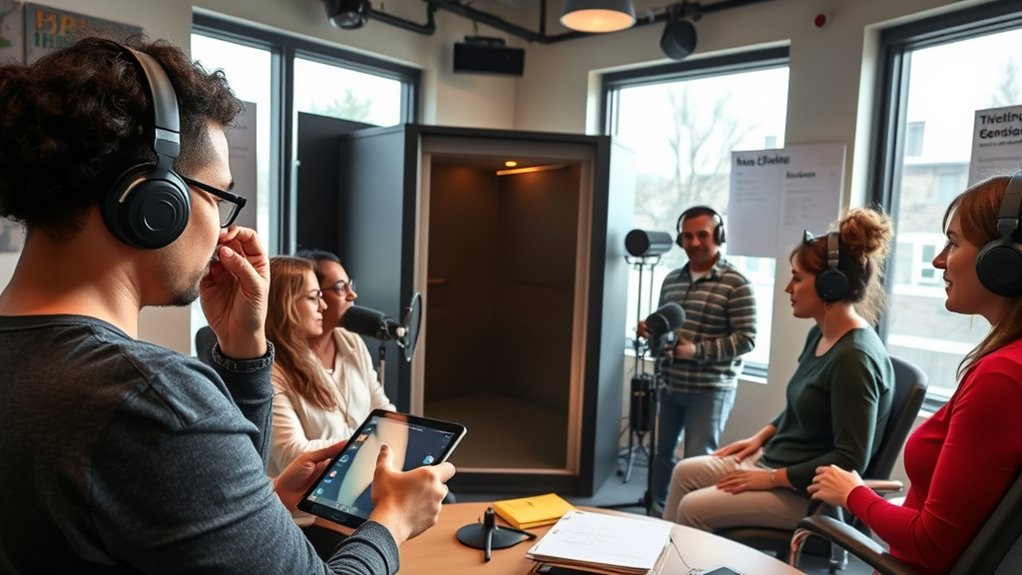
Accessibility in voice careers is transforming the industry by opening doors for more diverse talent. As a voice professional, you have a unique opportunity to make your work more inclusive by embracing assistive technology and inclusive design principles. These tools and approaches aren’t just about compliance—they’re about genuinely serving audiences with disabilities and ensuring your voice solutions are accessible to everyone. When you understand how assistive technology works, you can craft voice interfaces and recordings that are easier to use for people with a range of needs. Screen readers, voice amplifiers, and hearing aids all rely on clear, well-structured audio content, so paying attention to pronunciation, pacing, and clarity becomes essential. By integrating assistive technology considerations into your process, you help remove barriers, making your voice work more meaningful and usable for individuals with disabilities.
Inclusive design, on the other hand, is about creating voice solutions that naturally accommodate diverse needs from the start. When designing voice interfaces, consider how users with visual impairments or motor disabilities will interact with your product. For example, ensure command structures are simple and intuitive, and that voice commands can be executed with minimal effort. This not only broadens your audience but also enhances usability for everyone, including those without disabilities. In practice, this means testing your voice recordings and interfaces with diverse user groups to identify potential barriers and refine your approach. It’s about thinking beyond the average user and actively designing with empathy. This approach not only broadens your reach but also aligns with the growing demand for ethical, responsible voice technology. Additionally, understanding diverse needs and how they influence content accessibility can help you develop more effective and inclusive voice solutions.
Fostering accessibility in your voice career also involves staying informed about emerging assistive technologies and evolving best practices. Attend workshops, participate in inclusive design communities, and seek feedback from users with disabilities. This continuous learning helps you create voice content that’s genuinely accessible, rather than just compliant. Ultimately, by adopting assistive technology and inclusive design principles, you’re not only expanding your professional skill set but also playing a crucial role in making voice technology more equitable. Your efforts can empower individuals with disabilities, helping them experience the benefits of voice technology just as fully as anyone else. Accessibility isn’t a secondary consideration—it’s an integral part of responsible, innovative voice work that benefits all users and shapes a more inclusive future for the industry.
screen reader software for visually impaired
As an affiliate, we earn on qualifying purchases.
As an affiliate, we earn on qualifying purchases.
Frequently Asked Questions
How Can Voice Actors Improve Accessibility for Diverse Disabilities?
You can improve accessibility by integrating sign language options and audio description techniques into your work. Use clear, expressive speech and consider providing sign language interpretation or captions whenever possible. Incorporate audio descriptions to help visually impaired audiences understand visual content. By actively adopting these methods, you make your voice work more inclusive, allowing diverse audiences with disabilities to fully engage and enjoy your performances.
What Technologies Assist Voice Actors in Creating Accessible Content?
You might worry tech can’t make your content fully accessible, but it truly can. Sign language interpretation and captioning tools, like real-time caption generators, help you reach audiences with hearing disabilities. These technologies enable you to deliver inclusive, engaging content effortlessly. Embracing such tools shows your commitment to accessibility, ensuring everyone can enjoy your voice work without barriers. Your voice can make a difference—technology makes that possible.
Are There Specific Training Programs for Serving Disabled Audiences?
Yes, there are specific training programs focused on serving disabled audiences. These programs emphasize inclusive storytelling and disability awareness, helping you understand diverse needs and adapt your voice work accordingly. By participating, you learn to craft content that’s accessible, respectful, and engaging. This training equips you with the skills to connect authentically with disabled audiences, ensuring your voice acting promotes inclusivity and reaches everyone effectively.
How Do Industry Standards Address Accessibility in Voice Recordings?
Industry standards prioritize accessibility by encouraging sign language integration and visual cue utilization in voice recordings. You should guarantee your content includes clear visual cues and options for sign language interpretation, making it easier for disabled audiences to understand. Following these standards helps you create inclusive content that caters to diverse needs, improving overall accessibility and ensuring your voice work reaches and resonates with everyone, regardless of their physical abilities.
What Challenges Do Voice Actors Face When Adapting for Accessibility?
Like steering through a maze, adapting for accessibility challenges you to master accent adaptation and script simplification. You may struggle to guarantee your tone remains warm and genuine while adjusting pronunciation or simplifying complex language. Balancing clarity with authenticity can feel overwhelming, but your dedication helps break down barriers. By embracing these hurdles, you make your voice more inclusive, creating a welcoming experience for all listeners.
hearing aid compatible voice recorder
As an affiliate, we earn on qualifying purchases.
As an affiliate, we earn on qualifying purchases.
Conclusion
By embracing accessibility in voice careers, you open doors to a diverse world of listeners who might otherwise be overlooked. While some see barriers, you see opportunities to innovate and connect authentically. Serving audiences with disabilities isn’t just about compliance; it’s about creating a richer, more inclusive experience. In a landscape that often emphasizes perfection, your commitment to accessibility transforms challenges into powerful moments of connection and understanding.
assistive listening devices for hearing aids
As an affiliate, we earn on qualifying purchases.
As an affiliate, we earn on qualifying purchases.
As an affiliate, we earn on qualifying purchases.
Halloween Picks
halloween
As an affiliate, we earn on qualifying purchases.