Moving from stage to voice over involves translating your acting skills into a microphone-friendly performance. You’ll need to focus on vocal control, mastering mic techniques like proper positioning and breath support, while adapting your projection for an intimate sound. Developing emotional connection through your voice is key. With practice, you’ll transform your stage presence into compelling, authentic vocal performances. Keep exploring these techniques, and you’ll discover how your skills can evolve for voice acting success.

Get everyday helpers delivered free with Prime
- Fast, free delivery on millions of items
- Prime Video, Amazon Music and more included
- Member-only deals all year
Key Takeaways
- Leverage stage experience to develop strong vocal presence and emotional expression suited for voice acting.
- Adapt your projection techniques to maintain clarity and control within the close-mic recording environment.
- Practice microphone positioning and technical skills for clear, professional-quality recordings.
- Transition from physical stage cues to vocal nuances, accents, and emotional layers to bring characters to life.
- Continuously refine your vocal habits and experiment with new techniques to enhance your voice over performance.
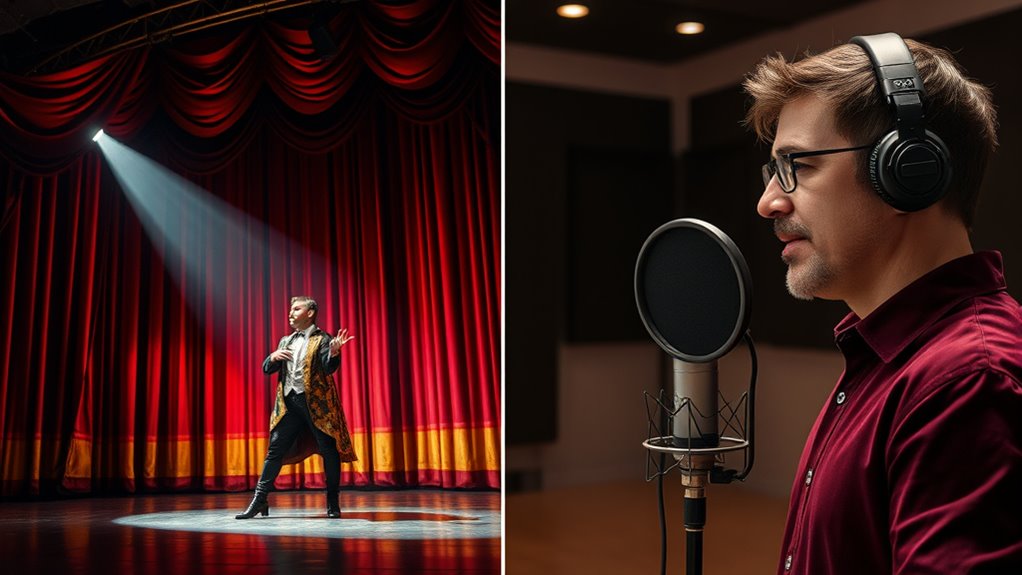
Have you ever wondered how to smoothly shift from performing on stage to recording voice overs? Switching between these two worlds requires more than just a change of scenery; it’s about adapting your skills and embracing new techniques. One of the most vital aspects is understanding character development in the context of voice work. On stage, you rely heavily on physical presence, gestures, and facial expressions to bring a character to life. In voice overs, those visual cues are replaced by your vocal tone, pitch, and emotion. You need to learn how to craft a detailed character solely through your voice. This means exploring different nuances, accents, and emotional layers, and then translating those into your recordings. Developing a vivid mental picture of your character helps you deliver authentic performances that resonate with listeners, even without visual support.
Master character development through voice to create authentic, compelling performances without visual cues.
Another key element is mastering microphone techniques. Unlike a stage performance, where projecting your voice is essential, voice over work demands a different approach. You’ll want to get comfortable with how your microphone captures your voice. Position your mic at the right distance—usually about six to eight inches away—and use a pop filter to eliminate plosive sounds. Consistency in your distance and angle helps maintain a uniform sound quality. You also need to learn how to control your breathing and avoid unwanted noises, like mouth clicks or sibilance, which can be distracting in a recording. Proper microphone technique ensures your voice remains clear, warm, and engaging throughout the script. Additionally, understanding emotional support can help you connect more deeply with your character, making your delivery more compelling and genuine.
Shifting from stage to voice over also involves adjusting your vocal habits. On stage, you might push your voice to reach the back of the auditorium, but in a recording booth, you want a more controlled, intimate sound. Practice speaking with a relaxed throat and avoid strain. Record yourself frequently, listening for clarity, pitch, and emotional delivery, and then refine your technique. It’s helpful to warm up your voice before each session and stay mindful of your posture, which impacts your breath control and vocal resonance.
Ultimately, this change is about honing your vocal skills and understanding the technicalities behind microphone use. By focusing on character development, you’ll give your voice depth and authenticity, while mastering microphone techniques will ensure your recordings sound professional and polished. With practice, you’ll find that your stage experience provides a strong foundation, and with a few adjustments, you can excel in the voice over world. It’s a journey of learning, experimentation, and refinement—one that opens up new creative possibilities and expands your performance repertoire.
professional microphone for voice over
As an affiliate, we earn on qualifying purchases.
As an affiliate, we earn on qualifying purchases.
Frequently Asked Questions
How Do I Build a Voice-Over Demo Reel?
You build a voice-over demo reel by selecting your best clips that showcase your range and style. Use casting techniques to highlight different characters and tones. Focus on audition preparation to record polished, professional samples. Keep it concise, around 60-90 seconds, and tailor it to your target industry. Regularly update your reel as you improve and gain new skills, ensuring it always represents your current voice-over talents.
What Vocal Warm-Ups Are Best for Voice-Over Work?
To unlock your vocal potential, you should focus on warm-up routines that enhance vocal flexibility. Gentle humming, lip trills, and sirens are excellent choices, helping you smoothly prepare your voice for recording. These routines warm up your vocal cords, improve range, and promote clarity. Incorporate them into your daily practice to guarantee your voice stays versatile and ready for any voice-over project, boosting your confidence and performance quality.
How Can I Find Voice-Over Audition Opportunities?
You can find voice-over audition opportunities by actively networking at industry events and online platforms like Voices.com or Casting Call Club. Follow audition etiquette by submitting professional demos and personalized submissions. Engage with industry professionals on social media and join voice-over groups to stay informed about open calls. Consistent networking and respectful communication open doors to new opportunities, helping you build relationships that lead to recurring auditions and long-term success.
What Equipment Do I Need to Start Voice-Over Recording?
Your voice-over studio setup doesn’t have to be a spaceship, but it should be close! Start with a good microphone, like a condenser or dynamic mic, to capture your voice clearly. Pair it with headphones, a pop filter, and soundproofing to reduce echo. A sturdy desk and a computer with editing software complete the essentials. Focus on quality gear to make your recordings sound professional and stand out.
How Do I Price My Voice-Over Services Professionally?
You should start by researching industry standards and applying effective pricing strategies, such as hourly rates or project-based fees. Be clear about your rates and flexible in client negotiations to accommodate different budgets. Consider your experience, the project scope, and market demand when setting prices. Communicate confidently and professionally to guarantee clients see your value, and don’t be afraid to adjust your pricing as you gain experience.
As an affiliate, we earn on qualifying purchases.
Conclusion
Stepping from the bright stage into the quiet world of voice over is like trading a blazing spotlight for a hidden, shimmering treasure. Your voice becomes a magic key, revealing new stories and dreams, even in silence. Embrace this shift as an exciting voyage, where every word you speak paints a vivid picture, and your passion lights the way through uncharted waters. Trust in your talent—your voice is the most powerful instrument you’ll ever wield.
As an affiliate, we earn on qualifying purchases.
As an affiliate, we earn on qualifying purchases.
Halloween Picks
halloween
As an affiliate, we earn on qualifying purchases.