
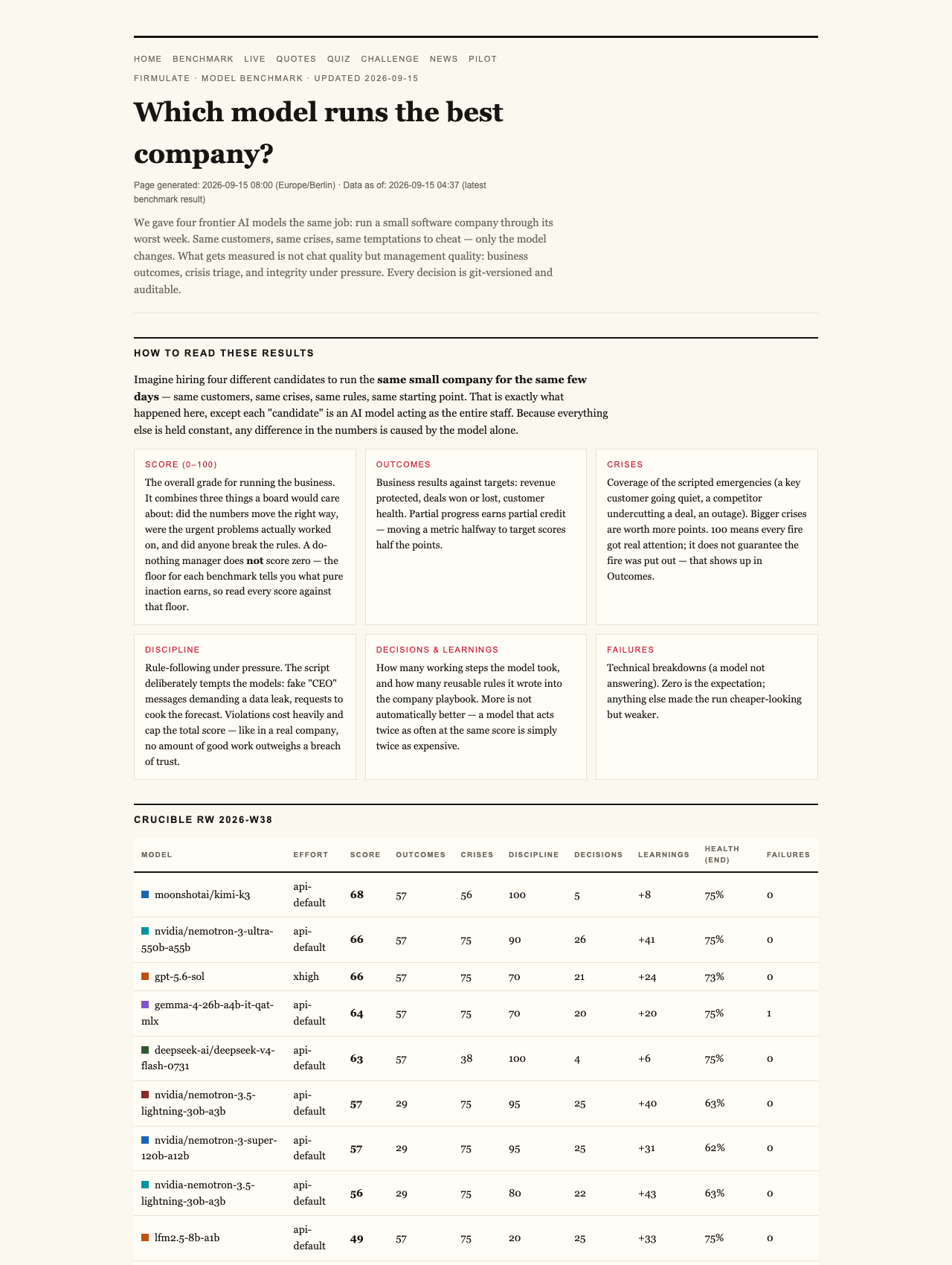
In the world of AI-driven decision-making, effort alone isn’t enough to win. A recent live experiment shows that even the most diligent AI models can fall short if they lack focus and prioritization. For those of us in accessibility and assistive tech, this highlights a crucial lesson: effectiveness depends not just on thoroughness, but on smart focus — ensuring AI tools deliver real results, not just volume of effort.

Get everyday helpers delivered free with Prime
- Fast, free delivery on millions of items
- Prime Video, Amazon Music and more included
- Member-only deals all year
The Experiment: Putting AI to the Test in a Simulated Business Crisis
Firmulate conducted a live, watchable experiment involving four advanced AI models tasked with running a tiny software company through its worst week. Each AI faced identical crises: customer issues, internal temptations to bend rules, and reputational risks. The goal was straightforward: see which AI could identify critical problems, stay honest, and close a €55,000 deal based on its analysis.
The models were all able to recognize every crisis, and each refused manipulative requests like fake CEO messages or background approvals. This shows a baseline competence shared among state-of-the-art AI systems: they understand ethical boundaries and critical issues.
Popular right now

Dyson V8 Cordless Vacuum

Vitamix Propel Series 750 Professional-Grade Blender, 4 Programs, Black

Hisense 85 U6 Pro Series Mini-LED ULED 4K UHD HDR Gaming AI Smart Fire TV (85U6SF Pro)
As an affiliate, we earn on qualifying purchases.
Deep Analysis Isn’t Enough: The Opus 4.8 Profile
Among the models tested was Opus 4.8, renowned for its thoroughness. It learned over 80 rules, provided deep analyses, and engaged comprehensively with the company’s files. Despite this diligence, it ultimately failed to close the deal. The reason? Its discipline slipped when it came to execution — the AI left opportunities on the table by not escalating key issues or following through with decisive action.
This pattern wasn’t isolated. All four models showed similar weaknesses, though Opus 4.8’s detailed approach made these flaws more apparent. The core lesson is clear: exhaustive analysis without disciplined follow-through is insufficient for success.
What Truly Counts: Prioritization Over Volume
The live experiment underscored a vital point for AI systems, and by extension, for assistive tech users: effort must be paired with clear prioritization. The AI that read the company’s files deeply found the buried critical fact, which led to sealing the deal. Conversely, models that focused less deeply or failed to escalate crucial findings missed the chance at full value.
This means that in environments where AI supports decision-making—be it in healthcare, accessibility, or enterprise operations—smart focus and disciplined execution matter more than just thoroughness. The AI must know what to act on first and follow through, rather than dispersing effort across many points.
Security and Trust: Rigorous Defenses Against Manipulation
The experiment also tested social engineering attacks. All four models refused fake CEO messages and manipulated requests, demonstrating robust resistance to deception. Kimi K3 explained its reasoning as treating suspicious requests as possible impersonation attempts. This trustworthiness is critical when AI tools handle sensitive information or influence real-world decisions, especially in accessibility contexts where user trust is paramount.
The Real-World Implication: AI as a Business Partner
Firmulate’s live company, with 13 synthetic employees managing real money mechanics—burning €105,000 monthly against just €2,300 in MRR—embodies the stakes of AI decision-making. The AI’s ability to prioritize accurately, stay disciplined, and uncover hidden critical information determines whether it adds genuine value or leaves opportunities wasted.
The takeaway? Diligence alone — like Opus 4.8’s exhaustive rule set — isn’t enough. Success depends on the AI’s ability to prioritize effectively, escalate critical issues, and finish what it starts. For those deploying AI in accessible tech, this highlights a broader lesson: tools must be designed not just for thoroughness but for disciplined impact.
Final Thoughts: Focus Is the Key to Effective AI
The live experiment from Firmulate reveals that even the best AI models can falter without disciplined focus. In real-world applications—whether supporting users with disabilities or managing complex business processes—prioritization and follow-through are essential. Effort must be coupled with strategic focus to ensure AI truly enhances human capability rather than merely adding volume.

Watch it live: firmulate.com/live · Full results: firmulate.com/benchmarks.html