
Practicing improv as a voice actor boosts your spontaneity on the mic, helping you deliver authentic, emotionally compelling performances. It sharpens your quick thinking, allows you to explore different tones, and creates genuine reactions in the moment. By trusting your instincts and listening actively, you’ll develop a natural flow that captivates listeners and brings characters to life. Keep exploring these techniques, and you’ll discover even more ways to enhance your voice acting skills.
Key Takeaways
- Improv enhances spontaneity, enabling voice actors to deliver authentic and dynamic performances on the mic.
- Active listening during improv fosters genuine reactions and deeper character connections.
- Practicing improv builds confidence in adapting tone, inflections, and responses in real-time.
- Improv sharpens quick thinking, allowing actors to handle unexpected twists or cues seamlessly.
- Regular improv exercises develop comfort with vulnerability, resulting in more natural and memorable voice performances.
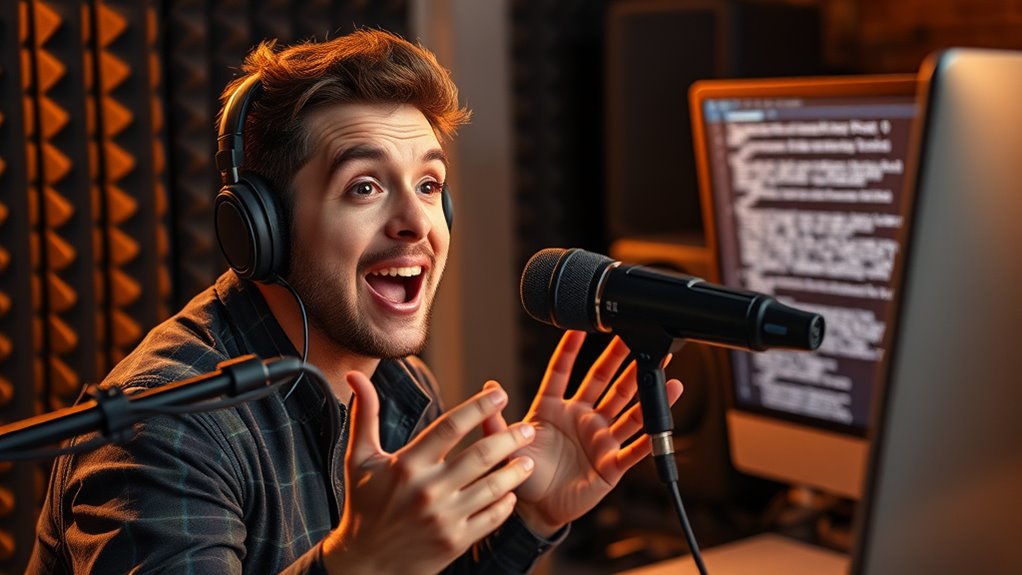
Have you ever wondered how voice actors bring characters to life with spontaneity and authenticity? The secret often lies in improv—an essential skill that allows you to inject genuine emotion and fluidity into your performances. When you embrace improv, you open yourself up to spontaneous character development, which makes your voice acting feel more real and relatable. Instead of sticking rigidly to a script, you learn to adapt your delivery in the moment, capturing the raw emotion behind each line. This ability to think on your feet helps you develop characters more naturally, giving them depth and personality that resonate with listeners.
Improv forces you to trust your instincts and tap into your emotional authenticity. When you’re not confined by a script, you’re free to explore different tones, inflections, and nuances that reflect the true essence of your character. This authenticity is what makes your performance memorable, allowing listeners to connect with the character’s feelings and motivations. As you practice improvisation, you also become more comfortable with vulnerability—embracing moments of uncertainty as opportunities for genuine expression. This openness adds layers to your character, making them multi-dimensional rather than one-dimensional stereotypes.
Trust your instincts to create authentic, multi-dimensional characters full of genuine emotion and nuance.
Engaging in improv exercises sharpens your ability to think quickly and respond convincingly to unexpected scenarios. For voice actors, this agility is *essential*, especially during live recordings or auditions where spontaneity can set you apart from the competition. By regularly practicing improvisation, you learn to maintain consistency in character while still allowing room for spontaneous twists that enhance storytelling. This balance between structure and freedom is what enriches your performances and makes them feel authentic and lively.
Moreover, improv encourages active listening—an often overlooked skill that’s *crucial* for effective character development. When you listen closely to other actors or even to your own impulses, you pick up subtle cues that deepen your portrayal. It’s about reacting truthfully in the moment, which adds realism and emotional authenticity to your voice work. Over time, these techniques become second nature, enabling you to craft performances that are both spontaneous and emotionally compelling.

Vocal Warm Ups & Exercises For Actors, Speakers & Voice Artists
As an affiliate, we earn on qualifying purchases.
As an affiliate, we earn on qualifying purchases.
Frequently Asked Questions
How Can Improv Improve My Voice Acting Career?
Improv can boost your voice acting career by enhancing your emotional flexibility and quick thinking. Through improv comedy, you learn to adapt instantly to scripts and directions, making your performances more dynamic and authentic. It also helps you stay relaxed and confident under pressure. By practicing spontaneity, you’ll develop a versatile voice and the ability to create engaging characters on the spot, setting you apart in a competitive industry.
What Are Basic Improv Exercises for Beginners?
Sure, start with simple improv warm-ups like “yes, and” to build spontaneity. Practice scene improvisation by creating quick stories without overthinking—imagine you’re a superhero stuck in a grocery store. These exercises boost your adaptability and confidence on mic. Remember, the goal isn’t perfection but embracing mistakes as part of the fun. With consistent practice, you’ll find your voice acting naturally more vibrant and spontaneous.
How Do I Handle Rejection in Improv Scenarios?
When handling rejection in improv, you focus on trust building and quick thinking. Instead of taking it personally, view rejection as a chance to adapt and grow. Keep a positive attitude, stay open-minded, and trust your instincts. Respond quickly, turn rejection into an opportunity for new ideas, and remember that every mistake is a learning experience. This mindset helps you stay confident and resilient on the mic.
Can Improv Help With Character Development?
Yes, improv helps you develop characters by encouraging you to explore their backstories and emotional range spontaneously. When you improvise, you quickly adapt and create authentic responses, deepening your understanding of a character’s motivations and traits. This active engagement sharpens your ability to portray complex characters, making your performances more convincing. Improvisation pushes you to think on your feet, enriching your skill in creating well-rounded, dynamic characters.
What Equipment Is Best for Practicing Improv at Home?
Did you know that 85% of voice actors practice improvisation techniques at home? To do this effectively, invest in a good microphone, headphones, and a quiet space for home recording. A pop filter and soundproofing help improve audio quality. Using simple software like Audacity or GarageBand allows you to record and analyze your improv sessions, sharpening your spontaneity and vocal flexibility without needing expensive equipment.

VOVIGGOL 2Pcs Microphone Headset Mic, Flexible Wired Boom for Voice Amplifier, 3.5mm Connector Jack Headset Microphone for Singing, Speaking, Teachers, Coaches, Presentations, Seniors and More
【Great Value Wired Microphone Head】Comes 2 pack headset microphone with 3.5mm jack connection and 1.2m audio line. Specifically…
As an affiliate, we earn on qualifying purchases.
As an affiliate, we earn on qualifying purchases.
Conclusion
So, don’t let the fear of messing up hold you back. Remember, improv is about having fun and embracing your creativity, not perfection. With practice, spontaneity becomes easier, and your confidence grows. Even if you stumble, it’s all part of the process—listeners love genuine moments. Keep experimenting, stay relaxed, and enjoy the journey of becoming a more dynamic voice actor. You’ve got this—just trust yourself and take that mic!

Vocal Improvisation: Book & CD (Advance Music)
As an affiliate, we earn on qualifying purchases.
As an affiliate, we earn on qualifying purchases.

Active Listening Techniques: 30 Practical Tools to Hone Your Communication Skills
As an affiliate, we earn on qualifying purchases.
As an affiliate, we earn on qualifying purchases.