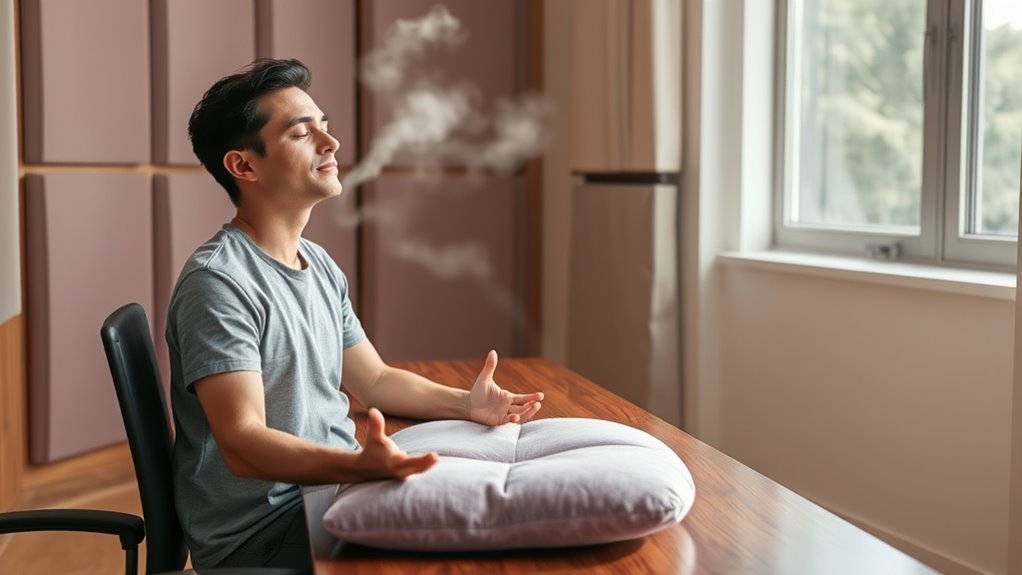

To reduce tension in voice acting, you can use meditation techniques to stay present and relax your body. Focus on slow, deep breaths to release stress and ease vocal strain. Pay attention to areas like your jaw, shoulders, and neck, and gently relax them. Incorporating mindfulness into your practice helps improve vocal control, authenticity, and emotional connection. If you continue exploring, you’ll discover more ways to harness meditation for a more resonant, tension-free voice.
Key Takeaways
- Meditation enhances mindfulness, helping voice actors become aware of and release physical tension before and during performances.
- Regular meditation practice improves breath control, leading to relaxed vocal production and reduced strain.
- Mindfulness meditation helps identify tension patterns in the jaw, shoulders, and neck, enabling targeted relaxation.
- Using meditation techniques during performance resets focus, calms nerves, and maintains vocal ease in demanding scenes.
- Incorporating meditation fosters emotional presence, decreasing anxiety and promoting more authentic, tension-free voice acting.
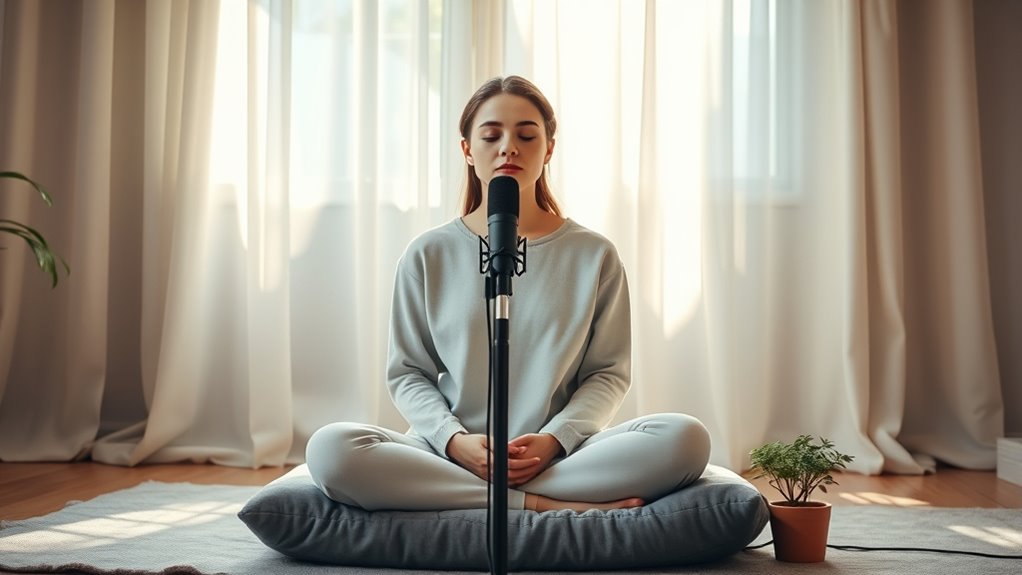
Mindful voice acting is about more than just delivering lines; it’s about being fully present in each moment to bring authenticity and depth to your performance. When you approach your craft with mindfulness, you tap into a deeper connection with your voice, allowing genuine emotion and nuance to flow naturally. One of the foundational elements of mindful voice acting is mastering breath control, which directly influences your vocal relaxation and overall performance. By paying close attention to your breath, you can anchor yourself in the present, reducing tension that often hampers vocal flexibility.
To improve breath control, start by focusing on slow, deliberate breaths. Take a deep inhale through your nose, filling your lungs fully without forcing. As you exhale, do so gently and steadily, avoiding any tightness in your throat or chest. This practice encourages vocal relaxation, helping you release unnecessary tension that can cause vocal strain or fatigue. When you’re mindful of your breathing, you create a sense of calm that allows your voice to resonate more freely and effortlessly. Additionally, utilizing AI-driven analysis tools can help you monitor your breath patterns for better control.
Focus on slow, deliberate breaths to enhance vocal relaxation and reduce tension.
Vocal relaxation is key to delivering authentic performances. When your muscles are tense, your voice becomes strained, limiting your expressive range. Mindfulness prompts you to notice areas of tension—perhaps in your jaw, shoulders, or neck—and consciously release them. Incorporate simple relaxation techniques, such as gentle stretching or progressive muscle relaxation, into your routine. As you become more aware of your body’s state, you learn to let go of tension before stepping into the recording booth or onto the stage.
Practicing mindful breathing also enhances your ability to stay centered during demanding moments. If you feel nervous or overwhelmed, return to your breath. Inhale slowly, drawing attention inward, and exhale with intention. This simple act of conscious breathing resets your focus, easing anxiety and restoring vocal relaxation. Over time, this mindfulness becomes second nature, enabling you to maintain clarity and emotional depth in your performance, no matter the scene or script.
Ultimately, integrating breath control and vocal relaxation through mindfulness transforms your voice acting. It reduces tension, improves vocal quality, and elevates your authenticity. When you listen to yourself with a mindful ear, you can identify and release habits of tension that block your true voice. Regular practice not only enhances your technical skills but also deepens your emotional connection, making your performances more compelling and genuine. Mindful voice acting isn’t just about technique—it’s about cultivating a state of presence that allows your voice to truly shine.
Top picks for "mindful voice meditation"
Open Amazon search results for this keyword.
As an affiliate, we earn on qualifying purchases.
Frequently Asked Questions
How Can Meditation Improve Voice Projection and Clarity?
Meditation enhances your voice projection and clarity by improving breath control and vocal resonance. When you meditate regularly, you learn to breathe deeply and steadily, supporting stronger, more sustained voice output. It also helps relax your vocal cords, allowing your resonance to flow freely. As a result, your voice becomes clearer and more powerful, making it easier to project naturally and confidently in any performance or conversation.
What Specific Meditation Techniques Benefit Voice Actors?
You benefit from meditation techniques like deep breathing exercises and progressive muscle relaxation to improve your voice. These practices enhance breath control, allowing you to sustain notes and articulate clearly. They also promote vocal relaxation, reducing tension that hampers your projection. By incorporating mindfulness meditation, you become more aware of your breathing patterns, helping you stay calm and focused, which ultimately boosts your voice clarity and confidence during performances.
How Often Should Voice Actors Practice Mindful Meditation?
You should practice mindful meditation daily, even if just for a few moments. Incorporate breathing exercises and gentle vocal warm-ups to deepen your relaxation and focus. Regular practice helps you build resilience against tension, ensuring your voice remains clear and expressive. By dedicating consistent time, you’ll notice a calming effect that enhances your performances, making each session more vibrant and authentic. Consistency truly nurtures your vocal well-being.
Can Mindfulness Reduce Stage Fright and Performance Anxiety?
Yes, mindfulness can profoundly reduce your performance anxiety. By practicing relaxation techniques like deep breathing and present-moment awareness, you help calm your mind and body before stepping on stage. This mental clarity allows you to focus on your performance rather than worries, easing stage fright. Incorporating regular mindfulness exercises into your routine builds resilience against anxiety, helping you stay grounded and confident during your voice acting or stage performances.
Are There Any Contraindications for Meditation in Voice Training?
There are some meditation safety concerns to take into account. If you have severe mental health issues like PTSD or severe anxiety, certain practices might be contraindicated, so it’s best to consult a mental health professional first. Avoid techniques that cause discomfort or worsen symptoms. Always listen to your body, and if a practice feels unsafe or overwhelming, stop immediately. Proper guidance helps ensure meditation supports your voice training safely.
Conclusion
By practicing mindfulness, you can transform your voice acting sessions into moments of calm and clarity. As you become more aware of your breath and tension, you’ll find it easier to stay centered and deliver authentic performances. Remember, it’s not about fighting the storm but learning to dance in the rain. With patience and consistent effort, you’ll discover that a relaxed mind and voice can turn even the toughest scenes into opportunities for genuine connection.