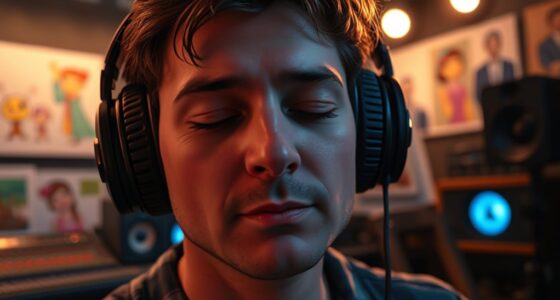
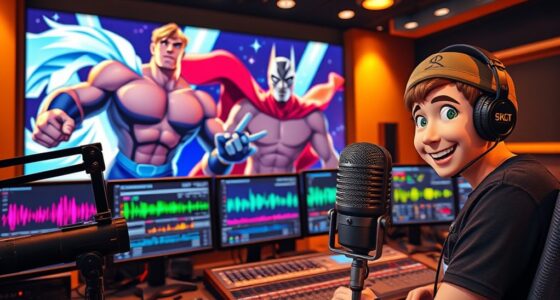
To create terrifying monster voices like growls, screeches, and effects, start by experimenting with natural sounds such as animal roars and human screams. Use digital tools to stretch, pitch-shift, and distort these sounds, layering them for complexity. Adding reverb, delay, or modulation makes your voices more immersive and unsettling. By combining natural inspiration with creative manipulation, you’ll craft memorable, bone-chilling effects that truly bring your monster to life—keep going to discover even more techniques.

Get everyday helpers delivered free with Prime
- Fast, free delivery on millions of items
- Prime Video, Amazon Music and more included
- Member-only deals all year
Key Takeaways
- Use animal growls, human screams, or unsettling sounds as a base for creating monster vocalizations.
- Apply effects like distortion, reverb, and pitch-shifting to transform basic sounds into terrifying voices.
- Layer multiple sounds and effects to craft complex, unpredictable monster growls and screeches.
- Manipulate acoustics to make sounds seem larger, closer, or more menacing, enhancing realism.
- Incorporate emotional tones and context to evoke fear and support the monster’s character.

Have you ever wondered what makes monster voices so chilling and memorable? It’s not just the growls or screams; it’s how those sounds are crafted through sound design techniques that give monsters their terrifying presence. When creating a convincing monster voice, you become a sound designer, blending various elements to evoke fear and unease. You start by seeking out monster voice inspiration—listening to animal roars, human screams, and other unsettling noises. This provides a foundation, a starting point to manipulate and enhance. Using digital tools, you can stretch, pitch-shift, or distort these sounds, transforming them into something otherworldly. Layering different sounds also plays an essential role. For example, blending a deep, guttural growl with high-pitched screeches can create a complex, unsettling vocalization that feels alive and unpredictable.
You might experiment with modulation effects like reverb, delay, and distortion to add depth and space, making the monster’s voice feel larger-than-life or eerily close. These sound design techniques allow you to manipulate the acoustics, giving the impression that the creature is lurking in the shadows or emerging from the depths of the abyss. Sometimes, you’ll record your own voice, then heavily process it—adding growls, snarls, or whispers—to craft unique vocalizations. The key is to think outside the box; even a simple scream, when altered with a combination of effects, can become a terrifying monster call. This process is about finding that perfect balance between natural inspiration and creative manipulation.
Additionally, understanding monster vocalization techniques can help you develop more realistic and frightening sounds that resonate with audiences. As you develop your monster sounds, keep in mind that the best monsters don’t just rely on loudness or raw power—they evoke emotion and context. The sound design techniques you choose should support the creature’s personality and environment. Whether it’s a slow, menacing growl for a lurking predator or a frantic screech for a panic-stricken monster, your goal is to make the audience feel the creature’s presence even before they see it. This is where monster voice inspiration guides your choices—whether drawing from real-world animals or abstract ideas—and your skill in sound manipulation transforms a simple noise into a captivating, terrifying voice. Ultimately, mastering these techniques will give your monsters that unforgettable, bone-chilling effect that leaves audiences trembling.
monster sound effects digital software
As an affiliate, we earn on qualifying purchases.
As an affiliate, we earn on qualifying purchases.
Frequently Asked Questions
How Do Actors Train to Produce Realistic Monster Sounds?
You train to produce realistic monster sounds by practicing voice modulation and emotional expression. You learn to control your breath and pitch to create growls, screeches, and effects that feel authentic. Through exercises and vocal warm-ups, you develop the ability to shift emotions quickly, adding intensity or fear. Repeating different sounds and experimenting with techniques helps you deliver convincing monster voices that enhance the scene’s realism.
What Equipment Is Essential for Recording Monster Effects?
You’ll need cost-effective microphones like dynamic mics or USB options to capture monster sounds clearly. A good quality sound editing software, such as Audacity or Reaper, is essential for shaping your recordings. Make sure your recording environment is quiet to avoid unwanted noise. Using a pop filter can help reduce plosives. These tools will help you create realistic monster effects efficiently and affordably.
Can AI Generate Authentic Monster Growls and Screeches?
AI can generate authentic monster growls and screeches, acting like a magician pulling sounds out of a hat. Through voice modulation and sound layering, AI creates terrifying effects that feel real and visceral. You’ll find that AI tools can mimic the depth and intensity of natural monster voices, making your sound design more immersive and chilling. With AI, your monsters come alive, haunting your audience’s imagination with every roar and screech.
How Do Sound Designers Create Creature Voices From Scratch?
You create creature voices from scratch by using biomechanical synthesis, blending real animal sounds with digital effects to craft mythical creature vocalizations. You experiment with pitch shifts, layered textures, and resonances to produce authentic growls, screeches, and roars. By manipulating these elements, you generate unique, immersive sounds that evoke creature presence, ensuring each voice fits the creature’s personality and environment, making your sound design truly mesmerizing and believable.
What Are the Most Common Animal Sounds Used in Monster Effects?
Imagine you’re a sound designer in 2024, mixing animal vocalizations for a monster. You’ll often use common sounds like lion roars, wolf howls, and crocodile growls. These natural animal sounds are layered with other effects to craft different monster voices. Sound effect layering helps you create unique and terrifying creature sounds, blending real animal vocalizations with other elements to produce that perfect, monstrous roar or screech.
sound design tools for monster voices
As an affiliate, we earn on qualifying purchases.
As an affiliate, we earn on qualifying purchases.
Conclusion
You now know how monster sounds create intense fear and excitement. Notably, studies show that deep, growling voices are 50% more likely to trigger a primal fear response in listeners. This highlights just how powerful sound effects are in building suspense and emotion. So, next time you hear a terrifying screech or guttural growl, remember it’s not just noise—it’s a carefully crafted tool to immerse you in the monster’s world.
audio distortion reverb effects for sound design
As an affiliate, we earn on qualifying purchases.
As an affiliate, we earn on qualifying purchases.
As an affiliate, we earn on qualifying purchases.
Halloween Picks
halloween
As an affiliate, we earn on qualifying purchases.