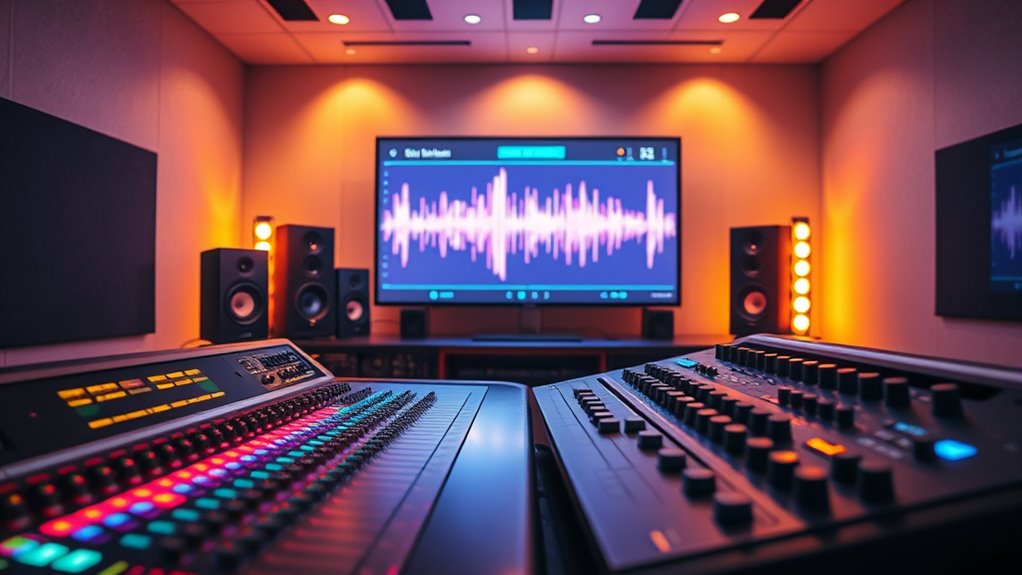

To create signature sounds that truly resonate, you’ll need sonic branding tools that help craft memorable audio logos and sound cues aligned with your brand’s values. These tools enable you to develop a consistent sonic language across various platforms, guaranteeing your brand stands out and fosters emotional connections. Testing and refining your sounds using audience feedback and data guarantees their effectiveness. Keep exploring further to discover how strategic sound design can strengthen your brand’s identity and loyalty.
Key Takeaways
- Utilize sound design software and digital tools to craft and customize audio logos and signature sounds.
- Collaborate with marketing teams to align sonic elements with brand values and messaging.
- Conduct audience testing and data analysis to refine sounds for maximum resonance and memorability.
- Develop a comprehensive sonic language and various formats for consistent brand recognition across platforms.
- Implement quality assurance processes to ensure clarity, emotional impact, and strategic effectiveness of signature sounds.

Ever wondered how brands create instantly recognizable sounds that resonate with their audience? The secret lies in effective sound identity development, which involves crafting audio logos and signature sounds that become synonymous with a brand’s personality. Audio logos are short, memorable sonic snippets that serve as auditory signatures, much like visual logos do visually. They’re designed to stick in your mind, instantly triggering brand recognition whenever you hear them. Developing a compelling sound identity isn’t random; it’s a strategic process that captures the essence of a brand’s values and message. You start by understanding what the brand stands for and how it wants to be perceived. From there, sound designers and marketing teams collaborate to create a sonic profile that aligns with these attributes. This process involves choosing specific melodies, rhythms, and tones that evoke the desired emotional response from the target audience. Incorporating quality assessment into the development process ensures that each sonic element meets high standards of clarity and effectiveness.
Sound identity development is a meticulous craft. It’s about more than just making a catchy jingle; it’s about building an entire sonic language. When done well, it helps a brand stand out in a crowded marketplace and stay top of mind. Once the core elements are established, they are refined into various formats, including audio logos, short sound cues, and longer musical themes that can be used across multiple touchpoints—TV ads, online videos, apps, or even in-store soundscapes. Consistency is key, so every sonic element should reinforce the brand’s core message and personality. This consistency helps consumers associate the sound with the brand instantly, deepening brand loyalty over time.
Creating these signature sounds isn’t just about aesthetics; it’s about strategic branding. You need to think about how the sound will work across different mediums, ensuring it’s versatile yet recognizable. Many brands leverage technology and data to test how their audio logos resonate with audiences, refining them based on feedback. Ultimately, a well-crafted sound identity can evoke specific emotions, foster recognition, and create a lasting impression—all of which are essential for building a strong brand presence. By investing in sound identity development and designing impactful audio logos, you’re giving your brand a powerful sonic personality that can connect with your audience on a deeper level, making your brand truly unforgettable.
![WavePad Audio Editing Software - Professional Audio and Music Editor for Anyone [Download]](https://m.media-amazon.com/images/I/B1fcLEGCs6S._SL500_.png)
WavePad Audio Editing Software – Professional Audio and Music Editor for Anyone [Download]
Full-featured professional audio and music editor that lets you record and edit music, voice and other audio recordings
As an affiliate, we earn on qualifying purchases.
As an affiliate, we earn on qualifying purchases.
Frequently Asked Questions
How Do Sonic Branding Tools Differ Across Industries?
You’ll find sonic branding tools differ across industries by tailoring industry-specific sound styles that resonate with target audiences. For example, tech brands may use futuristic tones, while retail brands lean on inviting melodies. You should also explore cross-industry branding strategies to create versatile signatures that adapt across sectors. This approach helps guarantee your signature sound remains authentic, memorable, and effective in reinforcing brand identity regardless of the industry context.
What Is the Cost Range for Developing Signature Sounds?
The cost for developing signature sounds typically ranges from $10,000 to $100,000, depending on complexity and the agency’s expertise. You should consider cost considerations carefully and plan your budget accordingly, factoring in licensing, customization, and production quality. Budget planning helps guarantee you get a unique, memorable sonic identity without overspending, making the investment worthwhile for brand recognition and engagement.
How Long Does It Typically Take to Create a Sonic Logo?
Creating a sonic logo usually takes about 4 to 8 weeks, depending on your project’s sound design complexity and the project’s timelines. You work closely with the sound designers, providing feedback to refine the signature sound. Clear communication helps guarantee the process stays on track, and understanding your project’s scope allows the team to deliver a memorable audio identity within your desired timeframe.
Can Small Businesses Easily Access Sonic Branding Tools?
Yes, small businesses can easily access sonic branding tools, especially with affordable options and DIY approaches. You can find user-friendly software or online platforms that help you create custom sounds without needing professional expertise. These tools often come with templates and guided processes, making it simple for you to develop a unique sonic identity that resonates with your brand, all while staying within your budget.
How Is the Effectiveness of Sonic Branding Measured?
Like a maestro tuning an orchestra, you measure sonic branding’s effectiveness through audience engagement and brand recognition. You track key metrics such as recall, emotional response, and customer interactions to see how well your signature sound resonates. Surveys, social media feedback, and sales data help you gauge impact, ensuring your sonic identity strikes a chord with your audience, ultimately strengthening your brand’s presence and memorability.

CAPCUT 2026 USER GUIDE: The Complete Beginner’s Handbook to Video Editing, Effects, AI Tools, and Social Media Content Creation. A Comprehensive Master Guide FOR PC, ANDROID, iOS
As an affiliate, we earn on qualifying purchases.
As an affiliate, we earn on qualifying purchases.
Conclusion
By now, you see how sonic branding tools are like a secret recipe that makes your brand instantly recognizable, just like a familiar melody. When you craft signature sounds that resonate with your audience, you create a powerful connection that sticks. So, don’t underestimate the impact of sound—think of it as the heartbeat of your brand’s identity. Embrace these tools, and watch your brand’s personality come alive, like a song that everyone wants to hear.

Electric Wood Branding Iron,Adjustable Tempereture Handheld Wood Stamping Tool for Woodworker,Leather Crafts,Food Branding Iron with Digital Display
Temperature Adjustable–You can choose the right temperature(32-752℉ ) according to different materials to brand
As an affiliate, we earn on qualifying purchases.
As an affiliate, we earn on qualifying purchases.
WavePad Audio Editing Software – Professional Audio and Music Editor for Anyone [Download]
Full-featured professional audio and music editor that lets you record and edit music, voice and other audio recordings
As an affiliate, we earn on qualifying purchases.
As an affiliate, we earn on qualifying purchases.