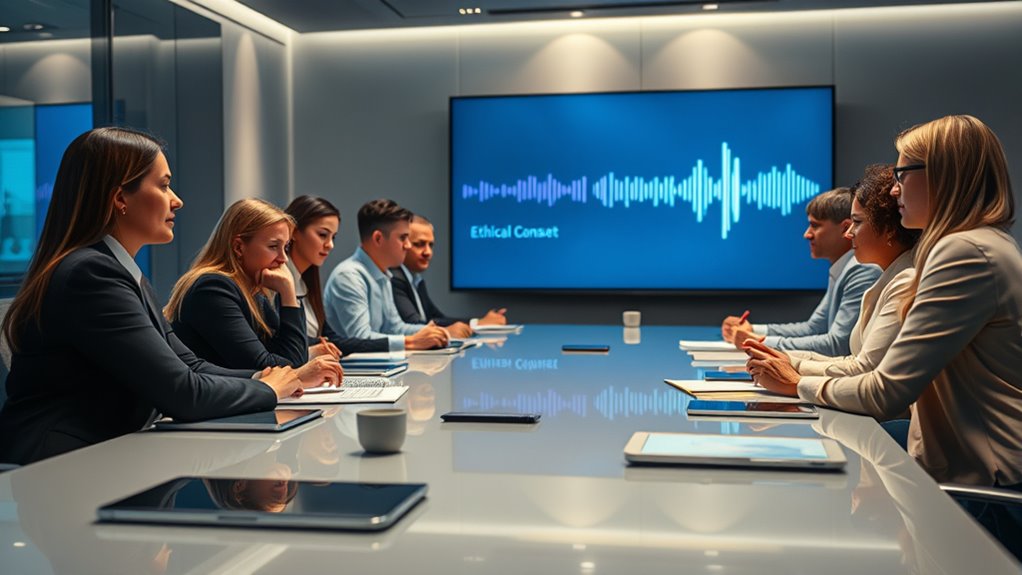

Balancing innovation with consent in voice cloning means you must prioritize ethical use and respect privacy rights. You should always seek clear permission before cloning someone’s voice and make certain they understand how it will be used and stored. Protecting individuals from misuse like impersonation or fraud is vital. Responsible development involves strict protocols and legal safeguards to prevent harm. If you want to explore how to navigate these challenges properly, there’s more to take into account.
Key Takeaways
- Establish transparent consent protocols to ensure individuals authorize voice cloning and understand its uses and risks.
- Implement legal frameworks defining rights, permissible uses, and penalties to protect against misuse and unauthorized cloning.
- Prioritize privacy by securely storing voice data and limiting access to prevent breaches and unauthorized exploitation.
- Promote responsible innovation that balances technological benefits with ethical considerations and individual rights.
- Foster public awareness and ongoing dialogue to develop norms and standards for ethical voice cloning practices.
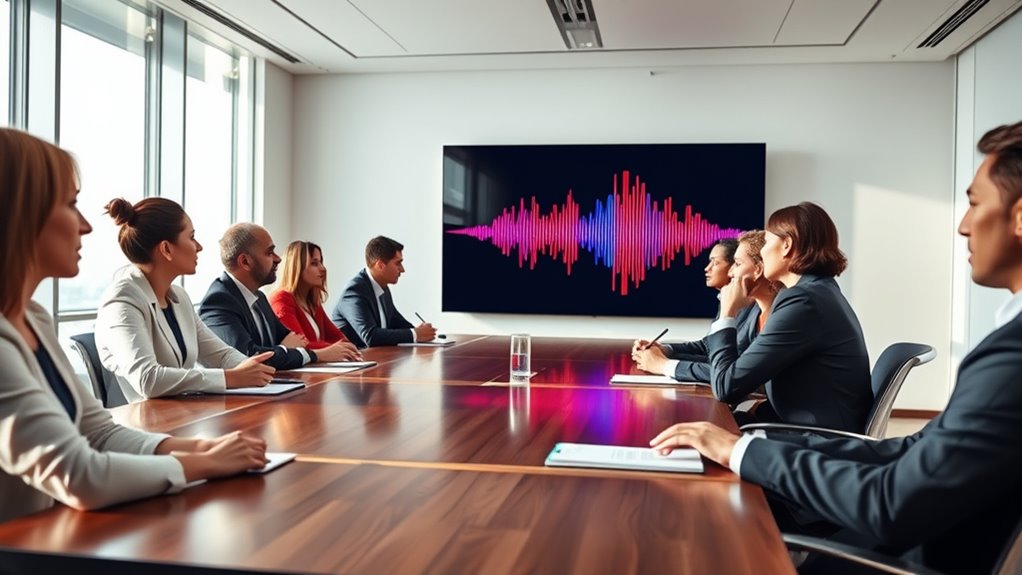
Voice cloning technology has advanced rapidly, raising important ethical questions about its use and potential consequences. As this technology becomes more accessible, it’s essential to consider how it impacts individual privacy and the importance of establishing clear consent protocols. When you think about voice cloning, privacy concerns immediately come to mind. Your voice is deeply personal; it’s tied to your identity, emotions,, and even your sense of self. If someone creates a clone of your voice without your permission, it can lead to a violation of your privacy. This can manifest in various ways, such as malicious impersonation, fraud, or unauthorized recordings that may be used to manipulate or deceive others. The challenge is that, unlike traditional data, your voice is often captured and stored in multiple places, making it vulnerable to misuse if proper safeguards aren’t in place. Additionally, the well-sourced name coverage of voice identities is crucial to establishing trusted and reliable use cases for this technology.
To address these issues, establishing robust consent protocols is essential. When organizations or individuals seek to clone a voice, they should obtain explicit permission from the original voice owner. Consent protocols should be transparent and thorough, clearly outlining how the voice will be used, stored,, and protected. You should never have your voice cloned without your informed permission, yet current practices sometimes fall short of this standard. Without clear consent, voice cloning can quickly cross ethical boundaries, leading to legal and moral dilemmas. As a user, you need assurance that your voice won’t be exploited or used in ways you’re uncomfortable with, and that your rights are respected throughout the process.
Furthermore, the development of consent protocols should involve legal frameworks that protect individuals’ rights. These frameworks can specify who owns the rights to a cloned voice and under what circumstances it can be used. They can also set penalties for misuse or unauthorized cloning. When you’re dealing with voice technology, it’s essential that these protocols are enforced consistently to prevent abuse. The responsibility lies with developers, companies, and policymakers to prioritize your privacy and to implement systems that require your active participation and approval before your voice is cloned or used in any capacity.
Ultimately, balancing innovation with respect for individual rights is key. While voice cloning offers exciting possibilities in entertainment, healthcare, and customer service, it must be done ethically. You should feel confident that your voice isn’t being exploited without your knowledge or permission. By emphasizing privacy concerns and establishing strict consent protocols, we can harness the potential of voice cloning technology responsibly, ensuring that progress doesn’t come at the expense of your fundamental rights.
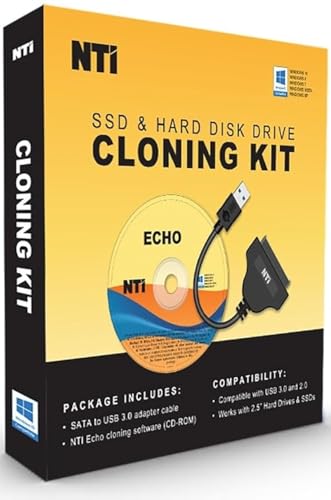
NTI Cloning Kit | NEW! Version 6 of NTI Cloning Software | Best for SSD and HDD Upgrades | Software via Download | SATA-to-USB Adapter Included for 2.5" SSD and HDD
[NEW in V6] Added Windows-mode Cloning, which is more reliable, and supports cloning of BitLocker disks, and RAID…
As an affiliate, we earn on qualifying purchases.
As an affiliate, we earn on qualifying purchases.
Frequently Asked Questions
Can Voice Cloning Be Used to Impersonate Someone Without Their Knowledge?
Yes, voice cloning can be used to impersonate someone without their knowledge. This raises deepfake dangers and consent challenges, as malicious actors might create convincing audio to deceive or manipulate others. You need to be cautious, as such misuse can damage reputations or spread misinformation. Always verify the authenticity of voice recordings, and support regulations that prevent unauthorized voice cloning to protect individuals’ rights and privacy.
What Safeguards Exist to Prevent Malicious Use of Voice Cloning Technology?
To prevent malicious use of voice cloning, you rely on authentication protocols that verify voice identity before granting access or sharing sensitive info. Ethical guidelines also set standards for responsible use, ensuring creators and users act with integrity. These safeguards help protect against impersonation and misuse, fostering trust in voice technology. By combining technical measures with ethical principles, you can balance innovation with the need for security and consent.
How Do Legal Systems Currently Regulate Voice Cloning Applications?
Legal systems regulate voice cloning applications by addressing intellectual property and data ownership issues. You’re protected through laws that prevent unauthorized use of voices, ensuring creators retain rights over their recordings. Regulations also require companies to obtain explicit consent before cloning voices. By enforcing these rules, the law aims to balance innovation with individual rights, making sure voice data is used responsibly and ethically.
Are There Industry Standards for Obtaining Consent in Voice Cloning?
Industry guidelines emphasize the importance of obtaining informed consent before creating or using voice clones. You should clearly explain how the voice will be used and get explicit permission from the individual. These standards aim to safeguard privacy and prevent misuse. By following established protocols for informed consent, you help ensure ethical practices in voice cloning, fostering trust and compliance with potential legal requirements.
How Might Voice Cloning Impact Personal Privacy Rights Long-Term?
You might find that voice cloning could lead to long-term privacy erosion if consent challenges aren’t addressed properly. As technology advances, your personal voice could be used without permission, making it harder to control your identity. This impacts your privacy rights, and you may struggle to safeguard your voice from misuse. Staying informed and advocating for clear regulations helps ensure your rights stay protected amid these ongoing privacy concerns.
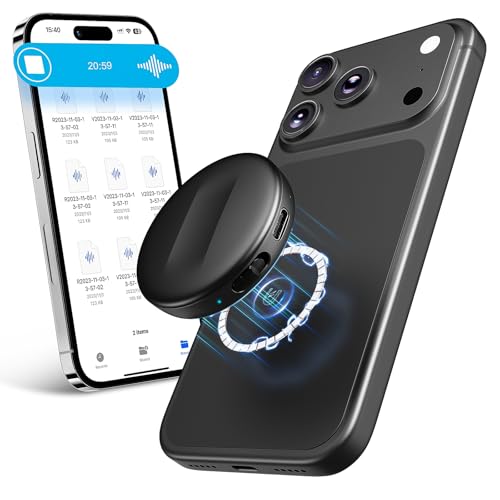
128GB Natesukii Magnetic Voice Activated Recorder – 9800Hrs Recording Device with Al-Intelligent Triple Noise Reduction Portable Dictaphone Digital Voice Recorder with Playback for Lecture Meeting
【128GB High Capacity – 70Hours Long Battery Life】Newly upgraded with 128GB – Can store up to 9800 hours…
As an affiliate, we earn on qualifying purchases.
As an affiliate, we earn on qualifying purchases.
Conclusion
So, here you are, marveling at the incredible tech that can mimic anyone’s voice, unaware of the ethical tightrope you’re walking. It’s ironic—you’ve gained the power to recreate voices, yet the true challenge lies in respecting the real people behind them. As you push forward with innovation, remember: consent isn’t just a checkbox, it’s the voice of trust. Without it, even the most groundbreaking tech risks turning into a tool of deception.
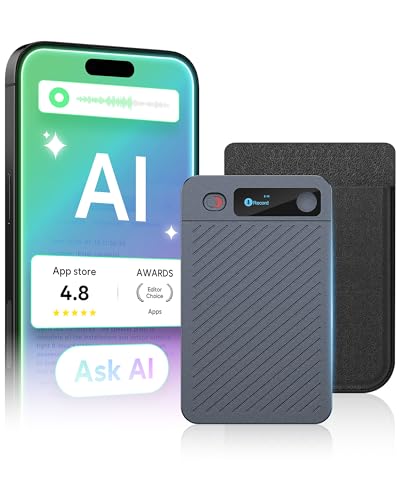
AI Voice Recorder, 64GB Note Taking Device w/Magnetic Case, App Control, AI Technology Transcribe & Summarize Free, 121 Languages, 45H Battery, Audio Recorder for Lectures Meetings Calls
𝗡𝗲𝘅𝘁-𝗚𝗲𝗻 𝗔𝗜 𝗡𝗼𝘁𝗲 𝗧𝗮𝗸𝗶𝗻𝗴 𝗗𝗲𝘃𝗶𝗰𝗲 𝘄𝗶𝘁𝗵 𝗚𝗣𝗧-𝟰𝗼 𝗜𝗻𝘁𝗲𝗴𝗿𝗮𝘁𝗶𝗼𝗻: Transform your productivity with this advanced AI voice recorder that…
As an affiliate, we earn on qualifying purchases.
As an affiliate, we earn on qualifying purchases.
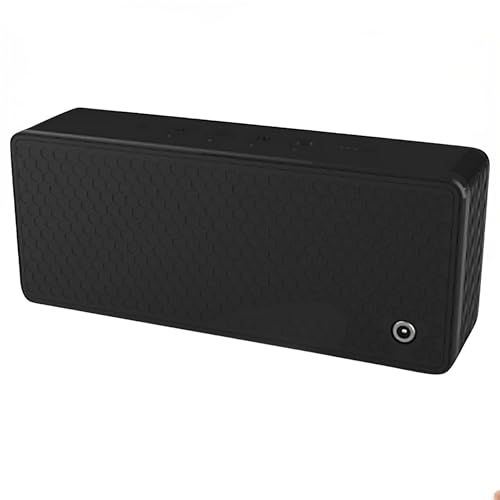
Spy Associates Ultrasonic Privacy Protector – Portable Acoustic Masking Device, Voice Privacy Tool for Secure Conversations in Meetings, Offices, Cars & Travel
ULTRASONIC SPEECH PRIVACY: Uses ultrasonic acoustic output (above 25 kHz, inaudible to humans) to help protect speech privacy…
As an affiliate, we earn on qualifying purchases.
As an affiliate, we earn on qualifying purchases.