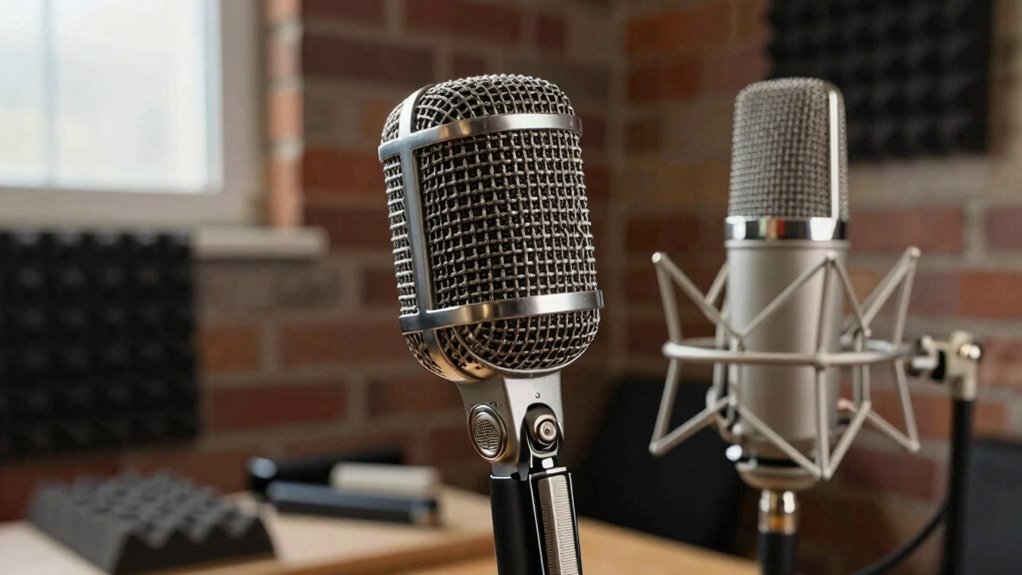
In untreated rooms, dynamic microphones are often a better choice because they’re less sensitive, have limited frequency response, and are more forgiving of reflections. Their design reduces ambient noise pickup and allows you to place them closer to your sound source, which improves clarity. Condenser mics capture more detail but need careful placement and better acoustics. To learn how to optimize your recordings despite your environment, keep exploring the key differences and tips.

Get everyday helpers delivered free with Prime
- Fast, free delivery on millions of items
- Prime Video, Amazon Music and more included
- Member-only deals all year
Key Takeaways
- Dynamic microphones are more forgiving in untreated rooms due to limited sensitivity and reduced pickup of room reflections.
- Condenser microphones capture more detailed sound but are more affected by room acoustics, requiring careful placement.
- In untreated spaces, proximity effect in dynamic mics allows closer placement for clarity and noise reduction.
- Directional patterns in both mic types help minimize ambient noise, but dynamic mics are generally better suited for poor acoustic environments.
- Proper microphone placement can significantly improve recording quality in untreated rooms, especially when using dynamic mics.
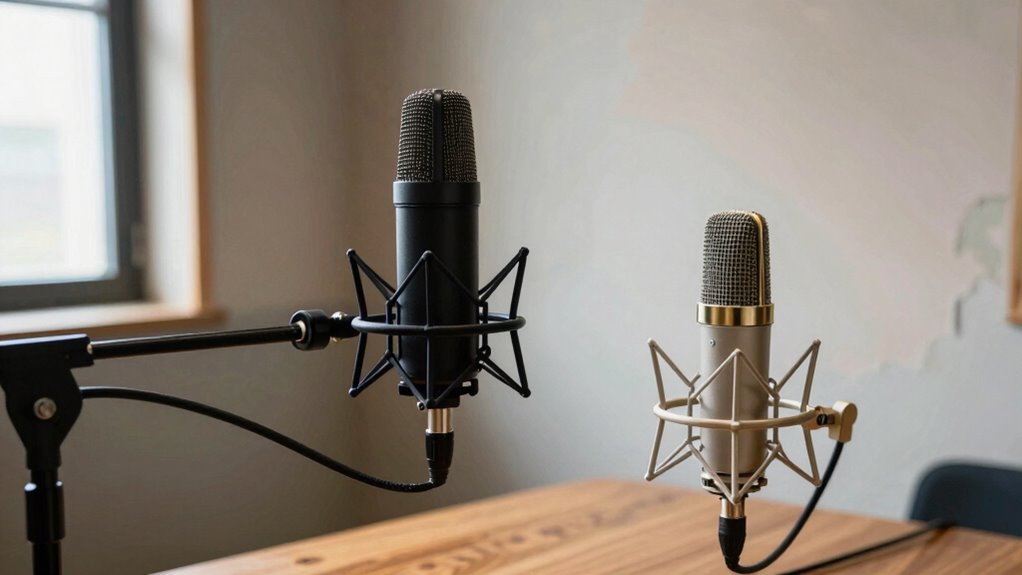
When recording in untreated rooms, choosing the right microphone can profoundly impact your sound quality. The room’s acoustics play a big role in how your recordings turn out, especially when you’re working without soundproofing or acoustic treatment. In such environments, your microphone choice and placement become even more vital. Dynamic microphones are generally more forgiving in untreated rooms. Their design inherently limits the pickup of ambient noise and room reflections because they tend to have a narrower frequency response and a less sensitive diaphragm. When you’re positioning a dynamic mic, you can often place it closer to your sound source without picking up too much of the room’s reverberations. This proximity effect helps you capture a cleaner, more direct sound, minimizing the influence of room acoustics. Additionally, because dynamic mics are less sensitive, they tend to reject unwanted background noise, making them ideal for less-than-ideal spaces. You don’t need perfect microphone placement to get a decent sound—simply positioning it close to your source can considerably improve clarity. Proper microphone placement is especially crucial in untreated environments to achieve optimal results. Understanding the room acoustics and how they influence sound can help you make better choices about microphone selection and placement, ultimately improving your recording quality regardless of the environment.
Furthermore, selecting microphones with specific characteristics suited for untreated spaces can make a notable difference in your recordings. For example, choosing a mic with a directional pickup pattern can help further reduce unwanted ambient noise. Ultimately, your choice depends on what you’re recording and the environment you’re working in. If you’re in a space with poor room acoustics, a dynamic mic can help you focus on your sound source without capturing too much of the room’s character. With a condenser, you need to be more mindful of microphone placement and room reflections, but you’ll get more detailed and nuanced recordings if you manage to control the environment. Both types can work well, but understanding how room acoustics influence your recordings and adjusting your microphone placement accordingly will make all the difference in achieving clarity and quality in untreated spaces.
dynamic microphone for untreated rooms
As an affiliate, we earn on qualifying purchases.
As an affiliate, we earn on qualifying purchases.
Frequently Asked Questions
How Do Microphone Polar Patterns Affect Recording in Untreated Spaces?
You should consider how microphone polar patterns influence recording in untreated spaces. Cardioid patterns focus on sound sources directly in front, reducing room acoustics and microphone sensitivity to ambient noise. Omnidirectional mics pick up sound equally from all directions, capturing more room reverb and noise. Choosing the right polar pattern helps control room acoustics’ impact, ensuring clearer recordings by minimizing unwanted reflections and emphasizing your desired sound source.
Can Placement Techniques Compensate for Room Acoustics With These Mics?
Your placement techniques can make a huge difference, almost like casting an acoustic illusion. While room treatment is ideal, you can still improve sound by carefully positioning your microphones—closer mics reduce room noise, and angling them minimizes reflections. Both dynamic and condenser mics benefit from smart placement, helping you compensate for untreated rooms. With patience and precision, you’ll create recordings that sound much more polished, even without perfect acoustics.
What Maintenance Is Required for Dynamic and Condenser Microphones?
You need to regularly check both microphones for durability issues, like loose parts or corrosion, especially if used frequently or in harsh environments. For condenser mics, keep the capsule clean and handle them carefully to prevent damage. Dynamic mics require minimal maintenance but should be checked for wear. If your condenser mic is battery-powered, regularly replace or recharge the batteries to guarantee peak performance. Proper maintenance extends their lifespan and preserves sound quality.
Are There Specific Brands Best Suited for Untreated Room Recordings?
Did you know that over 60% of home recordings are improved with the right microphone? For untreated rooms, brands like Audio-Technica, Rode, and Shure stand out for recording quality. These brands offer versatile microphones that minimize room reflections and capture clear sound. Your choice depends on your needs, but starting with trusted names guarantees better results, especially when your space isn’t acoustically optimized.
How Do Budget Constraints Influence Mic Choice for Untreated Rooms?
Budget constraints heavily influence your mic choices in untreated rooms. You might lean toward dynamic mics because they’re generally more affordable and less sensitive to room acoustics, making them ideal for recording without extensive acoustic treatment. Condenser mics, while offering better clarity, can pick up more room noise, so they’re usually more expensive and often require some acoustic treatment for best results. Prioritize your needs and room conditions to make the best choice.
condenser microphone for home recording
As an affiliate, we earn on qualifying purchases.
As an affiliate, we earn on qualifying purchases.
Conclusion
Choosing between dynamic and condenser mics for untreated rooms is like selecting a vessel for your voice’s journey. Think of the microphone as a lantern illuminating your sound’s true nature in a dark, unrefined space. Whether you prefer the rugged reliability of a dynamic or the delicate sensitivity of a condenser, remember it’s your unique voice that guides the way. With the right mic, your sound will shine, lighting up any room—untreated or not.
microphone with directional pickup pattern
As an affiliate, we earn on qualifying purchases.
As an affiliate, we earn on qualifying purchases.
best microphones for poor acoustics
As an affiliate, we earn on qualifying purchases.
As an affiliate, we earn on qualifying purchases.
Columbus Day / Indigenous Peoples' Day Picks
long weekend sales
As an affiliate, we earn on qualifying purchases.