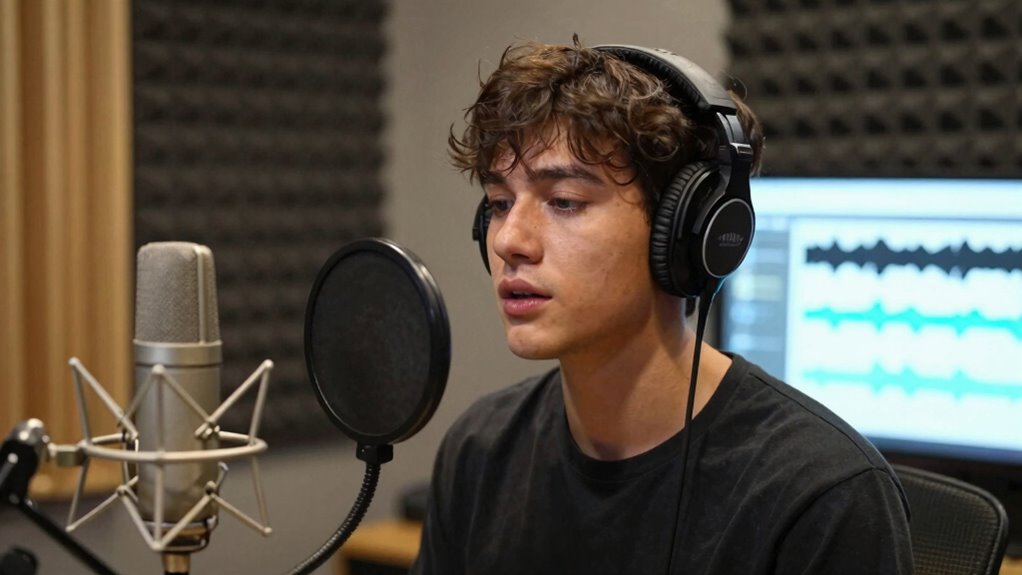

In your first 90 days, focus on setting up quality equipment and creating a quiet recording space to guarantee professional sound. Warm up your voice daily, practice reading aloud, and explore different styles to build versatility. Network with industry peers for feedback and opportunities. Keep learning through tutorials, coachings, and industry research. Staying consistent and open to growth will help you develop your skills steadily—there’s much more to discover as you progress.
Key Takeaways
- Set up a dedicated, quiet recording space with quality equipment to ensure professional sound quality.
- Establish daily voice warm-ups and breathing exercises to maintain vocal health and improve performance.
- Practice reading aloud from diverse scripts to develop pacing, pronunciation, and emotional expression.
- Build a portfolio by recording and critically reviewing your best work; seek constructive feedback.
- Continue learning through tutorials, coaching, and industry resources to refine skills and stay motivated.
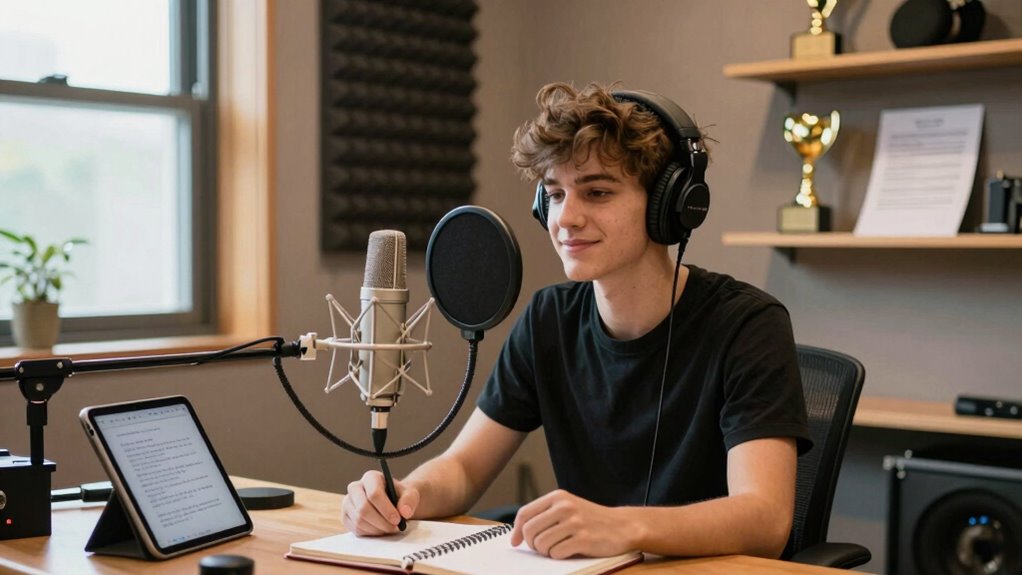
Starting your journey as a beginner voice actor can feel overwhelming, but the first 90 days are essential for building a solid foundation. During this time, your focus should be on developing good habits, understanding your voice, and acquiring the right tools. One of the first steps is investing in quality audio equipment. You don’t need the most expensive gear, but clear audio is crucial for auditions and recordings. A decent microphone, headphones, and a quiet space will dramatically improve the quality of your recordings. As you progress, you’ll learn how to set up a home studio that minimizes background noise and maximizes sound clarity. Proper equipment use is fundamental in making your voice stand out and ensuring professional results.
Invest in quality gear and create a quiet space to ensure professional-sounding voice recordings.
Equally important is establishing a routine of voice warm-ups. These exercises prepare your vocal cords for extended sessions, reduce strain, and improve your overall tone. Daily warm-ups might include humming, lip trills, or gentle scales. Incorporate breathing exercises to enhance your control and projection. Consistently warming up your voice not only helps prevent injury but also boosts your confidence during recordings. As a beginner, it’s easy to overlook this step, but it’s one of the most effective ways to improve your vocal quality quickly. Additionally, paying attention to vocal health can help you maintain your voice in top condition over the long term.
In these initial months, you should also focus on honing your reading skills and understanding different styles and genres. Practice reading aloud daily, trying out scripts from commercials, audiobooks, or character dialogues. Pay attention to your pacing, pronunciation, and emotion. Record yourself regularly and listen critically to identify areas for improvement. This self-review process helps you develop your unique voice and versatility. Additionally, exploring audio technology can help you understand how different equipment and settings influence your recordings and overall sound quality.
Networking and seeking feedback are equally vital. Join online communities or local groups where you can share your recordings and receive constructive critiques. Don’t be discouraged by early setbacks—each session is an opportunity to learn. Building a professional portfolio with your best recordings will serve as your calling card when auditioning for roles or reaching out to clients.
Finally, stay committed to ongoing learning. Read industry books, watch tutorials, and consider taking a coaching class down the line. Your first 90 days set the tone for your voice acting career, so embrace every opportunity to learn, practice, and refine your craft. With dedication to your audio setup, consistent warm-ups, and continual growth, you’ll lay a strong foundation that will support your success in the voice acting world.
professional USB microphone for voice recording
As an affiliate, we earn on qualifying purchases.
As an affiliate, we earn on qualifying purchases.
Frequently Asked Questions
How Do I Find My Unique Voice Acting Style?
To find your unique voice acting style, focus on experimenting with different voice characterization and emotional expression. Try various genres and characters, paying attention to what feels most natural and exciting for you. Record yourself often, listen critically, and seek feedback. Over time, you’ll discover the tones and styles that resonate most with you, helping you develop a signature sound that stands out in the industry.
What Equipment Is Essential for Starting a Home Studio?
They say “a chain is only as strong as its weakest link,” so start with the essentials. Your home studio needs a quiet recording space to minimize noise. Invest in a good microphone and accessories like pop filters and mic stands. These tools help you produce professional sound quality. With the right equipment, you can focus on honing your craft and making your voice heard confidently.
How Can I Build a Professional Voice Acting Demo Reel?
To build a professional voice acting demo reel, focus on showcasing your range through well-chosen scripts that highlight character development and your ability to interpret different styles. Record in a quiet, sound-treated space and edit for clarity and quality. Include diverse characters and tones to demonstrate versatility. Keep the reel concise—around 60-90 seconds—to leave a strong impression and attract potential clients or casting agents.
What Are Common Mistakes Beginners Make in Auditions?
You often make the mistake of not showcasing character differentiation and emotional versatility in auditions. To improve, focus on clearly distinguishing each character’s voice and emotions, avoiding a monotonous tone. Practice varying your pitch, pace, and intensity to bring characters to life. Remember, casting directors look for your ability to adapt, so demonstrate your range and emotional depth confidently. This will make your audition stand out and increase your chances of landing roles.
How Do I Price My Voice Acting Services?
You should start by researching industry-standard rates and applying flexible pricing strategies based on your experience and project scope. When negotiating with clients, be confident but open to discussion, ensuring you value your work appropriately. Set clear boundaries, consider offering discounts for long-term collaborations, and remember that pricing is a balance between fair compensation and attracting clients. Consistent communication and professionalism will help you establish your worth confidently.
soundproof home recording studio setup
As an affiliate, we earn on qualifying purchases.
As an affiliate, we earn on qualifying purchases.
Conclusion
In your first 90 days, remember that consistency and a willingness to learn are your best tools. Some believe that success in voice acting hinges solely on talent, but research shows perseverance and networking often outweigh raw skill early on. Keep practicing, stay curious, and embrace every opportunity to grow. If you believe in the power of your voice and stay committed, you’ll find that the world of voice acting is more accessible than you think—just take the first step.
noise-canceling headphones for voice work
As an affiliate, we earn on qualifying purchases.
As an affiliate, we earn on qualifying purchases.
voice warm-up exercises for beginners
As an affiliate, we earn on qualifying purchases.
As an affiliate, we earn on qualifying purchases.