
To upgrade booth acoustics effectively, start by sealing gaps around doors, windows, and vents to block external noise. address structural issues first before adding treatment. then, install acoustic panels, bass traps, and diffusers strategically at reflection points and corners. enhance internal soundproofing with carpets, curtains, or fabric panels. finally, test and fine-tune your setup by listening carefully and adjusting placements. Keep going to discover more tips that guarantee your booth sounds professional and controlled.

Get everyday helpers delivered free — and shop member deals
- Fast, free delivery on millions of items
- Access to Prime Big Deal Days deals on October 6–7
- Prime Video, Amazon Music and more included
Key Takeaways
- Seal gaps and leaks around doors, windows, and vents to establish a solid acoustic foundation.
- Address core sound issues with internal environment enhancements like carpets and curtains.
- Implement initial acoustic treatments at reflection points with foam panels and diffusers.
- Install bass traps in corners to target low-frequency resonances.
- Conduct sound tests and fine-tune panel placement for optimal acoustics.
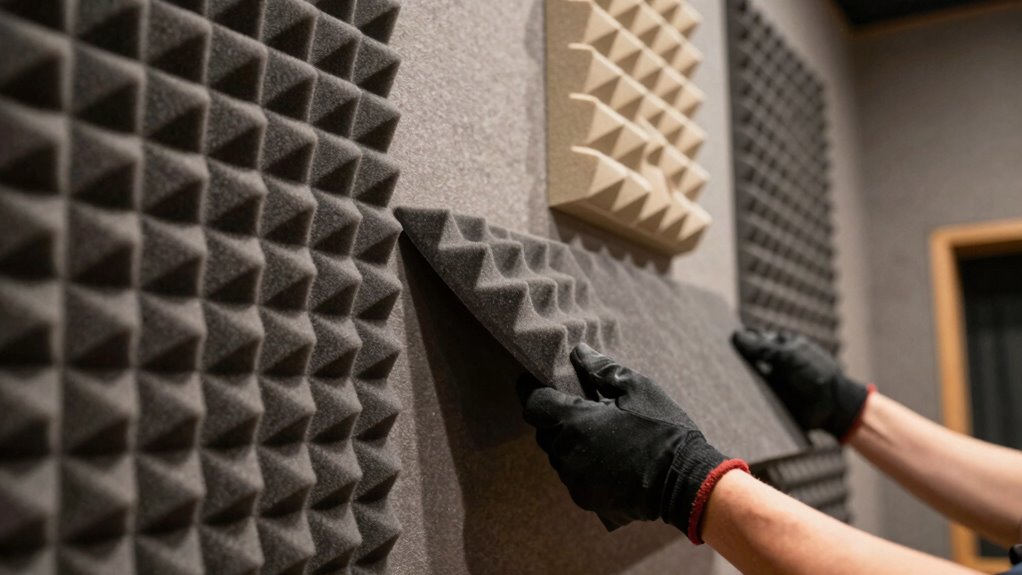
Are you struggling with echoey or muffled sound inside your booth? If so, you’re not alone. Improving your booth’s acoustics can seem overwhelming, but understanding the right order of upgrades makes it manageable. The first step is addressing the core issues with soundproofing techniques. Soundproofing involves reducing external noise and preventing sound from leaking out, which creates a more controlled environment. You want to start by sealing any gaps or leaks around doors, windows, and vents with weatherstripping or acoustic sealant. This prevents unwanted noise from seeping in and your sound from escaping, establishing a solid foundation for better acoustics.
Start with sealing gaps and leaks to create a solid foundation for better booth acoustics.
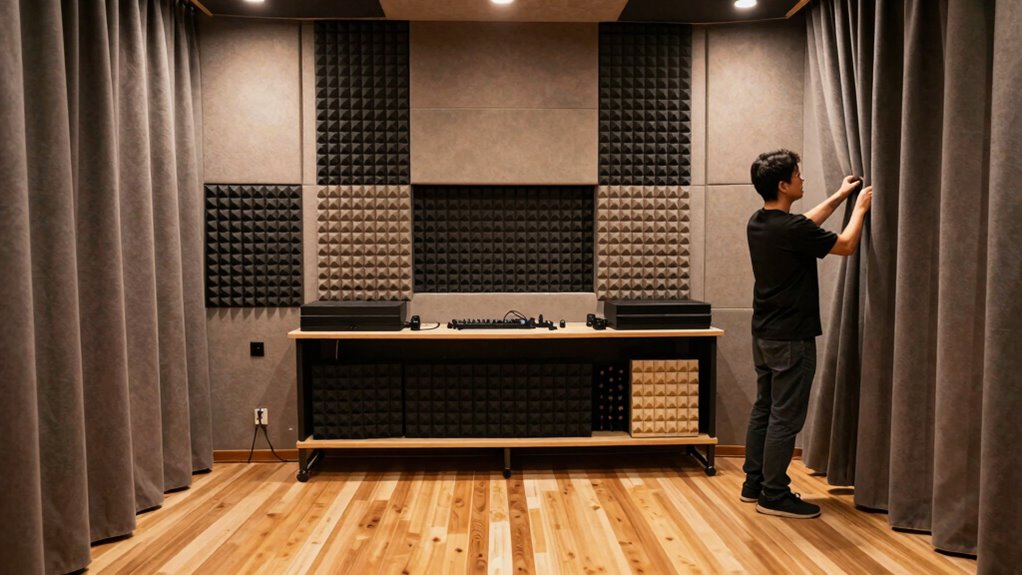
Once you’ve minimized external noise, the next focus is on acoustic treatment options. These treatments help manage sound reflections inside your booth, making your recordings clearer and more professional. Foam panels, bass traps, and diffusers are common choices. Position these strategically—placing foam panels at primary reflection points, such as directly opposite your microphone or speakers, helps absorb sound waves and reduces echo. Bass traps in the corners of your booth target low-frequency resonances that can muddy your recordings, while diffusers scatter sound evenly, preventing dead spots and flutter echoes. Remember, acoustic treatment is about balancing absorption and diffusion to create a natural, even sound within the space. Additionally, understanding the importance of biodiversity in designing acoustic environments can inspire innovative solutions that promote healthier soundscapes. Incorporating diverse acoustic materials can further enhance the effectiveness of your treatment. Paying attention to sound absorption properties of materials can help you select the most effective options for your specific needs.
Enhancing your booth with natural soundproofing techniques, such as using dense, eco-friendly materials, can also contribute to better overall acoustics. Now that you’ve sealed gaps and added acoustic treatment options, it’s time to focus on the internal environment. Consider upgrading your booth’s interior with materials that enhance sound absorption without overly deadening the room. Adding thick carpeting or rugs can dampen footsteps and surface reflections, and installing heavy curtains or fabric-covered panels can further improve sound quality. These materials work in tandem with your acoustic panels to fine-tune your booth’s acoustics.
Finally, after implementing these steps, always test your space with recordings or sound checks. Adjust placements of panels and absorption materials as needed. Remember, acoustics are often a matter of fine-tuning, so patience and careful listening are key. By following this logical order—starting with soundproofing techniques, then adding acoustic treatment options, and finally refining your environment—you’ll create a booth that sounds clear, professional, and suited to your needs. Upgrading your booth’s acoustics isn’t just about equipment; it’s about creating a space that naturally enhances your sound.
acoustic foam panels for recording booth
As an affiliate, we earn on qualifying purchases.
As an affiliate, we earn on qualifying purchases.
Frequently Asked Questions
What Is the Ideal Budget for Upgrading Booth Acoustics?
You should budget around $300 to $1,000 for upgrading booth acoustics, depending on your needs. Focus on sound absorption and noise reduction, investing in quality foam panels, bass traps, and acoustic diffusers. Prioritize essential elements first, then add improvements gradually. This budget allows you to create a quieter, more professional environment, ensuring clear recordings or conversations while staying within a reasonable range for most setups.
How Long Does the Upgrade Process Typically Take?
The upgrade process usually takes anywhere from a few days to a couple of weeks, depending on your project’s scope. You’ll start by installing soundproofing materials to block noise, then move on to acoustic treatment like panels and diffusers to improve sound quality. Planning carefully and working systematically guarantees you stay on schedule, minimizing disruptions and achieving the best acoustic results efficiently.
Can I Upgrade Acoustics Myself or Hire a Professional?
Sure, you can totally DIY your booth acoustics, but don’t be surprised if the sound quality ends up more “creative” than professional. For the best results, consider professional consultation, especially if you’re not familiar with acoustic treatments. While DIY installation saves money, a pro’s touch guarantees proper placement and performance, making your upgrade less of a gamble and more of a guaranteed success.
What Are Cost-Effective Options for Soundproofing?
To soundproof your booth cost-effectively, start with affordable acoustic treatment options like foam panels and bass traps. Use soundproofing materials such as mass-loaded vinyl or weatherstripping on doors and windows to block noise leaks. These solutions are budget-friendly and easy to install, helping improve sound isolation without breaking the bank. Combining these methods offers an efficient way to enhance your booth’s acoustics without significant expenses.
How Do I Measure the Success of My Acoustic Upgrades?
You measure your acoustic treatment‘s success by conducting sound measurement tests before and after upgrades. Use a decibel meter or specialized software to assess noise levels, echo, and clarity. If your measurements show reduced echo and more balanced sound, your acoustic treatment is effective. Regularly monitor these metrics to guarantee ongoing improvement, and adjust your soundproofing or acoustic treatment as needed for ideal booth acoustics.
As an affiliate, we earn on qualifying purchases.
Conclusion
So, after all that effort to improve your booth’s acoustics, don’t forget—the real magic isn’t in perfect soundproofing or fancy panels. Sometimes, the best upgrade is simply knowing when to stop. Because, in the end, the loudest noise often isn’t the echoes bouncing around, but the silence you’re left with when you realize nothing truly can be perfect. Perhaps the true upgrade is learning to embrace the imperfect symphony of your space.
As an affiliate, we earn on qualifying purchases.
diffusers for acoustic treatment
As an affiliate, we earn on qualifying purchases.
As an affiliate, we earn on qualifying purchases.
Halloween Picks
halloween
As an affiliate, we earn on qualifying purchases.