TL;DR

Get everyday helpers delivered free — and shop member deals
- Fast, free delivery on millions of items
- Access to Prime Big Deal Days deals on October 6–7
- Prime Video, Amazon Music and more included
Leaders from Trilogy Health Services and Signature HealthCARE described AI tools used for resident monitoring, fall prevention and documentation at a nursing homes conference. They reported reductions in hospitalizations and falls at participating sites, but the figures were presented by company executives and were not independently verified in the source report.
Trilogy Health Services and Signature HealthCARE are using AI-supported monitoring and documentation tools to flag potential health risks, prevent falls and organize records for audits, executives from the nursing home operators said at Skilled Nursing News’ ReThink conference in Philadelphia. The leaders said the systems can support care teams, but stressed that tools must fit staff workflows and protect resident information.
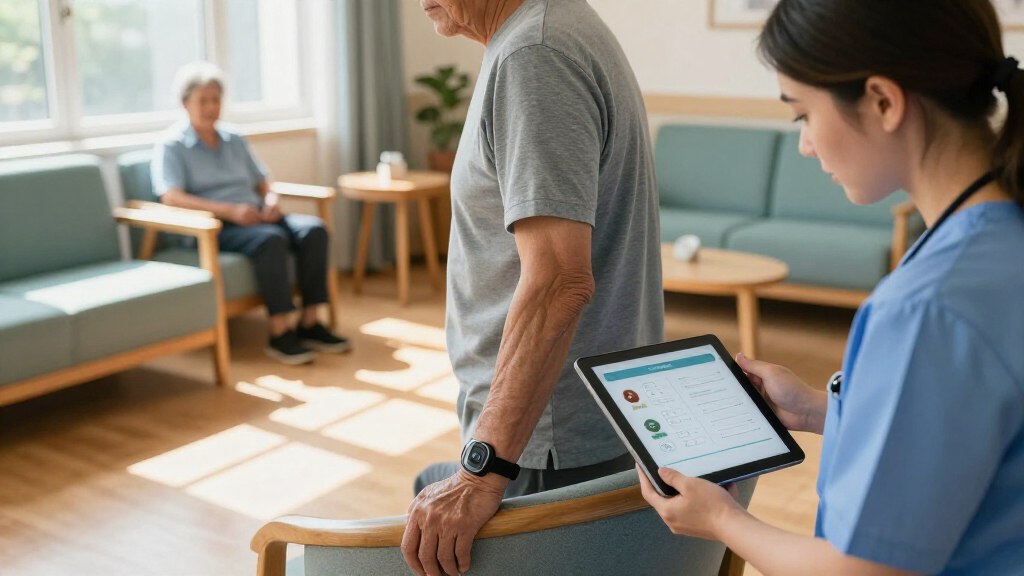
Rhonda Dempsey, Trilogy’s senior vice president and chief nursing officer, said the company uses a chest-worn monitoring device for about 300 residents considered at high risk of rehospitalization. Staff receive an alert when a resident’s temperature remains about two degrees above their individual baseline for roughly an hour, prompting a nurse to assess the resident and contact a practitioner.
Dempsey said the device had helped reduce hospitalizations by 60%. She did not provide a study design, comparison period or other details about how the reduction was calculated in the account of the conference discussion. Trilogy operates more than 140 senior living communities, according to the report.
Signature HealthCARE uses CareAI for fall prevention and ambient monitoring, Chief Nursing Officer Barbara Revelette said. After initially implementing the technology in four facilities, the company expanded it to 20 buildings. Revelette said clinical teams recorded an 80% decrease in falls in buildings using the system; the conference report did not specify the timeframe or comparison used for that figure. Signature operates 69 locations in five states.
Revelette described the system as a “virtual sitter program”: remote staff can receive movement alerts, speak with residents or contact nurses when a resident appears to be trying to get out of bed. She said the system can monitor eight to 10 residents per sitter, and that Signature also uses it for behavioral monitoring. The company is adding features, including options for families to join calls with residents, sitters and clinicians.
For documentation, Signature uses technology to identify missing information and bring records into dashboards for review, Revelette said. Both executives said AI-assisted documentation specialists can help staff respond to varied auditor requests. Dempsey said facilities may retain more documentation than regulations require to prepare for audits.
AI’s Role in Daily Nursing Home Care
The examples show how nursing home operators are applying AI to practical tasks: spotting changes in residents’ condition, responding to movement that could precede a fall, and organizing records. If the reported outcomes hold up under closer measurement, earlier alerts and fewer falls could affect resident safety, hospital transfers and staff workload.
The claims remain company-reported results, not proof that the tools alone caused the changes. Their effect may depend on how alerts are reviewed, whether staff can respond promptly and how outcomes are measured. The operational trade-off is also clear: technology intended to save time can add work if it creates extra steps or alerts that do not match staff needs.
Privacy and oversight matter because staff may seek their own digital workarounds when official systems do not help them. Dempsey warned that unapproved tools could expose a facility to HIPAA-related risks. Both leaders argued that technology providers should work as partners with operators and caregivers rather than simply supply software.
AI-powered fall detection devices for nursing homes
As an affiliate, we earn on qualifying purchases.
As an affiliate, we earn on qualifying purchases.
Two Operators, Different AI Uses
The conference panel focused on clinical uses of AI and predictive analytics in skilled nursing and senior living operations. Trilogy’s approach, as described by Dempsey, centers on identifying potential health changes before they become emergencies. Signature’s examples include remote monitoring for movement and falls, alongside tools that assist with clinical documentation and audit preparation.
Signature’s fall-prevention project received a Tennessee state grant, according to the report. The company began in four facilities and later expanded to 20. Revelette said its monitoring team is based in Louisville, Kentucky, while it can support residents in facilities in other states. The program remains in development, with Signature adding capabilities roughly a year after its launch.
The executives said staff acceptance is a condition for adoption. Dempsey said technology must relate directly to facility work and remove or improve tasks for caregivers; otherwise, nurses may stop using it. She also said close relationships with technology partners can help operators bring building staff on board and reduce reliance on unapproved tools.
“When their temperature goes up two degrees above their baseline and sustains for about an hour, the nurse gets the alert, goes down and assesses the resident, and calls the practitioner.”
— Rhonda Dempsey, Trilogy Health Services’ senior vice president and chief nursing officer
resident monitoring wearable devices
As an affiliate, we earn on qualifying purchases.
As an affiliate, we earn on qualifying purchases.
How the Reported Results Were Measured
The conference account does not provide the data, study methods or comparison periods behind Trilogy’s reported 60% reduction in hospitalizations or Signature’s reported 80% decrease in falls. It is not clear how those results were calculated, whether other changes in care contributed, or whether the figures apply across all participating residents and facilities.
The report also does not specify the products or safeguards behind every system, how alert accuracy is evaluated, or how resident and family consent is handled for monitoring. Dempsey raised HIPAA concerns about unapproved technology, but the discussion did not detail particular compliance measures. Signature said it is still developing features, so the program’s final capabilities and broader results are not yet clear.
AI documentation tools for senior care
As an affiliate, we earn on qualifying purchases.
As an affiliate, we earn on qualifying purchases.
Expansion and Further Evaluation
Signature has expanded its fall-prevention technology from four facilities to 20 and is continuing to add features to its monitoring program, Revelette said. The company’s next steps include further development of capabilities that it has not yet put into use, though she did not give a timetable.
Trilogy is tracking its monitoring program weekly, Dempsey said, with the device then used by about 300 residents. The executives did not announce new deployments or specific evaluation plans at the conference. Further reporting on the operators’ methods, time periods and facility-level outcomes would help clarify how broadly their reported results apply.
As an affiliate, we earn on qualifying purchases.
Key Questions
What AI tools are Trilogy and Signature using?
Trilogy uses chest-worn monitoring devices to flag sustained temperature rises among some high-risk residents. Signature uses CareAI and ambient monitoring to detect movement, alert remote sitters and staff, and support fall prevention and documentation.
How many residents are monitored by Trilogy’s device?
Dempsey said the device was being used for about 300 residents at the time of the conference discussion. She described them as residents considered at higher risk of rehospitalization.
Did Signature report fewer falls after introducing AI?
Yes. Revelette said clinical teams recorded an 80% decrease in falls in buildings where fall-prevention AI was implemented. The source report did not give the measurement period or comparison basis, so the figure should be treated as an executive’s reported result.
Does the virtual sitter program replace human staff?
No. Revelette described it as involving live remote sitters who respond to alerts and can contact residents or facility staff. The system combines human monitoring with AI and ambient monitoring, according to her account.
What did the executives say about privacy and staff adoption?
Dempsey warned that staff may turn to unapproved technology if operators do not provide useful tools, potentially creating HIPAA-related risks. She said systems need to fit facility workflows and reduce or improve caregivers’ tasks to gain acceptance.
Source: rss
Halloween Picks
halloween
As an affiliate, we earn on qualifying purchases.