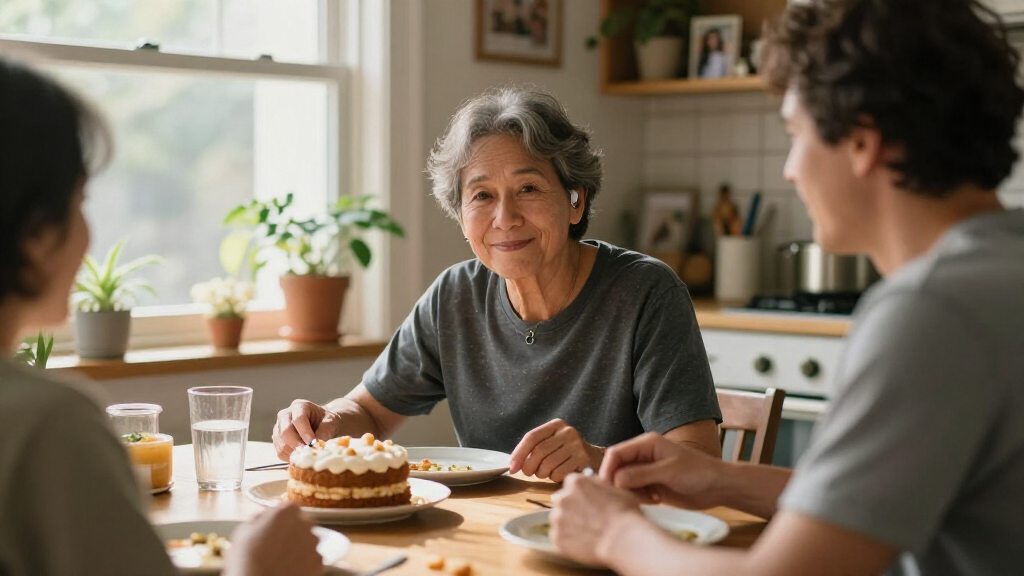

TL;DR

Get everyday helpers delivered free — and shop member deals
- Fast, free delivery on millions of items
- Access to Prime Big Deal Days deals on October 6–7
- Prime Video, Amazon Music and more included
A Sixty and Me contributor is reflecting on the 25th anniversary of her first breast cancer diagnosis and a second diagnosis two years ago, at age 70. She describes treatment, the physical and emotional effects of mastectomy and reconstruction, and how journaling and support helped her cope.
A writer reflecting on 25 years since her first breast cancer diagnosis has described undergoing two diagnoses and two mastectomies with reconstruction, including a second diagnosis at age 70. In a personal essay published by Sixty and Me, she recounts how treatment and its lasting effects shaped her life, and how writing and support helped her manage the emotional toll.
The writer says her first diagnosis came 25 years ago and was ductal carcinoma in situ (DCIS), an early form of breast cancer found in the milk ducts. She reports there was no lymph-node involvement. The diagnosis came as a shock, she writes, because she had no known family history of cancer; as a mother of three, she also worried about her children.
Her second diagnosis came two years ago, when she was 70. She describes it as invasive lobular breast cancer, with lymph-node involvement, despite annual mammograms. According to her account, treatment included radiation, mastectomy and reconstruction. She also says she began monthly injections of fulvestrant because the cancer was estrogen-driven.
The essay details effects that continued beyond treatment, including altered body image and loss of sensation around the nipple area after surgery. The writer says a supportive partner, a plastic surgeon and a nurse-therapist helped her adjust. She also describes journaling, meditation and creative-visualization exercises as parts of her personal coping routine.
Living With Cancer After Treatment
The account gives readers a first-person view of how breast cancer can involve more than diagnosis and medical treatment. The writer describes lasting physical changes after mastectomy and reconstruction, along with emotional adjustment that she says took longer than physical recovery. Her experience is personal and does not establish what other patients will experience, but it highlights concerns that may not be captured by a treatment summary alone.
Her reflection also speaks to the continuing uncertainty and fear that can accompany a diagnosis, including concern for family members. She says that writing and support helped her, while presenting those practices as her own experience rather than medical guidance. The essay’s anniversary framing turns a personal milestone into an opportunity to discuss survival, recovery and the varied effects of treatment.
breast cancer recovery support pillow
As an affiliate, we earn on qualifying purchases.
As an affiliate, we earn on qualifying purchases.
Two Diagnoses Across 25 Years
The writer places her first diagnosis in the months after the September 11, 2001, attacks on the World Trade Center. She says she later faced a second, different breast cancer diagnosis. Her account distinguishes the first case, DCIS without node involvement, from the later invasive lobular cancer with node involvement. The details are presented in a personal essay, not an independently reviewed medical record.
She also connects her recovery to a long-standing writing practice. She says she began keeping a journal at age 10 and later used reflective writing while coping with cancer. Her second memoir, Healing with Words, includes journaling prompts, she writes, and marked its 15th anniversary the year before the essay. The piece closes with her invitation for readers to reflect on how they remember hardships and celebrate personal victories.
““Emotional healing usually takes longer than physical healing.””
— The writer, in her Sixty and Me essay
As an affiliate, we earn on qualifying purchases.
Details the Essay Does Not Establish
The essay does not provide dates for the second diagnosis or the individual treatments, nor does it state the writer’s current cancer status or prognosis. It also does not identify the hospitals or clinicians involved. Those details cannot be established from the account provided.
The writer’s statements about her diagnoses, treatment and recovery are her own account; the source material does not include independent confirmation or medical records. Her experience should not be read as a guide to another person’s screening, diagnosis or treatment. No broader conclusion about outcomes or the effectiveness of journaling, meditation or other coping practices follows from a single personal narrative.
As an affiliate, we earn on qualifying purchases.
The Essay’s Invitation to Readers
No further publication, event or medical update is announced in the source material. The next step identified by the essay is conversational: the writer asks readers to share how they remember difficult experiences and recognize what they have overcome. Whether she plans additional writing or public activities tied to the 25-year milestone is not stated.
meditation and visualization tools for cancer recovery
As an affiliate, we earn on qualifying purchases.
As an affiliate, we earn on qualifying purchases.
Key Questions
What is the news in “Celebrating My Survival: 25 Years Later”?
Sixty and Me published a personal reflection in which a writer marks 25 years since her first breast cancer diagnosis and recounts a second diagnosis two years ago.
What diagnoses does the writer describe?
She says her first diagnosis was DCIS with no node involvement. She describes the later diagnosis as invasive lobular breast cancer with lymph-node involvement.
What treatment does she say she received?
For the second diagnosis, she reports radiation, mastectomy and reconstruction, along with monthly fulvestrant injections. The account does not give a full treatment timeline.
How does the writer say she coped?
She describes support from her partner and health-care professionals, along with journaling, meditation and creative-visualization exercises. These are her personal experiences, not medical advice.
Does the essay report her current cancer status?
No. The source material does not specify her current cancer status or prognosis, and it gives no further medical update.
Source: rss
Halloween Picks
halloween
As an affiliate, we earn on qualifying purchases.