Hearing aid dryers help manage moisture from sweat, humidity, and daily wear, but the right choice depends on your devices and routine. My best overall pick is the PerfectDry LUX, which pairs electronic drying with a straightforward daily-care format. The DryCaddy is a simpler option for buyers who prefer a non-electronic system, while the Redux Home stands out for its self-recharging desiccant approach. The main tradeoffs are electronic convenience versus a simpler, heatless or desiccant-based routine, along with extra features such as UV light that may not suit every buyer. Read on for the full breakdown and guidance on matching a dryer to your hearing aids.

Get everyday helpers delivered free — and shop member deals
- Fast, free delivery on millions of items
- Access to Prime Big Deal Days deals on October 6–7
- Prime Video, Amazon Music and more included
Complete the kit


Key Takeaways
- Drying method matters more than feature count: This lineup ranges from electronic units to heatless and desiccant systems, so the best fit depends on your care routine and device maker’s guidance.
- PerfectDry LUX is the strongest all-round choice: Its electronic drying focus makes it a sensible starting point for buyers seeking a dedicated daily-care unit.
- DryCaddy favors simplicity over automation: Its system suits buyers who want a less electronics-dependent option and are comfortable with a more hands-on routine.
- UV, displays, and ports are not automatic advantages: Models with UV-C, dual lights, battery checks, or USB ports add functions, but buyers should weigh those against ease of use and device compatibility.
- Maintenance separates the desiccant choices: Redux Home uses self-recharging desiccant, while the Wisesorb set relies on replaceable capsules, creating different upkeep routines.
| Automatic UV Hearing Aid Dryer and Dehumidifier Case |  | Best for Flexible Cycle Options | Cleaning modes: 1-hour basic mode; 6-hour deep-clean mode | Drying method: Heat | UV lamp: Yes; wavelength not specified | VIEW LATEST PRICE | See Our Full Breakdown |
| Hearing Aid Dryer and Dehumidifier with UV-C Light |  | Best for Quick Drying | Drying modes: 30-minute quick dry; 60–90-minute deep dry | Drying method: Warm air at 110°F (43°C) | Sanitizing light: 360-degree UV-C | VIEW LATEST PRICE | See Our Full Breakdown |
| PerfectDry LUX Hearing Aid Dryer and Dehumidifier | 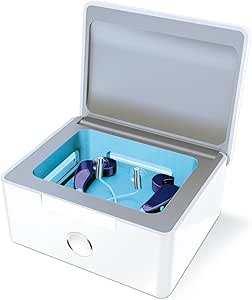 | Best for Temperature-Specified Drying | Drying cycle: 45 minutes | Drying method: Pulsed warm air | UV-C lamp: 360° | VIEW LATEST PRICE | See Our Full Breakdown |
| Hearing Aid and Earbud Dryer with UV Lights, Battery Test, and Cleaning Kit |  | Best for Built-In Maintenance Tools | Drying method: Heat | UV lamps: 4 | Included cleaning tools: 5 | VIEW LATEST PRICE | See Our Full Breakdown |
| VOCOMAXA Electronic Hearing Aid Dryer and Dehumidifier |  | Best for Straightforward Daily Use | Model: BL-35 | Compatible hearing aid types: BTE, ITE, ITC, CIC | Features: Automatic shutoff, LED indicator, moisture removal, silent operation, UV light | VIEW LATEST PRICE | See Our Full Breakdown |
| DryCaddy Drying System for Hearing Aids and Electronics |  | Best for Power-Free Travel | Desiccant: Molecular sieve | Power: No batteries or electricity required | Recharging: Not required | VIEW LATEST PRICE | See Our Full Breakdown |
| Hearing Aid Dryer and Dehumidifier with Dual UV Lights, 43°C Gentle Heat, Digital Display, and Dual USB Ports |  | Best for Two-Device Daily Care | Brand: Jovlalis | Model: BL-35 | Heating temperature: 43°C | VIEW LATEST PRICE | See Our Full Breakdown |
| Hearing Aid Dryer and Dehumidifier with LED Light |  | Best for Flexible Drying Cycles | Drying modes: 2-hour quick dry and 8-hour deep dry | Power: DC 5V/1A | Included: USB cable | VIEW LATEST PRICE | See Our Full Breakdown |
| Redux Home Hearing Aid Dryer and Dehumidifier with Self-Recharging Desiccant |  | Best for App-Connected Moisture Tracking | Brand: Redux | Model: Redux Home | Dimensions: 4.4 × 5.3 × 4.4 in (D × W × H) | VIEW LATEST PRICE | See Our Full Breakdown |
| PerfectDry QR Hearing Aid Dryer and Dehumidifier |  | Best for Fast, Controlled Drying | Drying cycle: 45 minutes | Maximum temperature: 113°F | Capacity: 2 BTE hearing aids, 2 ITE hearing aids, or 2 cochlear implants | VIEW LATEST PRICE | See Our Full Breakdown |
| Super Dri Aid Hearing Aid Dehumidifier, Single Dryer |  | Best Simple, Heat-Free Desiccant Pick | Product type: Hearing aid dehumidifier | Drying material: Reusable pellets | Pellet reactivation: Heat in a microwave | VIEW LATEST PRICE | See Our Full Breakdown |
| Veri-Dry Heatless Hearing Aid Dryer and Dehumidifier |  | Best Heat-Free Electronic Option | Brand and model: Redux Veri-Dry | Moisture removal: Heat-free Electronic Rice technology | Dimensions: 4.4 × 5.3 × 4.4 in (D × W × H) | VIEW LATEST PRICE | See Our Full Breakdown |
| Flow Med Dry-Cap UV2 Electronic Hearing Aid Dryer for Rechargeable Hearing Aids |  | Best for Rechargeable Hearing Aids | Product type: Electronic hearing aid dryer | Compatibility: Rechargeable hearing aids | Modes: Dry & Clean; Clean | VIEW LATEST PRICE | See Our Full Breakdown |
| Wisesorb Hearing Aid Dryer, Hearing Aid Dehumidifier, Hearing Drying Jar and Dehumidifier Set |  | Best for Visible Desiccant Status | Drying method: Indicating silica gel desiccant | Desiccant color: Orange to white | Desiccant capsule: 30 g; described as usable for two to three months | VIEW LATEST PRICE | See Our Full Breakdown |
| iHearUp T80 Rechargeable Hearing Aid Dryer and Dehumidifier |  | Best for Adjustable Powered Drying | Brand and model: iHearUp T80 | Drying modes: 15-minute basic, 25-minute deep, and 50-minute smart | Maximum temperature: 103°F | VIEW LATEST PRICE | See Our Full Breakdown |
More Details on Our Top Picks
Automatic UV Hearing Aid Dryer and Dehumidifier Case
This case suits buyers who want to choose between a short routine cycle and a longer drying session. Its 1-hour basic mode is more predictable for daily use than the 6-hour deep-clean cycle, which takes longer than the timed options on the PerfectDry LUX and the compact UV-C dryer. Automatic shutoff means the unit stops when its selected cycle ends, rather than requiring manual monitoring. Its broad compatibility also makes it useful in households with hearing aids and other small listening devices. The tradeoff is limited technical detail: the UV wavelength and drying temperature are unspecified, so buyers cannot compare those parameters with the PerfectDry LUX’s stated temperature. Choose this model for cycle choice and broad device support, not for a fast overnight turnaround.
Pros:- Offers separate 1-hour basic and 6-hour deep-clean cycles
- Automatically shuts off when the selected cycle ends
- Works with hearing aids and several other small audio devices
- Made from food-grade thermoplastic
Cons:- The 6-hour deep-clean cycle is slow compared with the 45-minute PerfectDry LUX cycle
- UV wavelength and drying temperature are not specified
Best for: Hearing aid users who want both a shorter everyday cycle and a longer session, or who also dry earbuds and in-ear monitors
Not ideal for: Buyers who need a clearly specified drying temperature or a deep cycle shorter than six hours
- Cleaning modes:1-hour basic mode; 6-hour deep-clean mode
- Drying method:Heat
- UV lamp:Yes; wavelength not specified
- Compatibility:Hearing aids, in-ear monitors, electronic hearing protection devices, AirPods, wireless earbuds, and ear amplifiers
- Material:Food-grade thermoplastic
- Automatic shutoff:Yes, at the end of a cycle
- Warranty:3 years
Our verdict“Choose this case if you value two distinct cycle lengths and broad device compatibility more than a quick deep-dry cycle or detailed operating specifications.”
Hearing Aid Dryer and Dehumidifier with UV-C Light
For buyers who want a short cycle, this model offers the clearest speed advantage in this group: a 30-minute quick-dry mode, plus a 60–90-minute deep-dry option. Warm air operates at a listed 110°F, while 360-degree UV-C light adds a sanitizing feature; the product does not quantify that light’s effect, so I would treat it as a care feature rather than a medical guarantee. At 3.66 inches square and USB-powered, it is easier to pack than the larger VOCOMAXA unit, though it does need a USB power source. Compared with the 45-minute PerfectDry LUX, it offers a faster short cycle and published noise and temperature figures, but its stated weight is inconsistent: the description says 4.2 ounces while the specs say 12 ounces.
Pros:- 30-minute quick-dry mode and a longer deep-dry setting
- Lists a controlled operating temperature of 110°F
- Quiet operation below 35 dB with automatic shutoff
- Compact USB-powered design works with hearing aids and other small listening devices
Cons:- Requires a USB power source
- Listed weight conflicts between the description and specifications
- UV-C sanitizing effect is not quantified
Best for: Hearing aid users who want a short daily cycle, quiet operation, and a compact unit they can power by USB
Not ideal for: Buyers who need a dryer with a dedicated wall-powered setup or consistent, verified weight information for travel planning
- Drying modes:30-minute quick dry; 60–90-minute deep dry
- Drying method:Warm air at 110°F (43°C)
- Sanitizing light:360-degree UV-C
- Noise level:Below 35 dB
- Power:USB, 5 V; 10 W
- Dimensions:3.66 × 3.66 × 2.02 inches
- Weight:Specifications list 12 oz; description lists 4.2 oz
- Compatibility:Hearing aids, earbuds, in-ear monitors, and electronic hearing protection
Our verdict“Pick this model for a fast, quiet USB-powered drying routine, but look elsewhere if the weight discrepancy or reliance on USB power is a concern.”
PerfectDry LUX Hearing Aid Dryer and Dehumidifier
The PerfectDry LUX is a good fit for buyers who want a relatively quick cycle with a clearly stated heat limit. Its 45-minute automatic cycle uses pulsed warm air, and temperature regulation keeps heat at or below 113°F. That gives buyers more information about heat exposure than the Automatic UV Hearing Aid Dryer and Dehumidifier Case, which does not list a drying temperature. The 360° UV-C lamp is another care feature, though the product gives no measurements for its infection-prevention claims. At 8.32 ounces and roughly 3.6 inches wide, it is compact enough for travel, but the product data do not say how it is powered. Compared with the USB-powered UV-C model, its cycle is 15 minutes longer and its power requirements are less clear.
Pros:- Completes its automatic drying cycle in 45 minutes
- Temperature regulation caps heat at 113°F
- Uses pulsed warm air rather than replaceable desiccants
- Compact size and compatibility with rechargeable and non-rechargeable hearing aids
Cons:- Power and charging requirements are not specified
- UV-C infection-prevention claims are not quantified
Best for: Hearing aid users who want a compact automatic dryer with a stated maximum temperature and a cycle under an hour
Not ideal for: Buyers who need clearly documented power or charging requirements before choosing a travel dryer
- Drying cycle:45 minutes
- Drying method:Pulsed warm air
- UV-C lamp:360°
- Maximum temperature:113°F
- Dimensions:3.6 × 1.9 × 3.0 inches
- Weight:8.32 ounces
- Operation mode:Automatic
- Compatibility:Hearing aids, earbuds, in-ear monitors, and electronic hearing protection devices
Our verdict“Choose the PerfectDry LUX if a stated heat limit and compact 45-minute cycle matter more than having fully documented power details.”
Hearing Aid and Earbud Dryer with UV Lights, Battery Test, and Cleaning Kit
This dryer is the most maintenance-focused option here: alongside heated drying and four UV lamps, it includes five cleaning tools and a tester for hearing aid button batteries. That combination may suit users who want routine device care and a basic battery check in one package. The orange shell is described as reducing light brightness, and opening it automatically switches the unit off. Compared with the VOCOMAXA BL-35, this model adds the battery tester and cleaning kit, while the VOCOMAXA provides more detail about capacity, power, and airflow. The main drawback is that cycle duration and drying temperature are not given, making it harder to judge whether the heating suits a particular routine. UV operation also stops when the shell opens.
Pros:- Combines heated drying with four UV lamps
- Includes five cleaning tools for routine device care
- Built-in tester checks hearing aid button battery level
- Opening the shell automatically powers the unit off
Cons:- Drying temperature and cycle duration are not specified
- UV light turns off when the shell is opened
- Provides less operating detail than the VOCOMAXA BL-35
Best for: Hearing aid owners who want a dryer bundled with cleaning tools and a tester for button-battery level
Not ideal for: Buyers who need a published cycle time or drying temperature to plan a consistent drying routine
- Drying method:Heat
- UV lamps:4
- Included cleaning tools:5
- Battery test:Tests hearing aid button battery level
- Auto power-off:Turns off when the shell is opened
- Shell:Orange; designed to reduce light brightness
Our verdict“Choose this kit if the included cleaning tools and button-battery tester are useful to you, but skip it if you need a dryer with specified cycle and temperature settings.”
VOCOMAXA Electronic Hearing Aid Dryer and Dehumidifier
The VOCOMAXA BL-35 focuses on straightforward moisture removal: it uses one-touch operation, automatic shutoff, silent operation, and an LED indicator, with UV light included for routine care. Its listed compatibility covers common BTE, ITE, ITC, and CIC hearing aid styles, making it a more hearing-aid-specific choice than the multipurpose USB dryer, which also targets earbuds and in-ear monitors. The listed 200-cubic-centimeter capacity and 0.5-cfm airflow give buyers some practical operating detail, while the included adapter means it is not described as USB-powered. In exchange, it is larger than the compact UV-C models, and the product data list 110 volts without clarifying other voltage support. It also lacks a cycle duration and drying temperature.
Pros:- One-touch operation and automatic shutoff simplify routine use
- Lists compatibility with BTE, ITE, ITC, and CIC hearing aids
- Includes UV light and an LED indicator
- Comes with a power adapter and lists capacity and airflow
Cons:- At 6 × 6 × 3 inches, it is less compact than the PerfectDry LUX
- Drying temperature and cycle duration are not specified
- Voltage is listed as 110 volts, with no other voltage support stated
Best for: Hearing aid users with common BTE, ITE, ITC, or CIC styles who want one-touch moisture removal for a regular home routine
Not ideal for: Travel-focused buyers who prioritize a compact footprint, or anyone who needs a published cycle time, temperature, or confirmation of voltage support beyond 110 volts
- Model:BL-35
- Compatible hearing aid types:BTE, ITE, ITC, CIC
- Features:Automatic shutoff, LED indicator, moisture removal, silent operation, UV light
- Capacity:200 cubic centimeters
- Tank volume:0.2 liters
- Power:5 watts; 110 volts
- Air flow capacity:0.5 cfm
- Dimensions:6 × 6 × 3 inches
- Included components:Dryer unit, power adapter, and user manual
Our verdict“Pick the VOCOMAXA BL-35 for simple, hearing-aid-focused daily moisture removal at home, not for compact travel or temperature-controlled drying.”
DryCaddy Drying System for Hearing Aids and Electronics
I’d choose the DryCaddy when portability and freedom from electrical power matter more than a timed drying cycle. Its molecular sieve discs absorb moisture without batteries, charging, or reactivation, making this a simpler travel option than the powered PerfectDry QR or the app-connected Redux Home. The kit includes a small jar, six discs, and a larger storage container, so there’s a dedicated setup for drying and carrying the system.
The tradeoff is less feedback: the product data gives no drying time or stated capacity, and there’s no powered airflow or cycle indicator to tell you when a device is ready. I’d favor it for straightforward, unplugged moisture management, but choose the PerfectDry QR if a defined cycle time matters or Redux Home if you want app-reported drying information.
Pros:- Works without batteries, electricity, charging, or reactivation
- Portable kit includes a jar, six desiccant discs, and a storage container
- Molecular sieve desiccant is intended to protect hearing aids, cochlear implants, and other electronics from moisture
- Useful when access to an outlet is limited
Cons:- No drying duration or device capacity is specified
- Does not provide powered drying or an automatic cycle
- The product data does not describe a clear indicator for desiccant condition or drying completion
Best for: Hearing aid and cochlear implant users who travel, spend time away from outlets, or prefer a simple desiccant-based routine.
Not ideal for: Buyers who want a timed cycle, active powered drying, or a clear indication of when drying is complete.
- Desiccant:Molecular sieve
- Power:No batteries or electricity required
- Recharging:Not required
- Included:Small jar, six DryCaddy discs, and large cylindrical container
- Intended use:Hearing aids, cochlear implants, and other electronic devices
- Drying time:Not specified
Our verdict“Choose DryCaddy for portable, power-free desiccant drying, but pick a powered model if you need a defined cycle or drying feedback.”
Hearing Aid Dryer and Dehumidifier with Dual UV Lights, 43°C Gentle Heat, Digital Display, and Dual USB Ports
The Jovlalis BL-35 is the pick here for users who want gentle heated drying for two hearing aids and prefer simple controls over app features. Its 43°C cycle, digital display, and one-button operation make routine use more direct than the Bluetooth-connected Redux Home, while the chamber accommodates several common styles, including BTE, RIC, ITC, and ITE. Dual USB ports add flexibility for powering the unit and connecting small accessories.
The added UV-C and UVA lights may appeal to buyers seeking surface care alongside moisture removal, but the product information offers no independent evidence of hygiene effectiveness. Its plastic construction is also less substantial on paper than the metal-and-plastic PerfectDry QR. I’d pick this for straightforward two-device care, not for buyers who prioritize independently supported UV claims or a documented drying duration.
Pros:- 43°C gentle heat supports moisture removal
- Chamber holds two devices and fits BTE, RIC, ITC, ITE, and custom-molded styles
- Digital display and one-button operation keep daily use simple
- Dual USB input and output ports offer connection flexibility
Cons:- No independent evidence for the claimed hygiene effectiveness of the UV lights is provided
- Plastic construction may feel less substantial than the PerfectDry QR’s metal-and-plastic build
- The product data does not specify drying cycle length
Best for: People who dry two compatible hearing aids together and want a display, one-button operation, and a gentle heated cycle.
Not ideal for: Buyers who need documented evidence for UV hygiene claims, a stated cycle duration, or a unit with specified non-plastic construction.
- Brand:Jovlalis
- Model:BL-35
- Heating temperature:43°C
- UV lights:Dual UV-C and UVA
- Capacity:Two hearing aids
- Compatibility:BTE, RIC, ITC, ITE, and custom-molded hearing aids
- USB ports:Dual 5V/1A input and output
- Material:Plastic
Our verdict“Pick the Jovlalis BL-35 if you want a simple heated dryer for two hearing aids, but don’t choose it on UV claims alone.”
Hearing Aid Dryer and Dehumidifier with LED Light
This dryer suits buyers who want to choose between a 2-hour quick-dry and an 8-hour deep-dry rather than rely on one fixed cycle. One-button controls keep that choice simple, and the stated fit for hearing devices, cochlear implant processors, earbuds, and other small electronics gives it broader use than the two-hearing-aid Jovlalis BL-35. The built-in UV light also switches off when the lid opens, a useful safety feature during handling.
Its tradeoffs are practical: the USB wall adapter is not included, so buyers may need to supply a compatible power source, and recommended use is limited to approximately 12 hours per day. Unlike the PerfectDry QR, the product data does not state a maximum temperature or a single short cycle. I’d choose it for flexible cycle lengths and varied small devices, not for a ready-to-use package with every power accessory included.
Pros:- Offers distinct 2-hour quick-dry and 8-hour deep-dry modes
- Fits many hearing devices and small electronics
- One-button controls simplify cycle selection
- UV light switches off automatically when the lid opens
Cons:- USB wall adapter is not included
- Recommended use is limited to approximately 12 hours per day
- No maximum drying temperature is specified in the product data
Best for: Users who want both shorter and longer drying options for hearing devices, cochlear implant processors, or small electronics.
Not ideal for: Buyers who want a wall adapter in the box, need drying beyond the stated daily-use limit, or prefer a specified temperature-controlled cycle.
- Drying modes:2-hour quick dry and 8-hour deep dry
- Power:DC 5V/1A
- Included:USB cable
- USB wall adapter:Not included
- Fit:Most hearing devices and small electronics
- UV light safety:Turns off automatically when the lid opens
- Recommended daily use:Up to approximately 12 hours
Our verdict“Choose this model for two clearly different drying durations and broad device fit, provided you already have a compatible USB wall adapter.”
Redux Home Hearing Aid Dryer and Dehumidifier with Self-Recharging Desiccant
The Redux Home stands apart for pairing active drying with self-recharging desiccant and Bluetooth app reporting. Its automatic cycle runs for approximately 120 minutes, and the app can report drying completion and moisture removed—more feedback than the DryCaddy’s passive discs provide. It also targets rechargeable hearing aids, AirPods, and earbuds, which makes it a stronger fit for households drying several kinds of small rechargeable devices.
That extra information comes with a longer wait than the PerfectDry QR’s 45-minute cycle, and the app features depend on Bluetooth connectivity. Buyers who want a simple, power-free routine may find the DryCaddy easier to pack and use; those who want app-based reporting may accept Redux’s larger, residential-oriented footprint. The product data does not specify capacity or dimensions for the drying chamber, so I wouldn’t assume it can handle a particular device combination without checking fit.
Pros:- Self-recharging desiccant avoids routine refills
- Automatic cycle takes approximately 120 minutes
- Bluetooth app reports drying completion and moisture removed
- Designed for rechargeable hearing aids, AirPods, and earbuds
Cons:- Approximately two-hour cycle is longer than the PerfectDry QR’s 45-minute cycle
- App reporting requires Bluetooth connectivity
- Product data does not state device capacity or chamber dimensions
Best for: At-home users with rechargeable hearing aids or earbuds who want automatic drying and app-reported cycle and moisture information.
Not ideal for: Travelers seeking a power-free dryer, buyers who want a sub-hour cycle, or users who prefer not to rely on Bluetooth and an app.
- Brand:Redux
- Model:Redux Home
- Dimensions:4.4 × 5.3 × 4.4 in (D × W × H)
- Operation mode:Automatic
- Cycle time:Approximately 120 minutes
- Connectivity:Bluetooth app connectivity
- Desiccant:Self-recharging
- Recommended use:Residential
Our verdict“Choose Redux Home if app-reported drying information matters more than a short cycle or power-free portability.”
PerfectDry QR Hearing Aid Dryer and Dehumidifier
I’d rank the PerfectDry QR highest for buyers who want a short, defined drying cycle: pulsed warm air and controlled ventilation work for 45 minutes, with temperature regulation capped at 113°F. That makes the routine more predictable than DryCaddy’s passive desiccant approach and faster than the Redux Home’s approximately two-hour automatic cycle. It holds two hearing aids or two cochlear implants, and it can double as a storage or travel case.
The main compromise is capacity: this is for two devices at a time, not a larger household batch. Its warm-air method also won’t suit users who prefer heatless, desiccant-only drying, while the Jovlalis BL-35 offers a lower stated heating temperature of 43°C. I’d favor the QR for speed and controlled ventilation, but compare device fit and your preferred drying method before choosing it.
Pros:- 45-minute cycle is shorter than the Redux Home’s approximately 120-minute cycle
- Temperature regulation limits heat to 113°F
- Holds two BTE hearing aids, two ITE hearing aids, or two cochlear implants
- Can also serve as a storage or travel case and includes a two-year warranty
Cons:- Capacity is limited to two devices
- Uses warm air, which may not suit users who prefer desiccant-only drying
- Manual operation does not offer the Redux Home’s Bluetooth app reporting
Best for: Hearing aid or cochlear implant users who want a short, temperature-regulated drying cycle for up to two devices.
Not ideal for: Buyers who need to dry more than two devices at once or prefer a heatless, desiccant-based method.
- Drying cycle:45 minutes
- Maximum temperature:113°F
- Capacity:2 BTE hearing aids, 2 ITE hearing aids, or 2 cochlear implants
- Internal dimensions:4.1 × 0.8 × 2.2 inches
- Color:White
- Material:Metal and plastic
- Operation mode:Manual
- Warranty:2 years
Our verdict“Pick the PerfectDry QR for a fast, temperature-regulated cycle for up to two devices, unless you prefer heatless drying or need more capacity.”
Super Dri Aid Hearing Aid Dehumidifier, Single Dryer
The Super Dri Aid suits buyers who want a compact, electricity-free way to store hearing aids with reusable drying pellets. Its simple dehumidifier format is a contrast to the iHearUp T80, which adds powered drying modes, UV-C light, and status information. Here, the appeal is fewer functions and a small form that can travel between home and office without a charging cable. The tradeoff is upkeep: when the pellets need reactivation, you must heat them in a microwave, so this is less convenient than a rechargeable appliance for someone who wants a ready-to-run nightly routine. Product details do not specify drying time or a saturation indicator, either. I’d choose it for straightforward moisture storage, not for buyers seeking timed drying or extra hygiene features.
Pros:- Compact form is suitable for home, office, or travel use.
- Reusable pellets avoid replacing the drying material after every cycle.
- Pellets can be reactivated in a microwave.
- Simple dehumidifier design avoids dependence on a powered drying routine.
Cons:- Pellets require microwave heating to reactivate.
- No drying time or saturation indicator is specified.
- Does not offer the powered modes or UV-C feature set of the iHearUp T80.
Best for: Hearing aid users who want a compact, reusable-pellet dehumidifier for home, office, or occasional travel and have access to a microwave.
Not ideal for: Buyers who want automatic drying cycles, UV-C cleaning, or a device that can be refreshed without microwave heating.
- Product type:Hearing aid dehumidifier
- Drying material:Reusable pellets
- Pellet reactivation:Heat in a microwave
- Size:Compact
- Suggested settings:Home, office, or travel
- Powered drying modes:Not specified
Our verdict“Choose the Super Dri Aid if you prefer a compact, reusable-pellet dehumidifier and are comfortable refreshing the pellets in a microwave.”
Veri-Dry Heatless Hearing Aid Dryer and Dehumidifier
The Veri-Dry is the clearest fit here for anyone who wants an electronic moisture-removal system without heat. Its reusable Electronic Rice technology works across hearing aids, earbuds, and other small electronics, while the included case and reactivation accessories make the kit more travel-oriented than the Super Dri Aid, which relies on pellets reheated in a microwave. Heat-free operation may appeal to users who prefer not to expose devices to a heated drying cycle, but the available details leave a practical gap: they do not state drying duration or moisture-removal performance. The listed 1 microliter capacity is also unclear, so I wouldn’t pick it based on capacity claims. This model makes most sense when heat avoidance and multi-device compatibility matter more than quantified performance.
Pros:- Uses heat-free Electronic Rice moisture removal.
- Reusable moisture-removal system is designed for reactivation.
- Supports hearing aids, earbuds, and other small electronics.
- Includes a protective case and USB-C reactivation cable.
Cons:- No drying time or moisture-removal performance details are provided.
- The listed 1 microliter capacity is unclear.
- The reactivation sleeve and cable add steps compared with a simple desiccant jar.
Best for: Hearing aid and earbud owners seeking reusable, heat-free moisture removal in a compact kit with a case and reactivation accessories.
Not ideal for: Buyers who need published drying times, clearly explained capacity, or specific moisture-removal performance before choosing a dryer.
- Brand and model:Redux Veri-Dry
- Moisture removal:Heat-free Electronic Rice technology
- Dimensions:4.4 × 5.3 × 4.4 in (D × W × H)
- Color:Transparent
- Operation mode:Continuous
- Included components:DryBuddy moisture removal unit, reactivation sleeve, USB-C power cable, user manual, and Veri-Dry dryer case
- Compatible devices:Hearing aids, earbuds, and other small electronics
- Listed capacity:1 microliter; meaning is unclear in the product details
Our verdict“Pick the Veri-Dry if heat-free, reusable drying for multiple small devices matters more to you than published cycle and performance details.”
Flow Med Dry-Cap UV2 Electronic Hearing Aid Dryer for Rechargeable Hearing Aids
The Flow Med Dry-Cap UV2 combines three jobs—drying, UV-C cleaning, and charging—which makes it more integrated than the Super Dri Aid pellet dehumidifier. In Dry & Clean mode, an air blower handles drying while UV-C light provides the hygiene function; Clean mode lets users run UV-C without the drying cycle. That separate setting is useful when a user wants cleaning without adding a drying step. Its main limitation is compatibility: this model is specified for rechargeable hearing aids, so it is not the flexible pick for people using disposable-battery devices or a mix of electronics. The product details also omit drying duration and dimensions, leaving less information for planning a routine or checking counter space. I’d rank it above simpler dehumidifiers for an all-in-one care setup, but only for compatible rechargeable aids.
Pros:- Combines hearing aid charging, drying, and UV-C cleaning.
- Air-blower drying provides an active drying method.
- Separate Clean mode allows UV-C use without the drying mode.
- More functions in one device than the pellet-based Super Dri Aid.
Cons:- Designed for rechargeable hearing aids, limiting compatibility.
- Drying time is not specified.
- Device dimensions are not provided.
Best for: People with rechargeable hearing aids who want one appliance for charging, air-blower drying, and UV-C cleaning.
Not ideal for: Users with non-rechargeable hearing aids or buyers who need stated cycle times and product dimensions before purchase.
- Product type:Electronic hearing aid dryer
- Compatibility:Rechargeable hearing aids
- Modes:Dry & Clean; Clean
- Drying method:Air blower
- Hygiene method:UV-C light
- Charging:Charges hearing aids while drying or cleaning
Our verdict“Choose the Dry-Cap UV2 if you use rechargeable hearing aids and want charging, air-blower drying, and UV-C cleaning in one unit.”
Wisesorb Hearing Aid Dryer, Hearing Aid Dehumidifier, Hearing Drying Jar and Dehumidifier Set
The Wisesorb drying jar is a strong choice for users who want a passive, travel-ready container and a visible cue for when its desiccant is changing. Its orange-to-white indicating silica gel makes saturation status easier to monitor than with the Super Dri Aid, whose product details do not mention a color indicator. The jar needs no electricity during dehumidification and is described as compatible with several hearing aid styles as well as other small devices. That simplicity has limits: it does not provide timed powered drying, UV-C cleaning, or charging like the Flow Med Dry-Cap UV2. The capsule is described as usable for two to three months, so users must track replacement rather than rely on an electronic cycle. I’d favor this for portable passive storage and a visible desiccant cue, not for active drying features.
Pros:- Orange-to-white indicating silica gel provides a visible change as the desiccant absorbs moisture.
- No electricity is needed during dehumidification.
- Compact jar and capsule are suited to travel and varied hearing aid styles.
- Reusable routine includes a 30 g silica gel capsule described as lasting two to three months.
Cons:- Passive desiccant storage lacks the active drying and UV-C functions of the Flow Med Dry-Cap UV2.
- Capsule replacement timing requires user attention.
- No powered drying time or measured performance is specified.
Best for: Hearing aid users who want an unpowered, portable drying jar with color-changing desiccant to help monitor moisture absorption.
Not ideal for: Buyers who need active air drying, UV-C cleaning, charging, or a powered cycle with a stated duration.
- Drying method:Indicating silica gel desiccant
- Desiccant color:Orange to white
- Desiccant capsule:30 g; described as usable for two to three months
- Jar dimensions:3.4 in diameter × 2.6 in long (87 × 67 mm)
- Jar weight:42 g net
- Capsule dimensions:2.5 in diameter × 0.7 in long (63 × 18.5 mm)
- Materials:Polypropylene jar and cobalt-free indicating silica gel
- Included components:One plastic jar, two sponges, and one 30 g silica gel capsule
- Compatible devices:BTE, CIC, ITE, and RIC hearing aids; also listed for ear molds and other small devices
Our verdict“Choose the Wisesorb set if you want portable, electricity-free dehumidification and a visible silica-gel status cue rather than an electronic dryer.”
iHearUp T80 Rechargeable Hearing Aid Dryer and Dehumidifier
The iHearUp T80 is the most configurable powered dryer in this group: it offers a 15-minute basic cycle, a 25-minute deep-drying cycle, and a 50-minute humidity-based smart mode, plus UV-C light and a display. Temperature monitoring with a stated ceiling of 103°F gives buyers a clearer limit than the product details provide for the Flow Med Dry-Cap UV2, whose drying time and dimensions are unspecified. That extra control also means more decisions, and smart drying may run beyond the short basic cycle. The T80 is rechargeable and supports hearing aids, earbuds, and several related devices, unlike the rechargeable-hearing-aid-only Dry-Cap UV2. Its claimed week of runtime is a manufacturer figure, not a guaranteed outcome. I’d choose it for users who value adjustable cycles and broad compatibility over a simple passive jar.
Pros:- Offers basic, deep-drying, and humidity-based smart modes.
- Monitors temperature and humidity and limits maximum temperature to 103°F.
- LED display shows operating information and UV-C status.
- Rechargeable design supports hearing aids and several other in-ear devices.
Cons:- Smart drying may continue beyond the 15-minute basic cycle.
- The claimed runtime of up to one week is a manufacturer claim.
- More operating modes and charging upkeep than the passive Wisesorb jar.
Best for: Hearing aid users who want rechargeable powered drying, multiple cycle choices, UV-C light, and compatibility with earbuds or other in-ear devices.
Not ideal for: Buyers who prefer a passive, maintenance-light desiccant jar or who need a verified runtime rather than a manufacturer claim.
- Brand and model:iHearUp T80
- Drying modes:15-minute basic, 25-minute deep, and 50-minute smart
- Maximum temperature:103°F
- Battery capacity:1200 mAh
- Charging time:2 hours
- Claimed runtime:Up to one week
- Dimensions:4.13 × 4.13 × 2.17 in
- Compatible devices:Hearing aids, in-ear monitors, electronic hearing protection devices, wireless earbuds, and ear amplifiers
- Included components:Dryer, Type-C cable, user manual, and compliance certificate
Our verdict“Pick the T80 if you want adjustable powered drying and UV-C features across hearing aids and earbuds, and are comfortable with a rechargeable device.”
How We Picked
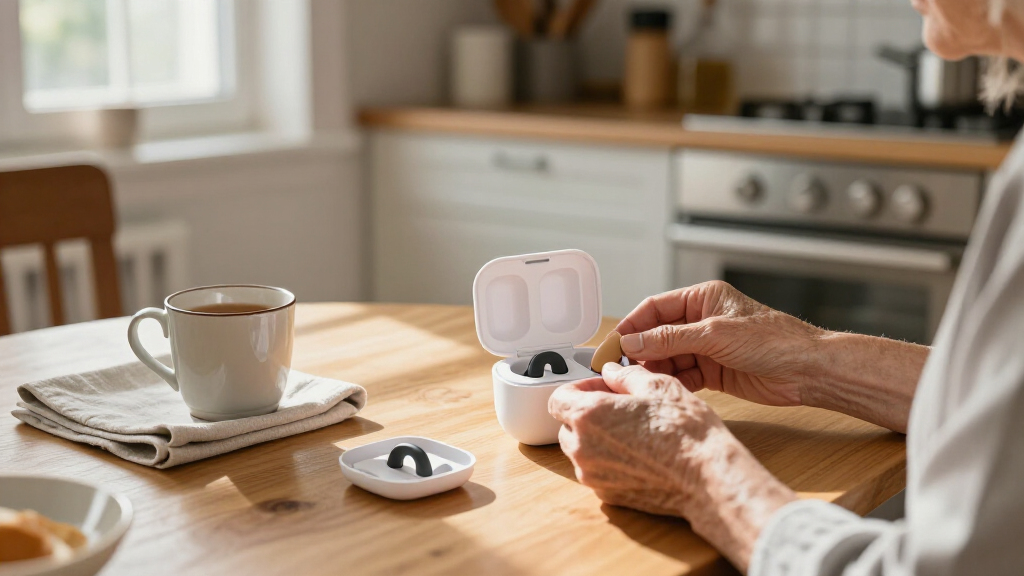
I compared these hearing aid dryers around the questions that affect daily ownership: how each product approaches moisture, how much setup and upkeep it asks of the user, and whether its format suits common hearing-aid routines. I also looked at practical details such as heatless operation, capacity for more than one device, portability, controls, and whether added functions—such as UV lighting, battery testing, or USB ports—serve a clear purpose for the intended buyer.
The ranking favors products with a clear role and a manageable care routine, rather than simply rewarding the longest feature list. That puts the PerfectDry LUX first as a balanced dedicated electronic option, while simpler systems such as DryCaddy and capsule-based Wisesorb rank for buyers who prioritize a different kind of upkeep. Models with specialized features rank higher for buyers who need those features, but lower for people who would rather avoid extra steps or compatibility questions. Product names and listed features do not establish clinical effectiveness, so I treat UV and drying claims as product attributes rather than medical guarantees.
Factors to Consider When Choosing Hearing Aid Dryers
Before choosing a dryer, match its care method to your hearing aids, your environment, and the amount of attention you want to give maintenance. These broader questions can help narrow the field beyond the feature lists.
Match the drying method to your device guidance
Hearing aids differ in materials, seals, battery systems, and manufacturer care instructions, so there is no single drying method that suits every model. Check your device manual or ask your hearing-care professional whether heat, UV exposure, or a particular drying process is appropriate. A heatless model may appeal if you want to avoid added heat, but it still needs to fit the manufacturer’s care guidance. Do not assume that a product labeled for hearing aids is automatically suitable for every rechargeable or custom device. This check is especially useful before buying units that combine UV light with heat. Compatibility should settle the shortlist before extra features do.
Choose a routine you will actually maintain
An electronic dryer can reduce hands-on steps, while a desiccant system may call for recharging or capsule replacement. Think about whether you prefer plugging in a device, monitoring a cycle, or keeping supplies on hand. A low-maintenance system can be a better practical choice than a feature-rich unit that adds chores you are unlikely to follow. Ask how often the drying element needs attention and whether the instructions make that process clear. Reusable desiccant can reduce repeat purchases, but it still requires the prescribed recharge routine. The best system is one that fits naturally into the way you already store your hearing aids.
Treat UV as an extra, not a substitute for care
Several products in this roundup advertise UV or UV-C lighting, sometimes alongside drying. That feature may appeal to buyers looking for an added care step, but it does not replace cleaning, inspection, or advice from a hearing-care professional. Check the product instructions for how the light operates and whether hearing aids should be positioned in a particular way. Avoid choosing a unit solely because its listing includes UV terminology; usability and compatibility still matter. Buyers who only need moisture management may prefer a simpler dryer without extra controls. Focus on the job you need done rather than the number of functions on the box.
Account for rechargeable devices and accessories
Rechargeable hearing aids can change how you use a dryer, since you may need to remove the devices from their charging case and place them in a separate unit. Confirm that the dryer’s interior fits your hearing aids, domes, and any accessories you plan to dry. A dual-device layout can help households or users who dry a pair together, while a compact container may suit a single-user routine better. Features such as USB ports can be convenient, but they do not prove that a dryer charges hearing aids or replaces their dedicated charger. Keep charging needs separate from moisture-care needs unless the product instructions clearly support both. A quick size and workflow check can prevent a device that is awkward to use every evening.
Weigh convenience against added complexity
Displays, battery tests, timers, and multiple light sources can be useful when they address a task you already perform. They can also mean more controls to learn and more features to verify against your device instructions. Buyers who want a simple daily routine may be better served by a dedicated dryer with clear operation than by a multi-function unit. If you are considering a battery-testing feature, confirm that it applies to your battery type and does not confuse a quick check with a full measure of battery health. Extra functions earn their place when they save a real step, not just when they make the product listing longer. Compare the everyday workflow, not just the specification list.
Plan for travel, placement, and ongoing supplies
A dryer used at home every night has different needs from one carried on trips or kept at work. Check the unit’s size, power requirements, and whether its care system depends on capsules or other supplies that must be packed. Desiccant jars can be straightforward to store, while electronic units may need a suitable power source and a stable place to sit. Consider where the device will live: a compact option is easier to keep beside a charger, but a small opening may be less convenient for handling hearing aids. For capsule-based systems, find out how replacements are identified and how often they may be needed under the product’s instructions. These practical details often matter more over time than a feature you use only occasionally.
Frequently Asked Questions
Can I use a hearing aid dryer with rechargeable hearing aids?
Often, but check both the hearing-aid instructions and the dryer’s directions before use. Many dryers require you to remove the hearing aids from their charging case, so the drying routine may be separate from charging. Confirm that the unit has enough room for your devices and any attached parts you plan to leave in place. Do not assume that USB ports mean the dryer charges hearing aids. If the manufacturer advises against heat or UV exposure, choose a method that follows that guidance.
Should I choose a heatless dryer or one that uses gentle heat?
The choice depends on your hearing-aid maker’s care instructions and your comfort with the drying method. Heatless options can appeal to buyers who want to avoid added heat, while a heated unit may fit someone seeking a dedicated electronic drying cycle. The phrase “gentle heat” alone does not confirm compatibility with every device. Check the stated operating method and ask your hearing-care professional if the instructions are unclear. Do not use a dryer outside its directions just because moisture is a concern.
Do hearing aid dryers with UV light replace cleaning?
No. UV lighting is an added product feature, not a replacement for removing visible debris or following your hearing-aid maker’s cleaning instructions. The dryer’s directions should explain how the light is used and how devices are placed inside. Buyers who do not need that extra feature may find a simpler moisture-care system easier to operate. Avoid treating UV claims as a guarantee of disinfection or a substitute for professional advice. Regular device care still depends on the steps specified for your particular hearing aids.
Is reusable desiccant better than replaceable capsules?
Neither approach is automatically better; the difference is the maintenance routine. A self-recharging desiccant system may reduce the need to keep replacement capsules on hand, but it still requires recharging according to its instructions. A capsule-based set can be simple to use, though buyers need to monitor supplies and replace capsules as directed. Compare the upkeep steps with how often you expect to dry your devices. If you travel, consider how easy it is to carry the system and any supplies you may need.
Do I need a dryer if I already clean my hearing aids every day?
Cleaning and drying address different parts of routine care: cleaning removes surface debris, while a dryer is intended to manage moisture. Whether you need a separate dryer depends on your environment, how much you sweat, and the guidance for your hearing aids. People in humid conditions or with frequent moisture exposure may value a dedicated drying routine more than those with a dry, low-exposure routine. Ask your hearing-care professional what makes sense for your device rather than adding a dryer by default. If you do buy one, continue the cleaning steps in your hearing-aid instructions.
Conclusion
For most buyers seeking a dedicated electronic routine, I’d start with the PerfectDry LUX as best overall. The DryCaddy is my best value-style pick for simplicity if you prefer a less electronics-dependent system, while the Redux Home is the premium-style choice for reusable, self-recharging desiccant rather than a feature-heavy electronic setup. For beginners, I’d favor a clearly operated dedicated dryer such as the PerfectDry LUX over a multi-function model with controls you may not need. Choose the Veri-Dry if a heatless format is your priority, or the Wisesorb if you want a capsule-based jar system. Before buying, check your hearing-aid maker’s care guidance and match the dryer’s upkeep to the routine you can maintain.
Halloween Picks
halloween
As an affiliate, we earn on qualifying purchases.