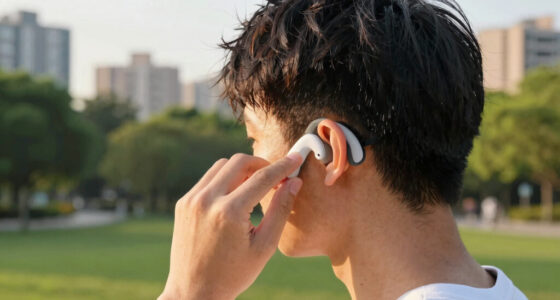
Choosing assistive listening for a gathering comes down to whether one person needs clearer speech or many attendees need the same support. Personal assistive listening devices, such as pocket amplifiers or hearing aids paired with a remote microphone, send sound to an individual listener. Group assistive listening systems, such as an installed hearing loop, radio transmitters, or infrared audio, distribute a venue’s sound to multiple listeners.

Get everyday helpers delivered free with Prime
- Fast, free delivery on millions of items
- Prime Video, Amazon Music and more included
- Member-only deals all year

Venucast AuraPlex M3 Auracast Assistive Listening System
- ✔ Brand and model: Venucast AuraPlex M3
- ✔ Wireless technology: Bluetooth LE Audio
- ✔ Included devices: 1 transmitter and 3 receivers

Avantree Audiplex M3 Multi-Channel Assistive Listening System with 1 Transmitter and 3 Clip-On Receivers
- ✔ Brand and model: Avantree Audiplex M3
- ✔ Wireless technology: 2.4 GHz RF
- ✔ Channels: Up to 4 selectable channels

Enersound 4-Person Assistive Listening System
- ✔ Brand: Enersound
- ✔ System capacity: 4 people
- ✔ Wireless system: FM assistive listening
The main tradeoff is individual control versus shared access. Personal devices are usually simpler and less expensive when only a few people need help, and users can adjust them to suit their hearing. A group system takes more planning and may cost more to install, but it can serve many attendees and make access part of the venue experience. Choose based on the size and frequency of gatherings, the number of listeners, and whether the venue can maintain and support the equipment.
At a Glance
| Criteria | Personal assistive listening devices | Group assistive listening systems | Winner |
|---|---|---|---|
| Number of listeners | Best for one or a few listeners | Designed to serve multiple attendees | B |
| Setup and portability | Portable; quick setup for a small gathering | Requires venue equipment, setup, and a clear way to access receivers | A |
| Listening control | Each user can adjust volume and, with some systems, microphone focus | Shared system settings; listener control depends on receiver or personal hearing device | A |
| Sound source and coverage | Often best when a microphone can be placed near the speaker | Can distribute a shared microphone or venue audio across a room | B |
| Accessibility and compatibility | Depends on device type; may connect to hearing aids or use headphones | Can offer broad access, but users need compatible receivers or hearing aids | Depends |
| Cost and value | Lower upfront cost for occasional or small-scale use | Higher upfront and ongoing costs; value improves with repeated use and more listeners | Depends |
| Maintenance and support | Usually simple, though batteries, pairing, and user instructions matter | Venue must charge, clean, store, test, and explain equipment | A |
Venucast AuraPlex M3 Auracast Assistive Listening System
For gatherings where guests arrive with different listening equipment, the Venucast AuraPlex M3 offers the most adaptable starting point in this lineup. It includes one transmitter and three receivers, while select Auracast-enabled hearing aids and compatible personal devices may also receive the broadcast. That flexibility can help an organizer serve beyond the three supplied receivers, although it depends on guests having supported equipment; we should not assume that any Bluetooth hearing aid will work.Compared with Avantree’s four-channel approach, Venucast emphasizes who can tune in rather than giving the organizer several selectable audio groups. It is a better match when one shared program should reach a mix of dedicated-receiver users and compatible personal-device users. Optical and analog connection accessories also give venues options for connecting different audio sources. The stated line-of-sight range reaches 328 feet, but walls and other obstacles can reduce coverage, and the listing cautions against stadiums and outdoor events.Its limitations are meaningful: only select hearing aids are supported, the system is not water resistant, and the included three receivers still set the ready-to-use headcount unless more compatible devices are available. Against Enersound’s dedicated FM setup, the AuraPlex can serve more kinds of listeners, but its compatibility needs more checking in advance. For a church, classroom, or indoor event space that can confirm device support, it is the strongest overall choice here.
Pros:
- Includes one transmitter and three dedicated receivers.
- Supports select Auracast hearing aids and compatible personal devices.
- Provides optical and analog audio connection accessories.
- States up to 328 feet of line-of-sight range.
Cons:
- Compatibility applies only to select Auracast-enabled hearing aids and devices.
- Obstacles can reduce coverage, and the system is not recommended for stadiums or outdoor events.
- Not water resistant.
Best for: Organizers of indoor gatherings with guests who may use supported Auracast hearing aids, compatible personal devices, or the included receivers.
Not ideal for: Events where attendees’ hearing aid compatibility cannot be confirmed, or outdoor and stadium settings where obstacles and exposure may be concerns.
Bottom line: Choose Venucast when a mixed indoor audience may benefit from Auracast access as well as supplied receivers, and confirm device compatibility before the event.
“Choose Venucast when a mixed indoor audience may benefit from Auracast access as well as supplied receivers, and confirm device compatibility before the event.”
Avantree Audiplex M3 Multi-Channel Assistive Listening System with 1 Transmitter and 3 Clip-On Receivers
When a gathering needs more than one audio feed, Avantree Audiplex M3 is the most purpose-built option of the three. Its four selectable channels let organizers separate listening groups or sources, while each receiver has its own volume control. That can be useful for events with parallel programming or for accommodating listeners who prefer different levels. The 30 ms latency is intended to keep speech and video more closely synchronized, which matters when guests are watching a presentation as well as listening.Compared with Venucast, Avantree puts more emphasis on organizer control of channels than on access through compatible hearing aids and personal devices. Its included three clip-on receivers each use wired on-ear earbuds, so the listening arrangement is more standardized and may feel less convenient to guests who prefer their own hearing equipment. Enersound is simpler for a single FM listening group, but it does not list channel selection or per-receiver volume controls; Avantree is the more capable choice when those adjustments are central.The system includes a charging dock, optical and AUX cables, and can support additional receivers. Its stated 100 m range applies to open areas, so venue walls and layout should inform placement rather than the headline distance alone. This system makes the most sense for schools, churches, and event organizers who can plan the audio setup and want distinct channels. It is less compelling for a small gathering that needs one uncomplicated feed.
Pros:
- Offers up to four selectable channels.
- Provides individual volume control on each receiver.
- 30 ms latency supports closer synchronization with speech and video.
- Includes three receivers, a charging dock, and optical and AUX cables.
Cons:
- The included receivers use wired on-ear earbuds.
- The stated 100 m range is for open areas and may be reduced by venue obstacles.
- Four channels may add setup complexity for events using a single audio feed.
Best for: Event organizers who need to distribute multiple audio channels and let each listener adjust receiver volume.
Not ideal for: Guests who need a personal hearing aid connection or dislike using the included wired on-ear earbuds.
Bottom line: Pick Avantree when channel separation and listener-level volume control matter more than Auracast access or a simpler single-feed setup.
“Pick Avantree when channel separation and listener-level volume control matter more than Auracast access or a simpler single-feed setup.”
Enersound 4-Person Assistive Listening System
For an organizer who needs a defined small-group setup, Enersound’s four-person FM system keeps the initial audience size and equipment straightforward: the system is specified for four listeners and includes an ADA plaque. The plaque is a practical venue feature for making assistive listening availability visible. Its stated five-year warranty and US-based phone support also distinguish it from the two systems with two-year warranty terms.Enersound is less flexible at the point of use than Avantree: the supplied details do not list selectable channels or individual receiver volume controls. It is also more receiver-dependent than Venucast, which can support select Auracast-enabled hearing aids and compatible devices. Those distinctions make Enersound a clearer fit for a single listening group using dedicated FM receivers, rather than an event seeking multiple feeds or broad bring-your-own-device access.The system can expand with additional Enersound R-120 or R-100 FM receivers, so its four-person starting capacity is not a fixed ceiling. However, each extra listener requires a separately purchased receiver, which adds planning and procurement work as attendance grows. Compared with the more feature-rich Avantree and Venucast systems, Enersound’s appeal is its focused setup and support package. Choose it when a modest, defined group and warranty support outweigh channel options and personal-device compatibility.
Pros:
- Designed to support four listeners.
- Can expand with additional R-120 or R-100 FM receivers.
- Includes an ADA plaque.
- Includes US-based phone support and a five-year warranty.
Cons:
- Additional listeners require separately purchased receivers.
- The supplied details do not list multiple channels or personal-device listening.
- Less flexible for mixed-device audiences than the Venucast Auracast system.
Best for: Small venues or gatherings that need assistive listening for four people initially and value an ADA plaque plus US-based phone support.
Not ideal for: Events needing multiple audio channels, Auracast access, or immediate listening capacity beyond the included four people.
Bottom line: Choose Enersound for a defined four-person FM setup with a longer stated warranty and an upgrade path through additional receivers.
“Choose Enersound for a defined four-person FM setup with a longer stated warranty and an upgrade path through additional receivers.”
As an Amazon Associate we earn from qualifying purchases.
Key Differences
The clearest distinction is scale. A personal device solves a specific listener’s problem and can travel between a family dinner, community meeting, or small celebration. A group system treats access as a venue service: one audio feed can reach many people, and attendees can use receivers or compatible hearing aids. That reach matters at recurring events, but it brings equipment, staff, and upkeep responsibilities.
Control and source quality also shape the choice. Personal options can let a listener set comfortable volume and position a microphone near the person speaking. A group setup can provide more consistent audio across a room, especially when connected to a sound system, though its usefulness depends on good installation and operation. Neither approach automatically improves conversation in every setting: competing speakers, background noise, distance, and microphone placement still matter.
Value depends on how often the equipment will be used and by how many people. A single portable device is usually the practical purchase for a household or occasional host. A venue that serves many attendees repeatedly may justify the greater cost of a shared system, particularly when it can support different listening needs and is easy to access. Before choosing, confirm how the intended users hear the signal, whether hearing aids are compatible, and who will set up and maintain the equipment.
Detailed Comparison
Number of listeners (Group assistive listening systems wins — major)
Group systems win by a major margin when several people need listening support at the same event: one shared audio source can serve multiple receivers. Personal devices are a better fit for one listener or a small number who can each bring or be given a device. In practice, a venue serving a changing audience benefits from group access; a family gathering rarely needs that reach.
Setup and portability (Personal assistive listening devices wins — moderate)
Personal devices win by a moderate margin for informal or changing locations. A host can bring one along and place its microphone near the main speaker, while installed loops or venue transmitters require equipment to be available and configured. Portable group kits exist, but they still involve receiver distribution and more coordination. This favors personal devices for dinners and one-off gatherings.
Listening control (Personal assistive listening devices wins — moderate)
Personal devices usually win by a moderate margin because the listener can adjust their own volume and may be able to change microphone position or direction. Group systems provide a shared feed, but individual adjustment can depend on the receiver and how the venue has configured the system. The practical difference is meaningful for guests with different hearing needs, though a well-designed receiver can narrow the gap.
Sound source and coverage (Group assistive listening systems wins — moderate)
Group systems win by a moderate margin for larger rooms and events with a public address or audio setup: they can feed sound to listeners across a defined area. Personal devices can be more effective at a small table when their microphone is close to the speaker, but performance falls when the microphone is distant or several people speak from different places. The best result depends on matching the microphone to the gathering.
Accessibility and compatibility (major difference)
This is a tie in principle, with the practical winner depending on the people attending and the system offered. A personal device may work with headphones or a compatible hearing aid, while group systems may offer receivers, a hearing loop, or another connection method. Neither is universally compatible. Ask users what they can use and check support for hearing aids or cochlear implants before buying or installing equipment.
Cost and value (major difference)
There is no universal winner. Personal devices usually cost less to provide for one or two listeners, so they offer better value for occasional household use. A group system costs more upfront and needs ongoing care, but its per-event value can improve when many attendees use it regularly. Pay more for the shared setup when repeated demand and broad access justify the investment.
Maintenance and support (Personal assistive listening devices wins — minor)
Personal devices win by a minor margin for straightforward upkeep: the owner handles charging or batteries, storage, and basic instructions. Group systems require the venue to keep equipment charged, clean receivers, test coverage, and make access clear to guests. For a venue, that work is manageable when assigned to staff; without an owner, the system may be unavailable when needed.
Personal assistive listening devices: Pros and Cons
Pros:
- Portable and practical for small or changing gatherings
- Lets an individual adjust listening level
- Can be used without installing a venue-wide system
- Often lower cost when only a few people need support
Cons:
- Usually serves only the person wearing or using it
- Results depend on microphone placement and the distance to speakers
- May not suit every listener or hearing aid
- The host or user must bring, charge, and explain the device
Group assistive listening systems: Pros and Cons
Pros:
- Can serve many attendees from one shared sound source
- Can cover a defined room or connect to venue audio
- Makes listening access available as part of a recurring venue service
- May work with receivers or compatible hearing devices
Cons:
- Higher setup and maintenance costs
- Needs clear operating procedures and someone responsible for equipment
- Coverage and sound quality depend on installation and correct use
- Attendees still need compatible receivers or devices
Who Should Choose What
Choose Personal assistive listening devices if:
- Only one or a few people at your gatherings need clearer speech.
- Events move between homes or locations, or happen occasionally.
- A listener wants personal volume control and can use a portable microphone or amplifier.
- You need a lower-cost way to improve listening at small tables or meetings.
Choose Group assistive listening systems if:
- You run a venue or recurring event where multiple attendees may need listening support.
- A sound system or microphone can provide a reliable shared audio feed.
- You can budget for installation, receivers, upkeep, and staff guidance.
- You want listening access available without asking each attendee to bring their own amplifier.
Skip both if: Neither option is ready to help if the listener cannot use the available connection or receiver, or if conversation is too dispersed for the microphone setup. First identify the listener’s compatible hearing device and the audio source that works in the room.
Value for Money
Paying more for a group system is worthwhile when a venue expects repeated use by multiple people and can keep the equipment ready. Its cost buys shared availability and room coverage, rather than a better personal listening experience for every individual. For a household, occasional host, or small gathering with one listener, a personal device is usually better value because it avoids installation and venue-wide maintenance. Compare the full cost with actual use: include receivers, charging, cleaning, repairs, and the time someone must spend helping guests connect.
Final Verdict
For most households and occasional gatherings, choose a personal assistive listening device: it is portable, easier to manage, and gives an individual direct control without paying to equip an entire room. Choose a group assistive listening system if you operate a venue or host frequent events where several attendees need access to the same audio. The deciding factor is recurring audience size. A shared system earns its higher cost through repeated, multi-listener use; otherwise, the personal device is the more sensible purchase. Check compatibility and microphone placement before committing to either.
Frequently Asked Questions
Are personal listening devices or group systems better for a family gathering?
Personal devices are usually the better fit when one or two guests need help and the gathering is small. A microphone placed near the main speaker can make conversation easier to hear without setting up venue equipment. Consider a group system when many people need access or the event uses a public address system.
Can a group assistive listening system work with hearing aids?
Some systems connect directly with compatible hearing aids or cochlear implants; others require a venue receiver and headphones, a neckloop, or another accessory. Compatibility varies by system and device. Confirm the connection method with the user and the manufacturer or venue before relying on it.
Is a hearing loop the same as a personal listening device?
No. A hearing loop is a type of group system that sends audio to compatible hearing aids or cochlear implants equipped with a telecoil. A personal device is intended for an individual and may use a microphone, headphones, or a direct connection. A loop can be convenient for compatible users, while a personal device can travel and offer individual control.
When is a group system worth the higher cost?
It is most likely to be worth the cost when a venue hosts recurring gatherings and several attendees may need listening support. The venue should be able to maintain the equipment, provide compatible receivers or connections, and tell guests how to use it. For a one-time or small private event, a personal device usually costs less and takes less coordination.