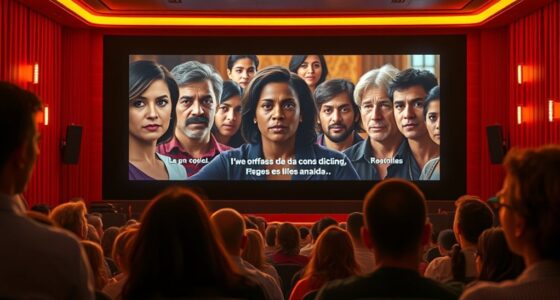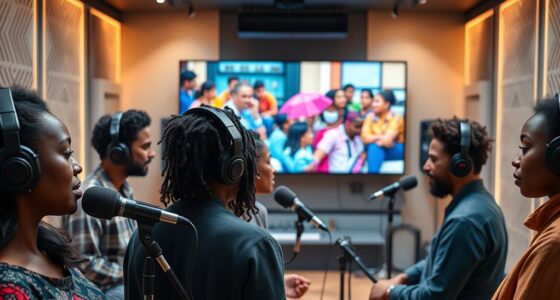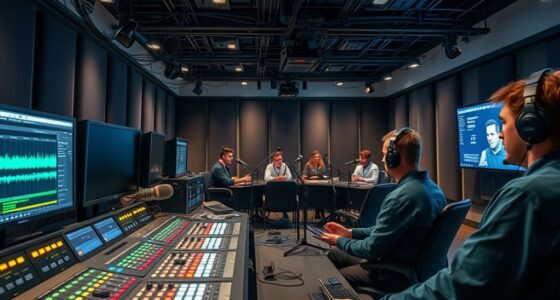
Using voice cloning to recreate deceased actors raises serious ethical questions for you to contemplate. You might wonder if it’s right to use someone’s voice without explicit consent, especially when it involves their legacy or estate. Concerns about privacy, moral boundaries, and potential emotional harm are important. If you want to understand how these dilemmas are managed and what boundaries exist, keep exploring this complex topic further.
Key Takeaways
- Obtaining consent from the deceased actor or their estate is complex and essential to avoid ethical violations.
- Recreating voices without explicit approval risks infringing on the actor’s legacy and personal autonomy rights.
- Privacy and data protection concerns arise from handling sensitive voice data without transparent safeguards.
- Unauthorized use of voice cloning can damage public trust and lead to reputational harm for creators and studios.
- Clear legal frameworks and ethical guidelines are needed to balance technological innovation with moral responsibilities.

As technology advances, voice cloning has opened new possibilities for bringing deceased actors back to life on screen. This process, often called digital resurrection, allows filmmakers to recreate a performer’s voice with astonishing accuracy, giving new life to characters who have passed away. While this innovation can enhance storytelling and preserve performances that might otherwise be lost, it also raises serious ethical questions. One of the most pressing issues revolves around consent challenges. When an actor is no longer alive, who has the right to decide whether their voice can be cloned and used in future projects? Without clear consent, using a deceased actor’s voice risks crossing ethical boundaries, potentially infringing on their legacy and the rights of their estate. Studios and creators often argue that they’re honoring the actor’s memory or fulfilling fans’ desires, but this doesn’t negate the importance of respecting personal autonomy and prior wishes.
In many cases, the consent challenges stem from the fact that voice cloning technology can produce highly convincing replicas, sometimes indistinguishable from the original. If an actor didn’t explicitly agree to this, their family or estate might be uncomfortable with their loved one’s voice being used in ways that could be misleading, commercialized, or even damaging to their reputation. This creates a complex web of moral considerations: Is it ethical to recreate a voice that was never intended for digital resurrection? Should consent be required not just before an actor’s death but also posthumously, to ensure their wishes are honored? These questions underscore the importance of establishing clear guidelines and legal frameworks before deploying such technology. Additionally, the privacy implications of voice cloning raise concerns about how personal data is handled and protected in these processes.
Furthermore, the consent challenges are compounded by the fact that voices are deeply personal. They carry emotional weight and identity, making their recreation a sensitive matter. Even if an estate grants permission, the actor’s fans and the public might feel uncomfortable or betrayed if they discover a deceased actor’s voice is being used in new productions without explicit approval. This could lead to backlash, harming the reputation of studios and creators.
Top picks for "voice clon deceas"
Open Amazon search results for this keyword.
As an affiliate, we earn on qualifying purchases.
Frequently Asked Questions
Can Voice Cloning Be Used Without the Actor’s Family’s Consent?
No, voice cloning shouldn’t be used without the actor’s family’s consent. You should respect consent requirements and privacy concerns, as using someone’s voice without permission can violate their rights and cause emotional harm to their loved ones. Always seek approval from the family or legal representatives before employing voice cloning technology, ensuring transparency and ethical practices to prevent potential legal issues and uphold respect for the deceased’s legacy.
How Does Voice Cloning Impact the Actor’s Original Legacy?
Imagine using voice cloning to recreate a beloved actor for a new film, but if done without respecting their original voice authenticity, it could dilute their legacy. This technology can both preserve and distort an actor’s influence, potentially overshadowing their true talent. You must consider how voice cloning impacts legacy preservation—does it honor their memory or risk turning their unique voice into a mere imitation?
Are There Legal Restrictions on Cloning Deceased Actors’ Voices?
You need to know that legal restrictions on cloning deceased actors’ voices vary by jurisdiction. Digital rights and consent regulations play a big role, often requiring permission from estates or rights holders before using a voice clone. Laws aim to protect the actor’s legacy and prevent unauthorized use. Keep in mind, laws are evolving, so staying informed about current regulations is essential for legal and ethical cloning practices.
What Rights Do Actors Have Over Their Voice Data Posthumously?
You have rights over your voice data, even posthumously, depending on legal agreements and jurisdiction. Your voice ownership typically stays with you during your life, but after death, posthumous rights can transfer to your estate or designated parties. These rights may include control over how your voice is used, ensuring that your voice isn’t exploited without consent. It is crucial to clarify these rights beforehand to protect your legacy.
How Can Audiences Distinguish Between Real and Cloned Voices?
You can distinguish between real and cloned voices by paying attention to audience perception and authenticity verification. Listen for subtle inconsistencies, unnatural speech patterns, or tonal differences that cloned voices may exhibit. Experts and tools can help verify authenticity, but as an audience member, trusting your perception and looking for signs of digital manipulation is key. Staying informed about voice cloning technology also helps you critically evaluate what you hear.
Conclusion
While voice cloning might seem disrespectful or invasive, it also offers a way to honor and preserve an actor’s legacy. By approaching it ethically, with consent and transparency, you can celebrate their talents without crossing moral boundaries. Remember, technology itself isn’t good or bad—it’s how you use it that matters. When used thoughtfully, voice cloning can keep their voice alive for future generations, enriching stories and memories rather than erasing or exploiting them.