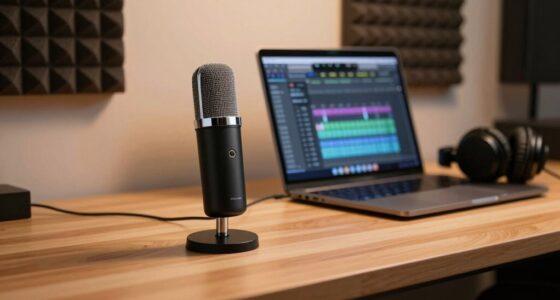
Many voice actors believe higher sample rates automatically mean better sound, but this isn’t true. In fact, increasing the sample rate beyond what your ears can perceive doesn’t improve audio quality and just creates bigger files and more processing work. Focus instead on using quality gear, good acoustics, and proper techniques. If you want to discover more common misconceptions and how to get the best recordings, keep exploring these insights.

Get everyday helpers delivered free with Prime
- Fast, free delivery on millions of items
- Prime Video, Amazon Music and more included
- Member-only deals all year
Key Takeaways
- Higher sample rates do not automatically improve audio quality; human hearing maxes out around 20 kHz.
- Digital recording quality depends more on equipment and technique than on using ultra-high sample rates.
- Post-production quality is unaffected by initial sample rate if recordings are properly optimized and converted.
- Good acoustics and a quality microphone have a greater impact than increasing sample rate.
- Chasing higher sample rates is unnecessary; focus on proper setup for clearer, natural voice recordings.
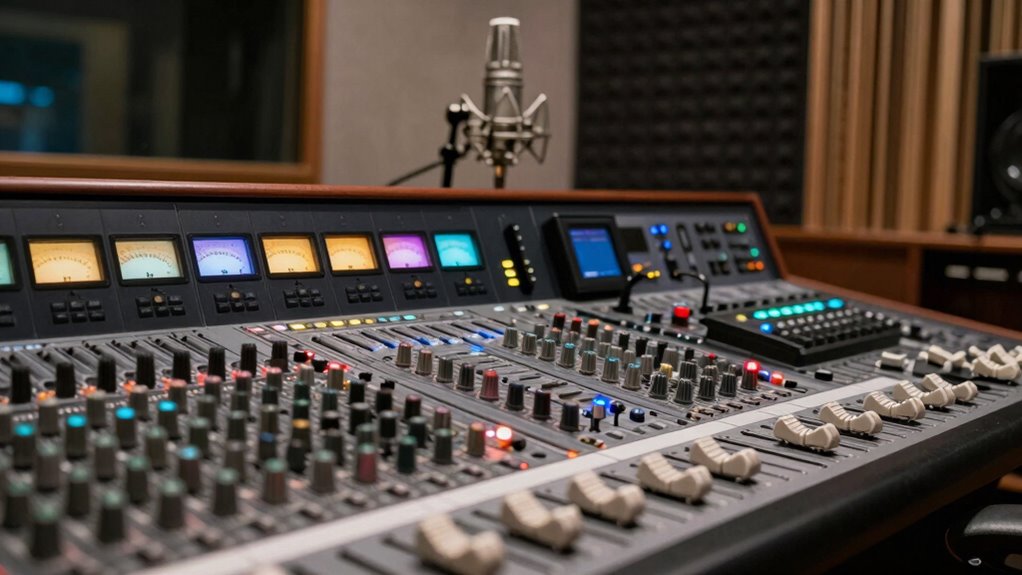
Have you ever wondered if higher sample rates truly improve audio quality? It’s a common question, especially among voice actors who want the best possible recordings. The truth is, understanding sample rates can be tricky, and many myths circulate about what really matters. One key misconception is that simply increasing the sample rate automatically results in better sound. But to get the full picture, you need to consider how analog versus digital recording works and the equipment involved. Analog recording captures sound in a continuous wave, which many argue offers a warmer, more natural tone. Digital recording, on the other hand, converts these waves into numerical data through sampling. This process relies heavily on sample rate settings, but higher isn’t always better.
Higher sample rates don’t always mean better sound; focus on quality equipment and technique instead.
When you’re choosing recording equipment, it’s tempting to think that recording at an ultra-high sample rate, like 192 kHz, will make your voice sound clearer and more professional. The reality is, most human voices don’t require such high rates because our hearing typically tops out around 20 kHz. Recording at excessively high sample rates can lead to larger file sizes and more demanding processing needs without tangible improvements in audio quality. Instead, focus on a good-quality microphone, proper acoustics, and proper recording techniques. These factors have a far more significant impact on your sound than the sample rate setting. Additionally, understanding digital audio fundamentals can help you make more informed decisions about your recordings. It’s also helpful to recognize that sampling theory emphasizes how the quality of the original sound source plays a crucial role in the final outcome.
Another myth is that using a higher sample rate during recording will allow for more flexibility in post-production. While it’s true that higher sample rates can provide some editing advantages, the benefits are often negligible for voice recordings. When you convert your recordings down to standard formats like 44.1 or 48 kHz for distribution, any supposed quality gains from higher initial sample rates tend to disappear. To ensure your recordings are properly optimized, it’s also essential to understand how audio resolution affects clarity and detail. So, instead of chasing after the highest setting, invest in reliable recording equipment suited to your voice and environment. A well-calibrated microphone and a quiet space matter more than the sample rate setting. Moreover, optimal recording techniques can significantly enhance your audio quality regardless of the sample rate chosen.
Ultimately, the myth that higher sample rates automatically mean better audio is just that—a myth. As a voice actor, your goal should be clarity, warmth, and natural tone, all of which depend more on your equipment, technique, and environment than on the sample rate. Don’t get caught up in the misconception that you need the highest possible rate; instead, aim for a balanced, professional setup that captures your voice accurately and efficiently.
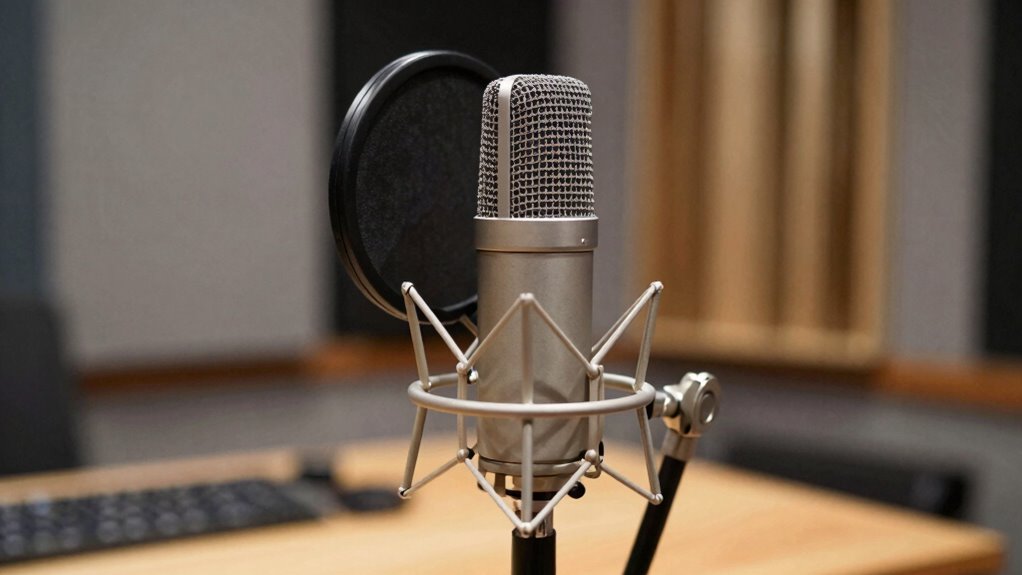
professional condenser microphone for voice recording
As an affiliate, we earn on qualifying purchases.
As an affiliate, we earn on qualifying purchases.
Frequently Asked Questions
Does Higher Sample Rate Always Mean Better Audio Quality?
Higher sample rates don’t always mean better audio quality. While they can capture more detail, they also require more audio compression, which might introduce artifacts. Plus, sample rate conversion during editing can degrade quality if not done carefully. Focus on recording at a standard rate like 44.1kHz or 48kHz, and guarantee proper processing, rather than simply choosing higher sample rates to improve sound.
How Does Sample Rate Affect File Size and Storage?
Higher sample rates increase file size because they capture more audio data per second, reducing sample rate flexibility and making files larger. Digital conversion effects can also influence file size, as higher sample rates require more storage and processing power. You should balance your needs; lower sample rates save space but may compromise quality, while higher rates improve fidelity but demand more storage and processing resources.
Is 44.1khz Sufficient for Professional Voice Recordings?
You’ll be pleased to know that 44.1kHz is sufficient for professional voice recordings, as it captures audio well within human hearing range, ensuring clear voice clarity. Surprisingly, most audio equipment, including microphones and editing software, is compatible with this sample rate. Staying at 44.1kHz simplifies your workflow and maintains quality without sacrificing equipment compatibility, making it a practical choice for voice actors seeking professional results.
Can Low Sample Rates Cause Voice Distortion or Loss of Detail?
Low sample rates can cause voice distortion and loss of detail because of sample rate limitations. When you record at a low sample rate, it reduces voice clarity, making your recordings sound less natural and less precise. This can hinder your professional quality. To guarantee your voice sounds clear and detailed, stick to higher sample rates like 44.1kHz or 48kHz, which better capture the nuances of your voice.
Should I Always Match Sample Rate With My Recording Equipment?
Matching your sample rate with your recording equipment is like tuning a musical instrument—precision matters. You should aim for sample rate compatibility to guarantee clarity, avoiding unnecessary conversion artifacts. Always calibrate your recording equipment first; mismatched rates can lead to audio quality loss or syncing issues. So, yes, syncing your sample rate to your gear guarantees your recordings sound professional and consistent, making your voice stand out.
As an affiliate, we earn on qualifying purchases.
Conclusion
Stop wasting your time obsessing over impossible sample rate perfection! Believe me, chasing that mythical 192kHz unicorn is like trying to catch lightning in a bottle — completely pointless and a guaranteed recipe for frustration. Focus instead on your talent, your voice, and solid recording habits. Because in the end, no one’s going to care if your sample rate was 44.1kHz or 96kHz — they’ll care about your voice, not your tech. Get back to what really matters!
audio interface for voice acting
As an affiliate, we earn on qualifying purchases.
As an affiliate, we earn on qualifying purchases.
high-quality pop filter for microphones
As an affiliate, we earn on qualifying purchases.
As an affiliate, we earn on qualifying purchases.
Halloween Picks
halloween
As an affiliate, we earn on qualifying purchases.