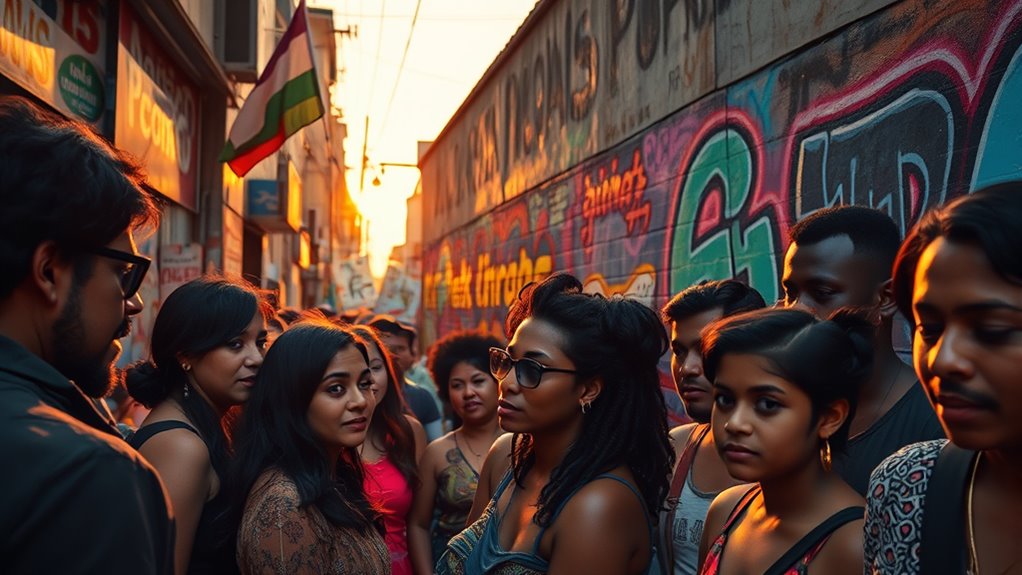

When adapting content across cultures, it’s vital to understand local censorship laws and cultural sensitivities. You should research what topics, language, and visuals are acceptable and avoid those that might cause backlash or legal issues. Respect for local norms helps your message resonate without conflict. Adjust your content thoughtfully to guarantee it aligns with societal standards while still conveying your core message. Stay informed about ongoing censorship trends, and you’ll discover more ways to navigate these challenges effectively.
Key Takeaways
- Research and understand local censorship laws and cultural sensitivities before creating or sharing content.
- Adapt language, visuals, and themes to align with cultural norms and avoid taboo topics.
- Regularly monitor censorship trends to update content strategies accordingly.
- Respect societal values to foster trust and prevent backlash or legal issues.
- Balance core message delivery with cultural appropriateness for effective cross-cultural communication.

Censorship is a complex issue that balances the need to protect society from harmful content with the importance of free expression. When you’re creating or sharing content across different cultures, understanding how government restrictions and cultural sensitivities influence what’s acceptable is essential. Governments often impose restrictions to maintain social order, prevent the spread of misinformation, or uphold moral standards. These restrictions can vary wildly from one country to another, impacting what you can publish or distribute. For instance, some nations have strict laws against political dissent, religious criticism, or certain social topics. If you’re not aware of these rules, your content could be censored, blocked, or even lead to legal trouble.
Cultural sensitivities also play a pivotal role in how content is received and regulated. What’s considered acceptable humor or commentary in one culture might be deeply offensive in another. When you’re adapting content for different audiences, it’s essential to research and respect local norms. This doesn’t mean you have to compromise your message entirely, but understanding the boundaries helps you communicate more effectively without risking censorship or alienation. For example, images, language, or themes that are perfectly fine in Western contexts might be taboo elsewhere, triggering censorship or backlash. You need to strike a balance between staying true to your voice and respecting the cultural context to avoid misunderstandings or violations of local standards.
Navigating these considerations requires ongoing awareness. Laws and societal norms can change quickly, especially with the rise of new media platforms and digital communication. What was acceptable a few years ago might now be censored or frowned upon. As you adapt your content, you must stay informed about current restrictions and sensitivities, adjusting your approach accordingly. This might mean avoiding certain topics, using different terminology, or framing your message in a way that aligns with local expectations. To do so effectively, regularly monitoring censorship trends and updates in relevant regions is crucial. While it can be challenging, embracing these differences can also help you connect more authentically with diverse audiences, building trust and credibility.
Ultimately, successfully managing censorship considerations involves research, sensitivity, and a willingness to adapt. By respecting government restrictions and cultural sensitivities, you guarantee your content reaches its intended audience without unnecessary obstruction. This proactive approach not only minimizes the risk of censorship but also demonstrates cultural awareness and respect, which are key to effective communication across borders.
Top picks for "censorship consideration adapt"
Open Amazon search results for this keyword.
As an affiliate, we earn on qualifying purchases.
Frequently Asked Questions
How Do Cultural Differences Influence Censorship Decisions?
Cultural differences heavily influence censorship decisions because you need to take into account cultural sensitivities and language barriers. When creating content, you might censor or modify material to respect local values, avoid offending audiences, and guarantee understanding. You’ll find that what’s acceptable in one culture may be taboo in another, so adapting content carefully helps you navigate these differences and maintain positive reception across diverse audiences.
What Are Common Challenges in Adapting Content for Censorship?
You face common challenges in adapting content for censorship, like balancing content sensitivity and respecting local norms. You must modify or omit certain elements to avoid offending audiences or violating regulations, which can limit artistic freedom. Finding the right balance is tough, as you want to preserve your message while ensuring it aligns with cultural standards. Managing these challenges requires understanding diverse sensitivities without compromising your creative integrity.
How Can Creators Ensure Respectful Cultural Representation?
Oh, sure, just wave your magic wand of cultural sensitivity and hope everyone’s delighted! To guarantee respectful cultural representation, you need to actively listen, research deeply, and avoid stereotypes. Balance artistic integrity with respect by collaborating with cultural insiders and seeking feedback. Remember, respecting traditions and nuances isn’t optional—it’s the foundation of authentic storytelling that truly honors diverse audiences and avoids unnecessary controversy.
What Role Do Local Laws Play in Content Censorship?
Local laws greatly influence content censorship by establishing legal restrictions and regulatory frameworks you must follow. These laws determine what you can or cannot include in your content, often varying widely between regions. You need to stay informed about these legal restrictions to avoid penalties or bans. By understanding and respecting local regulations, you ensure your content remains compliant while effectively reaching your audience across different cultural landscapes.
How Does Censorship Impact Global Content Distribution?
Censorship impacts your global content distribution by creating barriers that can limit your reach. International standards aim to promote consistency, but local censorship laws often lead to content removal or restrictions. Transparency in censorship practices helps you understand these boundaries, enabling you to adapt your content accordingly. You must navigate these differences carefully to maintain compliance and ensure your content is accessible across diverse markets while respecting cultural sensitivities.
Conclusion
As you navigate cultural differences, remember that adapting content isn’t just about avoiding censorship—it’s about respecting diverse perspectives. Some believe that true artistic expression can flourish regardless of restrictions, but evidence suggests censorship often stifles creativity and open dialogue. By understanding these dynamics, you can find smarter ways to share your message without compromising authenticity. Ultimately, questioning whether censorship truly protects or hinders society might be the key to fostering genuine cultural exchange.