

Studios weigh audience preferences, cultural sensitivities, production costs, and distribution goals when choosing between a global dub or regional versions. If your content has broad appeal, they might opt for a single global dub to save time and guarantee consistency. For culturally specific content, regional versions help connect better with local viewers by adapting humor and references. To understand how they balance these factors and make the best choice, keep exploring the key considerations involved.

Get everyday helpers delivered free with Prime
- Fast, free delivery on millions of items
- Prime Video, Amazon Music and more included
- Member-only deals all year
Key Takeaways
- Market preferences and cultural nuances determine if a global dub suffices or regional versions are necessary.
- Content type influences the choice; universal themes favor global dubs, while culturally specific content benefits from regional adaptations.
- Budget, resources, and production timelines impact the feasibility of creating multiple regional versions.
- Distribution channels and target audiences guide whether consistency or localization is prioritized.
- Audience feedback and regional market analysis help refine localization strategies for maximum engagement.
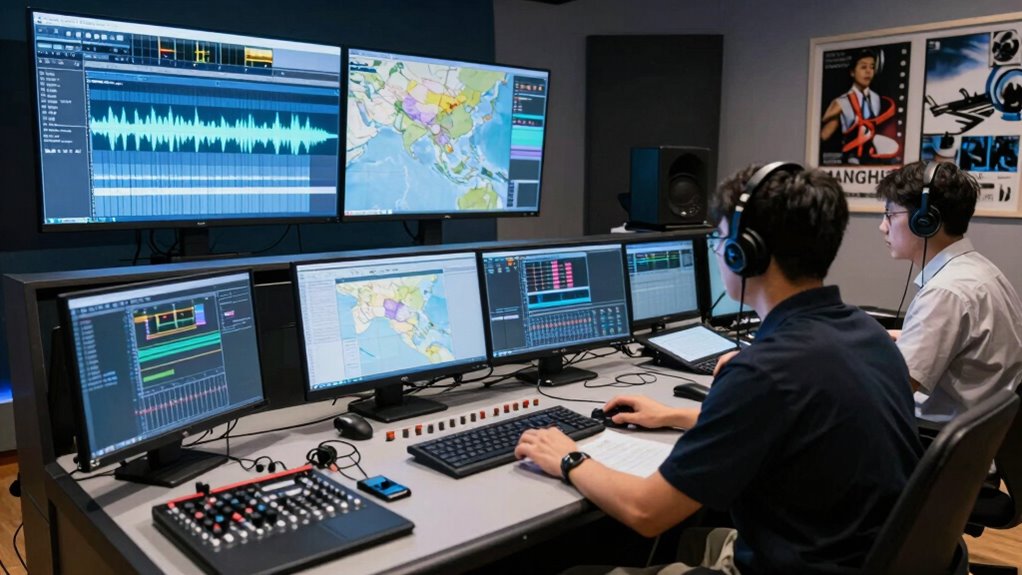
As studios weigh their options, they often face the decision of whether to release a global dubbed version or create regional variations. This choice hinges on multiple factors, including audience preferences, market dynamics, and production costs. When considering a global dub, studios typically adopt a unified localization strategy, aiming to deliver a consistent experience across all markets. This approach can streamline production, reduce expenses, and guarantee brand uniformity. However, it might overlook regional nuances that resonate deeply with local audiences.
On the other hand, creating regional versions allows for tailored cultural adaptation. You might find that certain jokes, slang, or references need to be modified to fit the local context. Cultural adaptation isn’t just about translation; it involves understanding the cultural sensitivities, humor styles, and societal norms of each target region. This method can boost viewer engagement, as audiences tend to connect more deeply when content reflects their cultural realities. But it also requires more resources—more voice actors, additional localization teams, and extended production timelines. Advances in localization technology can influence how studios approach regional adaptations, making it easier and more cost-effective to produce multiple versions without sacrificing quality. Additionally, understanding local content preferences helps tailor localization efforts to better match regional viewer expectations. Incorporating consumer feedback can further refine these adaptations, ensuring they resonate authentically with local audiences.
Regional versions enhance cultural relevance, boosting engagement but require more resources and time.
The decision often boils down to the target demographic’s preferences and the nature of the content. For family-friendly animations or universally appealing genres, a global dub might work well, as broad humor and themes tend to translate smoothly. Conversely, for content that relies heavily on cultural references, idioms, or local humor, regional versions can provide a richer experience. You must also consider the distribution strategy: streaming platforms may prefer regional versions to maximize relevance, while global theatrical releases might lean toward a single, high-quality dub to maintain brand consistency.
Market research plays an essential role in this decision-making process. Understanding viewer expectations, cultural sensitivities, and language preferences helps studios craft the most effective localization strategy. Sometimes, studios even employ a hybrid approach—using a global dub for some regions while creating localized versions for others. Additionally, audience engagement can be greatly enhanced by understanding local preferences, encouraging more targeted localization efforts. This flexibility allows them to balance cost, cultural resonance, and audience engagement. To achieve this, studios often leverage market analysis to make informed choices about localization strategies that align with viewer preferences and regional demands.
Ultimately, your goal is to strike a balance. You want to guarantee that the story’s core remains intact while respecting the cultural differences that make each audience unique. Whether choosing a single global dub or regional variations, the key is thoughtful localization—adapting content not just linguistically but culturally—to forge a genuine connection with viewers around the world.
professional voice over microphone
As an affiliate, we earn on qualifying purchases.
As an affiliate, we earn on qualifying purchases.
Frequently Asked Questions
How Do Studios Assess Regional Cultural Preferences for Dubbing?
You assess regional cultural preferences by analyzing cultural nuances and audience feedback, ensuring your localization strategies resonate locally. You consider language idioms, humor, and social norms to make the dub authentic. You also study regional media consumption habits and collaborate with local experts. This approach helps you adapt content effectively, ensuring it appeals to diverse audiences while respecting their unique cultural identities.
What Is the Typical Timeline for Choosing a Dubbing Approach?
You typically decide on a dubbing approach within a few months, depending on project scope. During this timeline, you focus on language localization and voice actor selection, ensuring the chosen approach resonates culturally and linguistically. You evaluate whether a single global dub can meet regional needs or if regional versions are necessary. This process involves reviewing scripts, auditioning voice talent, and coordinating with localization experts to finalize your decision.
How Do Licensing Agreements Influence Dubbing Decisions?
Licensing agreements heavily influence dubbing decisions because they set the boundaries for voice localization rights and regional adaptations. You might think these agreements limit flexibility, but they actually guide studios to select the most practical approach. During licensing negotiations, studios discuss whether they can use a single voice cast worldwide or need regional versions. Clear licensing terms guarantee the chosen dubbing strategy aligns with legal and distribution requirements, avoiding costly disputes later.
What Are the Cost Differences Between Global Dub and Regional Versions?
You’ll find that global dubs often cost less because they streamline voice casting and avoid repeated localization challenges across regions. Regional versions, however, can be more expensive due to the need for separate voice talent, adaptations, and addressing local cultural nuances. Balancing these costs involves considering localization challenges, as regional versions require tailored voice casting to resonate authentically, which increases overall expenses compared to a single global dub.
How Does Audience Feedback Impact Future Dubbing Choices?
Ever wondered if your feedback influences dubbing choices? Your audience engagement directly impacts future decisions. Studios analyze feedback to gauge how well regional or global dubs resonate with viewers. If many express dissatisfaction or suggest improvements, studios will adapt, possibly opting for regional versions or refining translations. Your insights help shape the dubbing process, ensuring content better aligns with audience preferences and cultural nuances, ultimately enhancing your viewing experience.
As an affiliate, we earn on qualifying purchases.
Conclusion
Ultimately, your choice between a global dub and regional versions hinges on understanding your audience’s cultural preferences and market size. Did you know that over 70% of viewers prefer localized content that feels culturally relevant? This statistic highlights the importance of tailoring your approach to maximize engagement. By carefully weighing these factors, you can guarantee your content resonates deeply, boosting both reach and viewer satisfaction across diverse markets.
As an affiliate, we earn on qualifying purchases.
sound editing and mixing console
As an affiliate, we earn on qualifying purchases.
As an affiliate, we earn on qualifying purchases.
Fall Picks
fall essentials
As an affiliate, we earn on qualifying purchases.