
When choosing between lip-sync and off-screen narration, consider your project’s goals and the message you want to convey. Lip-sync creates realistic, expressive characters, ideal for narrative-driven content where character connection is key. Off-screen narration offers flexibility, making it perfect for explainer videos or background info without constraining visuals. Understanding these differences helps you pick the right style for maximum impact—keep exploring to discover how each can elevate your storytelling.
Key Takeaways
- Use lip-sync for character-driven stories requiring realism and emotional expression; choose off-screen narration for clarity and background info.
- Lip-sync enhances immersion in animated or narrative content; off-screen narration offers flexibility in explainer videos or abstract visuals.
- Consider project goals: character engagement favors lip-sync; straightforward messaging benefits from off-screen narration.
- Lip-sync creates seamless dialogue integration; off-screen narration allows for multiple voices or commentary without mouth movement constraints.
- Select style based on tone, emotional impact, and visual complexity to optimize viewer engagement and storytelling effectiveness.
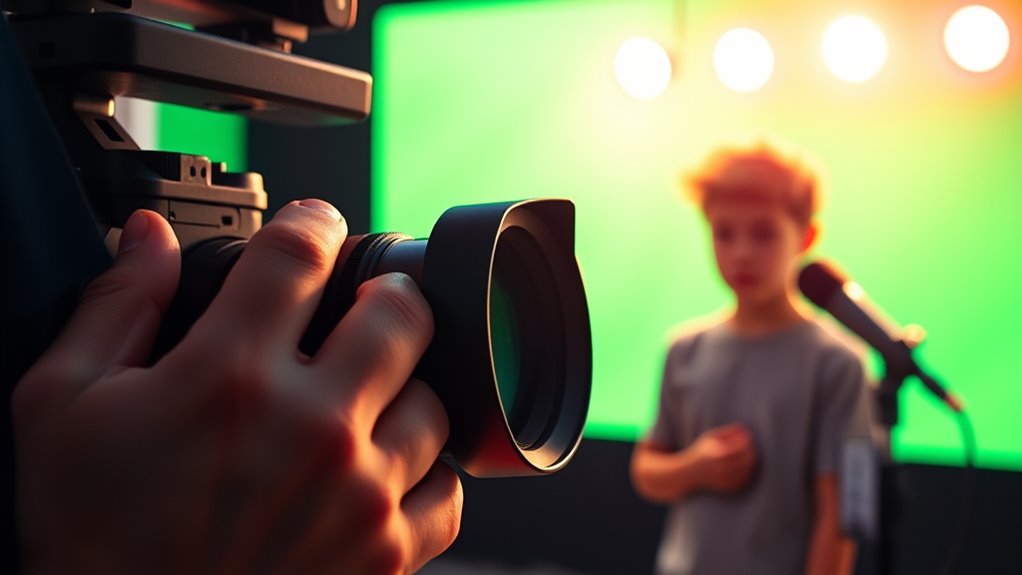
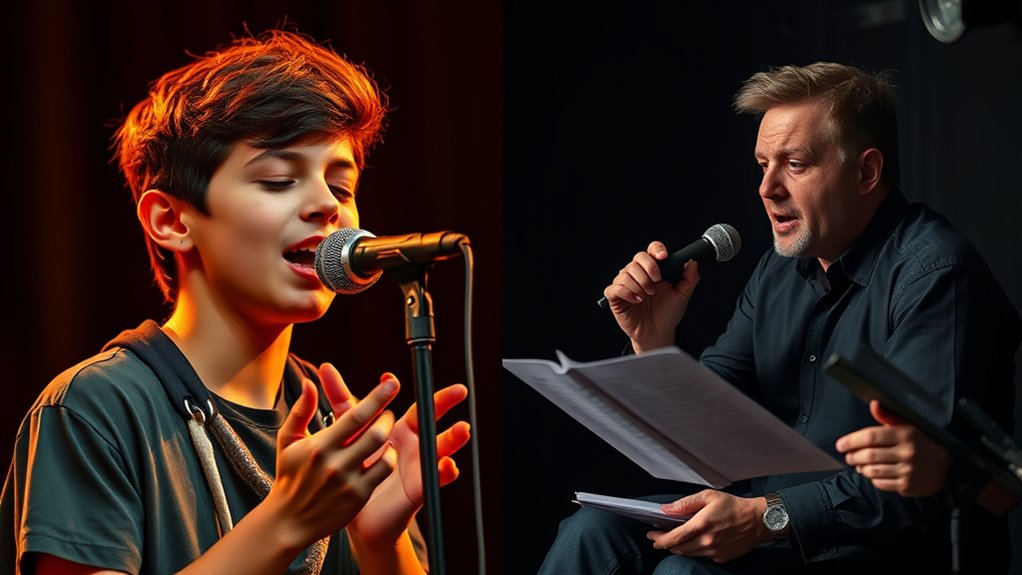
When it comes to storytelling techniques in video production, choosing between lip-sync and off-screen narration can substantially impact how your audience perceives your message. Both methods serve different purposes and evoke distinct emotional responses, so understanding their strengths helps you make an informed decision. Lip-sync involves matching a character’s mouth movements precisely to voice-over techniques, creating a seamless connection between the dialogue and the visuals. This approach often enhances realism, especially in animated projects, where animation integration allows for expressive, synchronized character performances. When done well, lip-sync makes your characters feel alive, engaging viewers through believable speech and emotion. It’s particularly effective in narrative-driven content or character-centric stories, where viewers expect to see a human connection through facial expressions and lip movements.
On the other hand, off-screen narration involves a voice-over that is not visually synchronized with on-screen characters. Instead, it provides context, commentary, or background information while the visuals play out independently. This style offers a versatile way to guide viewers’ understanding without the constraints of matching mouth movements, giving you more freedom in voice-over techniques. It’s especially useful in explainer videos, documentaries, or abstract animations where the focus is on delivering information clearly and efficiently. Off-screen narration often creates a sense of intimacy or authority, depending on the tone of voice used, and allows you to use a single voice actor to deliver multiple roles or perspectives, enhancing consistency and clarity. Additionally, understanding projector technology can help optimize how your visuals are presented, making the narration more impactful.
Deciding between lip-sync and off-screen narration also depends on your animation integration needs. If your project involves complex character animations or stylized visuals, lip-sync can be a powerful tool to bring characters to life and deepen emotional engagement. Conversely, if your goal is to simplify storytelling or emphasize visuals over dialogue, off-screen narration offers a cleaner, less distracting way to communicate your message. Keep in mind that voice-over techniques vary, and selecting the right style involves considering your audience, message complexity, and overall tone.
Ultimately, your choice should align with your project’s objectives. Lip-sync can foster a more immersive experience, especially when character performance is central. Off-screen narration provides flexibility and clarity, making it ideal for delivering straightforward, informative content. Both techniques have their place, and understanding how to leverage each—along with effective animation integration—will help you craft compelling stories that resonate with your viewers.
Top picks for "sync screen narration"
Open Amazon search results for this keyword.
As an affiliate, we earn on qualifying purchases.
Frequently Asked Questions
How Does Audience Engagement Differ Between Lip-Sync and Off-Screen Narration?
You’ll find that audience engagement differs because lip-sync creates a strong visual connection, making viewers feel more involved and emotionally connected. Off-screen narration, on the other hand, often delivers a broader emotional impact by guiding viewers through the story without distracting visuals. With lip-sync, you’re more likely to see immediate reactions, while off-screen narration encourages deeper reflection and understanding, shaping how your audience emotionally connects with your content.
What Are the Cost Implications of Each Narration Style?
Did you know off-screen narration can cut production costs by up to 30%? With off-screen narration, you typically need less specialized equipment and fewer crew members, reducing overall expenses. Lip-syncing often demands advanced editing, synchronized audio, and extra equipment like microphones and soundproofing. So, if budget is a concern, off-screen narration usually offers a more cost-effective solution, streamlining your production process and saving money.
Which Style Is More Effective for Educational Content?
You find that lip-sync narration enhances visual appeal and keeps learners engaged, making complex concepts easier to grasp through clear, synchronized visuals. Off-screen narration offers narrative clarity, allowing you to focus on delivering information without distracting visuals. Both styles can be effective, but for maximum engagement and clarity, combining lip-sync with off-screen narration often provides the best balance for educational content.
How Do Cultural Differences Influence Style Choice?
Ever wondered how cultural differences shape your style choice? You should consider cultural storytelling and language nuances because they influence how your audience perceives authenticity and engagement. For example, some cultures prefer visual storytelling paired with lip-sync, while others value off-screen narration for clarity. Your goal is to adapt your approach to resonate locally, ensuring your message connects deeply without misinterpretation or cultural insensitivity.
Can Both Styles Be Combined Effectively in a Single Project?
Yes, you can blend techniques to create effective hybrid storytelling. Combining lip-sync with off-screen narration allows you to add variety and depth, engaging your audience in different ways. Use strategic placement of each style to suit your story’s tone and message. When you skillfully merge these techniques, you enhance the overall experience, making your project more dynamic and enthralling for viewers.
Conclusion
Choosing between lip-sync and off-screen narration is like picking the perfect brushstroke for your masterpiece. Lip-sync can make you feel like you’re singing alongside your audience, bringing energy and intimacy. Off-screen narration, on the other hand, acts like a trusted guide, weaving stories from behind the curtain. Think of it as a dance—sometimes you want to lead with lively steps, other times let the voice drift softly, guiding your audience through an unforgettable journey.