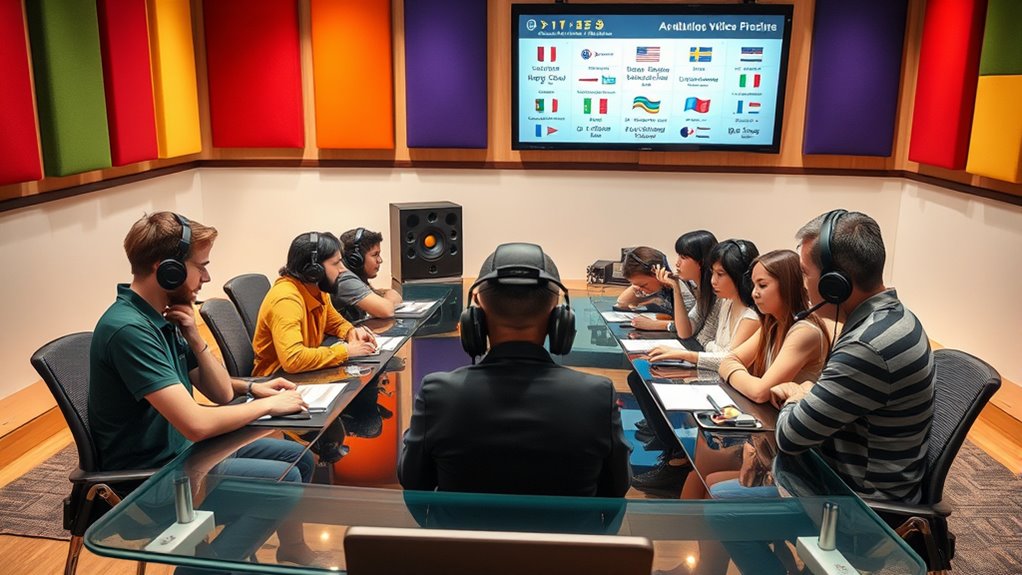

Casting multilingual animation presents challenges like finding talented voice actors who speak target languages fluently while maintaining consistency across versions. Balancing quality within budgets and capturing regional accents adds complexity. To succeed, collaborate with local studios, audition multiple performers, and use recording technology to guarantee authenticity and emotion. Focusing on authentic cultural representation enhances audience connection. Keep exploring further to discover more strategies that can help you overcome these challenges effectively.
Key Takeaways
- Selecting native or near-native voice actors ensures authentic language delivery and cultural accuracy.
- Collaborating with local talent agencies helps access skilled performers and regional dialects.
- Conducting thorough auditions guarantees performance quality and consistent character portrayal across languages.
- Using professional recording environments and technology enhances audio quality and performance precision.
- Balancing budget constraints with talent quality involves strategic partnerships and targeted casting efforts.
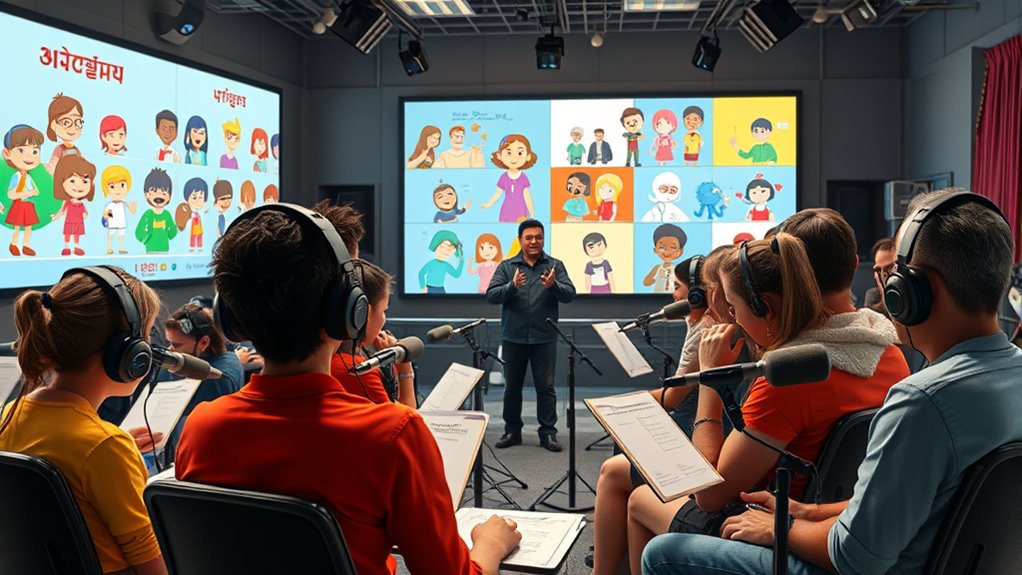
Creating multilingual animation involves more than just translating dialogue; it requires casting voices that authentically represent each language and culture. Voice casting is a critical step in guaranteeing your animation resonates with diverse audiences. When selecting voice actors, it’s essential to find performers who can authentically deliver the tone, emotion, and nuances of each language. This authenticity helps viewers connect with the characters on a deeper level and avoids cultural missteps that can damage credibility. You need to prioritize actors with native or near-native fluency, as well as a genuine understanding of cultural context, to bring characters to life convincingly.
Language localization, in this context, isn’t just about translating words—it’s about adapting dialogue to fit cultural idioms, humor, and speech patterns. Effective voice casting makes this process smoother because the chosen actors can naturally interpret and adapt scripts to suit their language’s unique rhythm and style. When you invest in accurate voice casting, you’re supporting the overall localization effort, making sure that the story’s essence remains intact across languages. This also involves considering regional accents and dialects, which add authenticity and help viewers see characters as relatable and true to their cultural backgrounds.
Effective voice casting enhances cultural adaptation, authenticity, and relatability in multilingual animation.
One of the biggest challenges you’ll face is finding the right talent for each language while maintaining consistency across all versions. Your goal is to assemble a diverse cast that accurately reflects the characters’ backgrounds without sacrificing voice quality or acting skill. Sometimes, this means working with specialized casting agencies or native speakers who can provide insight into regional speech patterns. It’s also crucial to audition multiple candidates and compare their performances to ensure you’re capturing the right tone and emotional depth.
Another challenge is balancing budget constraints with the need for high-quality voice talent. High-caliber actors can be expensive and harder to secure, but cutting corners risks undermining the authenticity of your project. To navigate this, you might explore partnerships with local studios or talent agencies, which can help you access skilled performers at a reasonable cost. Additionally, leveraging technology such as voice recording software and editing tools allows you to fine-tune performances and ensure consistency across multiple languages.
Furthermore, understanding the importance of high-quality audio equipment and recording environments can significantly impact the final voice performances, ensuring clarity and professionalism in each language version.
Ultimately, your success depends on understanding that voice casting and language localization are interdependent. When you select the right voices, you’re not just translating dialogue—you’re translating culture, emotion, and character identity. Investing time and effort into this process ensures your multilingual animation resonates authentically with viewers worldwide, strengthening your story’s impact and reach.

FIFINE Studio Condenser USB Microphone Computer PC Microphone Kit with Adjustable Boom Arm Stand Shock Mount for Instruments Voice Overs Recording Podcasting YouTube Vocal Gaming Streaming-T669
[USB Output] Enables simple setup. USB studio recording microphone kit provides a direct convenient plug-and-play connection to pc…
As an affiliate, we earn on qualifying purchases.
As an affiliate, we earn on qualifying purchases.
Frequently Asked Questions
How Do Cultural Differences Influence Voice Casting Choices?
Cultural differences greatly influence your voice casting choices by emphasizing cultural authenticity, ensuring characters resonate genuinely with local audiences. You need actors who can adapt their language and expressions, highlighting language adaptability. This approach helps your animation stay true to each culture’s nuances, making it more believable and engaging. By selecting voices that reflect cultural identities, you create a more immersive experience, fostering stronger connections between viewers and your animated characters.
What Budget Considerations Are Unique to Multilingual Animation Projects?
Have you considered how multilingual projects impact your budget? You need to factor in cost estimation for voice actors across different languages and translation costs for scripts. These expenses can quickly add up, making it essential to plan carefully. Are you prepared to balance high-quality performances with budget constraints? Prioritize the most critical languages and explore cost-effective translation options to keep your project financially feasible.
How Is Voice Synchronization Maintained Across Multiple Languages?
You guarantee voice synchronization across multiple languages by focusing on lip sync accuracy and audio timing. You work closely with voice actors to match their delivery to the character’s mouth movements, adjusting recordings as needed. Using specialized software, you refine the timing so that dialogue aligns perfectly with animation frames. This process guarantees that each language maintains natural lip movements, preserving the character’s expressiveness and viewer immersion across all versions.
What Legal Issues Arise in International Voice Casting?
You face legal issues like steering copyright laws, which protect original voice recordings and performances, and ensuring talent contracts comply with international regulations. You need to secure rights for voice recordings in each country and draft clear agreements that specify usage, royalties, and rights transfer. Failing to do so can lead to legal disputes, financial penalties, or loss of rights, so it’s vital to consult legal experts familiar with international entertainment law.
How Do Regional Dialects Impact Character Consistency?
Regional dialects can make maintaining character consistency tricky, as each actor’s accent may differ. You need to guarantee accent consistency across all versions to keep characters authentic and recognizable. By providing clear direction on dialects and conducting thorough voice tests, you help actors deliver performances aligned with your vision. This approach minimizes discrepancies, preserves character integrity, and enhances the overall quality of your multilingual animation project.
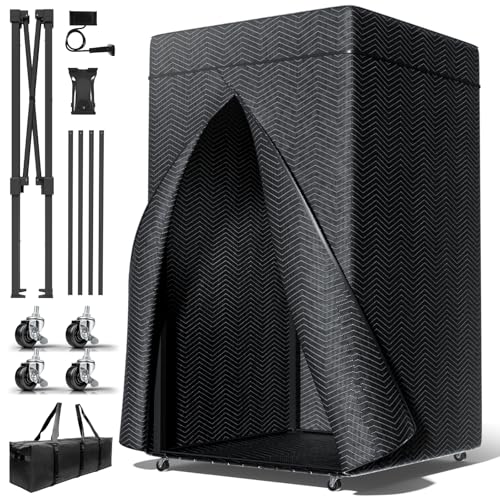
RDCMKL XL Portable Recording Booth, Complete Home Recording Studio Soundproof Vocal Booth, Foldable with Travel Bag for Echo-Free Studio-Quality Sound, Ideal for Voiceovers, Podcasts, and Music
Transform your home studio with our complete home recording studio. This vocal booth offers clear, high-quality audio for…
As an affiliate, we earn on qualifying purchases.
As an affiliate, we earn on qualifying purchases.
Conclusion
Just like a well-orchestrated symphony, casting multilingual animation requires harmony, patience, and the right blend of voices. When you embrace diverse talent and navigate cultural nuances, you create a masterpiece that resonates worldwide—think of it as weaving a vibrant tapestry where each thread adds depth and color. With strategic choices and open minds, you’ll transform challenges into opportunities, ensuring your animation not only speaks many languages but also touches hearts across the globe.

OneOdio Wired Over Ear Headphones Hi-Res Studio Monitor & Mixing DJ Stereo Headsets with 50mm Drivers and 1/4 to 3.5mm Jack for AMP Computer Recording Podcast Keyboard Guitar Laptop – Black
Bass Sound: Enjoy clear sound and superior comfort with the OneOdio Studio Monitor Headphones. Equipped with large 50mm…
As an affiliate, we earn on qualifying purchases.
As an affiliate, we earn on qualifying purchases.
![WavePad Free Audio Editor – Create Music and Sound Tracks with Audio Editing Tools and Effects [Download]](https://m.media-amazon.com/images/I/B1HPw+BmlXS._SL500_.png)
WavePad Free Audio Editor – Create Music and Sound Tracks with Audio Editing Tools and Effects [Download]
Easily edit music and audio tracks with one of the many music editing tools available.
As an affiliate, we earn on qualifying purchases.
As an affiliate, we earn on qualifying purchases.