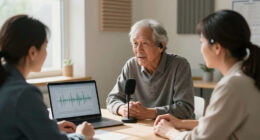
Captioned phones for hearing impaired callers display spoken conversation as text, while amplified phones make sound louder or clearer without captions. I rank the Hamilton CapTel 840i as the best overall captioned option in this lineup, with the CapTel 2400iSPNBT standing out for its large touchscreen and the Panasonic KX-TGM450S for callers who prefer amplified audio and Slow Talk. The main choice is between reading captions, improving sound, or combining easier handling with louder audio. Internet, landline, setup, and accessibility needs can narrow the options quickly. Read on for the full comparison and help matching a phone to your calling habits.

Get everyday helpers delivered free — and shop member deals
- Fast, free delivery on millions of items
- Access to Prime Big Deal Days deals on October 6–7
- Prime Video, Amazon Music and more included
Key Takeaways
Only two picks are captioned phones: the Hamilton CapTel 840i and 2400iSPNBT; the other eight rely on amplified audio or accessibility features rather than speech-to-text captions.
The CapTel 840i is the more conventional captioned-phone choice for large buttons, speakerphone, and an answering machine, while the 2400iSPNBT favors a large touchscreen interface.
Amplification serves a different need from captions: the Panasonic Slow Talk model and Clarity amplified phones may help when hearing speech is difficult, but they do not provide on-screen transcripts.
Corded models suit a fixed calling spot and avoid handset charging, while cordless picks such as the XLC8 and XLC3.4+ bundle make it easier to move around the home.
Feature fit matters more than a long feature list: talk-back numbers, large buttons, extra handsets, and caller ID address different barriers, so buyers should match them to the specific difficulty they face.
| Sonic Alert AMPLIDECT350X Amplified Cordless Phone with Backlit Caller ID & Extra Charging Base |  | Best Cordless Pick | Receiving Volume: Up to 40 dB | Hearing Aid Compatible: Yes (T-Position) | Phonebook Capacity: 50 numbers | VIEW LATEST PRICE | See Our Full Breakdown |
| Hamilton CapTel 840i Captioned Telephone with Large Buttons, Answering Machine and Speakerphone |  | Best Overall | Amplified Volume Gain: Up to 40 dB | Hearing Aid Compatible: Yes | Captioning Service: Free 24/7 US nationwide (registration required) | VIEW LATEST PRICE | See Our Full Breakdown |
| Panasonic KX-TGM450S Amplified Cordless Phone with Slow-Talk (Silver) |  | Best for Powerful Amplification | Amplified Volume: Up to 50 dB | Ringer Volume: Up to 112 dB | Slow-Talk: Yes (real time and voicemail playback) | VIEW LATEST PRICE | See Our Full Breakdown |
| Clarity P300 Amplified Corded Landline Phone for Seniors |  | Best Budget-Friendly Basic | Sound Amplification: Up to 26 dB | Ringer: Adjustable pitch and volume | Connection Type: Corded, standard phone jack | VIEW LATEST PRICE | See Our Full Breakdown |
| Hamilton CapTel 2400iSPNBT Large Touch Screen Captioned Telephone |  | Best Premium Touchscreen | Screen: Large touchscreen with adjustable caption size | Amplification: Up to 40 dB gain | Hearing Aid Compatible: Yes | VIEW LATEST PRICE | See Our Full Breakdown |
| Clarity JV35 Amplified Corded Phone with Talk Back Numbers |  | Best for Low Vision and Hearing Loss Combined | Amplification: Up to 37 decibels | Keypad: Jumbo buttons with Braille | Talk Back Numbers: Yes | VIEW LATEST PRICE | See Our Full Breakdown |
| Clarity XLC8 DECT 6.0 Extra Loud Big Button Amplified Cordless Phone |  | Best Feature-Rich Cordless Pick | Amplification: 50 dB incoming, 15 dB outgoing | Technology: DECT 6.0 cordless | Tone Control Settings: 4 | VIEW LATEST PRICE | See Our Full Breakdown |
| Clarity XLC3.4+ Cordless Phone Bundle with 2 XLC3.6+ Handsets for Severe Hearing Loss |  | Best Multi-Room Bundle | Bundle: XLC3.4+ base with 2 XLC3.6+ handsets | Technology: DECT 6.0 (1.9GHz) | Hearing Aid Compatible: Yes | VIEW LATEST PRICE | See Our Full Breakdown |
| Clarity XL40 Amplified Big Button Corded Phone |  | Best for Noisy Households | Amplification: Up to 43 decibels | Noise Reduction: Digital signal processor | Telephone Type: Corded, single keypad | VIEW LATEST PRICE | See Our Full Breakdown |
| Clarity E814CC Amplified Corded Hearing Impaired Phone for Elderly |  | Best All-in-One Desk Station | Amplification: Up to 40 decibels | Answering Machine: Amplified digital | Expandable Handsets: Up to 4 | VIEW LATEST PRICE | See Our Full Breakdown |
| captioned phones for hearing impaired | Hearing Aid Compatible | Amplification |
|---|---|---|
| Sonic Alert AMPLIDECT350X Ampl | Yes (T-Position) | — |
| Hamilton CapTel 840i Captioned | Yes | — |
| Panasonic KX-TGM450S Amplified | Yes | — |
| Clarity P300 Amplified Corded | — | — |
| Hamilton CapTel 2400iSPNBT Lar | Yes | Up to 40 dB gain |
| Clarity JV35 Amplified Corded | Yes | Up to 37 decibels |
| Clarity XLC8 DECT 6.0 Extra Lo | — | 50 dB incoming, 15 dB outgoing |
| Clarity XLC3.4+ Cordless Phone | Yes | — |
| Clarity XL40 Amplified Big But | — | Up to 43 decibels |
| Clarity E814CC Amplified Corde | — | Up to 40 decibels |
More Details on Our Top Picks
Sonic Alert AMPLIDECT350X Amplified Cordless Phone with Backlit Caller ID & Extra Charging Base
This option stands out for buyers who want amplification without being tethered to a desk. Unlike the corded Hamilton CapTel 840i, the AMPLIDECT350X delivers up to 40 dB of receiving volume on a cordless handset with a genuinely long range — up to 900 feet outdoors — plus a second charging base so a handset is always within reach. The strobe flash and loud ringer mean missed calls become far less likely even when the phone is out of earshot. Compared with the Panasonic KX-TGM450S, amplification is a touch lower at 40 dB versus 50 dB, and there’s no Slow-Talk speech processing, so very fast talkers may still be a challenge. The tradeoff for cordless freedom: the volume and tone controls sit on the earpiece, which takes some getting used to, and there are no captions — this is a hearing-focused phone, not a reading one.
Pros:- Up to 40 dB receiving amplification with T-Position hearing aid compatibility
- Strobe flash and extra-loud ringer make missed calls rare
- Two charging bases and up to 900 ft of outdoor range
- One-touch memory dial buttons and large backlit keys for easy dialing
Cons:- Volume, tone, and amplification controls on the earpiece take time to learn
- No captioning — purely amplification-based, so it lags behind CapTel models for severe loss
Best for: Hearing-impaired buyers who move around the house or yard and want amplified, hearing-aid-friendly calls from multiple rooms
Not ideal for: Anyone who needs to read conversations as text — this phone amplifies sound but offers no captioning of any kind
- Receiving Volume:Up to 40 dB
- Hearing Aid Compatible:Yes (T-Position)
- Phonebook Capacity:50 numbers
- Ringing Volumes:6 adjustable, with strobe flash
- Indoor / Outdoor Range:Up to 164 ft / 900 ft
- Charging Bases:2 included
- Conference Calls:3-way
Our verdict“This model makes the most sense for buyers with mild to moderate hearing loss who value cordless mobility over captioned text.”
Hamilton CapTel 840i Captioned Telephone with Large Buttons, Answering Machine and Speakerphone
For the core promise of this roundup — reading phone conversations in real time — this CapTel model is the strongest all-around choice. Captions appear for both incoming and outgoing calls via a free 24/7 nationwide captioning service, and the captioned answering machine is a genuinely useful touch that amplified-only phones like the Sonic Alert AMPLIDECT350X simply can’t replicate. Combined with up to 40 dB of amplification and hearing aid compatibility, it covers both reading and listening paths. The big tradeoff versus the 2400iSPNBT: buttons and physical keys instead of a large touchscreen, and it must sit at a desk with wired internet. It also requires registration and US residency with certified hearing loss — a hurdle, but one that unlocks the free FCC-supported captioning. This pick makes the most sense for buyers who want captions every day without paying a premium for a touchscreen interface.
Pros:- Real-time captions for both incoming and outgoing calls
- Captioned voicemail on the built-in answering machine
- Up to 40 dB amplification with hearing aid compatibility
- Free 24/7 nationwide captioning service
Cons:- Requires high-speed internet, telephone service, and a fixed desk location
- Captioning service limited to US residents with hearing loss after registration
Best for: US residents with certified hearing loss who want reliable daily captioned calls plus amplified sound in one desk phone
Not ideal for: Households without high-speed internet, or non-US residents — the captioning service won’t function
- Amplified Volume Gain:Up to 40 dB
- Hearing Aid Compatible:Yes
- Captioning Service:Free 24/7 US nationwide (registration required)
- Answering System:Digital, captioned voicemail, 18-minute capacity
- Internet Requirement:High-speed (Ethernet or Wi-Fi)
- Display:Large caption screen with adjustable caption size
- Dimensions:7.5 x 9 x 6.5 inches, 2 pounds
Our verdict“Buyers who want dependable captioned calls, amplified volume, and captioned voicemail at a straightforward feature set will find this the most balanced choice.”
Panasonic KX-TGM450S Amplified Cordless Phone with Slow-Talk (Silver)
When raw volume is the priority, this Panasonic outmuscles the rest of the lineup: 50 dB of voice amplification and a 112 dB ringer, the loudest pairing here. What separates it from the Sonic Alert AMPLIDECT350X is the Slow-Talk feature, which slows down rapid speech in real time and during voicemail playback — a practical fix for one of the most common complaints about amplified phones, where loud-but-fast speech stays unintelligible. Add noise reduction, talking Caller ID, talking keypad, and a red LED visual ringer, and it’s also the most supportive option for buyers with combined hearing and vision challenges. The catch compared with the CapTel models: there are no captions, so conversations still depend entirely on listening ability. Extra handsets for whole-home coverage are sold separately, and multi-handset setups add cost. This model is better suited to moderate hearing loss with some residual listening ability than to profound loss.
Pros:- Class-leading 50 dB voice amplification and 112 dB ringer
- Slow-Talk clarifies fast speech in real time and voicemail playback
- Talking Caller ID, talking keypad, and red LED ringer help low-vision users
- Expandable to 6 handsets with 250-number call blocking
Cons:- Additional handsets sold separately for multi-room coverage
- No captioning, so it depends on usable residual hearing
Best for: Buyers with moderate hearing loss who need maximum volume, slowed speech, and strong visual/vocal aids in a cordless phone
Not ideal for: Buyers with severe-to-profound hearing loss who rely on reading conversations — captions aren’t available on this model
- Amplified Volume:Up to 50 dB
- Ringer Volume:Up to 112 dB
- Slow-Talk:Yes (real time and voicemail playback)
- Display:1.8-inch backlit LCD
- Hearing Aid Compatible:Yes
- Speed Dials:9
- Call Block Capacity:250 numbers
- Expandable Handsets:Up to 6
Our verdict“This is the pick for buyers who hear better when speech is louder and slower, not those who need to read calls as text.”
Clarity P300 Amplified Corded Landline Phone for Seniors
Not everyone needs 50 dB of gain or a captioning subscription — and this Clarity model is the honest, stripped-down answer for that buyer. It amplifies up to 26 dB, covers mild to moderate loss, and plugs into a standard phone jack with no batteries, internet, or registration. That simplicity is its whole appeal compared with the Hamilton CapTel 840i, which requires high-speed internet and US-only service sign-up, or the Panasonic KX-TGM450S, whose advanced features would go unused in a low-tech household. The adjustable ringer pitch is a smart inclusion, since many seniors hear some frequencies better than others. The compromises are real, though: the corded design anchors it to one spot, and 26 dB falls well short for severe loss — the XLC3.4+ bundle or a CapTel model is the better route there. This pick makes the most sense as a first amplified phone or a spare room phone.
Pros:- Plug-and-play setup on a standard phone jack with no batteries
- Adjustable ringer pitch suits different hearing profiles
- Large buttons and simple handset for limited dexterity or vision
- Reliable wired connection with 25-ft line cord included
Cons:- Corded design locks placement to one location
- Amplification tops out at 26 dB, well below cordless rivals
Best for: Seniors with mild to moderate hearing loss who want a simple, plug-in amplified phone with no internet or setup complexity
Not ideal for: Buyers with severe hearing loss — 26 dB of gain won’t close the gap, and captions aren’t offered
- Sound Amplification:Up to 26 dB
- Ringer:Adjustable pitch and volume
- Connection Type:Corded, standard phone jack
- Power Source:Phone line (no batteries required)
- Included Accessories:25-ft telephone line cord, user guide
Our verdict“This is the right choice for a low-cost, low-hassle first step into amplified calling — skip it if hearing loss is severe.”
Hamilton CapTel 2400iSPNBT Large Touch Screen Captioned Telephone
Think of this as the deluxe version of the CapTel 840i: same free 24/7 FCC-certified captioning, same 40 dB amplification and hearing aid compatibility, but presented on a large touchscreen that makes adjusting caption size, tone, and settings far more approachable for users who struggle with physical buttons. It also adds a choice between automatic captions and live-operator assisted captioning, which helps on noisy or technical calls where auto-captioning stumbles. Compared with amplified-only models like the Panasonic KX-TGM450S, the advantage is fundamental: you can read every word, so hearing ability stops being the bottleneck. The downsides mirror the 840i’s — mandatory high-speed internet, electrical power, and registration restricted to US residents with certified hearing loss — and the touchscreen interface may feel less intuitive for seniors who strongly prefer tactile buttons. For buyers who prioritize readability and modern controls, this option stands out as the most refined captioned experience in the lineup.
Pros:- Large touchscreen with adjustable caption size for easy reading
- Choice of automatic or live-operator assisted captions
- Up to 40 dB amplification with hearing aid compatibility
- Free FCC-certified 24/7 captioning with captioned voicemail
Cons:- Requires high-speed internet, electrical power, and US residency with certified hearing loss
- Touchscreen may be harder for button-accustomed seniors than the 840i’s keypad
Best for: US residents with certified hearing loss who want the easiest-to-read caption display and more control over captioning modes
Not ideal for: Seniors who prefer physical buttons — the touchscreen interface may frustrate users uncomfortable with touch controls
- Screen:Large touchscreen with adjustable caption size
- Amplification:Up to 40 dB gain
- Hearing Aid Compatible:Yes
- Caption Modes:Auto captions or assisted with live operator
- Voicemail:Built-in answering machine with captioned voicemail
- Captioning Service:Free, 24/7, US nationwide (registration required)
- Requirements:High-speed internet (Wi-Fi capable), telephone service, electrical power
Our verdict“This is the pick for buyers who want the most readable, most controllable captioned phone available — provided they’re comfortable with a touchscreen.”
Clarity JV35 Amplified Corded Phone with Talk Back Numbers
Where most phones in this roundup address hearing alone, the Clarity JV35 stands out for handling dual sensory loss: every button announces its number back to you as you dial, and the jumbo keypad includes Braille markings. Compared with the Clarity XL40, which offers more amplification (43dB versus 37dB) and noise reduction, the JV35 gives up raw volume but gains talk-back dialing, which matters enormously if the user cannot clearly see the keypad. The 95+ dB ringer and hearing aid compatibility keep it competitive on the hearing side. The tradeoff is simplicity at a cost: single-line operation only, no captioning like the Hamilton CapTel 840i, and four AA batteries to monitor. This pick makes the most sense for buyers whose vision is as much a barrier as their hearing.
Pros:- Talk-back numbers and Braille buttons make dialing possible without sight
- Amplified incoming sound up to 37 decibels with adjustable tone
- Extra loud 95+ dB ringer plus hearing aid compatibility
- Simple corded design that always stays in one predictable place
Cons:- Single-line operation only, so it cannot serve a small office setup
- Requires 4 AA batteries that need periodic replacement
- Lower amplification than the XL40 or XLC8
Best for: Seniors with both hearing and vision loss, including Braille readers, who need guided dialing confidence
Not ideal for: Anyone wanting captions or multi-line support — this phone amplifies speech but displays no text, unlike the CapTel models
- Amplification:Up to 37 decibels
- Keypad:Jumbo buttons with Braille
- Talk Back Numbers:Yes
- Ringer:95+ dB extra loud
- Hearing Aid Compatible:Yes
- Power:Corded electric, 4 AA batteries
- Operation:Single-line
Our verdict“Choose the JV35 when failing eyesight is as big a problem as hearing loss and guided, tactile dialing is the priority.”
Clarity XLC8 DECT 6.0 Extra Loud Big Button Amplified Cordless Phone
The XLC8 is the most versatile amplified phone in this batch, pairing 50dB of incoming amplification — the loudest here — with an unusual Live Slow Talk mode that slows real-time speech and answering machine playback. Compared with the Clarity XLC3.4+ bundle, which targets severe hearing loss with a simpler feature set, the XLC8 adds Bluetooth mobile pairing, a headset/neckloop jack for assistive listening devices, and talking Caller ID. Its red-and-white color scheme is deliberately easy to find, unlike the plain black E814CC. The compromises are real: expansion handsets cost extra, the talking features skip Spanish, and it runs on AA batteries. This model suits buyers who want one device bridging landline and mobile calls at maximum volume.
Pros:- Loudest amplification in this lineup at 50dB incoming, 15dB outgoing
- Bluetooth pairing plus 2.5mm/3.5mm jack for neckloops and headsets
- Live Slow Talk and talking Caller ID help with fast speakers
- Four tone settings and TIA-1083 hearing aid compliance
Cons:- Expansion handsets sold separately
- Talking features limited to English and French
- 130-hour standby on disposable AA batteries
Best for: Users with severe hearing loss who field calls on both a landline and a mobile phone and want maximum amplification
Not ideal for: Buyers on a budget planning a multi-room setup — each additional handset is sold separately, unlike the three-handset XLC3.4+ bundle
- Amplification:50 dB incoming, 15 dB outgoing
- Technology:DECT 6.0 cordless
- Tone Control Settings:4
- Connectivity:Bluetooth, landline, 2.5mm/3.5mm headset jack
- Expandable Handsets:Up to 4 (sold separately)
- Standby Time:130 hours
- Answering System:Digital
Our verdict“The XLC8 is the pick when 40dB phones aren’t loud enough and mobile-call amplification matters as much as landline calls.”
Clarity XLC3.4+ Cordless Phone Bundle with 2 XLC3.6+ Handsets for Severe Hearing Loss
This bundle solves the problem most single-handset options ignore: having a loud, accessible phone in every room without buying pieces separately. Out of the box you get the XLC3.4+ base plus two XLC3.6+ handsets, all hearing aid compatible with talking Caller ID. Compared with the Clarity E814CC, which also supports multiple handsets, this bundle includes them up front and adds dual power battery backup, so calls continue during an outage — a genuine safety factor for elderly users. Against the feature-heavy XLC8, it offers fewer frills: no Bluetooth, no Live Slow Talk. What it trades in features it gains in simplicity and whole-home coverage. This pick makes the most sense for a house where the user moves between rooms and cannot rush to a single phone.
Pros:- Three handsets included, covering multiple rooms out of the box
- Designed specifically for severe hearing loss
- Dual power battery backup keeps service during power outages
- Talking Caller ID announces incoming calls on every handset
Cons:- More expensive than a standard single-handset cordless phone
- Fewer connectivity and convenience features than the XLC8
- Bulkier total footprint with multiple charging bases
Best for: Seniors with severe hearing loss living in multi-room homes who need phones throughout the house
Not ideal for: Tech-comfortable users who want Bluetooth, mobile pairing, or a slow-talk feature — the XLC8 covers those bases
- Bundle:XLC3.4+ base with 2 XLC3.6+ handsets
- Technology:DECT 6.0 (1.9GHz)
- Hearing Aid Compatible:Yes
- Caller ID:Talking Caller ID
- Power Backup:Dual power battery backup
- Designed For:Severe hearing loss
Our verdict“Buy this bundle when whole-home coverage for severe hearing loss matters more than connectivity extras.”
Clarity XL40 Amplified Big Button Corded Phone
The XL40 earns its slot with one differentiator the other Clarity corded models lack: a digital signal processor that strips out background noise, not just boosts volume. In a busy kitchen or a home with a TV always on, that distinction matters more than a few extra decibels. With 43dB of amplification it out-muscles the JV35’s 37dB, though it skips that model’s Braille and talk-back dialing. The reverse-contrast backlit buttons are easier to read than the JV35’s plain white keypad, and the flashing visual ringer plus 3.5mm assistive-listening port round out a well-rounded accessibility package. The main annoyance: the amplifier resets after every call, so the user must re-boost each time — a real friction point for anyone with dexterity or memory challenges.
Pros:- Digital signal processor actively reduces background noise
- 43dB amplification, stronger than the JV35 and E814CC
- Extra-large backlit buttons with high reverse contrast
- Flashing visual ringer and 3.5mm port for assistive devices
Cons:- Amplifier resets to normal volume after each call
- Corded design locks placement near a wall jack
- No Bluetooth or mobile connectivity
Best for: Users with moderate to severe hearing loss in loud households where background noise drowns out conversations
Not ideal for: Users with memory or dexterity issues who would struggle to re-boost the amplifier after every single call
- Amplification:Up to 43 decibels
- Noise Reduction:Digital signal processor
- Telephone Type:Corded, single keypad
- Display:Backlit buttons, reverse contrast
- Ringer:Super loud with flashing visual alert
- Assistive Device Port:3.5mm
- Warranty:One year
Our verdict“The XL40 is the corded pick for noisy environments, provided re-boosting the volume each call won’t frustrate the user.”
Clarity E814CC Amplified Corded Hearing Impaired Phone for Elderly
The E814CC plays a different role than the cordless picks: it’s a fixed command center for a senior’s main living space, combining 40dB amplification, an amplified digital answering machine, and a loud speakerphone in one desk unit. Compared with the Clarity XL40, it matches a senior-friendly experience — jumbo buttons, high-contrast display — while adding the answering machine and speakerphone the XL40 omits, though the XL40’s noise reduction gives it an edge in clarity. The E814CC supports up to four cordless handsets, but unlike the XLC3.4+ bundle, none are included, so costs climb if you expand. There’s no Bluetooth or captioning; buyers wanting text support should look at the Hamilton CapTel 840i instead. This model suits a single-room setup where everything lives in one place.
Pros:- Built-in amplified digital answering machine plays messages loudly and clearly
- 40dB amplification with four tone settings for tuning speech clarity
- Large high-contrast display and jumbo buttons
- Expandable to four cordless handsets for other rooms
Cons:- Additional handsets sold separately and limited to specific compatible models
- Bulky footprint takes up notable desk space
- No Bluetooth or wireless connectivity of any kind
Best for: Elderly users who want one central desk phone with a built-in amplified answering machine and speakerphone
Not ideal for: Buyers needing captions or mobile connectivity — this is amplification only, with no Bluetooth or text display
- Amplification:Up to 40 decibels
- Answering Machine:Amplified digital
- Expandable Handsets:Up to 4
- Tone Settings:4
- Ringer:10 melodies, 6 volume levels
- Keypad:Jumbo buttons, high-contrast display
- Warranty:1 year
Our verdict“The E814CC is the best single-desk solution for seniors who want amplification, an answering machine, and a speakerphone in one box.”

How We Picked
I compared these phones by how directly they address hearing-related calling needs: caption availability, sound amplification and clarity features, button and display legibility, and whether the phone supports hands-free or multi-room use. I also considered the practical setup implied by each design, including corded versus cordless use and whether a model is positioned as a captioning phone or as an amplified landline phone.
The Hamilton CapTel models rank ahead for buyers specifically seeking captions because the rest of the lineup does not list captioning. The 840i takes the overall captioned-phone position for its combination of large buttons, answering machine, and speakerphone; the 2400iSPNBT is a distinct touchscreen alternative. The remaining picks are ranked by the accessibility problem they address, with clear tradeoffs: amplified audio cannot replace captions, and convenience features such as extra handsets do not improve speech-to-text access.
| captioned phones for hearing impaired | Hearing Aid Compatible |
|---|---|
| Sonic Alert AMPLIDECT350X Ampl | Yes (T-Position) |
| Hamilton CapTel 840i Captioned | Yes |
| Panasonic KX-TGM450S Amplified | Yes |
| Clarity P300 Amplified Corded | — |
| Hamilton CapTel 2400iSPNBT Lar | Yes |
| Clarity JV35 Amplified Corded | Yes |
| Clarity XLC8 DECT 6.0 Extra Lo | — |
| Clarity XLC3.4+ Cordless Phone | Yes |
| Clarity XL40 Amplified Big But | — |
| Clarity E814CC Amplified Corde | — |
Factors to Consider When Choosing Captioned Phones For Hearing Impaired
Before choosing a model, decide which part of a phone call is hardest: hearing speech, following rapid conversation, reading small controls, or answering from different rooms. That distinction can prevent a common mismatch—buying a louder phone when captions are needed, or paying for a caption screen when better audio is the main goal.
Captions or louder audio?
Captioning converts the other caller’s speech into text on a display, while amplification raises or adjusts the audio you hear. These features solve related but different problems, and this roundup includes only two models identified as captioned phones. If reading text is easier than following speech by ear, confirm that the exact model provides captions rather than assuming an amplified phone does. If you can understand speech with more volume or slower delivery, amplification may be simpler to use. Some buyers benefit from both audio and visual cues, so check the specific model’s listed capabilities before deciding. Also confirm any service, connectivity, or registration requirements for captioning with the manufacturer before purchase.
Check the connection and home setup
Do not assume every phone works with the same telephone service or internet connection. Captioning phones may have network or service requirements that differ from a standard landline handset, so verify compatibility with your provider and the current product documentation. Corded phones need a convenient permanent location, while cordless models depend on charging bases and usable range around the home. If the phone will sit far from the router or telephone jack, map the setup before buying. Households that rely on a particular service, such as a managed phone line, should confirm compatibility rather than relying on the product title alone. This check can prevent an otherwise suitable accessibility feature from being unusable in the intended room.
Choose controls the caller can read and operate
Large buttons are useful only if their labels and spacing suit the person using them. Think through the whole call: locating a contact, dialing, adjusting sound, answering, and ending a call. A touchscreen can offer a broad display, but it may be less comfortable for someone who prefers raised physical keys. Talk-back number announcements can help confirm dialing without looking closely at each button, although they do not provide captions for the other caller’s words. If vision, dexterity, or memory also affects phone use, prioritize the control style that reduces mistakes in routine tasks. Ask the intended user to try similarly sized controls when possible.
Match the phone style to calling habits
A corded phone works well for a dedicated desk or kitchen spot and does not require charging the handset between calls. A cordless model can be carried from room to room, but the user must return it to a base and keep its batteries ready. Multiple handsets help when calls happen in several rooms; they do not make the audio clearer by themselves. Speakerphone can reduce the need to hold a handset against the ear, though room noise and privacy may become concerns. Consider where calls actually happen and whether the caller usually speaks alone or with other people nearby. The right layout can matter as much as the advertised amplification level.
Treat sound specifications as only part of fit
Amplification figures do not tell the whole story of speech clarity or comfort. Hearing needs vary, and raising volume may not address difficulty distinguishing similar sounds or following a fast speaker. Features such as Slow Talk, tone adjustment, or a compatible assistive listening setup may be more useful for some callers than sheer loudness. Check whether the product documentation describes adjustable listening settings and whether they can be changed during a call. If the phone is for someone with significant or changing hearing needs, a hearing care professional can help assess what kind of audio support is appropriate. Do not rely on a single loudness number as a substitute for that fit.
Plan for maintenance and support
Phones with cordless handsets add batteries and charging routines to the ownership picture, while corded models reduce that upkeep. Captioning features may depend on ongoing service availability, internet access, or account setup, so review those details before choosing a model. Check warranty coverage, replacement handset or battery availability, and the manufacturer’s current support information. An answering machine can help avoid missed messages, but it is useful only if the intended user can hear or access the recorded message comfortably. Family members who assist with setup should consider whether they can help with updates or service changes later. A simpler model may be the better long-term choice if the user prefers fewer setup steps.
Frequently Asked Questions
Which phones in this roundup actually show captions during a call?
The Hamilton CapTel 840i and Hamilton CapTel 2400iSPNBT are the two products in this lineup described as captioned telephones. The Sonic Alert and Clarity models are amplified or accessible phones, but their listed features do not identify them as captioning devices. That difference matters if reading the conversation is the main way the caller follows speech. Before buying either CapTel model, check its current service, connection, and eligibility requirements with the manufacturer. Product availability and service terms can change, so confirm them for your location.
Can I use an amplified phone instead of a captioned phone?
It depends on how the caller best understands speech. An amplified phone can make sound louder or adjust how it is presented, but it does not display spoken words as text unless captioning is specifically listed. If the caller still misses words even at a comfortable volume, captions may address a different need. Some callers prefer audio support and visual text together, so compare the actual features of each model rather than relying on broad labels such as “hearing impaired.” If possible, involve the intended user in the choice.
Do captioned phones require internet access?
Requirements vary by model and captioning service, so there is no safe assumption that every captioned phone works the same way. Check the current setup instructions for the exact CapTel model and confirm whether it needs broadband, a telephone line, or both. Ask the provider whether the home’s existing service and router arrangement are supported. Also consider what happens if the internet or power goes out, since that can affect access to captioning or calling features. Confirming this before purchase can prevent a setup mismatch.
Should I choose a corded phone or a cordless phone for someone with hearing loss?
Choose based on where and how the person makes calls, since corded versus cordless design does not by itself determine sound clarity. A corded model stays ready at one location and avoids handset charging, which can simplify daily use. A cordless handset lets the caller move around and can be more convenient when calls happen in different rooms, but it needs charging and a suitable base location. Multi-handset sets can extend access around the home, though they add equipment to manage. If the caller often forgets to return devices to a charger, a corded phone may be easier to maintain.
What should I check before buying a phone for both hearing and vision difficulties?
Check more than the button size: look at label contrast, display readability, key spacing, and whether the controls are physical or touchscreen. Talk-back dialing can confirm a number aloud, but it does not make incoming conversation easier to understand. A caption display may support speech comprehension, while large keys can help with dialing; these benefits come from different features. Consider whether the user can reach and operate the volume controls without assistance. If possible, have them try the control style in person or review clear product images and manuals before choosing.
Conclusion
For a buyer whose priority is reading speech during calls, I recommend the Hamilton CapTel 840i as the best overall, with its large buttons, speakerphone, and answering machine; choose the CapTel 2400iSPNBT as the premium-style alternative if a large touchscreen is the preferred interface. The Clarity P300 is a straightforward starting point for someone who wants a corded amplified phone, while the Clarity XLC3.4+ bundle suits a household that needs cordless access in more than one room. For buyers seeking value through practical audio support rather than captions, compare the simpler Clarity corded models and the Panasonic Slow Talk option against the needed controls. Match the recommendation to the user’s main barrier: captions for missed words, amplification for quiet speech, and larger or spoken controls for dialing access.
Fall Picks
fall essentials
As an affiliate, we earn on qualifying purchases.