Editorial update log
November 19, 2026:
Deal update: RoundupForge price history now flags ASIN B0FL4VX2SC on amazon.com as below its typical tracked range. RF labels the deal as all_time_low.
Exact pricing remains intentionally gated through the live Grimfaste price module in the article.
Among these medical alert systems for seniors, I’d choose the Medical Guardian MGMini as the best overall for readers who want a compact mobile device, while SecuLife stands out for GPS tracking, fall detection, and two-way calling. For caregivers seeking a home alert rather than a monitored emergency service, the CallToU multi-receiver systems offer a simpler way to summon help nearby. The main tradeoffs are whether you need professional emergency response or a caregiver notification, and whether you prefer landline, Wi-Fi, or mobile coverage. Button range, fall detection, setup demands, and ongoing service needs also vary widely. Read on for the full breakdown and guidance on matching a system to the senior’s home, habits, and support network.

Get everyday helpers delivered free with Prime
- Fast, free delivery on millions of items
- Prime Video, Amazon Music and more included
- Member-only deals all year
Key Takeaways
- The lineup splits into two different kinds of help: mobile or home medical alert devices aim to contact emergency services or a response service, while many CallToU caregiver pagers notify someone within the home.
- Mobile coverage adds freedom but brings more setup questions: the MGMini and SecuLife are better suited to people who leave home, while landline and Wi-Fi models depend on the connection available where they are used.
- Fall detection is not a substitute for pressing the button: Nomo and SecuLife list fall detection, but buyers should check how it works, whether it is automatic, and whether it requires a service plan.
- Multiple buttons help only when receivers are placed within reach: two-button systems can cover more than one room or person, but receiver coverage and caregiver availability matter more than button count alone.
- Color variants are not separate capability tiers: the silver and rose gold MGMini listings are differentiated by finish, so choose between them by preference rather than assuming a feature difference.
| App-Controlled Medical Alert System for Seniors with Panic Buttons, Waterproof Wristband, Receiver, and LED Display |  | Best for Caregiver App Alerts | Brand and model: PRNBRH CF106 | Included items: Two panic buttons, one wristband remote, one receiver | Wi-Fi compatibility: 2.4 GHz only | VIEW LATEST PRICE | See Our Full Breakdown |
| Wi-Fi Caregiver Alert System with Pendant, Wrist Button, and Receiver |  | Best for Longer-Range Home Alerts | Included components: One waterproof call button, one SOS watch button, one receiver | Button-to-receiver connection: 433 MHz | App connectivity: 2.4 GHz Wi-Fi | VIEW LATEST PRICE | See Our Full Breakdown |
| 911 Help Now Medical Alert Pendant with Direct 911 Calling |  | Best for Direct 911 Calling | Connectivity: 4G cellular | Emergency calling: Direct 911 call | Activation: Press and hold the SOS button for 3 seconds | VIEW LATEST PRICE | See Our Full Breakdown |
| Medical Alert System with Waterproof Wrist and Necklace Buttons |  | Best for Landline-Based Family Contact | Included buttons: One wrist button and one necklace button | Maximum number of buttons: Eight | Wireless range: Stated range of 70,000 square feet | VIEW LATEST PRICE | See Our Full Breakdown |
| Nomo Medical Alert System with Fall Detection for Seniors |  | Best for Fall Detection and Caregiver Monitoring | Brand and model: Nomo Smart Care KIT1001R-01 | Included components: Smart Hub, two Satellite range extenders, wearable Tags | Connectivity: Wireless Wi-Fi | VIEW LATEST PRICE | See Our Full Breakdown |
| Senior HELP Dialer HD700 Medical Alert System with Two Panic Buttons |  | Best No-Monthly-Fee Landline Pick | Model: HD700 | Included panic buttons: 1 wrist button and 1 necklace button | Emergency contacts: Calls up to 3 phone numbers | VIEW LATEST PRICE | See Our Full Breakdown |
| Freedom Alert Landline Personal Emergency Response System |  | Best for Simple Home Use | Connection: Landline phone service required | Communication: Two-way voice | Intended use: Home emergency response | VIEW LATEST PRICE | See Our Full Breakdown |
| Medical Guardian MGMini Medical Alert Device for Seniors, Silver |  | Best for Mobile Monitoring | Color: Silver | Connectivity: Cellular with Wi-Fi backup | Emergency support: 24/7 monitoring subscription required | VIEW LATEST PRICE | See Our Full Breakdown |
| Medical Guardian MGMini Medical Alert Device for Seniors, Rose Gold |  | Best Style Choice for Mobile Monitoring | Color: Rose gold | Connectivity: Cellular with Wi-Fi backup | Emergency features: SOS button, two-way speaker, and 24/7 monitoring | VIEW LATEST PRICE | See Our Full Breakdown |
| CallToU Wireless Caregiver Pager and Intercom System, 2 Receivers, 2 Call Buttons, and 2 Walkie-Talkies | 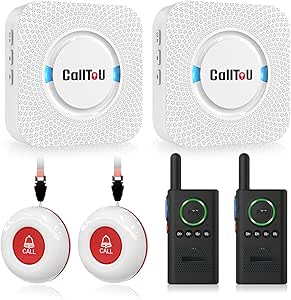 | Best for Multi-Room Caregiver Communication | Included components: 2 receivers, 2 call buttons, and 2 walkie-talkies | Maximum stated range: 500 feet in open areas | Recommended indoor range: Less than 300 feet | VIEW LATEST PRICE | See Our Full Breakdown |
| PRNBRH Wi-Fi Medical Alert System with 2 Call Buttons, Receiver, and LED Display |  | Best for Shared Caregiver Alerts | Model: CF106 | Included components: 2 panic buttons and 1 receiver | Connectivity: 2.4 GHz Wi-Fi and wireless signal | VIEW LATEST PRICE | See Our Full Breakdown |
| SecuLife Medical Alert Pendant with Fall Detection, GPS Tracking, and 2-Way Calling |  | Best for Mobile Fall Detection | Connectivity: 4G LTE cellular | Features: Automatic fall detection, SOS alerts, two-way calling, GPS tracking, and geofencing | Water resistance: IP67 | VIEW LATEST PRICE | See Our Full Breakdown |
| CallToU Wireless Caregiver Pager System with 3 Receivers and 2 Call Buttons |  | Best for Whole-Home Receiver Coverage | Model: CC01 2-3 | Included components: 3 receivers and 2 call buttons | Maximum range: 150 meters (500+ feet in open areas) | VIEW LATEST PRICE | See Our Full Breakdown |
| CallToU Wireless Caregiver Pager with Call Button |  | Best Simple Single-User Setup | Included components: 1 receiver and 1 call button | Wireless range: 500+ feet in open areas | Ringtones: 55 | VIEW LATEST PRICE | See Our Full Breakdown |
| CallToU Wireless Caregiver Pager with 2 Call Buttons and 2 Receivers |  | Best for Two Alert Points | Model: CC01 2-2 | Included components: 2 call buttons and 2 receivers | Wireless range: 500+ feet in open areas | VIEW LATEST PRICE | See Our Full Breakdown |
More Details on Our Top Picks
App-Controlled Medical Alert System for Seniors with Panic Buttons, Waterproof Wristband, Receiver, and LED Display
I’d choose the PRNBRH CF106 for households where someone nearby can respond to alerts and caregivers also want phone notifications. Its receiver sounds a 110 dB alarm and identifies the activated button on a numbered display, while the app adds another way to receive alerts. Compared with the Wi-Fi Caregiver Alert System with Pendant, Wrist Button, and Receiver, this model has a shorter stated range but gives caregivers a clear button number at the receiver. The wristband remote is waterproof, which makes it useful for wearing in the shower; that protection does not extend to the other buttons or receiver. Basic pager use has no monthly fee, but SMS notifications require a subscription, and the app requires 2.4 GHz Wi-Fi. This is a home alert setup, not professional monitoring or automatic fall detection.
Pros:- Receiver combines a loud alarm with a numbered display to identify which button was pressed.
- Waterproof wristband remote can be worn in the shower.
- App alerts complement the receiver alarm.
- Basic pager use does not require a monthly fee.
Cons:- App connectivity is limited to 2.4 GHz Wi-Fi.
- SMS notifications require a subscription.
- Only the wrist-worn remote is waterproof; the system does not provide medical monitoring or fall detection.
Best for: Seniors who want an at-home receiver alarm and caregivers who can use 2.4 GHz Wi-Fi and want app alerts.
Not ideal for: People who need cellular coverage away from home, automatic fall detection, professional monitoring, or SMS alerts without a subscription.
- Brand and model:PRNBRH CF106
- Included items:Two panic buttons, one wristband remote, one receiver
- Wi-Fi compatibility:2.4 GHz only
- Wireless range:Up to 300 feet
- Alarm volume:110 dB
- Water resistance:Wrist-worn remote is waterproof
- Monthly fee:No fee for basic pager use; SMS notifications require a subscription
Our verdict“Choose the PRNBRH CF106 if you want a loud, identifying home receiver with app alerts and can accept its Wi-Fi and subscription limits.”
Wi-Fi Caregiver Alert System with Pendant, Wrist Button, and Receiver
The Wi-Fi Caregiver Alert System suits a home where the wearer may move between rooms and wants both a wearable button and an audible receiver. Its buttons communicate with the receiver over 433 MHz, with a stated open-area range of up to 656 feet, while 2.4 GHz Wi-Fi sends app push notifications. That longer stated range gives it an advantage over the PRNBRH CF106, whose listed range is 300 feet, though walls and interference can shorten either system’s reach. The receiver’s adjustable volume helps households set an alert level that fits the room. Push notifications do not require a fee, but phone calls and SMS may require a paid app service. I would not treat it as a replacement for professional monitoring: it has no medical monitoring or automatic fall detection.
Pros:- Includes both a waterproof call button and an SOS watch button.
- Receiver sounds locally while app push notifications alert a smartphone.
- Adjustable receiver volume accommodates different rooms and hearing needs.
- Stated open-area range is longer than the PRNBRH CF106’s listed range.
Cons:- Phone calls and SMS may require a paid app service.
- The open-area range can be reduced by walls, interference, and placement.
- No medical monitoring or automatic fall detection is included.
Best for: Seniors and caregivers seeking a home-based pendant-and-wrist alert setup with receiver sound and app push notifications.
Not ideal for: People who need automatic fall detection, a monitoring center, cellular coverage outside the home, or guaranteed range through walls.
- Included components:One waterproof call button, one SOS watch button, one receiver
- Button-to-receiver connection:433 MHz
- App connectivity:2.4 GHz Wi-Fi
- Maximum stated range:656 feet (200 m) in open areas
- Receiver volume:Adjustable
- App notification fee:No fee for push notifications
- Limitations:No medical monitoring or automatic fall detection
Our verdict“Pick this system for a larger home where local receiver alerts and app push notifications matter more than professional monitoring or fall detection.”
911 Help Now Medical Alert Pendant with Direct 911 Calling
For someone who wants an emergency device to call 911 directly, rather than alert a household receiver or route through a monitoring service, this pendant takes a distinct approach. Holding its SOS button for three seconds starts a 4G cellular call; a built-in microphone and speaker let the wearer speak with the dispatcher. That makes it more suited to urgent communication than the AtsCares.com Medical Alert System with Waterproof Wrist and Necklace Buttons, which calls up to three chosen numbers over a home phone line. The pendant is compact and includes a lanyard, clothing clip, cover, and batteries, with voice prompts and a battery indicator to support use. Its tradeoff is dependence on compatible cellular service: without coverage, a call may not connect. The AAA batteries also need replacement, and the device does not include a monitoring center or fall detection.
Pros:- Calls 911 directly without an intermediary monitoring center.
- Built-in microphone and speaker allow conversation with a dispatcher.
- Press-and-hold activation and a protective cover help reduce accidental calls.
- Includes three AAA batteries, a lanyard, and a clothing clip.
Cons:- Requires compatible 4G cellular service to place calls.
- AAA batteries may need replacement.
- Does not provide automatic fall detection or a monitoring center.
Best for: Seniors who want a portable button that directly calls 911 and are comfortable relying on compatible cellular coverage.
Not ideal for: People who need caregiver-first call routing, automatic fall detection, monitoring-center support, or dependable operation where cellular service is unavailable.
- Connectivity:4G cellular
- Emergency calling:Direct 911 call
- Activation:Press and hold the SOS button for 3 seconds
- Communication:Built-in microphone and speaker
- Power source:Three AAA alkaline batteries; included
- Dimensions and weight:2.8 × 1.75 × 0.6 inches; 2.4 oz
- Included accessories:Protective cover, removable neck lanyard, clothing clip, user guide
- Monthly fees:None
Our verdict“Choose this pendant if direct 911 calling is your priority and you have compatible cellular coverage where it will be used.”
Medical Alert System with Waterproof Wrist and Necklace Buttons
This AtsCares.com system is a practical fit for a senior who wants to alert family or other chosen contacts using a home phone line. Pressing either waterproof wearable button prompts the base to call up to three numbers in sequence and play a personalized message, so the alert goes to people selected by the household rather than directly to 911. That contrasts with the 911 Help Now Medical Alert Pendant, which calls emergency services but depends on cellular coverage. The included wrist and necklace buttons offer different wearing options, and the system supports up to eight buttons. Its stated range is large, though actual performance can vary with the home setup. The central limitation is the home phone line requirement; cellphone use needs an optional Bluetooth adapter. It also lacks stated fall detection and professional monitoring.
Pros:- Includes both waterproof wrist and necklace buttons.
- Base can call up to three phone numbers in sequence.
- Personalized emergency message can explain the alert to chosen contacts.
- Supports up to eight buttons for additional household users or locations.
Cons:- Requires a home phone line unless paired with an optional Bluetooth adapter.
- The stated wireless range may vary with layout and setup.
- No fall detection or professional monitoring is specified.
Best for: Seniors with a home phone line who want waterproof wrist and necklace buttons to contact several chosen people.
Not ideal for: People without a landline who do not want an optional adapter, or those seeking direct 911 calling, automatic fall detection, or monitoring-center service.
- Included buttons:One wrist button and one necklace button
- Maximum number of buttons:Eight
- Wireless range:Stated range of 70,000 square feet
- Emergency calling:Calls up to three phone numbers sequentially
- Emergency message:Personalized message playback
- Phone connection:Home phone line; optional Bluetooth adapter for cellphone use
- Power and batteries:Battery powered; two AAA batteries included
- Base unit dimensions:6.5 × 4.5 × 1.7 inches
Our verdict“Choose this system if a landline and a family-contact call sequence suit your household better than direct 911 or monitored service.”
Nomo Medical Alert System with Fall Detection for Seniors
The Nomo Smart Care system stands apart from the button-and-receiver options here by combining wearable Tags with fall detection, a panic button, and two-way voice. Its Smart Hub and two Satellites are designed to extend coverage around the home, while caregiver alerts and emergency response are available through a 30-day monitoring trial. Compared with the PRNBRH CF106, which focuses on button-triggered alerts and a receiver, Nomo offers a more involved monitoring setup for households concerned about falls. That added support comes with an ongoing monthly subscription after the trial, and the system depends on Wi-Fi and AC power, with battery backup. Wireless DIY installation avoids special wiring, but this is not a fee-free pager that works independently of internet access. I’d favor it when fall detection and caregiver response outweigh subscription cost and connectivity dependence.
Pros:- Wearable Tags combine fall detection with a panic button.
- Two-way voice communication is available through the Smart Hub.
- Two Satellite units are included to extend system coverage.
- Wireless DIY installation requires no landline or special wiring.
Cons:- A monthly subscription applies after the 30-day monitoring trial.
- System operation depends on Wi-Fi connectivity.
- Hub uses AC power, so battery backup is relevant during power interruptions.
Best for: Seniors at risk of falls whose caregivers want wearable alerts, two-way voice, and a monitoring service after setup.
Not ideal for: People seeking a no-subscription pager, a system independent of Wi-Fi, or a portable cellular alert device for use away from home.
- Brand and model:Nomo Smart Care KIT1001R-01
- Included components:Smart Hub, two Satellite range extenders, wearable Tags
- Connectivity:Wireless Wi-Fi
- Alert types:Fall detection and emergency alerts
- Communication:Two-way voice
- Power:AC power with battery backup
- Monitoring and subscription:30-day monitoring trial; monthly subscription afterward
- Installation:Wireless DIY
Our verdict“Choose Nomo if fall detection and caregiver monitoring matter more than avoiding a subscription or Wi-Fi dependence.”
Senior HELP Dialer HD700 Medical Alert System with Two Panic Buttons
I’d choose the HELP Dialer HD700 for someone who wants a wearable alert that calls familiar people rather than a paid monitoring center. When a button is pressed, it calls up to three contacts and plays a personalized message; the two-way speakerphone then lets the user talk with whoever answers. The included wrist and necklace buttons offer a choice of how to wear the alert, and the water-resistant wrist button can stay on during bathing.
Unlike the Medical Guardian MGMini, this system has no monitoring subscription and does not add GPS location assistance for outings. Its tradeoff is dependence on a standard landline, plus a stated 100-foot range that may limit movement around a larger home. I’d skip it if the user has no landline or needs professional monitoring.
Pros:- Calls up to three chosen contacts and plays a personalized emergency message.
- Two-way speakerphone allows conversation after someone answers.
- Includes both wrist and necklace panic buttons.
- Water-resistant wrist button is suitable for showering and bathing.
Cons:- Requires a standard phone line; cell phone compatibility needs a separately sold Bluetooth adapter.
- The stated 100-foot range may not suit larger homes or extensive outdoor use.
- Calls personal contacts rather than providing a stated 24/7 professional monitoring service.
Best for: Seniors with a standard home phone line who want to alert family or friends without a monthly monitoring fee.
Not ideal for: People without a landline, those who want a monitoring center or GPS support, and users who need coverage beyond the stated 100-foot range.
- Model:HD700
- Included panic buttons:1 wrist button and 1 necklace button
- Emergency contacts:Calls up to 3 phone numbers
- Communication:Built-in speakerphone with two-way communication
- Stated range:100 feet
- Phone connection:Standard phone line
- Wrist button:Water-resistant; suitable for showering and bathing
- Monthly fees and contract:None
- Cell phone compatibility:Requires a separately sold Bluetooth adapter
Our verdict“Choose the HD700 if a landline-connected call to trusted contacts matters more than mobile coverage or professional monitoring.”
Freedom Alert Landline Personal Emergency Response System
The Freedom Alert is a straightforward choice for someone who wants to speak directly with emergency personnel, family, or friends from home without a monthly operating fee. Its two-way voice communication gives responders a chance to hear what is happening, while the pendant can be worn or kept on its mount for easy access in a familiar room. A 24-hour battery backup also provides a stated reserve during a power interruption.
Compared with the HELP Dialer HD700, Freedom Alert is described as connecting with emergency services as well as loved ones, but it requires an existing landline and is designed for home use. It does not offer the MGMini’s stated GPS assistance for trips away. I’d favor it for a landline household seeking a simple indoor setup, not for someone who needs an alert that follows them outdoors.
Pros:- Two-way voice communication connects the user with emergency personnel or loved ones.
- Pendant can be worn or kept on its mount for convenient access.
- Rechargeable design avoids routine battery replacement.
- Includes a stated 24-hour battery backup.
Cons:- Requires existing landline phone service.
- Designed for home use rather than protection while out and about.
- Does not list GPS location assistance or a 24/7 monitoring subscription.
Best for: Landline households looking for a rechargeable home alert with two-way conversation and no routine operating fee.
Not ideal for: Seniors who lack landline service or want mobile protection and location assistance when away from home.
- Connection:Landline phone service required
- Communication:Two-way voice
- Intended use:Home emergency response
- Pendant:Wearable or mountable
- Power:Rechargeable
- Battery backup:24 hours
- Monthly operating fees:None
Our verdict“Pick Freedom Alert for landline-based, two-way help at home, but choose a cellular device such as the MGMini for outings.”
Medical Guardian MGMini Medical Alert Device for Seniors, Silver
I rank the Medical Guardian MGMini highest for seniors who need a monitored alert beyond the home. Its cellular connection, Wi-Fi backup, GPS location assistance, and two-way speaker connect the wearer with a 24/7 monitoring team after service activation. A lanyard and belt clip give the user two ways to carry it, while app or portal access adds hourly location updates and step counts for people who want family-facing activity information.
That coverage comes with a required subscription, unlike the no-monthly-fee HELP Dialer HD700 and Freedom Alert, which depend on a landline. The MGMini’s battery lasts up to three days per charge, but it still needs regular charging and may run down sooner depending on signal conditions. I’d choose this over a home-only pager for mobile support, but not for someone unwilling to activate paid monitoring.
Pros:- Connects to a 24/7 monitoring team through a two-way speaker after activation.
- Cellular connectivity with Wi-Fi backup supports use beyond a landline-based home system.
- GPS assistance and hourly location updates can help with locating the wearer.
- Includes both a lanyard and belt clip, with up to three days of stated battery life.
Cons:- Monitoring must be activated and requires a subscription.
- Battery life can vary with cellular signal strength and network conditions.
- Only one device can be active per member at a time.
Best for: Seniors who leave home regularly and want cellular access to a 24/7 monitoring team with GPS location assistance.
Not ideal for: People seeking a no-subscription landline system, or anyone unlikely to keep a rechargeable wearable charged.
- Color:Silver
- Connectivity:Cellular with Wi-Fi backup
- Emergency support:24/7 monitoring subscription required
- Communication:Two-way speaker
- Location assistance:GPS; hourly location updates available
- Activity tracking:Step counting
- Battery life:Up to 3 days per charge
- Recharge time:4 hours
- Included wear options:Clip and lanyard
Our verdict“Choose the MGMini if monitored, location-assisted coverage away from home is worth the subscription and charging routine.”
Medical Guardian MGMini Medical Alert Device for Seniors, Rose Gold
The rose gold MGMini provides the same practical case for mobile monitored protection as the silver MGMini: a cellular device with Wi-Fi backup, GPS assistance, hourly location updates, a two-way speaker, and access to a 24/7 monitoring team after activation. The included lanyard and belt clip make it possible to wear or attach the device, and step counting adds a basic activity measure through the app or online portal. I’d treat its rose gold finish as a personal style preference, not a reason to expect different alert capabilities from the silver version.
Like the silver MGMini, this is a more mobile option than the landline-based Freedom Alert, but it requires a paid monitoring subscription and regular charging. The battery is stated to last up to 72 hours, and optional fall detection costs extra. Choose this color if it suits the wearer better; skip it if a no-fee system or built-in fall detection is the priority.
Pros:- Cellular connectivity and Wi-Fi backup support use away from landline service.
- Two-way speaker connects with a 24/7 monitoring team after activation.
- GPS location assistance, hourly updates, and step counting are available.
- Includes a lanyard, belt clip, and charging accessories.
Cons:- Requires activation and a paid monitoring subscription after the trial period.
- Fall detection is an optional add-on rather than an included feature.
- Battery life may vary with network conditions and cellular signal strength.
Best for: Seniors who want cellular monitored coverage and prefer a rose gold wearable with lanyard and clip options.
Not ideal for: Buyers focused on avoiding subscription fees, needing included fall detection, or seeking a device with no charging routine.
- Color:Rose gold
- Connectivity:Cellular with Wi-Fi backup
- Emergency features:SOS button, two-way speaker, and 24/7 monitoring
- Location features:GPS assistance and hourly location updates
- Additional feature:Step counting
- Battery life:Up to 72 hours
- Recharge time:4 hours
- Monitoring requirement:Subscription required; activate before use
- Fall detection:Optional add-on
Our verdict“Choose the rose gold MGMini for mobile monitoring if you prefer its finish and accept subscription service, charging, and optional fall detection.”
CallToU Wireless Caregiver Pager and Intercom System, 2 Receivers, 2 Call Buttons, and 2 Walkie-Talkies
The CallToU caregiver pager and intercom is better suited to a household care setup than to a conventional medical alert service. Two call buttons and two plug-in receivers let a senior request help from more than one location, while the included two-way radios give caregivers a way to talk with one another. Buttons can be worn on a neck strap or mounted, and adjustable volume with multiple ringtone choices can help tailor alerts to the household.
Compared with the Medical Guardian MGMini, CallToU does not list GPS or a 24/7 professional monitoring team; it alerts nearby household caregivers instead. Its stated range reaches 500 feet outdoors, but indoor walls and obstacles can reduce it, and the receivers need outlets. I’d pick this for an attended home with caregivers nearby, not as a substitute for monitored emergency response.
Pros:- Two call buttons and two receivers provide multiple alert points around the home.
- Included two-way radios support communication between caregivers.
- Buttons can be worn with a neck strap or mounted.
- Receivers offer 55 ringtone options and five volume levels.
Cons:- Receivers must be plugged into electrical outlets.
- Indoor obstacles can reduce the stated open-area range.
- Does not list a 24/7 professional monitoring service or GPS location assistance.
Best for: Seniors living with nearby caregivers who need call buttons in multiple spots and local communication between helpers.
Not ideal for: People who live alone, need a professional monitoring center or GPS support, or need alerts to work away from home.
- Included components:2 receivers, 2 call buttons, and 2 walkie-talkies
- Maximum stated range:500 feet in open areas
- Recommended indoor range:Less than 300 feet
- Ringtones:55 options
- Volume:5 levels, 0–110 dB
- Power:Battery-powered; receivers plug into outlets
- Water and dust protection:Receivers and call buttons described as waterproof and dustproof
- Mounting:Wall mount or door mount
Our verdict“Choose CallToU for local alerts and caregiver coordination in an occupied home, not for monitored or out-of-home protection.”
PRNBRH Wi-Fi Medical Alert System with 2 Call Buttons, Receiver, and LED Display
The PRNBRH suits households that want alerts in two places at once: a 110 dB receiver alarm sounds locally, while the app can notify caregivers through Tuya Smart or Smart Life. Its numbered LED display identifies which button was pressed, a useful distinction when two people or rooms share the setup. The wireless link reaches up to 300 feet and can keep operating during internet outages, unlike a system that relies only on app connectivity. Compared with the CallToU Wireless Caregiver Pager with 2 Call Buttons and 2 Receivers, this model adds smartphone sharing and an identifying display, but offers fewer receivers and a shorter stated range. It is a home alert pager, not a GPS-enabled service: SMS alerts require a subscription, and Wi-Fi is limited to 2.4 GHz.
Pros:- Combines a loud local receiver alarm with smartphone app notifications.
- Numbered LED display helps caregivers distinguish which button was pressed.
- Wireless signal can reach up to 300 feet and is described as working during internet outages.
- App device sharing lets multiple caregivers receive alerts.
Cons:- SMS notifications require a subscription.
- Supports 2.4 GHz Wi-Fi only.
- The 300-foot range may not cover larger homes or outdoor areas.
Best for: Families who want multiple caregivers to receive app alerts while a loud receiver remains available at home.
Not ideal for: Seniors who need GPS tracking, automatic fall detection, cellular coverage, or a system that works with 5 GHz Wi-Fi.
- Model:CF106
- Included components:2 panic buttons and 1 receiver
- Connectivity:2.4 GHz Wi-Fi and wireless signal
- Maximum range:300 feet
- Alarm volume:110 dB
- Display:1–6 LED number display
- App compatibility:Tuya Smart and Smart Life
- Monthly fee:No fee for pager use; SMS notifications require a subscription
Our verdict“Choose the PRNBRH if shared smartphone alerts and a clear in-home receiver matter more than GPS or wearable fall detection.”
SecuLife Medical Alert Pendant with Fall Detection, GPS Tracking, and 2-Way Calling
For a senior who leaves home regularly, the SecuLife offers a different kind of protection from the room-based CallToU Wireless Caregiver Pager with 3 Receivers and 2 Call Buttons. Its 4G LTE connection, GPS tracking, and geofencing can help selected contacts locate the wearer, while automatic fall detection and two-way calling add a response path when pressing SOS may be difficult. The IP67 design is intended for everyday wear, including in the shower. That portability comes with an ongoing service requirement: a monthly subscription is required, unlike the CallToU pager’s local alert setup. Battery expectations also need care; the description advertises up to six days with 24-hour tracking, while the specs list an average of five. This pendant makes more sense for out-of-home coverage than for caregivers who only need an alert inside the house.
Pros:- Automatic fall detection can alert preselected contacts when the wearer cannot press SOS.
- GPS tracking, geofencing, and location history support remote location checks.
- Two-way calling allows direct communication through the pendant.
- IP67 water resistance is intended to support everyday wear, including in the shower.
Cons:- A monthly subscription is required for service.
- Battery life is listed as an average of five days despite an advertised maximum of six days.
- Unlike the CallToU home pagers, it depends on cellular service and regular charging.
Best for: Seniors who spend time away from home and need GPS location, fall detection, and two-way contact with preselected people.
Not ideal for: People seeking a no-subscription, room-to-room home pager or those unwilling to charge a wearable every several days.
- Connectivity:4G LTE cellular
- Features:Automatic fall detection, SOS alerts, two-way calling, GPS tracking, and geofencing
- Water resistance:IP67
- Battery capacity:1000 mAh
- Advertised battery life:Up to 6 days with 24-hour interval tracking
- Average battery life:5 days
- Location history:1 year
- Subscription:Required; $20 per month
Our verdict“Pick the SecuLife for a senior who needs mobile location and fall-alert features and accepts a subscription and frequent charging.”
CallToU Wireless Caregiver Pager System with 3 Receivers and 2 Call Buttons
The CallToU CC01 2-3 is built around a simple household need: making a button press audible in several rooms. Its three plug-in receivers and two call buttons give it broader indoor alert placement than the one-receiver CallToU Wireless Caregiver Pager with Call Button. Five volume levels, up to 110 dB, and 55 ringtone choices let households tune the alert to the room and the listener. Buttons can be worn on a neck strap or mounted, and the system is described as waterproof and dustproof. Unlike the SecuLife pendant, this pager does not provide GPS, fall detection, or two-way calling; it is for summoning a nearby caregiver, not contacting help while away from home. Its stated 500-plus-foot reach applies to open areas, and every receiver needs an outlet.
Pros:- Three receivers can spread alerts across more rooms than the single-receiver CallToU model.
- Two call buttons support more than one user or alert location.
- Five volume levels and 55 ringtone options allow alert customization.
- Buttons can be worn or mounted and are described as waterproof and dustproof.
Cons:- All three receivers need electrical outlets.
- The 500-plus-foot range is specified for open areas, not typical indoor conditions.
- It alerts nearby caregivers but does not provide GPS, fall detection, or two-way calling.
Best for: Households that need a button press heard in several rooms and want two call buttons for different locations or users.
Not ideal for: Seniors who live alone and need remote monitoring, GPS location, automatic fall detection, or alerts beyond the home.
- Model:CC01 2-3
- Included components:3 receivers and 2 call buttons
- Maximum range:150 meters (500+ feet in open areas)
- Ringtones:55
- Volume levels:5
- Volume range:0–110 dB
- Receiver power:Plug-in
- Waterproof and dustproof:Yes
- Warranty:1 year
Our verdict“Choose this CallToU set when you need the widest receiver coverage inside a home and do not need mobile or monitored-service features.”
CallToU Wireless Caregiver Pager with Call Button
This one-button CallToU is the simplest fit here for a senior who mainly needs to summon a caregiver from one room. The wearable or mountable call button gives the user a choice of neck strap, bracket, or adhesive placement, while the plug-in receiver offers five volume settings and 55 ringtones. Compared with the CallToU Wireless Caregiver Pager with 2 Call Buttons and 2 Receivers, this set is easier to place when only one person and one alert point need coverage, but it does not provide a second button or receiver for another room. Its 500-plus-foot range is stated for open areas, so walls and layout may limit practical reach. The receiver must stay near an outlet, and this is a local caregiver pager rather than a GPS, fall-detection, or emergency-response service.
Pros:- One call button can be worn as a pendant or mounted in a convenient location.
- Receiver offers 55 ringtone options and five adjustable volume levels up to 110 dB.
- Waterproof and dustproof button suits common household placement, including near a bathroom.
- Small receiver can be moved to another outlet as the caregiver’s location changes.
Cons:- Only one receiver and one call button are included, limiting coverage compared with the two-button, two-receiver CallToU set.
- Receiver requires an electrical outlet.
- The stated 500-plus-foot range applies to open areas and may be shorter indoors.
Best for: A senior living with a caregiver nearby who needs one straightforward call button and one receiver.
Not ideal for: Multi-room households, multiple users, or seniors who need fall detection, GPS tracking, or alerts sent to distant contacts.
- Included components:1 receiver and 1 call button
- Wireless range:500+ feet in open areas
- Ringtones:55
- Volume levels:5, adjustable from 0 to 110 dB
- Receiver power:Plug-in
- Call button battery:1 12V alkaline battery required
- Waterproof and dustproof:Yes
- Mounting options:Neck strap, bracket, or double-sided sticker
- Product dimensions:1.97 × 1.97 × 1.97 inches
Our verdict“Choose this set for a single user who needs an uncomplicated in-home call button and does not need multi-room coverage.”
CallToU Wireless Caregiver Pager with 2 Call Buttons and 2 Receivers
This CallToU package balances coverage and simplicity: two buttons and two receivers suit a household that needs alerts in two locations without placing three receivers around the home. The buttons can be worn or mounted, making it easier to keep one within reach and put another near a bed or bathroom. Its five volume levels and 55 ringtone choices also provide more adjustment than the basic CallToU Wireless Caregiver Pager with Call Button, which includes only one button and receiver. The tradeoff is that both receivers need outlets, and the advertised 500-plus-foot range applies to open areas. As with the other local CallToU pagers, it helps summon someone nearby but does not offer GPS, automatic fall detection, or direct emergency-service calling. Choose it over the three-receiver version when two alert locations are enough.
Pros:- Two buttons and two receivers cover more than one user or area.
- Buttons can be worn with a neck strap or mounted with the included bracket or adhesive.
- Five volume levels reach up to 110 dB, with 55 ringtone choices.
- Buttons are described as waterproof and dustproof.
Cons:- Both receivers require electrical outlets.
- The 500-plus-foot range is specified for open areas and may be reduced indoors.
- Unlike the three-receiver CallToU set, it may not reach a caregiver across a larger multi-room home.
Best for: Seniors and caregivers who want two call locations and two receiver locations, but do not need three-room receiver coverage.
Not ideal for: People who need a wearable cellular alert, remote caregiver notifications, fall detection, or a receiver-free setup.
- Model:CC01 2-2
- Included components:2 call buttons and 2 receivers
- Wireless range:500+ feet in open areas
- Ringtones:55
- Volume levels:5
- Maximum volume:110 dB
- Power:Battery-powered call buttons; receivers plug into an outlet
- Batteries:2 included 12V alkaline batteries
- Warranty:1 year
Our verdict“Pick this version when two alert points and two receiver locations cover the home without requiring the larger three-receiver bundle.”

How We Picked
I compared these systems by the kind of help they provide, how a senior activates it, and what has to be in place for an alert to reach someone. The ranking gives priority to clear emergency pathways, mobility for users who leave home, usable button options, and practical features such as two-way calling or fall detection. I also weighed setup and connection requirements: a system tied to a landline or home Wi-Fi may suit a stable home routine, while a mobile device has a different coverage and charging burden.
I ranked options with broader emergency use and clearer potential for independent living ahead of caregiver pagers intended mainly for nearby assistance. Among similar models, I favored useful distinctions over accessory counts: an extra button or receiver can help with room coverage, but it does not turn a local alert into professional monitoring. Product names and listed features do not establish response times, network coverage, fall-detection accuracy, or service terms, so I treat those as items buyers should verify before purchase.
Factors to Consider When Choosing Medical Alert Systems For Seniors
Before choosing a device, I’d start with the actual help needed: emergency response from outside the home, a call to family, or a signal to a caregiver in another room. Those needs can sound similar but lead to different products. These checks help prevent a common mismatch between a device’s advertised alert and the support someone expects to receive.
Decide Who Receives the Alert
Ask what happens after the button is pressed: does the system call an emergency response center, dial 911 directly, contact chosen family members, or ring a receiver nearby? Those are not interchangeable paths. A caregiver pager can work well when a helper is present in the home, but it may not help if the senior is alone or the caregiver is away. A direct-911 device may be a better fit for someone who wants a straightforward emergency call, while a monitored service can provide a different kind of assistance. Before buying, confirm every contact step and decide who is expected to answer.
Match the Connection to the Home and Routine
Landline, Wi-Fi, and mobile systems have different dependencies, so check the actual home setup rather than choosing by convenience alone. A landline model may suit someone who stays home and has reliable phone service; Wi-Fi models require a working network and may be affected by outages or router changes. A mobile pendant can travel with the user, but its usefulness depends on cellular coverage and regular charging. Ask whether the device works outside the home and what happens during a power or internet interruption. Buyers often mistake wireless buttons for fully independent mobile coverage; the button’s connection to its receiver is not the same as access to help away from home.
Treat Fall Detection as Backup, Not a Guarantee
Automatic fall detection can add a safety layer when someone cannot press a button, but it should not be treated as a promise that every fall will be identified. Movement, how a device is worn, and the type of fall can affect detection. Check whether the feature is included, requires a separate service, and connects to a person who can respond. A wearable button should remain the main way to request help when the user is able to press it. If falls are a concern, ask the seller how alerts are handled and discuss the plan with the person’s clinician or caregiver.
Check Range, Placement, and Who Will Wear Each Button
For a home system, think through where the senior spends time and where a receiver can be heard. Button range claims may depend on walls, floors, and interference, so a large home or outdoor area may need a different arrangement from a compact apartment. Multiple call buttons are useful when they can be placed at likely points of need or worn by different people; they add little if they are left on a shelf. Confirm whether buttons are waterproof enough for the intended location, especially near a bath or sink. A practical placement plan is more useful than buying the largest bundle by default.
Plan for Charging, Testing, and Service Terms
Reliability depends on routine care as well as hardware. Find out how often a mobile device needs charging, how the low-battery warning works, and how to test an alert without triggering an emergency response. Confirm whether any monitoring, cellular access, or fall-detection function needs a paid plan, and read the cancellation and replacement terms before committing. A device that is easy to wear and charge is more likely to be available when needed. For a senior with memory or dexterity challenges, involve the caregiver in setup and choose a routine that does not depend on remembering complicated steps.
Frequently Asked Questions
Is a caregiver pager the same as a professionally monitored medical alert system?
No. A caregiver pager typically sends a signal to one or more receivers nearby, so it depends on a caregiver being within range and able to respond. A professionally monitored system is intended to connect the user with a response service, though the exact process depends on the plan. A direct-911 pendant has yet another pathway. I’d confirm the alert destination before buying, especially if the senior is often home alone.
Should I choose a landline, Wi-Fi, or mobile medical alert device?
Choose based on where the senior needs help and which connections are dependable there. A landline or Wi-Fi system may suit someone who mostly stays home, but each relies on its corresponding service and may not travel with the user. A mobile device can provide more flexibility outside the home, subject to coverage and battery life. Check whether the model works indoors and outdoors where the senior actually goes, rather than assuming mobile means coverage everywhere.
Can fall detection replace wearing and pressing the help button?
No. Fall detection is a backup feature, not a guarantee that a fall will be recognized or that help will arrive without delay. The user should wear the device as instructed and press its button when able. Before relying on automatic alerts, ask whether detection requires a service plan and what response follows an alert. If the person is unlikely to wear a pendant consistently, comfort and daily wear habits deserve as much attention as the detection feature.
How can I tell whether a home system will reach every room?
Look for the stated range, then ask how it was measured and whether walls, floors, and outdoor areas affect it. A receiver may sound adequate on paper but perform differently in a multi-level home or a property with thick walls. Place the base receiver where it can be heard, and consider testing the button from the rooms and locations where the senior spends time. If the system cannot be tested in the real home before the return period ends, check the seller’s return and support terms first.
What should I verify before buying a system advertised with 911 calling?
Confirm whether pressing the button calls 911 directly, contacts a monitoring center that can dispatch emergency services, or calls a list of personal contacts. Ask what location information is shared and whether the device works when the user is away from home. Also check whether the call depends on a landline, Wi-Fi, cellular service, or a subscription. These details affect who answers and what information they receive, so the product label alone is not enough to judge the emergency pathway.
Conclusion
My best overall pick is the Medical Guardian MGMini for seniors who want a compact mobile option, with the silver and rose gold listings offering a finish choice rather than different stated functions. For a feature-rich mobile alternative, SecuLife is the best fit for buyers seeking listed GPS tracking, fall detection, and two-way calling, provided its service and coverage terms fit their needs. I’d call the CallToU pager systems the best value for households that need a local caregiver alert, not a replacement for professional monitoring. For beginners, a straightforward home button-and-receiver setup may be easier to manage than a mobile device with charging and coverage considerations; confirm the alert destination before choosing. For a landline household, compare the Freedom Alert with the Senior HELP Dialer; for direct 911 calling, review the 911 Help Now pendant; and for fall-detection features, compare Nomo with SecuLife. Pick the system whose alert reaches the right person, through a connection the senior can use consistently.