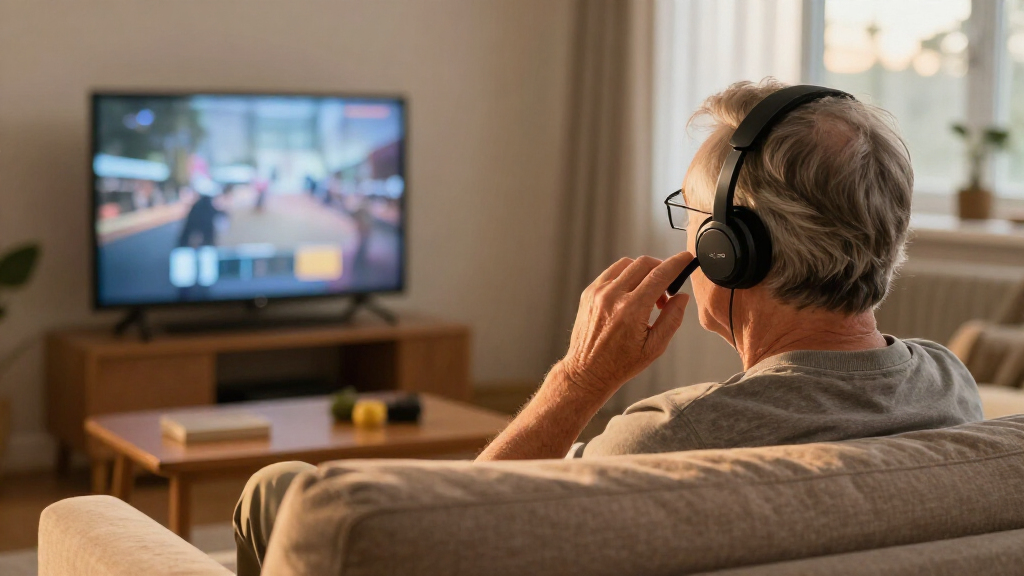
The best TV listening systems for hearing impaired viewers bring dialogue closer without forcing everyone in the room to turn up the television. I rank the TV Ears Original Wireless TV Listening System, Model 11681 as the best overall starting point, while the ChairSpeaker CS3 stands out for people who prefer sound near their seat instead of headphones. For shared listening, the SIMOLIO Dual 2.4 GHz Wireless TV Headphones offer a different kind of flexibility. The main tradeoffs are headphones versus a personal speaker, ease of setup versus connection options, and whether you need one listener or several. Read on for the full comparison, the selection criteria, and advice for matching a system to your room and hearing needs.

Get everyday helpers delivered free with Prime
- Fast, free delivery on millions of items
- Prime Video, Amazon Music and more included
- Member-only deals all year
Complete the kit


Key Takeaways
- The lineup divides into two practical formats: headphones keep sound private and close to the ears, while personal TV speakers let listeners avoid wearing a headset.
- TV Ears Model 11681 is the overall pick because the roundup prioritizes a dedicated TV-listening setup, while Bluetooth options may suit viewers who also want to connect other devices.
- SIMOLIO’s dual-headphone system addresses shared listening more directly than single-headset kits, but a second listener should check the included equipment and compatibility before buying.
- Charging docks and spare batteries matter for daily routines: they reduce interruptions, though a dock-based system still needs a convenient place near the television.
- Connection compatibility can outweigh extra features: confirm the TV’s available audio output and whether the system supports it before choosing among analog, digital, or Bluetooth-based options.
| Swiitech CH-211 Wireless TV Headphones with Charging Dock |  | Best for Long Listening Sessions | Style: Over-ear | Connectivity: Wireless; Bluetooth, optical, AUX, and RCA | Bluetooth version: 5.3 | VIEW LATEST PRICE | See Our Full Breakdown |
| TV Ears Original Wireless TV Listening System, Model 11681 |  | Best for Speech-Focused Listening | Model: 11681 | Connectivity: Optical and analog | Maximum volume: 120 dB | VIEW LATEST PRICE | See Our Full Breakdown |
| ANTOANE TTA Wireless TV Headphones with Transmitter Charging Base, Bluetooth 5.4, Black |  | Best for TV and Personal-Device Flexibility | Model: SK-K2 (AT-TV006-BL003) | Bluetooth: Version 5.4 | TV audio inputs: Optical, AUX, or RCA | VIEW LATEST PRICE | See Our Full Breakdown |
| SIMOLIO Dual 2.4 GHz Wireless TV Headphones with Spare Battery |  | Best for Personalized Sound Controls | Wireless technology: 2.4 GHz FHSS | Wireless range: Up to 100 feet | Audio connections: Optical, RCA, 3.5 mm AUX | VIEW LATEST PRICE | See Our Full Breakdown |
| SEREONIC Portable Wireless TV Speaker for Hearing Assistance |  | Best for Shared-Room Listening | Audio output mode: Stereo | Mounting type: Tabletop | Audio latency: 12 milliseconds | VIEW LATEST PRICE | See Our Full Breakdown |
| TV Ears Bluetooth TV Listening System for Seniors and People with Hearing Loss |  | Best for Speech-Focused Under-Chin Listening | Fit: Under-the-chin, in-ear | Modes: TV Ears mode and Bluetooth mode | Compatible devices: Television, smartphone, tablet, laptop, and other Bluetooth-enabled devices | VIEW LATEST PRICE | See Our Full Breakdown |
| ChairSpeaker CS3 Wireless TV Speaker for Clearer Dialogue |  | Best for Near-Ear Speaker Listening | Model: CS3 | Wireless range: Up to 33 feet with direct line of sight | Connections: RCA and digital optical | VIEW LATEST PRICE | See Our Full Breakdown |
| SIMOLIO SM-823D Pro Wireless TV Headphones for Seniors |  | Best for Fine-Tuning Headphone Sound | Wireless technology: 2.4 GHz FHSS | Transmission range: Up to 164 feet | Battery life: Up to 14 hours | VIEW LATEST PRICE | See Our Full Breakdown |
| Wireless TV Speaker for Seniors with Bluetooth |  | Best for Long-Running Speaker Playback | Wireless connection: 2.4 GHz RF | Wireless range: Up to 30 m (98 ft) in open areas | Bluetooth: Version 6.0 | VIEW LATEST PRICE | See Our Full Breakdown |
| SIMOLIO 621D Wireless TV Speaker for Seniors and Hard of Hearing |  | Best for Speaker-and-Headset Flexibility | Wireless technology: 2.4 GHz FHSS | Maximum range: 100 feet | Battery life: Up to 8 hours | VIEW LATEST PRICE | See Our Full Breakdown |
| OHAYO Wireless TV Headphones with Transmitter Charging Dock |  | Best for Low-Latency, Flexible Setup | Model: BH128A | TV connections: Optical, RCA, and 3.5 mm | Wireless technology: Bluetooth 5.3 | VIEW LATEST PRICE | See Our Full Breakdown |
| SIMOLIO SM-824D1 Wireless TV Headphones for Seniors |  | Best for Dialogue Customization | Model: SM-824D1 | Wireless technology: 2.4 GHz FHSS | Range: Up to 164 ft | VIEW LATEST PRICE | See Our Full Breakdown |
| LEVN Wireless TV Headphones with Transmitter and Charging Base |  | Best for Long Listening Sessions | Bluetooth: 5.2 | Audio connections: Optical, 3.5 mm AUX, RCA, and Bluetooth | Audio latency: <40 ms | VIEW LATEST PRICE | See Our Full Breakdown |
| SIMOLIO Wireless TV Speaker for Seniors |  | Best for Shared Listening Without Headphones | Audio output: Stereo | EQ modes: Dialogue, Standard, and 7.1CH Surround Sound | TV connections: Optical, RCA, or AUX; HDMI ARC requires a separate converter | VIEW LATEST PRICE | See Our Full Breakdown |
| TV Ears Original Analog Wireless Headset System |  | Best for Simple Analog TV Setups | Model: 11641 | Wireless connection: RF transmitter | TV compatibility: RCA or 3.5 mm audio output | VIEW LATEST PRICE | See Our Full Breakdown |
| TV listening systems for hearing impaired | Battery life | Wireless range |
|---|---|---|
| Swiitech CH-211 Wireless TV He | Up to 45 hours | Up to 100 ft (30 m) |
| TV Ears Original Wireless TV L | — | — |
| ANTOANE TTA Wireless TV Headph | Up to a week per charge | Up to 100 ft |
| SIMOLIO Dual 2.4 GHz Wireless | — | Up to 100 feet |
| SEREONIC Portable Wireless TV | — | Up to 100 feet |
| TV Ears Bluetooth TV Listening | — | — |
| ChairSpeaker CS3 Wireless TV S | — | Up to 33 feet with direct line of sight |
| SIMOLIO SM-823D Pro Wireless T | Up to 14 hours | — |
| Wireless TV Speaker for Senior | Up to 24 hours | Up to 30 m (98 ft) in open areas |
| SIMOLIO 621D Wireless TV Speak | Up to 8 hours | — |
| OHAYO Wireless TV Headphones w | Up to 30 hours | Up to 100 ft (30 m) |
| SIMOLIO SM-824D1 Wireless TV H | About 14 hours per charge | — |
| LEVN Wireless TV Headphones wi | Up to 65 hours | Up to 30 m (100 ft) |
| SIMOLIO Wireless TV Speaker fo | Up to 8 hours | — |
| TV Ears Original Analog Wirele | Up to 4 hours | — |
More Details on Our Top Picks
Swiitech CH-211 Wireless TV Headphones with Charging Dock
The Swiitech CH-211 suits viewers who want private TV audio without frequent charging. Its stated up to 45-hour battery life and dock make it a stronger fit for long stretches of daily listening than the SEREONIC portable speaker, which runs for up to eight hours per charge. Optical, AUX, and RCA inputs also give it more ways to connect to a TV than a Bluetooth-only setup, while under-40-ms latency helps dialogue stay aligned with faces on screen. The tradeoff is that this is a personal over-ear headset, not a room speaker for shared listening. Bluetooth is only useful when the TV supports it, and the listed connection choices and comfort features do not include the speech-focused controls offered by the SIMOLIO dual headset.
Pros:- Up to 45 hours of stated battery life reduces charging interruptions.
- Optical, AUX, RCA, and Bluetooth connectivity suit a range of compatible TVs and devices.
- Under-40-ms latency helps keep speech synchronized with on-screen movement.
- Lightweight over-ear design has soft, breathable earcups and an adjustable headband.
Cons:- Bluetooth connection depends on the TV supporting Bluetooth when wired outputs are unavailable.
- Personal headphones do not let other people in the room listen through a speaker.
- The listed features do not include adjustable tone or left/right balance controls.
Best for: Viewers who use headphones for long daily TV sessions and want a charging dock plus several wired TV connection options.
Not ideal for: Households that want TV audio shared aloud, or buyers whose TV lacks the listed wired outputs and does not support Bluetooth.
- Style:Over-ear
- Connectivity:Wireless; Bluetooth, optical, AUX, and RCA
- Bluetooth version:5.3
- Audio latency:Less than 40 ms
- Wireless range:Up to 100 ft (30 m)
- Battery life:Up to 45 hours
- Charging:Charging dock
- Warranty:1 year
Our verdict“Choose the Swiitech CH-211 for long, private listening with flexible TV connections; skip it if you need shared room sound or tailored balance controls.”
TV Ears Original Wireless TV Listening System, Model 11681
The TV Ears Original, Model 11681, is the most speech-centered choice in this group: its voice clarifying technology is designed to bring dialogue forward while reducing background noise. That gives it a different purpose from the Swiitech CH-211, which emphasizes long battery life and broad connection options rather than a stated speech-processing feature. Optical and analog inputs help it work with both newer and older TVs, and the plug-in setup needs no pairing, apps, or Wi-Fi—a useful contrast with systems that depend on Bluetooth setup. One transmitter can support multiple headsets, which suits two listeners who want private audio. The tradeoff is less detail about range and battery runtime than several alternatives, and its stated maximum volume of 120 dB calls for care with listening levels.
Pros:- Voice clarifying technology emphasizes speech and reduces background noise.
- Optical and analog connections support modern and older TVs with compatible outputs.
- Setup does not require pairing, apps, or Wi-Fi.
- One transmitter can support multiple headsets.
Cons:- A maximum volume of 120 dB means users should take care to choose safe listening levels.
- The supplied product details do not state wireless range or battery runtime.
- Compared with the SIMOLIO dual headset, no tone or left/right balance adjustment is listed.
Best for: Viewers who mainly struggle to follow dialogue and want a straightforward optical or analog system that can serve multiple headsets.
Not ideal for: Buyers who need a published long battery runtime, a stated wireless range, or extensive personal tone and balance controls.
- Model:11681
- Connectivity:Optical and analog
- Maximum volume:120 dB
- Battery:Rechargeable NiMH
- Battery weight:19 g
- Included components:Headset and charging station
- Color:Black
Our verdict“Pick TV Ears Original when speech emphasis and simple setup matter more than detailed battery and range specifications.”
ANTOANE TTA Wireless TV Headphones with Transmitter Charging Base, Bluetooth 5.4, Black
The ANTOANE TTA SK-K2 is the most versatile pick for someone who switches between TV listening and audio from a phone, tablet, or laptop. Its transmitter accepts optical, AUX, or RCA TV audio, while Bluetooth 5.4 handles compatible personal devices. That broader use case sets it apart from the TV Ears Original, which focuses on TV listening through its transmitter and speech-clarifying system rather than direct Bluetooth connections to personal devices. Under-40-ms latency and a stated range of up to 100 feet suit watching from another room, and the charging base keeps storage and charging together. The claimed battery life of up to a week is appealing, but no hour count is supplied, so it is harder to compare directly with the Swiitech CH-211’s stated 45 hours. Optical setup may also require the TV’s audio format to be set to PCM.
Pros:- Optical, AUX, and RCA inputs cover common TV audio outputs.
- Bluetooth 5.4 supports direct connections to compatible phones, tablets, and laptops.
- Under-40-ms latency is intended to keep TV audio close to picture timing.
- Charging base and stated range of up to 100 feet suit flexible at-home listening.
Cons:- Only one active connection is supported at a time.
- Optical connections may require setting the TV audio format to PCM.
- Battery life is described as up to a week, without a specific hour figure for comparison.
Best for: Viewers who want one over-ear headset for a compatible TV and Bluetooth audio from a phone, tablet, or laptop.
Not ideal for: Buyers who need multiple sources active at once, a clearly stated battery runtime in hours, or a system with no possible PCM setup adjustment.
- Model:SK-K2 (AT-TV006-BL003)
- Bluetooth:Version 5.4
- TV audio inputs:Optical, AUX, or RCA
- Latency:Under 40 ms
- Wireless range:Up to 100 ft
- Battery life:Up to a week per charge
- Fit:Over-ear
- Warranty:18 months
Our verdict“Choose the ANTOANE TTA if you want TV and Bluetooth-device flexibility in one headset, provided you are comfortable switching between sources.”
SIMOLIO Dual 2.4 GHz Wireless TV Headphones with Spare Battery
The SIMOLIO Dual is the best fit here for listeners who need more than a volume adjustment. Treble, normal, and bass modes, left/right balance adjustment, voice enhancement, and noise reduction let users shape the sound around their hearing needs. That makes it more adjustable than the Swiitech CH-211, whose listed controls are limited to volume. The spare battery is another practical difference: one battery can stay in the charging base while the other is in use, avoiding the need to pause listening for a recharge. Optical, RCA, and AUX connections cover common TV outputs, though optical use requires PCM audio. This headset has specific compatibility cautions: the supplied description says it is not suitable for pacemaker carriers or people with severe hearing loss, so those users should skip it and seek qualified guidance.
Pros:- Treble, normal, and bass settings provide more sound tailoring than basic volume control.
- Left/right balance adjustment can accommodate different hearing levels between ears.
- A spare battery can stay charged in the base while the other is in use.
- Optical, RCA, and 3.5 mm AUX connections support several TV output types.
Cons:- The supplied product information says it is not suitable for pacemaker carriers or people with severe hearing loss.
- Optical connections require the TV audio format to be set to PCM.
- A compatible, working TV audio output is required.
Best for: Listeners who benefit from tone and left/right balance adjustments and want a spare battery ready for continued TV use.
Not ideal for: People with a pacemaker or severe hearing loss, and buyers whose TV lacks a working compatible audio output or whose optical setup cannot use PCM.
- Wireless technology:2.4 GHz FHSS
- Wireless range:Up to 100 feet
- Audio connections:Optical, RCA, 3.5 mm AUX
- Sound modes:Mono or stereo
- Tone settings:Treble, normal, bass
- Listening adjustments:Voice enhancement, noise reduction, balance adjustment, personal sound amplifier
- Included:Spare battery, memory foam ear tips, ear loops
- Optical audio requirement:TV audio format must be set to PCM
Our verdict“Choose the SIMOLIO Dual for its adjustable sound and battery swap convenience, but follow its stated health and compatibility cautions.”
SEREONIC Portable Wireless TV Speaker for Hearing Assistance
The SEREONIC portable speaker is the only pick in this group that brings TV sound closer without putting headphones on the listener. Its tabletop speaker can sit beside a chair or sofa, letting one person hear more clearly while the TV’s own volume stays lower for others. That makes it a better match for shared-room listening than the personal headsets from TV Ears or the Swiitech CH-211. A stated 12-millisecond latency helps keep dialogue close to the picture, and RF transmission avoids Bluetooth or Wi-Fi setup. The speaker accepts RCA, 3.5 mm, or optical audio, but its base still needs a wired connection to the TV; HDMI requires a separately sold converter. Its up-to-eight-hour battery runtime is also shorter than the CH-211’s stated 45 hours, and the speaker is not water resistant.
Pros:- Portable tabletop speaker places TV audio closer to the listener.
- RCA, 3.5 mm auxiliary, and optical connections support common TV outputs.
- RF transmission works without Wi-Fi or Bluetooth.
- Stated 12-millisecond latency helps keep audio synchronized with the screen.
Cons:- The base must connect to the TV with an audio cable.
- An HDMI connection requires a separately sold converter.
- Up to eight hours of battery operation is shorter than the Swiitech CH-211’s stated runtime, and the speaker is not water resistant.
Best for: Viewers who want TV dialogue brought closer to their seat without wearing headphones or raising the television’s volume for everyone.
Not ideal for: Listeners who need private audio, all-day battery runtime, or a setup that connects directly through HDMI without a separate converter.
- Audio output mode:Stereo
- Mounting type:Tabletop
- Audio latency:12 milliseconds
- Wireless technology:Radio frequency (RF)
- Wireless range:Up to 100 feet
- Audio output:Up to 95 dB
- Battery operation:Up to 8 hours
- TV connections:RCA, 3.5 mm auxiliary, or optical audio
- Audio compatibility:Dolby Digital and PCM
Our verdict“Pick the SEREONIC when you want personal, nearby TV sound from a speaker rather than a headset, and can manage its wired base and shorter battery runtime.”
TV Ears Bluetooth TV Listening System for Seniors and People with Hearing Loss
For listeners who prefer an under-the-chin headset to a full over-ear design, this TV Ears model pairs speech emphasis with adjustable-angle ear tips. Its Voice Clarifying Technology is intended to make dialogue stand out against background sound, while a separate Bluetooth mode lets the headset work with compatible phones, tablets, and laptops. Compared with the SIMOLIO SM-823D Pro, it offers a lighter, simpler listening format rather than the broader tone, balance, and ambient-sound controls of over-ear headphones. The main limitation is the TV connection: TV Ears mode requires the TV Ears LINK, including for TVs without Bluetooth. It also lacks a stated battery-life figure, so buyers cannot plan listening sessions around a published runtime. I’d choose it for focused speech listening, not maximum adjustability.
Pros:- Voice Clarifying Technology is designed to bring speech forward and reduce background noise.
- Separate TV Ears and Bluetooth modes support TV listening and compatible personal devices.
- Adjustable-angle ear tips and a lightweight under-the-chin fit offer an alternative to over-ear headphones.
- TV Ears LINK can support up to six TV Ears headsets.
Cons:- TV Ears mode requires the separate TV Ears LINK for TV connection.
- Battery life is not specified in the provided product information.
- The under-the-chin form may not suit listeners who prefer over-ear headphones or a tabletop speaker.
Best for: TV viewers who prefer lightweight under-the-chin earbuds, need speech emphasis, and already have or plan to use the TV Ears LINK.
Not ideal for: People who want a complete TV transmitter in the box, need published battery-runtime guidance, or prefer over-ear headphones with detailed balance and tone controls.
- Fit:Under-the-chin, in-ear
- Modes:TV Ears mode and Bluetooth mode
- Compatible devices:Television, smartphone, tablet, laptop, and other Bluetooth-enabled devices
- TV connection:TV Ears LINK required for TV Ears mode
- Maximum volume:Up to 120 dB
- Battery:NiMH; battery weight 19 g
- Supported headsets:Up to 6 with TV Ears LINK
- Color:Black
Our verdict“Choose this headset if you want lightweight, speech-focused under-the-chin listening and can provide the TV Ears LINK; skip it if you need a complete kit or a stated runtime.”
ChairSpeaker CS3 Wireless TV Speaker for Clearer Dialogue
The CS3 is for someone who wants clearer TV dialogue without wearing headphones: its flexible neck positions a speaker beside the chair, directing sound toward one listener rather than filling the room. Voice enhancement aims to make speech easier to follow without asking everyone else to accept a higher TV volume. Unlike the SIMOLIO 621D, it does not offer a private-listening headset or Bluetooth streaming; its appeal is a straightforward near-ear speaker with included RCA and optical connections. The tradeoff is its infrared link: the transmitter needs a direct line of sight, and the stated range tops out at 33 feet. Furniture or a person blocking that path can interrupt the connection. I’d favor it for a fixed chair with a clear view of the transmitter, rather than for moving around the room.
Pros:- Near-ear speaker directs sound toward the listener without raising the room’s TV volume.
- Voice enhancement is designed to improve dialogue intelligibility.
- Includes RCA and digital optical cables for connection to many TVs.
- Flexible neck can be positioned beside a recliner or sofa.
Cons:- Infrared transmission requires a direct line of sight to the transmitter.
- Wireless range is limited to up to 33 feet.
- Does not provide the Bluetooth and included private-listening headset options found on the SIMOLIO 621D.
Best for: A viewer who stays in one recliner or beside one sofa spot, dislikes wearing headphones, and wants dialogue directed close to the ear.
Not ideal for: Listeners who move between rooms, need a long-range connection through obstacles, or want Bluetooth and private headphone listening in the same device.
- Model:CS3
- Wireless range:Up to 33 feet with direct line of sight
- Connections:RCA and digital optical
- Output:5 watts
- Power source:Corded electric
- Special features:Voice enhancing, near-ear sound
- Material and color:ABS plastic, black
- Included components:Speakers, cables, and base unit
Our verdict“Pick the CS3 if you want a near-ear speaker beside a fixed seat and can keep a clear line of sight to its transmitter.”
SIMOLIO SM-823D Pro Wireless TV Headphones for Seniors
Among these five picks, the SM-823D Pro gives listeners the most specified control over how TV audio reaches them: tone and left/right balance adjustments join voice highlighting, noise reduction, and mono or stereo modes. That makes it a stronger fit for people who need to tailor sound than the TV Ears Bluetooth headset, which focuses on a lightweight under-the-chin fit and speech clarification. Its 2.4 GHz system supports optical, RCA, and 3.5 mm connections, with a stated range of up to 164 feet and up to 14 hours of listening per charge. Ambient sound mode can help keep nearby conversation audible, while optical bypass allows a soundbar or receiver to play alongside the headphones. The tradeoffs are the stated pacemaker warning and the fact that soundbar bypass works only over optical. This is the control-oriented headphone choice, not the simplest setup.
Pros:- Tone and left/right balance controls allow more personal audio adjustment.
- Voice highlighting, noise reduction, and mono/stereo options support different listening needs.
- Up to 164 feet of stated range and up to 14 hours of listening per charge.
- Ambient sound mode and optical bypass add flexibility around conversation and shared audio.
Cons:- The product information says it is not recommended for people with pacemakers.
- Soundbar or receiver bypass is available only through an optical connection.
- More sound controls may make setup less straightforward than the TV Ears Bluetooth headset.
Best for: TV viewers who want to adjust tone and left/right balance, switch between mono and stereo, and listen for extended sessions away from the transmitter.
Not ideal for: People with pacemakers, anyone who needs soundbar bypass through a non-optical connection, or listeners who prefer a simple speaker rather than headphones.
- Wireless technology:2.4 GHz FHSS
- Transmission range:Up to 164 feet
- Battery life:Up to 14 hours
- Battery charge time:3 hours
- Audio connections:Optical, RCA, and 3.5 mm
- Audio modes:Mono and stereo
- Additional listening features:Tone and left/right balance controls; ambient sound mode
- Warranty:1 year
Our verdict“Choose the SM-823D Pro if you need adjustable headphone sound and long-range listening, provided its pacemaker warning and optical-only bypass suit your setup.”
Wireless TV Speaker for Seniors with Bluetooth
This tabletop speaker suits viewers who want clearer dialogue without wearing headphones and would rather not recharge after every evening. Its up to 24 hours of playback is the longest stated runtime among these five products, and the 2.4 GHz link reaches up to 98 feet in open areas. Optical, RCA, AUX, compatible USB-C, Bluetooth, and a headphone output give it broader everyday connectivity than the ChairSpeaker CS3, which is built around a near-ear speaker and line-of-sight infrared. The CS3 may be a better match for a listener who wants sound concentrated beside one chair; this model offers a more conventional portable speaker with voice enhancement and stereo output. Its limitations matter: HDMI is unsupported, and clearer output calls for the TV to be set to PCM. Buyers should also check that their USB-C output is compatible.
Pros:- Up to 24 hours of playback supports long listening sessions between charges.
- Voice enhancement is designed to make dialogue easier to distinguish.
- Optical, RCA, AUX, compatible USB-C, Bluetooth, and headphone output provide varied connection options.
- Supports synchronized playback on multiple compatible speakers.
Cons:- HDMI is not supported.
- TV output should be set to PCM for clearer audio.
- The stated 30 m range applies to open areas, so obstacles may reduce practical reach.
Best for: Listeners who want a portable tabletop speaker, long playback between charges, multiple wired connection choices, and Bluetooth for compatible devices.
Not ideal for: People whose TV has only HDMI audio output, or buyers who cannot set the TV’s audio output to PCM when needed.
- Wireless connection:2.4 GHz RF
- Wireless range:Up to 30 m (98 ft) in open areas
- Bluetooth:Version 6.0
- Battery life:Up to 24 hours
- Charging time:4 hours
- Connections:Optical, RCA, AUX, compatible USB-C, Bluetooth, and 3.5 mm
- Audio output:Stereo; 10 W maximum
- Dimensions and weight:17 × 7.8 × 7.8 cm; 555 g
- HDMI support:Not supported
Our verdict“Choose this speaker for long-running, portable dialogue listening if your TV has a supported output and can be set to PCM.”
SIMOLIO 621D Wireless TV Speaker for Seniors and Hard of Hearing
The SIMOLIO 621D stands out for combining a portable speaker with an included lightweight headset, so one listener can switch to private audio without replacing the main device. Voice clarity technology, automatic gain control, and EQ adjustment are aimed at making speech easier to follow; independent volume control helps the listener adjust without changing the room’s TV level. Compared with the Wireless TV Speaker for Seniors with Bluetooth, the 621D has a shorter stated battery life—up to eight hours versus up to 24—but adds the bundled headset and a charging base. Its optical, RCA, and AUX inputs cover common TV outputs, while Bluetooth handles separate compatible-device streaming. The main setup caveat is HDMI ARC: a converter is required and sold separately. Bluetooth and the 2.4 GHz TV connection are also separate modes, not one combined connection.
Pros:- Includes a lightweight headset for switching from speaker playback to private listening.
- Voice clarity, automatic gain control, and EQ adjustment target speech intelligibility.
- Optical, RCA, and AUX inputs cover several common TV audio outputs.
- Independent volume control and a charging base support personal, portable use.
Cons:- HDMI ARC requires a separately purchased converter.
- Battery life is stated as up to 8 hours, shorter than the 24-hour speaker option in this lineup.
- Bluetooth streaming is separate from the 2.4 GHz TV audio connection.
Best for: Households where a listener wants a tabletop TV speaker for shared viewing and an included headset for private listening.
Not ideal for: People who need HDMI ARC without a separate converter, want the longest stated battery runtime, or expect Bluetooth and TV wireless audio to operate as one connection.
- Wireless technology:2.4 GHz FHSS
- Maximum range:100 feet
- Battery life:Up to 8 hours
- TV connections:Optical, RCA, and AUX
- Bluetooth:Supported; separate from the 2.4 GHz TV connection
- Audio output mode:Stereo
- Speaker size and enclosure:50 mm speaker; metal enclosure
- Included accessories:Charging base and lightweight headset
Our verdict“Pick the 621D if you want one portable system with both a TV speaker and a private-listening headset, and its shorter runtime fits your routine.”
OHAYO Wireless TV Headphones with Transmitter Charging Dock
The OHAYO is a strong fit for viewers who want headphones that work with several generations of TVs without giving up a charging dock. Its transmitter accepts optical, RCA, and 3.5 mm audio, while automatic pairing reduces setup steps after the initial connection. A stated latency below 27 ms is a useful advantage for keeping speech in sync with faces on screen; the LEVN lists latency below 40 ms, though its battery lasts longer. OHAYO claims up to 30 hours of listening and a range up to 100 feet, giving it room for extended viewing and moving around the home. The tradeoff is that only one headset is included, and the playtime conditions are not specified. I would choose the SIMOLIO SM-824D1 instead if dialogue shaping and left/right balance controls matter more than longer battery life.
Pros:- Optical, RCA, and 3.5 mm inputs suit a wide range of TVs
- Stated latency below 27 ms can help keep dialogue synchronized with video
- Charging dock and claimed battery life of up to 30 hours
- Padded over-ear cushions, adjustable headband, and on-ear volume controls
Cons:- Only one headphone is included
- The product information does not state the conditions behind the battery-life claim
- The 680 g listed weight may feel substantial during long listening sessions
Best for: Viewers who want one-person listening, low stated audio latency, and a transmitter that supports optical, RCA, or 3.5 mm TV outputs.
Not ideal for: Households that want two people to listen through included headsets, or buyers who need clearly documented battery-test conditions.
- Model:BH128A
- TV connections:Optical, RCA, and 3.5 mm
- Wireless technology:Bluetooth 5.3
- Wireless range:Up to 100 ft (30 m)
- Latency:<27 ms
- Battery life:Up to 30 hours
- Charging:Dock charging base
- Fit and weight:Over-ear, adjustable headband; 680 g
Our verdict“Choose OHAYO for a flexible TV connection and low stated latency; choose the SIMOLIO SM-824D1 if tailored dialogue and balance controls matter more.”
SIMOLIO SM-824D1 Wireless TV Headphones for Seniors
For a listener who hears some parts of speech more clearly than others, the SM-824D1 offers more useful adjustment than the simpler OHAYO or LEVN headphones. Voice highlighting, noise reduction, tone selection, and separate left/right volume let the listener shape speech and balance without changing the TV volume for everyone else. Its optical bypass can also pass sound to a soundbar while the headphones are in use, a helpful arrangement for shared viewing—but that feature depends on an optical connection. A spare battery and ambient sound mode add flexibility, while the stated range reaches up to 164 feet. The main limits are the lack of Bluetooth and HDMI support and a shorter listed listening time of about 14 hours per charge. I would favor the SIMOLIO wireless speaker for someone who prefers room-filling sound over wearing headphones.
Pros:- Voice highlighting and noise reduction target speech clarity
- Separate left/right volume and tone selection allow personal sound adjustment
- Spare battery and ambient sound mode add listening flexibility
- Optical bypass supports headphone use alongside a soundbar
Cons:- Does not support HDMI or Bluetooth connections
- Soundbar bypass works only with an optical connection
- About 14 hours of listening per charge is shorter than the LEVN’s stated 65 hours
- Product information says it is not recommended for people with pacemakers
Best for: Older viewers or people with uneven hearing who want adjustable dialogue, tone, and left/right balance, plus the option to use an optical-connected soundbar.
Not ideal for: Buyers whose TV relies on HDMI or Bluetooth audio, or anyone who needs soundbar bypass without an optical output.
- Model:SM-824D1
- Wireless technology:2.4 GHz FHSS
- Range:Up to 164 ft
- Audio inputs:Optical, RCA, and AUX
- Battery life:About 14 hours per charge
- Sound features:Voice highlighting, noise reduction, tone selection, and separate left/right volume
- Soundbar support:Optical bypass
- Warranty:1 year manufacturer warranty
Our verdict“Pick the SM-824D1 when adjustable speech and balance controls are the priority, provided your TV has a supported audio output.”
LEVN Wireless TV Headphones with Transmitter and Charging Base
The LEVN stands out for viewers who want to charge less often: its stated battery life reaches up to 65 hours, well beyond the OHAYO’s up-to-30-hour claim and the SIMOLIO SM-824D1’s roughly 14 hours per charge. That makes it a practical choice for frequent, lengthy viewing, especially with a transmitter base that also serves as the charging point. Optical, AUX, and RCA connections help it work with many TVs, and Bluetooth 5.2 adds another connection route. Its latency is listed below 40 ms, which may suit ordinary TV viewing, though OHAYO gives the lower stated figure at under 27 ms. The padded protein-leather and breathable-cotton earmuffs are intended for extended wear. The tradeoff is that the transmitter must be connected and powered for straightforward TV use, and compatibility depends on a supported TV output or Bluetooth.
Pros:- Stated battery life of up to 65 hours is the longest among these headphone picks
- Optical, AUX, RCA, and Bluetooth connection options
- Transmitter base provides a dedicated charging location
- Protein-leather and breathable-cotton earmuffs are designed for extended listening
Cons:- Transmitter must be connected and powered for plug-and-play TV use
- Latency is listed below 40 ms, not as low as OHAYO’s stated figure
- Compatibility depends on the TV having a supported output or Bluetooth
Best for: Frequent TV viewers who want long stretches between charges, a charging base, and several ways to connect to a compatible television.
Not ideal for: Viewers who prioritize the lowest stated latency, want dialogue-specific controls like the SIMOLIO SM-824D1, or do not have a supported TV output or Bluetooth.
- Bluetooth:5.2
- Audio connections:Optical, 3.5 mm AUX, RCA, and Bluetooth
- Audio latency:<40 ms
- Wireless range:Up to 30 m (100 ft)
- Battery life:Up to 65 hours
- Charging:Transmitter charging base
- Earmuff materials:Protein leather and breathable cotton
Our verdict“Choose LEVN if fewer charging interruptions matter more than the lower stated latency or hearing-adjustment controls offered by other models.”
SIMOLIO Wireless TV Speaker for Seniors
Unlike the OHAYO, SIMOLIO SM-824D1, and LEVN, this pick puts amplified TV sound in a portable speaker rather than on one listener’s head. That makes it more suitable for someone who dislikes headphones or wants nearby family members to hear the program too. Dialogue, Standard, and 7.1CH Surround Sound EQ modes provide different listening profiles, while oversized controls make adjustments easier to reach. The included transmitter supports optical, RCA, or AUX connections, and Bluetooth allows audio streaming beyond TV use. A headphone jack offers a private-listening option, and bypass support can help preserve shared sound. Its range is listed up to 164 feet, but unplugged battery life is only up to eight hours. HDMI ARC also needs a separate converter, so buyers should check their TV connections before choosing it.
Pros:- Dialogue EQ mode and noise-reduction design focus on clearer TV speech
- Portable speaker can serve listeners who find headphones uncomfortable
- Bluetooth and transmitter-based TV connections support more than one use
- Oversized controls, a headphone jack, and bypass support add flexibility
Cons:- Battery life is limited to up to 8 hours when unplugged
- HDMI ARC requires a separate converter
- At 1.23 kg, it is heavier than a small personal listening device
Best for: Viewers who prefer a portable speaker near their seat, want larger controls, or need TV audio audible to others in the room.
Not ideal for: People who need private listening without disturbing others, viewers who need all-day battery use, or buyers whose only TV output is HDMI ARC and who do not want a separate converter.
- Audio output:Stereo
- EQ modes:Dialogue, Standard, and 7.1CH Surround Sound
- TV connections:Optical, RCA, or AUX; HDMI ARC requires a separate converter
- Wireless TV range:Up to 164 ft
- Maximum output power:10 watts
- Battery life:Up to 8 hours
- Headphone jack:3.5 mm
- Dimensions and weight:4 x 7.7 x 8.7 in; 1.23 kg
Our verdict“Choose this SIMOLIO speaker if you want clearer TV sound without wearing headphones, but pick a headset for more private listening.”
TV Ears Original Analog Wireless Headset System
The TV Ears Original is the most straightforward choice here for a viewer with an older television that has RCA or 3.5 mm audio output and who wants headset-based dialogue amplification. Its RF transmitter and headset volume control keep personal listening adjustments separate from the TV’s main level. Compared with the newer OHAYO and LEVN systems, however, this model is limited to analog inputs and offers only up to four hours of use per charge. That rules it out for many newer TV setups unless an appropriate analog output is available. It also calls for an initial charge of at least 14 hours, so it is not ready for a quick first session. The longer five-year limited warranty may appeal to buyers who value stated warranty coverage, but I would choose the SIMOLIO SM-824D1 for dialogue controls and broader digital-TV connection support.
Pros:- Amplifies dialogue and reduces background noise
- Headset volume control lets the listener adjust sound independently
- Simple connection for compatible RCA or 3.5 mm TV outputs
- Five-year limited warranty
Cons:- Does not work with digital TV audio output
- Up to 4 hours of use per charge is shorter than the other headphone options here
- Requires an initial charge of at least 14 hours
Best for: Viewers with an RCA or 3.5 mm TV output who want a simple headset with its own volume control and do not need long sessions between charges.
Not ideal for: Owners of TVs with digital audio output only, people who need more than four hours of listening per charge, or buyers seeking a quick first charge.
- Model:11641
- Wireless connection:RF transmitter
- TV compatibility:RCA or 3.5 mm audio output
- Battery life:Up to 4 hours
- Recommended initial charge:At least 14 hours
- Maximum sound output:120 dB
- Earpiece style:In-ear
- Warranty:5-year limited warranty
Our verdict“Choose TV Ears Original only if your TV has an analog output and short listening sessions suit your routine.”
How We Picked
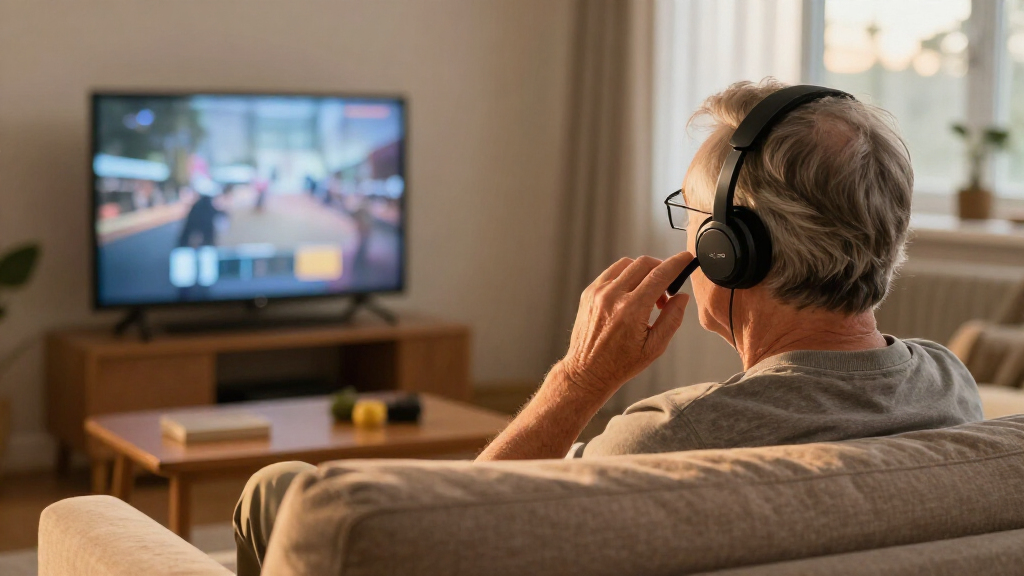
I organized the 15 systems around the needs that tend to shape this purchase: getting clearer dialogue to one listener, sharing TV audio, avoiding headphones, and keeping setup manageable. I compared the product types and listed features for connection flexibility, charging and battery arrangements, shared-listening support, portability, and everyday controls. I also treated the distinction between a dedicated TV system and a Bluetooth-capable headset as a real choice: wider device use can be useful, but it does not automatically make a system easier to connect to a television.
The ranking gives priority to purpose-built TV listening, practical usability, and a clear fit for a defined buyer, rather than feature count alone. That places the TV Ears Model 11681 first as the broadest dedicated-TV recommendation in this lineup, with the ChairSpeaker CS3 and SIMOLIO dual-headphone system recognized for specific listening preferences. Headphone kits with docks or spare batteries are useful for personal listening, while speaker models serve viewers who do not want to wear a headset. Product details and TV connections can vary by model and setup, so I recommend checking the current specifications and your television’s output before purchase.
| TV listening systems for hearing impaired | Wireless range |
|---|---|
| Swiitech CH-211 Wireless TV He | Up to 100 ft (30 m) |
| TV Ears Original Wireless TV L | — |
| ANTOANE TTA Wireless TV Headph | Up to 100 ft |
| SIMOLIO Dual 2.4 GHz Wireless | Up to 100 feet |
| SEREONIC Portable Wireless TV | Up to 100 feet |
| TV Ears Bluetooth TV Listening | — |
| ChairSpeaker CS3 Wireless TV S | Up to 33 feet with direct line of sight |
| SIMOLIO SM-823D Pro Wireless T | — |
| Wireless TV Speaker for Senior | Up to 30 m (98 ft) in open areas |
| SIMOLIO 621D Wireless TV Speak | — |
| OHAYO Wireless TV Headphones w | Up to 100 ft (30 m) |
| SIMOLIO SM-824D1 Wireless TV H | — |
| LEVN Wireless TV Headphones wi | Up to 30 m (100 ft) |
| SIMOLIO Wireless TV Speaker fo | — |
| TV Ears Original Analog Wirele | — |
Factors to Consider When Choosing TV Listening Systems For Hearing Impaired
The product list shows that choosing a TV listening system is as much about how and where you listen as it is about amplification. I would start with the listener’s comfort and the TV’s audio outputs, then decide whether anyone else needs to hear the program. These broader checks can prevent a common mistake: buying a feature-rich system that does not suit the room, routine, or connection available.
Headphones or a Personal TV Speaker?
Headphones direct sound to the listener and can help keep the television volume lower for other people in the room. A personal speaker places sound close to the chair, which may feel more comfortable for someone who dislikes wearing a headset or wants to keep their ears uncovered. Do not assume a speaker will provide the same privacy or degree of isolation as headphones; people nearby may still hear it. Think about whether the listener moves around during a program, since a speaker near the seat may stay put while headphones travel with the wearer. The right choice depends on comfort and household habits, not simply on which format promises louder sound. If possible, check the return policy when fit and listening preference are uncertain.
Check the TV’s Audio Outputs Before Buying
Connection mismatch is one of the easiest ways to end up with a system that is difficult to use. Look at the television’s actual outputs—such as optical, analog audio, or Bluetooth—and compare them with the system’s supported inputs. A port that looks familiar may serve a different purpose, so consult the TV manual rather than relying on appearance alone. Some televisions also change how their built-in speakers behave when an external audio connection is active; check whether the model can send sound to both the personal system and the room at once. An adapter may help in some setups, but it can add another cable, power requirement, or configuration step. I would prioritize a compatible, simple connection over a longer feature list.
Decide Whether More Than One Person Needs Audio
A single-user system can be the simplest answer when only one viewer needs assistance, but shared households may want two listeners to hear through personal headsets. Check whether a second headset is included, supported separately, or requires an additional purchase; “dual” in a product name is not enough to establish what comes in the box. If one person uses a headset while others listen through the TV speakers, confirm that simultaneous output is supported by both the TV and the listening system. Shared listening also raises a practical question about independent volume controls, since two people may have different preferences. A personal speaker can serve one seat without putting headphones on everyone, but it may not provide private listening. Match the setup to how the household actually watches together.
Treat Battery Life and Charging as Routine Features
A charging base makes it easier to return headphones to a known place between programs, while a spare battery can reduce downtime if the system supports swapping. Neither feature removes the need to keep the transmitter or dock connected and positioned sensibly. Before choosing, consider how long the listener typically watches at a stretch and whether they can manage small charging contacts or battery changes. A headset that is comfortable but often left uncharged can be less useful than a simpler system with an easy daily routine. Check how the product indicates charging status and whether replacement batteries are available. For a speaker system, review its power and placement needs rather than assuming it runs independently of the TV.
Choose Controls the Listener Can Manage
Small buttons, complicated pairing steps, and controls hidden on the TV can turn a helpful device into a daily frustration. Consider who will connect the system, adjust volume, and troubleshoot it after the initial setup. A dedicated transmitter and simple headset controls may suit someone who wants a repeatable TV-only routine; Bluetooth flexibility may be useful for a viewer who also uses a phone or tablet. That extra flexibility can bring more pairing steps, so it is not automatically the better choice for a beginner. Check whether controls are reachable while seated and whether the labels are easy to distinguish. If a family member will help with setup, a system with a clear, stable connection routine may matter more than advanced settings.
Match the System to the Hearing Need
TV listening systems can make dialogue more accessible, but they are not a substitute for a hearing assessment or an assistive device prescribed for an individual. People with hearing aids should check whether headphones fit comfortably over or around them and whether the TV system can work alongside their preferred hearing-aid setup. A personal speaker may avoid headset fit concerns, though it may not deliver sound as directly to the listener. For one-sided hearing loss, tinnitus, or a strong preference for one ear, confirm that the system’s controls and audio behavior suit that need rather than assuming all headsets work alike. Ask an audiologist about compatibility if the listener relies on hearing aids or other assistive technology. The most suitable choice is the one that fits the person’s hearing care, comfort, and everyday TV habits.
Frequently Asked Questions
Can I use a TV listening system while other people listen through the TV speakers?
Sometimes, but the answer depends on both the television’s audio settings and the listening system’s connection. Some TVs mute their built-in speakers when an external device is connected, while others allow simultaneous output or offer a setting to enable it. Check the TV manual for audio-output options before buying, and look for a system that explicitly supports shared TV and personal audio if that is a household requirement. An optical or analog connection does not guarantee that the TV speakers will keep working. If you cannot confirm the behavior, ask the TV manufacturer or test the connection with a compatible device before choosing a system.
Will these systems work with hearing aids?
Compatibility varies, and physical comfort matters as much as the connection. Over-ear headphones may press on hearing aids or cause feedback for some wearers, while a nearby personal speaker avoids placing a headset over the ear. Bluetooth support alone does not mean a system can connect directly to a hearing aid; the hearing aid must support the relevant connection method, and the product must be designed to pair with it. Check the hearing-aid manufacturer’s guidance and the listening system’s specifications before purchase. An audiologist can help compare a TV headset with a hearing-aid streamer or other assistive option.
What should I do if my TV has no headphone jack?
First, check the TV manual and rear-panel labels for other audio outputs, such as optical or analog line out. Then choose a listening system whose transmitter accepts that output, or verify that a compatible adapter can bridge the connection. Adapters can introduce extra setup and may need their own power, so they are not always a plug-and-play fix. Also check whether the TV can continue playing through its speakers after an external output is connected. Confirming the exact TV model and output type before ordering is safer than relying on a general compatibility claim.
Should I choose a Bluetooth model or a dedicated TV listening system?
A Bluetooth model makes sense if the listener also wants to use the headset with a phone, tablet, or another compatible source. A dedicated TV system may offer a more direct routine for watching television, particularly when its transmitter is designed to stay connected to the TV. Bluetooth performance depends on the television’s support and can involve pairing steps or audio delay, so check compatibility and latency details for the specific devices. Do not pay extra for broad device support if the listener only needs a simple TV setup. Choose based on the devices the person actually uses and how much setup they are comfortable managing.
Is a personal TV speaker a better choice than headphones for an older viewer?
It can be, especially when the viewer dislikes wearing headphones, has trouble handling a headset, or wants to keep their ears uncovered. A speaker positioned near the chair may make dialogue easier to hear without requiring a wearable device, but it offers less privacy and may be audible to others. Headphones keep sound close to the listener and can suit households where other people prefer a lower TV volume. Consider the listener’s mobility, preferred seat, comfort, and ability to operate the controls. If hearing aids are involved, check how the speaker or headset works with the person’s existing setup rather than assuming age alone determines the best format.
Conclusion
For most buyers seeking a dedicated personal TV setup, I recommend the TV Ears Original Wireless TV Listening System, Model 11681 as the best overall pick in this lineup. For a different listening format, the ChairSpeaker CS3 is the best choice for someone who would rather hear sound from a nearby speaker than wear headphones, while the SIMOLIO Dual 2.4 GHz Wireless TV Headphones suit households looking for a shared-headphone option. Buyers who want broader device use can compare Bluetooth models such as the TV Ears Bluetooth system, but should confirm their TV supports the intended connection. For beginners, I would prioritize a dedicated transmitter, straightforward controls, and a confirmed match to the TV’s audio output over extra features. For best value, compare the simpler headphone or speaker systems against your actual needs and avoid paying for Bluetooth or multi-listener functions you will not use; for a premium-oriented choice, favor the setup that best matches the listener’s format and routine rather than assuming a higher price means better hearing support. Before deciding, verify compatibility, comfort, and whether the TV can play through its own speakers at the same time.
Halloween Picks
halloween
As an affiliate, we earn on qualifying purchases.