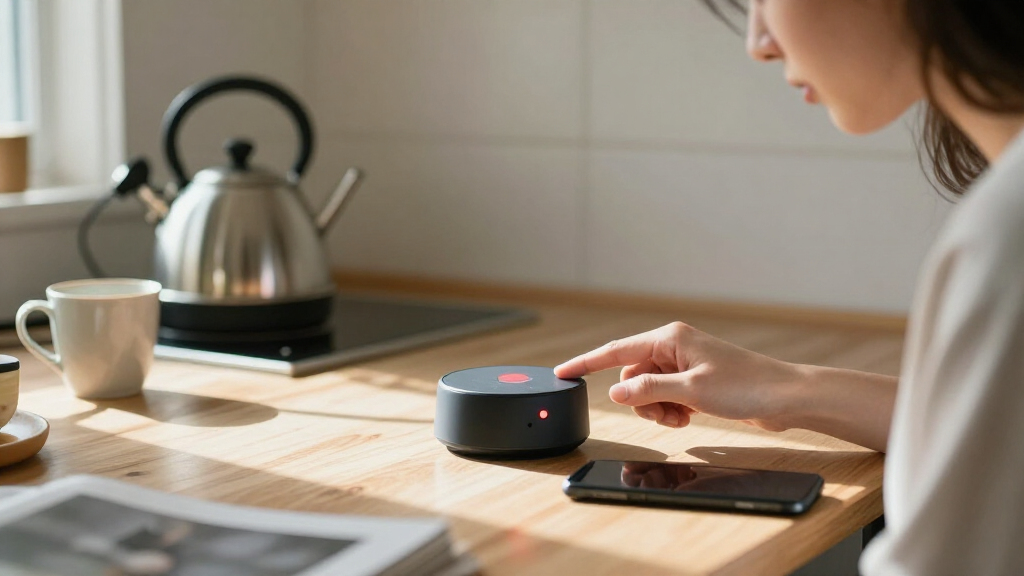
For a flexible, standalone alert setup, I’d start with the Bellman & Symfon Visit Flash Receiver; the Sonic Alert HomeAware II Basic Starter Kit stands out for a more integrated system, while the Midland SBNDL adds a pillow shaker for alerts during sleep. The right choice depends on whether you need to notice a visitor across several rooms, wake to an alert overnight, or simply add a bright signal to one doorway. This lineup ranges from inexpensive multi-receiver doorbells to dedicated alert systems, so compatibility, coverage, and alert style matter as much as the number of included parts. I’ll compare the tradeoffs and explain which setup fits different homes. Continue reading for the full breakdown of all 15 options.

Get everyday helpers delivered free with Prime
- Fast, free delivery on millions of items
- Prime Video, Amazon Music and more included
- Member-only deals all year
Key Takeaways
- Dedicated systems differ from basic doorbells: Bellman & Symfon, HomeAware II, and AlertMaster are geared toward a broader alert setup, while many other picks focus on doorbell signaling.
- Receivers matter for whole-home awareness: Kits with multiple receivers can put a visual alert in more than one room without relying on a single central unit.
- Overnight alerts call for a different feature set: The Midland bundle includes a pillow shaker, making it a more sleep-focused option than light-only doorbells.
- Two-button kits suit more than one entrance: Options from CallToU, JSIEEM, and FUHONGRUI include multiple buttons, which can help distinguish or cover separate doorways.
- More colors and melodies do not automatically mean better alerts: Placement, visibility, receiver count, and the alert method should guide the choice ahead of decorative settings.
| Wireless Flash Doorbell with 7-Color Light and 4 Volume Levels |  | Best Simple Single-Button Pick | Model: B209 | Wireless range: Stated 600 feet | Light colors: 7 | VIEW LATEST PRICE | See Our Full Breakdown |
| Bellman & Symfon Visit Flash Receiver for Visual Alerts |  | Best for Expanding a Visit Alert System | System: Bellman Visit Smart Home System | Power source: Battery powered | Battery description: Alkaline | VIEW LATEST PRICE | See Our Full Breakdown |
| Bloepum Wireless Doorbell with Seven Color Lights |  | Best for a Basic Wireless Setup | Brand: Bloepum | Included components: 1 receiver and 1 transmitter | Light colors: 7 | VIEW LATEST PRICE | See Our Full Breakdown |
| Sonic Alert HomeAware II Basic Starter Kit |  | Best for Nighttime and Multi-Signal Alerts | Model: HA360MBK | Power source: Corded electric | Alarm sensor type: Acoustic | VIEW LATEST PRICE | See Our Full Breakdown |
| Wireless Flashing Doorbell with 2 Transmitters and 3 Receivers |  | Best for Whole-Home Door Coverage | Model: A201 | Transmitters: 2 | Receivers: 3 | VIEW LATEST PRICE | See Our Full Breakdown |
| Midland SBNDL Strobe Light and Pillow Shaker Bundle |  | Best for Nighttime Weather Alerts | Power source: Battery powered | Compatible devices: Midland WR11, WR100, WR120, WR300, and WR400 radios; other radios with a 3.5 mm external jack | Batteries: Four AAA batteries included | VIEW LATEST PRICE | See Our Full Breakdown |
| Wireless Flashing Doorbell with 1 Transmitter and 2 Receivers |  | Best for Two-Room Doorbell Coverage | Manufacturer: HSYIJIA | Model: B209 | Included components: One transmitter and two receivers | VIEW LATEST PRICE | See Our Full Breakdown |
| JSIEEM Wireless Doorbell Kit with 2 Buttons and 3 Receivers |  | Best for Multiple Entrances | Model: D-157-2T3 | Buttons: Two | Receivers: Three plug-in receivers | VIEW LATEST PRICE | See Our Full Breakdown |
| CallToU Wireless Doorbell for Hearing-Impaired Users with Light and Vibration, 1 Button and 2 Receivers |  | Best Portable Visual-and-Vibration Alert | Button: One IP65-rated button | Receivers: Two portable receivers | Receiver power: Three AAA batteries per receiver | VIEW LATEST PRICE | See Our Full Breakdown |
| Wireless Doorbell with Flashing Light, 7 Colors, and 4 Volume Levels |  | Best Simple Single-Button Alert | Model: B209 | Wireless range: 600 feet | Light colors: Seven | VIEW LATEST PRICE | See Our Full Breakdown |
| CallToU Wireless Caregiver Pager with Two Call Buttons |  | Best for Caregiver Call Alerts | Model: CC21 | Included items: 2 call buttons and 1 receiver | Maximum stated range: 1,000 feet | VIEW LATEST PRICE | See Our Full Breakdown |
| Jsieem Wireless Doorbell with Touch Button, 1 Receiver, 36 Melodies, LED Light, 1200-Foot Range |  | Best Simple Plug-In Alert | Included components: 1 wireless doorbell button and 1 receiver | Melodies: 36 | Volume settings: 4: mute, low, medium, and high | VIEW LATEST PRICE | See Our Full Breakdown |
| FUHONGRUI Wireless Doorbell Kit with 2 Buttons, 3 Receivers, and Flashing Light |  | Best for Multi-Room Coverage | Buttons and receivers: 2 buttons and 3 plug-in receivers | Ringtones: 36 | Volume settings: 4: mute, low, medium, and high | VIEW LATEST PRICE | See Our Full Breakdown |
| Clarity AlertMaster AL12 Visual Alert System with Built-In Lamp Flasher |  | Best for Lamp-Based Alerts | Model: AL12 | Alert feature: Built-in lamp flasher | Dimensions: 7.2 x 4.8 x 4.7 inches | VIEW LATEST PRICE | See Our Full Breakdown |
| Wireless Doorbell with Flashing Light, 1 Button and 3 Plug-In Receivers |  | Best for One Entrance, Several Rooms | Button and receivers: 1 button and 3 plug-in receivers | Maximum stated range: Up to 1,200 feet in open areas | Alert modes: Ringing, flashing, or both | VIEW LATEST PRICE | See Our Full Breakdown |
More Details on Our Top Picks
Wireless Flash Doorbell with 7-Color Light and 4 Volume Levels
I’d choose this kit when the priority is a straightforward door alert that combines a visible signal with an optional chime. Its seven-color flash gives a person another cue to notice, while four volume levels let household members adjust the sound without making it the only alert. The stated 600-foot range may suit a larger home, though actual coverage can vary with walls and placement. Compared with the Wireless Flashing Doorbell with 2 Transmitters and 3 Receivers, this set is simpler to power and place, but it does not provide alerts from multiple receiver locations. Adhesive or screw mounting adds flexibility; the tradeoff is dependence on four AA batteries, with no stated confirmation that they’re included. I’d treat its battery-life and weather-resistance claims as unverified.
Pros:- Combines a flashing visual signal with an audible chime
- Seven light colors provide a noticeable alert
- Four volume settings allow sound adjustment
- Offers adhesive or screw installation
Cons:- Requires four AA batteries, and inclusion is not specified
- Battery-life and weather-resistance claims are not independently verified
- One receiver offers less whole-home coverage than multi-receiver kits
Best for: Deaf or hard-of-hearing people who need one door button and one receiver in a home where a visible alert and adjustable chime are both useful.
Not ideal for: Households that need alerts in several rooms or want a system with documented battery inclusion and verified weather resistance.
- Model:B209
- Wireless range:Stated 600 feet
- Light colors:7
- Volume levels:4
- Receiver coverage:Up to 150 square meters
- Power:4 AA batteries total: 3 for receiver and 1 for transmitter
- Stated battery life:3–5 months
- Dimensions:3.07 × 2.95 × 0.98 inches
Our verdict“Choose this for a simple one-button door alert with adjustable sound and colorful flashing, but look elsewhere if you need receivers in multiple rooms.”
Bellman & Symfon Visit Flash Receiver for Visual Alerts
This receiver makes the most sense for someone building on an existing Bellman Visit system, rather than shopping for a complete doorbell. It uses bright flashes and colored LED signals, and can respond to compatible Visit transmitters for events such as a doorbell, baby cry, or fire alarm. That broader alert range separates it from the Wireless Flash Doorbell with 7-Color Light and 4 Volume Levels, which is a self-contained button-and-receiver pairing but is focused on the door. Bellman’s encrypted radio link avoids relying on Wi-Fi, and battery backup adds resilience if power is interrupted. The main tradeoff is the system commitment: transmitters are sold separately, so this receiver alone cannot alert to a visitor or other event. I’d pick it for a compatible setup, not as a first purchase.
Pros:- Bright flashing lights and colored LED signals provide visual alerts
- Works with new and older compatible Bellman Visit transmitters
- Uses encrypted radio frequencies rather than Wi-Fi
- Includes battery backup
Cons:- Not a standalone alert system
- Transmitters are sold separately
- Useful coverage depends on compatibility with the wider Visit system
Best for: People who already own compatible Bellman Visit transmitters and want a dedicated visual receiver for several household alerts.
Not ideal for: Buyers seeking a ready-to-use doorbell kit, or anyone who does not want to purchase and pair compatible transmitters separately.
- System:Bellman Visit Smart Home System
- Power source:Battery powered
- Battery description:Alkaline
- Mounting type:Wall mount
- Sensor technology:Contact sensor
- Compatible alerts:Compatible Bellman Visit transmitters for events such as doorbell, baby cry, and fire alarm
- Radio connection:Encrypted radio frequencies; no Wi-Fi required
- Backup:Battery backup
Our verdict“Buy this receiver to add a visual alert point to a compatible Bellman Visit setup; choose a bundled wireless doorbell for a complete starter kit.”
Bloepum Wireless Doorbell with Seven Color Lights
The Bloepum is a basic button-and-receiver doorbell for buyers who want visual notification without wiring. Its seven-color lights add a cue beyond sound, and the included transmitter and receiver keep the setup simple compared with the Bellman & Symfon Visit Flash Receiver, which requires separately purchased compatible transmitters. This kit is also described for use across multiple rooms and floors, but its wireless range is not specified; I would not choose it when a measured long-distance range is central to the decision. It uses AA batteries, none included, so buyers need to supply four cells before setup. Compared with the Wireless Flash Doorbell with 7-Color Light and 4 Volume Levels, it has no listed range or volume-level figures, making its performance harder to judge from the available product details.
Pros:- Combines visual light alerts with audible notifications
- Includes one transmitter and one receiver
- Wireless setup avoids complicated wiring
- Seven-color lights add a visible cue for door calls
Cons:- Wireless transmission range is not specified
- Requires four AA batteries, which are not included
- Available details do not state adjustable volume levels
Best for: People who want a no-wiring doorbell with a visual light alert for a home, office, or care space and can accept unspecified range.
Not ideal for: Buyers who need a documented long wireless range, adjustable volume settings, or batteries included in the package.
- Brand:Bloepum
- Included components:1 receiver and 1 transmitter
- Light colors:7
- Transmitter power:1 AA battery
- Receiver power:3 AA batteries
- Batteries included:No
- Material:ABS
- Wireless range:Not specified
Our verdict“Pick the Bloepum for a simple wireless visual door alert when range and sound-control specifications are less important than a basic included pairing.”
Sonic Alert HomeAware II Basic Starter Kit
I rank the HomeAware II for a different job than the doorbell kits: it is aimed at home safety alerts and waking support, not just a visitor at the door. A flashing strobe, bed shaker, loud tones, and scrolling text offer several ways to notice an alert, which can help people who may miss a light across the room or sleep through sound. The HomeAware app and landline connection also add call and text notifications. Compared with the Bellman & Symfon Visit Flash Receiver, this kit lists a bed shaker and text display, while the Bellman receiver can work with a wider range of compatible Visit transmitters. There is a key limitation: HomeAware listens for compatible T3 smoke and T4 CO alarms and does not detect smoke or carbon monoxide itself. It must sit in the same room as those alarms.
Pros:- Combines strobe, bed shaker, tones, and scrolling text
- Can provide cellphone call and text notifications through the app
- Supports incoming landline call alerts
- Includes rechargeable battery backup
Cons:- Does not detect smoke or carbon monoxide directly
- Must be placed in the same room as compatible existing alarms
- Requires compatible T3 smoke or T4 CO alarms for those safety alerts
Best for: Deaf or hard-of-hearing people, including heavy sleepers, who need bedroom alerts from compatible smoke or CO alarms plus phone or landline notifications.
Not ideal for: Buyers who need a standalone smoke or carbon monoxide detector, or who need a doorbell-focused system with flexible placement away from existing alarms.
- Model:HA360MBK
- Power source:Corded electric
- Alarm sensor type:Acoustic
- Alert methods:Strobe, bed shaker, loud tones, and scrolling text display
- Connectivity:Bluetooth app connection and landline phone connection
- Battery backup:Rechargeable
- Dimensions:5 × 6 × 6.5 inches (D × W × H)
- Weight:1.8 pounds
Our verdict“Choose this for layered bedroom and safety notifications from compatible alarms, but not as a replacement for smoke or carbon monoxide detectors.”
Wireless Flashing Doorbell with 2 Transmitters and 3 Receivers
For a household where a single receiver could leave someone unaware of the door, this kit’s strongest advantage is its two transmitters and three receivers. Receivers can be placed in separate rooms so more people have a chance to notice the flashing alert; the seven colors offer a visual cue, while four volume levels retain an audible option. Compared with the single-receiver Wireless Flash Doorbell with 7-Color Light and 4 Volume Levels, this set is better suited to spreading alerts around a home, but it brings more battery upkeep. Its stated 600-foot range is useful on paper, though walls and layout can affect real coverage. The tradeoff is substantial power demand: the kit calls for 11 AA batteries, and the listing does not say they are included. Adhesive or screw mounting gives placement flexibility without hardwiring.
Pros:- Includes two transmitters and three receivers for distributed alerts
- Seven-color flashing provides a visual notification
- Four adjustable volume levels add an audible option
- Can be installed with adhesive tape or screws
Cons:- Requires 11 AA batteries, with inclusion not specified
- More receivers and transmitters mean more batteries to maintain
- Stated range may vary with walls and home layout
Best for: Households with several rooms or floors where deaf or hard-of-hearing residents need door alerts available at multiple receiver locations.
Not ideal for: People who need only one alert point, want to minimize battery changes, or prefer a system with confirmed included batteries.
- Model:A201
- Transmitters:2
- Receivers:3
- Light colors:7
- Volume levels:4
- Wireless range:Stated 600 feet
- Power:11 AA batteries: 3 per receiver and 1 per transmitter
- Installation:Adhesive tape or screws
Our verdict“Choose this kit when several people or rooms need to receive door alerts, and skip it if a single receiver would be enough.”
Midland SBNDL Strobe Light and Pillow Shaker Bundle
I’d choose this bundle for a specific job: making emergency weather alerts harder to miss while asleep. The strobe light and pillow shaker provide both a visual cue and a tactile one, which gives it a different purpose from the doorbell-focused JSIEEM Wireless Doorbell Kit. The included clip helps keep the shaker positioned on a pillow, and four AAA batteries are included for the bundle’s accessories.
The main tradeoff is that this is not a standalone alert system: it needs a compatible weather radio, sold separately. It also depends on the radio’s alert connection, so it won’t notify you about visitors at the door. I’d rank it ahead of general doorbells for overnight weather alerts, but skip it if you need an all-purpose household notification setup.
Pros:- Combines a strobe light with a tactile pillow shaker
- Pillow clip helps keep the shaker in position overnight
- Four AAA batteries are included
- Works with several listed Midland radios and other radios with a 3.5 mm external jack
Cons:- Requires a compatible weather alert radio, sold separately
- Designed for radio alerts rather than doorbell or general household notifications
Best for: Deaf, hard-of-hearing, or heavy-sleeping users who already own a compatible Midland weather radio and want both visual and pillow-based alerts at night
Not ideal for: Shoppers who need a complete system out of the box, doorbell notifications, or alerts without buying a compatible weather radio separately
- Power source:Battery powered
- Compatible devices:Midland WR11, WR100, WR120, WR300, and WR400 radios; other radios with a 3.5 mm external jack
- Batteries:Four AAA batteries included
- Color:Black
- Included components:SHKR100 pillow shaker, STR180 strobe light, Y cable, pillow clip, and batteries
- Alert types:Flashing strobe light and vibrating pillow shaker
Our verdict“Choose this bundle if you need a tactile and visual wake-up alert from a compatible weather radio, not a standalone doorbell system.”
Wireless Flashing Doorbell with 1 Transmitter and 2 Receivers
This kit’s strongest practical advantage is simple: one transmitter reaches two receivers, so a visual door alert can be placed in separate parts of a home. The seven-color flashing lights offer a noticeable cue, while four volume levels leave an audible option for people who use one. Compared with the CallToU Wireless Doorbell for Hearing-Impaired Users, this model has no stated vibration alert or portable battery-powered receivers; its appeal is the straightforward two-receiver arrangement.
The advertised 600-foot range may suit a larger home, but real coverage can be affected by walls and other obstructions. Installation can use adhesive or screws, though seven AA batteries are required and the listing does not say they’re included. I’d pick it for a simple multi-room doorbell, but not for buyers who want tactile alerts or clear power details before setup.
Pros:- One transmitter is paired with two receivers
- Seven light colors provide a visual door alert
- Four volume levels allow adjustment of the chime
- Can be mounted with adhesive or screws
Cons:- Requires seven AA batteries, with inclusion not specified
- No vibration alert is listed
- The advertised range may be reduced by walls and other obstacles
Best for: Households that want a visual doorbell alert in two locations and are comfortable supplying seven AA batteries
Not ideal for: Buyers who need vibration alerts, battery-included setup, or receivers they can carry from room to room
- Manufacturer:HSYIJIA
- Model:B209
- Included components:One transmitter and two receivers
- Wireless range:Advertised up to 600 feet
- Light colors:Seven
- Volume levels:Four
- Power:Seven AA batteries total; whether they are included is not specified
- Mounting:Adhesive or screws
Our verdict“Pick this for a two-location flashing doorbell setup, but choose the CallToU model if portable receivers and vibration matter more.”
JSIEEM Wireless Doorbell Kit with 2 Buttons and 3 Receivers
For a home with more than one entrance, I’d favor this kit’s two buttons and three plug-in receivers over the single-button CallToU Wireless Doorbell. Multiple receivers can spread the alert across rooms, and the three modes—ringing, flashing, or both—let households choose a visual-first setup or add sound. Its 36 chimes and four volume levels offer more sound customization than the Midland bundle, though that bundle serves a different need with tactile overnight weather alerts.
The stated range reaches 1,200 feet only in open areas, so I wouldn’t treat that as a guaranteed indoor distance. Receivers also need wall sockets, limiting placement compared with portable units. The buttons’ IP44 rating offers some protection, but the kit is best for users who can install fixed receivers and want coverage from multiple door locations.
Pros:- Two buttons and three receivers cover multiple entrances and rooms
- Flashing-only mode supports visual alert use without relying on sound
- Offers 36 chimes and four volume levels
- Buttons have an IP44 rating and include a CR2 battery
Cons:- Receivers must be plugged into sockets
- The 1,200-foot maximum range is specified for open areas
- No vibration alert is listed
Best for: Households with two entrances that want flashing alerts at several fixed locations and can keep receivers plugged into sockets
Not ideal for: People who need portable receivers, a dependable range through many walls, or a tactile alert such as the Midland pillow shaker
- Model:D-157-2T3
- Buttons:Two
- Receivers:Three plug-in receivers
- Maximum range:1,200 feet in open areas
- Chimes:36
- Volume levels:Four
- Alert modes:Ringing, flashing, or both
- Audible output:Up to 110 dB
- Button battery:One CR2 battery included
Our verdict“Choose this kit for multi-entrance visual coverage if fixed, plug-in receivers suit your home.”
CallToU Wireless Doorbell for Hearing-Impaired Users with Light and Vibration, 1 Button and 2 Receivers
I’d give this model the edge when an alert needs to follow the user around the home. Its two portable receivers combine flashing light, sound, and vibration, unlike the JSIEEM kit, whose receivers need wall sockets. That tactile channel can help when a receiver isn’t in the user’s line of sight, while five volume levels include a mute setting for visual-and-vibration use. The IP65-rated button also offers stronger stated protection from dust and water than the JSIEEM buttons’ IP44 rating.
Portability brings a battery tradeoff: each receiver needs three AAA batteries, and the listing doesn’t say they’re included. Its 1,000-foot range applies to open, unobstructed areas, so walls or metal doors can reduce coverage. I’d choose it over the seven-color HSYIJIA doorbell for tactile alerts and mobility, but not if plug-in receivers are preferable to battery upkeep.
Pros:- Combines flashing light, vibration, and sound
- Two portable receivers can be placed or carried in different rooms
- Five volume levels include a mute option
- IP65-rated button and no Wi-Fi, app, or hub requirement
Cons:- Each receiver requires three AAA batteries, which are not specified as included
- The advertised 1,000-foot range is for open, unobstructed areas
- Includes only one button
Best for: Deaf or hard-of-hearing users who want to carry a receiver between rooms and benefit from both flashing and vibration alerts
Not ideal for: Buyers who prefer plug-in receivers, want multiple door buttons, or need a range guarantee through walls and metal doors
- Button:One IP65-rated button
- Receivers:Two portable receivers
- Receiver power:Three AAA batteries per receiver
- Alert types:Sound, flashing light, and vibration
- Ringtones:20
- Volume levels:Five, from mute to 110 dB
- Wireless range:Up to 1,000 feet in open, unobstructed areas
- Connectivity:No Wi-Fi, app, or hub required
Our verdict“Choose this if you want portable receivers and tactile alerts; opt for the JSIEEM kit if you need two buttons and plug-in room coverage.”
Wireless Doorbell with Flashing Light, 7 Colors, and 4 Volume Levels
This B209 model keeps the setup focused on one door and a straightforward cue: an audible chime paired with a multicolor flashing light. Four volume levels offer some flexibility, while the advertised 600-foot range may suit a home or small office where transmitter and receiver placement is uncomplicated. Compared with the HSYIJIA B209 bundle, this listing does not specify two receivers, so I’d choose the HSYIJIA if alerts need to reach two separate rooms.
The system can also serve as a pager, adding a little flexibility beyond a front-door alert. Still, it lists no vibration option, and its power requirements are unspecified, making setup planning harder than with the Midland bundle, which names its batteries and included accessories. I’d consider it only when a basic flashing doorbell fits the need and the seller can clarify what powers it.
Pros:- Pairs a flashing light with an audible chime
- Offers seven light colors and four volume levels
- Can also be used as a pager
- Advertised 600-foot wireless range
Cons:- Power and battery requirements are not specified
- No vibration alert is listed
- The listing does not specify a multi-receiver setup
Best for: A buyer who needs a basic one-button flashing doorbell or pager for one area and can confirm its power requirements before purchase
Not ideal for: People who need tactile vibration, multiple stated receivers, or clearly documented battery and power details
- Model:B209
- Wireless range:600 feet
- Light colors:Seven
- Volume levels:Four
- Item weight:7.4 ounces
- Dimensions:3.07 x 2.95 x 0.98 inches
- Color:Black
- Power:Requirements not specified
Our verdict“Consider this for a simple single-area flashing alert only after confirming how the unit is powered.”
CallToU Wireless Caregiver Pager with Two Call Buttons
I’d choose the CallToU CC21 when the goal is for someone at home to summon a caregiver, rather than to signal visitors at the front door. Its two call buttons can be positioned in separate rooms, while a portable receiver gives the caregiver vibration and flashing alerts as well as sound. That makes it more adaptable to hearing access than the Jsieem Wireless Doorbell, which is built around a door-mounted button and one plug-in receiver.
The tradeoff is that the receiver runs on three AAA batteries, so it needs battery upkeep and may be less convenient than plug-in doorbell receivers. The stated 1,000-foot range is a maximum, not a guarantee through walls; I’d test the signal in the rooms where it will be used. Its pre-paired, no-network setup keeps installation simple, but it is a caregiver pager rather than a full home-wide alert network.
Pros:- Two call buttons can be placed in separate locations around the home.
- Vibration and flashing provide non-audible alert options.
- Portable receiver can accompany a caregiver between rooms.
- Pre-paired operation does not require a network.
Cons:- Receiver requires three AAA batteries, which need replacing.
- The stated range may be reduced by walls and other obstructions.
- Designed for caregiver calls, not as a multi-room visitor doorbell system.
Best for: Households where a person with limited mobility needs to call a caregiver from more than one room, and the caregiver carries the receiver.
Not ideal for: People seeking a doorbell alert across several rooms without carrying a receiver, or anyone who wants a receiver that stays plugged into an outlet.
- Model:CC21
- Included items:2 call buttons and 1 receiver
- Maximum stated range:1,000 feet
- Alert modes:Ringtone, vibration, and flash combinations
- Volume settings:5, including mute
- Receiver power:3 AAA batteries
- Call button battery:1 included 12V alkaline battery
- Dimensions and weight:2.36 x 2.36 x 0.62 inches; 1.28 ounces
Our verdict“Choose the CallToU when a caregiver needs portable visual or vibration alerts from two call points, but skip it for a fixed, multi-room doorbell setup.”
Jsieem Wireless Doorbell with Touch Button, 1 Receiver, 36 Melodies, LED Light, 1200-Foot Range
The Jsieem Wireless Doorbell suits someone who wants a straightforward door alert with a visible LED indicator and one receiver that plugs into an outlet. Its 36 melodies and four volume settings, including mute, let households choose whether sound should accompany the light. Compared with the FUHONGRUI Wireless Doorbell Kit, it is a simpler setup: one button and one receiver rather than multiple receivers for broader room coverage.
That simplicity is also its limit for deaf users. The product data identifies an LED indicator, but does not specify a distinct flashing-alert mode, so I would not rank it ahead of kits that explicitly offer flashing lights. The 1,200-foot figure applies to open areas, and the button may need careful placement away from metal and certain electronics. Its outlet-powered receiver avoids the battery upkeep required by the CallToU pager, though it ties the alert to a single outlet location.
Pros:- Plug-in receiver avoids receiver battery replacement.
- LED indicator adds a visual cue when the button is pressed.
- 36 melodies and four volume settings, including mute.
- Button is described as dustproof and waterproof.
Cons:- Only one receiver is included, limiting coverage to one outlet location.
- A distinct flashing-alert mode is not specified.
- The maximum range is for open areas and may shrink indoors.
Best for: A household wanting one plug-in doorbell receiver with an LED indicator and flexible sound settings, where a basic visual cue is sufficient.
Not ideal for: Deaf users who need an explicitly specified flashing alert or coverage from receivers in several rooms.
- Included components:1 wireless doorbell button and 1 receiver
- Melodies:36
- Volume settings:4: mute, low, medium, and high
- Maximum stated range:1,200 feet in open areas
- Button protection:Dustproof and waterproof
- Button battery:1 included CR2 battery
- Receiver power:Plug-in AC/DC; 110 volts
- Audible noise:110 dB
Our verdict“Pick the Jsieem for a basic single-outlet door alert with an LED, but choose a multi-receiver model with a stated flashing mode for stronger visual coverage.”
FUHONGRUI Wireless Doorbell Kit with 2 Buttons, 3 Receivers, and Flashing Light
For a home where a door alert needs to reach several rooms, I’d favor the FUHONGRUI kit over the single-receiver Jsieem Wireless Doorbell. It includes three plug-in receivers and two buttons, so alerts can be distributed around the home and triggered from more than one entrance. Its flashing light gives deaf users a visual signal, while four volume settings and 36 ringtones leave sound as an optional companion rather than the only cue.
The main compromise is that the supplied details do not describe independent alert settings for each receiver, so buyers should not assume each unit can be customized separately. The claimed 1,200-foot range is for open areas, and the buttons rely on two CR2032 batteries. Compared with the Wireless Doorbell with Flashing Light, 1 Button and 3 Plug-In Receivers, this kit offers an extra button, making it a better fit for multiple entrances, but it still depends on plug-in receivers and indoor signal conditions.
Pros:- Three plug-in receivers can place alerts in separate rooms.
- Two buttons cover more than one entry point.
- Flashing light provides a visual alert.
- Buttons are described as waterproof and dustproof.
Cons:- The 1,200-foot maximum applies to open areas, not typical rooms and walls.
- The two buttons require CR2032 batteries.
- Receiver-specific alert customization is not detailed.
Best for: Deaf or hard-of-hearing households with multiple entrances that need visual door alerts in several rooms.
Not ideal for: People who need portable alerts away from outlets, or buyers who require documented receiver-by-receiver customization.
- Buttons and receivers:2 buttons and 3 plug-in receivers
- Ringtones:36
- Volume settings:4: mute, low, medium, and high
- Maximum stated range:Up to 1,200 feet in open areas
- Visual alert:Flashing light
- Button weather resistance:Waterproof and dustproof
- Button batteries:2 CR2032 batteries, included
- Material and warranty:ABS; 1-year warranty
Our verdict“Choose this kit when two entrances and three rooms need visual door alerts; skip it if you need a portable receiver or clearly documented per-unit controls.”
Clarity AlertMaster AL12 Visual Alert System with Built-In Lamp Flasher
The Clarity AlertMaster AL12 takes a different route from the doorbell kits in this group: its main listed feature is a built-in lamp flasher, making it a focused choice for someone who wants a visible alert through a lamp rather than a melody-and-LED doorbell receiver. Compared with the FUHONGRUI kit, which supplies three receivers and two buttons, the AL12 has a simpler, more compact footprint and a more specialized alert style.
That focus leaves important questions unanswered in the supplied product details. They do not identify supported transmitters, alert sources, range, or whether a separate lamp is needed, so I would verify compatibility and setup before buying. The listed dimensions are compact, but at 1.4 pounds it is heavier than its size may suggest. It also requires two product-specific batteries, unlike plug-in receiver kits such as the Wireless Doorbell with Flashing Light. This pick makes sense only when its lamp-flashing approach matches the intended setup.
Pros:- Built-in lamp flasher provides a visual alert.
- Compact listed dimensions suit a smaller setup.
- A distinct alternative to chime-and-LED doorbell receivers.
Cons:- Requires two product-specific batteries.
- The supplied details do not specify range or compatible alert transmitters.
- Included accessories and alert-source compatibility are not stated.
Best for: Buyers seeking a compact visual alert unit centered on lamp flashing and who can confirm it works with their alert source.
Not ideal for: Anyone needing a ready-to-use doorbell kit with included buttons, multiple receivers, or clearly stated range and compatibility.
- Model:AL12
- Alert feature:Built-in lamp flasher
- Dimensions:7.2 x 4.8 x 4.7 inches
- Weight:1.4 pounds
- Battery requirement:2 product-specific batteries
- Included buttons or transmitters:Not specified in the supplied product data
Our verdict“Consider the AL12 only if a lamp-flashing alert fits your setup and compatibility is confirmed; choose a complete doorbell kit for a clearer out-of-box path.”
Wireless Doorbell with Flashing Light, 1 Button and 3 Plug-In Receivers
This doorbell is a practical match for someone who wants a single entrance covered in several parts of the home. Its three plug-in receivers can be spread across rooms, and the user can select flashing, ringing, or both. That direct choice of alert mode gives it a clearer visual-alert setup than the Jsieem Wireless Doorbell, whose details list an LED indicator but do not specify a flashing mode. The IP44-rated button also adds a defined level of water resistance.
Its one-button design is less flexible than the FUHONGRUI kit, which includes two buttons for multiple entrances. The range claim of up to 1,200 feet is for open areas, so receiver placement still needs testing indoors. Button power comes from one included CR2032 battery, which keeps installation simple but creates a replacement task over time. For one front or side door and multiple rooms, the three receivers are the stronger advantage; for multiple entry points, FUHONGRUI is the better fit.
Pros:- Three plug-in receivers extend alerts to several rooms.
- Dedicated flashing mode can be used without relying on sound.
- Ringing, flashing, and combined alert options provide flexibility.
- Button has an IP44 water-resistance rating.
Cons:- Only one button is included, limiting coverage to one entrance.
- The stated 1,200-foot range is for open areas and may be shorter indoors.
- The button relies on a CR2032 battery that will need replacement.
Best for: Deaf or hard-of-hearing residents who want a flashing door alert from one entrance delivered to multiple rooms.
Not ideal for: Households with two or more entrances to cover, or anyone needing a portable, battery-powered receiver.
- Button and receivers:1 button and 3 plug-in receivers
- Maximum stated range:Up to 1,200 feet in open areas
- Alert modes:Ringing, flashing, or both
- Chimes:36
- Volume settings:4, including silent
- Button water resistance:IP44
- Button battery:1 included CR2032
- Model and dimensions:D157-1T3 3.0; 7.2 x 3.89 x 3.6 inches
Our verdict“Choose this model for flashing alerts from one doorway across several rooms; select FUHONGRUI instead if you need buttons for multiple entrances.”
How We Picked
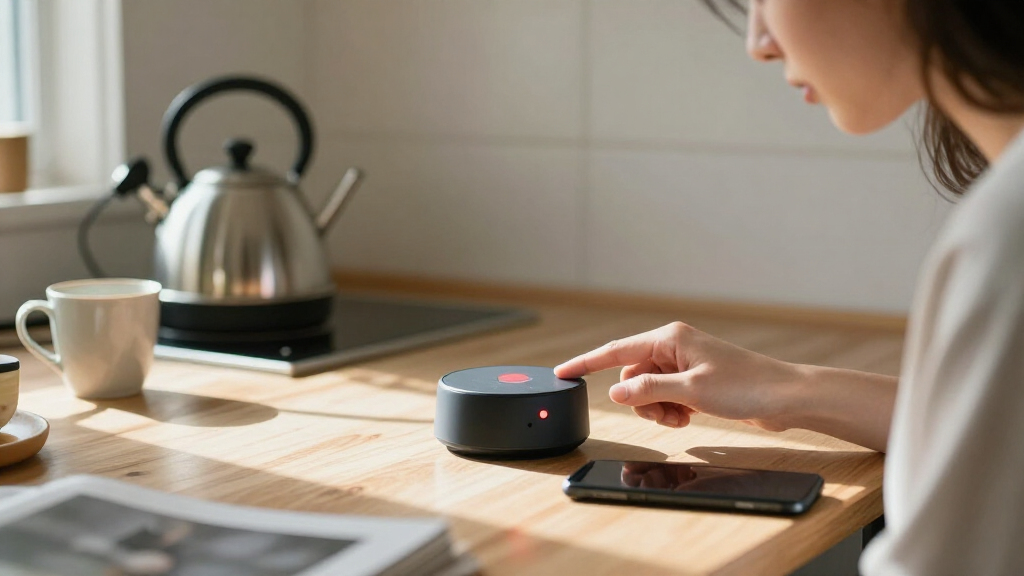
I ranked these visual alert systems for deaf users by how well their listed components address everyday alerting needs: visible signals, receiver placement, included transmitters, and additional alert methods such as vibration or a pillow shaker. I also weighed whether a system appears suited to a single doorway or a more distributed setup, and whether the product description offers enough information for a buyer to understand what is included.
The order favors options with a clearer role beyond a basic light-up doorbell, followed by multi-receiver and multi-button kits that can cover more rooms or entrances. Products with similar core functions are separated by their included hardware and intended use, not by claims about performance that cannot be verified from the supplied product details. Since the listing information does not establish compatibility with smoke alarms, phones, or other household devices, I treat those capabilities as unknown rather than assume they are included.
Factors to Consider When Choosing Visual Alert Systems For Deaf
Before choosing a kit, I’d map where alerts need to reach and when you need to notice them. A bright receiver by the front door may solve a daytime visitor problem, but it may not help from a back room or during sleep. These factors can prevent a low-cost kit from becoming an incomplete setup.
Match the Alert to the Situation
Think separately about visitors, calls for help, and alerts while sleeping; one device may not handle all three well. A flashing light is useful only when you can see it, while vibration can help when you are away from the receiver or asleep. A caregiver pager serves a different purpose from a doorbell and may be a better fit for requesting assistance inside the home. A common mistake is buying the most feature-rich doorbell when the actual need is a bedside alert. List the situations you need covered before comparing kits, then check that the alert type matches each one.
Plan Receiver Placement Before Counting Receivers
Receiver count is only useful if the units can be placed where you spend time. Consider bedrooms, a home office, the kitchen, and any room with a closed door or poor sightline to a shared space. Multi-receiver bundles can reduce missed alerts, but they do not automatically cover every floor or outbuilding. Check whether receivers plug into outlets or need another power source, and confirm the locations have usable outlets. When comparing two kits, prioritize practical placement over extra buttons or a long list of light colors.
Check Range Against Your Home Layout
Published wireless range is generally a best-case figure, not a promise for every building. Walls, floors, metal doors, and distance can affect how well a transmitter communicates with its receiver. A large house may need several receiver locations even if the advertised range sounds ample. If possible, check the return policy and test the system from the actual doorway and rooms where you need alerts. Do not assume that one transmitter will reach a detached garage or a different building without confirmation.
Treat Compatibility as a Separate Requirement
A doorbell alert system does not necessarily connect to a smoke alarm, telephone, or other alert source. If you need alerts from several household devices, check the manufacturer’s compatibility information and the exact components in the kit before buying. Dedicated systems may offer a broader setup, but the product name alone does not confirm which transmitters or accessories are included. Write down every signal you need to receive and verify each one against the product documentation. This step avoids mistaking a doorbell-only kit for a full home alert network.
Choose Settings You Can Recognize
Multiple tones, colors, and volume levels can help separate alerts, but only if the pattern is easy for you to distinguish. A simple, consistent flash may be more useful than many customization options, especially if several people share the home. Think about lighting conditions too: a signal that is visible in a dim bedroom may be harder to notice in a bright kitchen. If more than one transmitter is included, check whether the system lets you identify which button was pressed. Prioritize clear, repeatable alerts over settings that add complexity without improving recognition.
Decide Whether Overnight Coverage Is Needed
Daytime visual alerts and nighttime waking are different jobs. A flashing receiver may not wake someone who is asleep, even if it is easy to notice while awake. If nighttime notification matters, look for a vibration accessory such as a pillow shaker and confirm how it connects to the system. Placement and bedding can affect how noticeable vibration feels, so the accessory should suit the sleeper rather than simply appear on the feature list. Buyers who only need daytime door alerts can avoid paying for sleep-oriented components they will not use.
Frequently Asked Questions
Can a visual doorbell alert system also notify me about smoke alarms or phone calls?
Not automatically. Many products in this lineup are described as wireless doorbells, so their listed purpose is notifying you when someone presses a button. A broader alert system may support additional transmitters or household signals, but you should confirm the exact compatible devices and included parts in the manufacturer documentation. Do not rely on a doorbell kit as a smoke alarm notification system unless compatibility is explicitly stated. For safety-critical alerts, check that the proposed setup is designed for that use.
How many receivers do I need for my home?
Start by identifying the rooms where you need to see or feel an alert, rather than choosing a bundle based on its receiver count alone. One receiver may work in a small, open layout, while a larger or multi-level home may need units near a bedroom, living area, and workspace. Check outlet access and whether walls or floors separate each location from the transmitter. A multi-receiver kit can make coverage easier, but its range still depends on the building. If you are unsure, prioritize a system with a clear return policy and test it in the intended rooms.
Will a flashing light wake me up at night?
A visual signal may not wake a sleeping person, particularly if the receiver is outside the bedroom or not in view. For overnight use, look for a vibration accessory such as a pillow shaker and confirm that it is part of the bundle or compatible with the system. Think about where the receiver will sit and whether the vibration can reach the sleeper through their usual bedding. A light-only doorbell is usually better suited to waking hours. If nighttime alerts are essential, choose based on the sleep alert method, not daytime brightness.
Should I choose one system with several receivers or separate doorbells for different entrances?
A multi-receiver system is useful when one transmitter needs to alert you in several rooms. Multiple buttons can be more helpful when you need to cover separate entrances or want to tell which doorway was used, provided the system supports distinct signals. Check whether the receivers can pair with the relevant buttons and whether the alert pattern identifies the source. Do not assume that extra buttons create separate, recognizable alerts without confirming how the kit works. Choose the arrangement that matches your household layout and the information you need from each alert.
What should I verify before buying a wireless visual alert system?
Confirm what comes in the box, how each component is powered, and whether the system uses plug-in receivers, batteries, or both. Check the wireless range against your home layout and verify support for any extra alerts you need, such as a caregiver call button or nighttime vibration. Look for clear instructions on pairing transmitters and receivers, especially in multi-button kits. Also confirm how the alert is signaled and whether it can be distinguished from other household notifications. These checks are more useful than relying on a long feature list alone.
Conclusion
For my best overall choice, I’d start with the Bellman & Symfon Visit Flash Receiver for a dedicated visual alert approach; the Sonic Alert HomeAware II Basic Starter Kit is my best premium direction for buyers seeking a more integrated setup. The Wireless Flashing Doorbell with 1 Transmitter and 2 Receivers is a practical best value pick when the main goal is extending door alerts into multiple rooms, while the Wireless Flash Doorbell with 7-Color Light and 4 Volume Levels is a straightforward best for beginners option for shoppers who want simple controls. For overnight needs, choose the Midland SBNDL bundle because it includes a pillow shaker; for caregiver requests, the CallToU Wireless Caregiver Pager serves a different purpose from a visitor doorbell. Match the alert method and receiver placement to your daily routine, then verify compatibility before ordering.
Halloween Picks
halloween
As an affiliate, we earn on qualifying purchases.