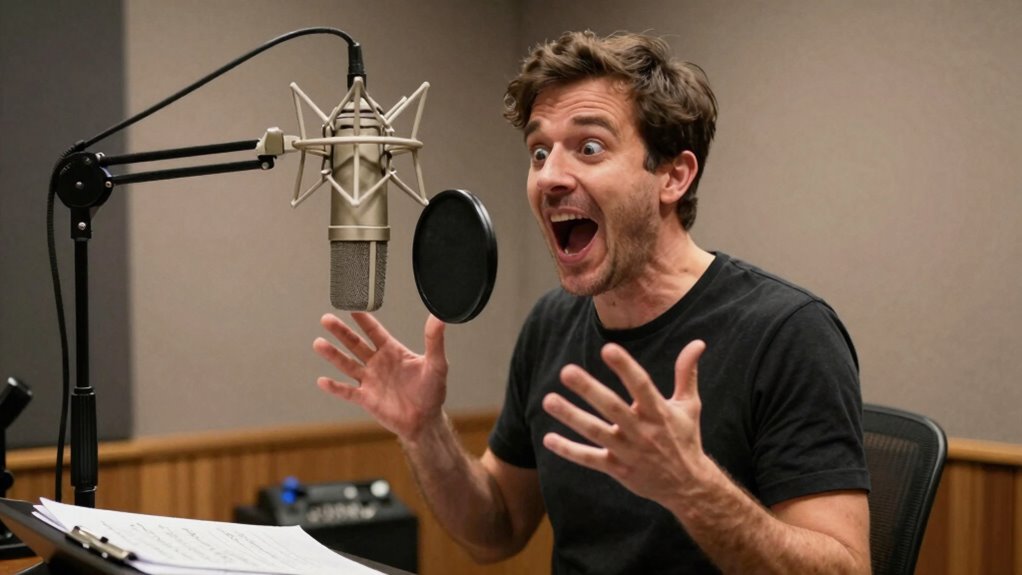
Overacting in the booth often happens because you want to stand out or feel your emotions more strongly, leading you to push your voice too far. You might believe that louder or more intense delivery makes your performance better, but it can make you sound unnatural or forced. To stop this, learn to use subtle vocal changes and controlled pauses instead. Keep going to discover more tips to help you deliver authentic, engaging performances without overdoing it.
Key Takeaways
- Overacting often stems from a desire to be heard, leading to exaggerated emotional expression.
- Lack of vocal control and awareness causes performers to push their delivery beyond natural limits.
- Misunderstanding that louder or more intense performance enhances authenticity encourages overacting.
- Inexperience with vocal modulation results in unbalanced, overly dramatic performances.
- Regular self-review and training in subtle vocal cues help performers develop natural, restrained delivery.
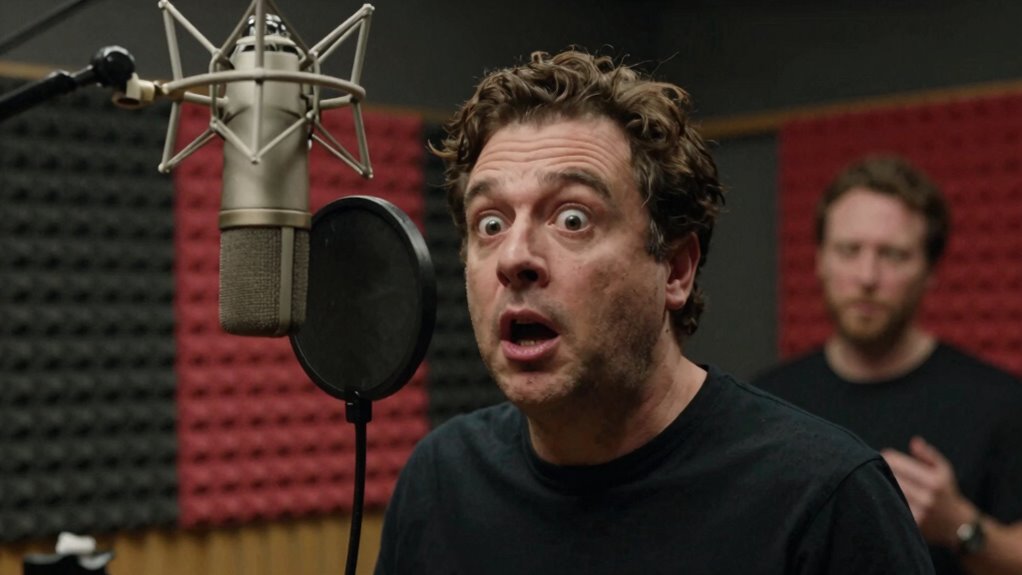
Overacting in the booth often happens because voice actors feel the need to convey every emotion intensely to make their performance stand out. It’s a common mistake driven by a desire to be heard and remembered, but it can actually detract from the authenticity of your delivery. When you overdo emotional expression, your voice can sound exaggerated or unnatural, making it harder for listeners to connect with the character or message. The key to avoiding this pitfall lies in understanding vocal modulation—adjusting your volume, pitch, and pace to suit the scene without going overboard. Instead of pushing every line to the limit, focus on subtle shifts that naturally mirror genuine emotion. For example, a slight increase in pitch or a gentle change in tempo can signal excitement or sadness without turning it into a theatrical performance.
Overacting happens when voice actors try to convey every emotion loudly, but subtle vocal shifts create more authentic performances.
You might feel that expressing every ounce of emotion will make your voice more compelling, but more often than not, it results in a performance that feels forced. The trick is to trust your ability to convey emotion through controlled vocal modulation rather than sheer intensity. When you become aware of your vocal tendencies, you can learn to dial back exaggerated expressions and instead let nuanced variations tell the story. This not only keeps your performance believable but also invites the listener to become more engaged. Remember, less is often more. A restrained, well-placed emotional cue can be much more powerful than loud, over-the-top shouting or sobbing.
Practicing restraint takes awareness and discipline. During recording sessions, periodically check in with yourself: Are you adding too much emotion? Are you pushing your voice beyond natural limits? If so, pause, take a breath, and reassess. Sometimes, simply slowing down your delivery allows the emotional content to come through more effectively without the need for excess volume or exaggerated gestures. Listening back to your recordings can also reveal moments where you overact, giving you clues about where to refine your approach. Developing vocal control is essential for delivering authentic performances and avoiding overacting. The more you practice intentional vocal modulation, the more you’ll find natural ways to express emotion without overdoing it, leading to performances that resonate more deeply with listeners. Over time, you’ll develop a better sense of how to use vocal modulation to express emotion authentically, making your performances more believable and engaging. Recognizing vocal tendencies can help you develop a more natural delivery style and avoid overacting.

TOPBOMED Singing Straws Vocal Straw for Singers
- SOVT Design: Reduces vocal tension and strain
- Enhances Vocal Clarity: Improves tone, resonance, and range
- Quick Warm-Ups: Rebuilds vocal strength and supports recovery
As an affiliate, we earn on qualifying purchases.
As an affiliate, we earn on qualifying purchases.
Frequently Asked Questions
Can Overacting Be Caused by Microphone Feedback?
Yes, overacting can be caused by microphone feedback, especially when feedback loops form. When your microphone sensitivity is high, it picks up sound from the speakers, creating a feedback loop that results in loud squeals. To prevent this, lower your microphone sensitivity, position the mic correctly, and keep a safe distance from speakers. Managing feedback loops effectively helps you stay calm and focused, reducing the tendency to overact.
Does Voice Type Influence Overacting Tendencies?
Your voice type can influence overacting tendencies because certain voices naturally lend themselves to heightened emotion or exaggerated modulation. If you struggle with emotional control, you might overact to compensate, especially with voice modulation. Recognizing your voice type helps you stay authentic and avoid overacting. Practice controlled delivery and emotional restraint to keep your performance genuine, ensuring your voice remains expressive without going over the top.
How Do Recording Environment Acoustics Affect Overacting?
Recording environment acoustics considerably influence overacting by affecting room ambiance and sound clarity. If your booth has poor acoustics, you might overcompensate with exaggerated gestures or expressions, which can transfer into your delivery. A well-designed space creates balanced sound, helping you stay natural and focused. Clear sound feedback allows you to monitor your performance accurately, reducing the temptation to overact and ensuring your voice remains authentic.
Can Overacting Be a Sign of Nervousness or Anxiety?
Overacting can indeed signal nervousness or anxiety, like a ship tossing in turbulent waters, struggling to stay steady. When you feel uneasy, your emotional authenticity may blur, affecting your performance confidence. This internal storm drives exaggerated expressions, making your delivery seem over-the-top. Recognizing this, you can work on calming techniques to anchor yourself, allowing your true voice to shine through naturally, resulting in a more genuine, confident performance.
Are There Specific Exercises to Reduce Overacting in the Booth?
Yes, you can use specific exercises to reduce overacting in the booth. Focus on breath control exercises, like diaphragmatic breathing, to steady your voice and manage anxiety. Practice emotional modulation by recording yourself and consciously adjusting your intensity, ensuring your delivery matches the scene. These exercises help you stay natural, control overacting, and deliver performances that are authentic and engaging without going over the top.

FIFINE T669 Studio Condenser USB Microphone for Recording Podcasting
- Easy USB Plug-and-Play: Connects directly to PC or laptop
- High-Quality Sound Capture: Wide frequency response and clear audio
- Durable Construction: Robust build for long-lasting use
As an affiliate, we earn on qualifying purchases.
As an affiliate, we earn on qualifying purchases.
Conclusion
Understanding why overacting happens helps you stay mindful during recordings. Remember, a recent study shows that overacting can decrease listener engagement by up to 30%. By focusing on natural delivery and trusting your instincts, you can avoid exaggeration and connect more authentically with your audience. Keep practicing, stay relaxed, and you’ll find that your voice becomes more compelling and genuine—making every recording a true reflection of your talent.

VOICE FLEX Pro Vocal Trainer for Singing – Voice Training Straws Set
- Enhances High Notes with Less Effort: Uses SOVT physics to improve vocal range
- Reduces Vocal Fatigue: Soothes and recovers tired vocal cords
- Includes Multi-Use Travel Case: Doubles as water bottle for exercises
As an affiliate, we earn on qualifying purchases.
As an affiliate, we earn on qualifying purchases.
![WavePad Audio Editing Software - Professional Audio and Music Editor for Anyone [Download]](https://m.media-amazon.com/images/I/B1fcLEGCs6S._SL500_.png)
WavePad Audio Editing Software – Professional Audio and Music Editor for Anyone [Download]
- Professional Audio Editor: Record and edit music, voice, and audio
- Audio Effects: Add echo, noise reduction, reverb, and more
- Supports Multiple Formats: WAV, MP3, FLAC, OGG, and others
As an affiliate, we earn on qualifying purchases.
As an affiliate, we earn on qualifying purchases.